Destination Guide • Photography • Planning

Africa

Travel Guide — Photography & Planning

54 countries, every landscape Earth invented

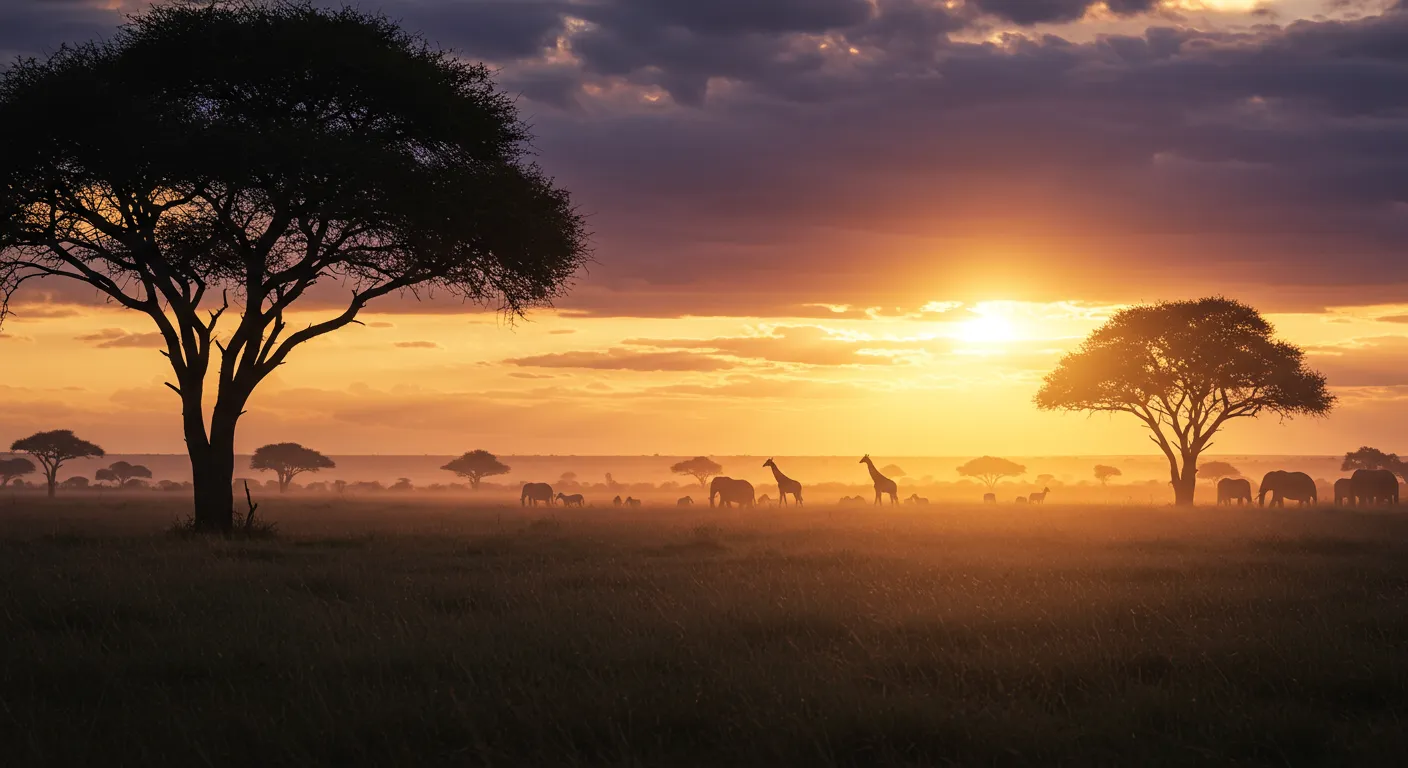
AI-generated hero image: Africa — vast savannas at golden hour with acacia trees, wildlife silhouettes, a

Photo by AI-Generated (Google Imagen)

Plan & Navigate

Quick Facts & Essentials

💰

Money & Costs

Currency: Africa has 40+ currencies. Widely used: South African Rand (ZAR, ~18/USD), Moroccan Dirham (MAD, ~10/USD), Egyptian Pound (EGP, ~48/USD), Kenyan Shilling (KES, ~129/USD), Nigerian Naira (NGN, ~1600/USD), West/Central African CFA Franc (XOF/XAF, ~600/USD, pegged to EUR). USD and EUR widely accepted in tourist zones. [ASSUMPTION] Rates fluctuate — check before travel.

Cash is king in most of the continent. Cards work in South Africa, Morocco, Kenya, Egypt's tourist areas, and major hotels everywhere else. ATMs reliable in capitals and tourist hubs, scarce rurally — withdraw in cities. Mobile money (M-Pesa in Kenya/Tanzania, MTN MoMo in West Africa) often beats cards locally. Tipping: 10% in restaurants where service isn't included; small notes for guides, porters, drivers expected.

Budget: Varies wildly by country. Budget: $25–50/day (Ethiopia, Malawi, Morocco hostels). Mid-range: $80–180/day (Kenya, Egypt, South Africa). Luxury safari/lodge: $500–1500+/day (Botswana, Tanzania, Rwanda gorilla permits alone $1500).

🗣️

Language

Official: Over 2000 languages. Colonial linguas francas dominate officially: English (East/Southern Africa, Nigeria, Ghana), French (West/Central Africa, Madagascar), Arabic (North Africa), Portuguese (Mozambique, Angola). Swahili is the East African common tongue; Hausa across the Sahel; Amharic in Ethiopia.

English fluency strong in Anglophone countries (Kenya, Uganda, South Africa, Ghana, Nigeria) and tourist zones everywhere. Limited in Francophone West Africa, rural Ethiopia, rural Morocco, and Lusophone countries — basic French or Portuguese helps enormously.

Useful: Jambo / Habari (Hello / How are you (Swahili)), Asante sana (Thank you very much (Swahili)), Salam alaikum (Peace be upon you (Arabic greeting, universal in North/Sahel Africa)), Shukran (Thank you (Arabic)), Hakuna matata (No worries / no problem (Swahili))

🚗

Getting Around

Distances are massive and overland travel is slow. Fly between countries — borders, visas, and road conditions make overland a commitment, not a shortcut. Within countries, shared minibuses (matatu, dala-dala, tro-tro, louage) are cheap and chaotic; private drivers are the sane mid-range option. Safari travel almost always means a 4x4 with guide, booked in advance.

Regional flights: Ethiopian Airlines, Kenya Airways, RwandAir, and South African Airways link hubs. Book early; routing often via Addis, Nairobi, or Johannesburg even for short hops. — $150–500 one-way intra-Africa

Shared minibus (matatu/tro-tro/louage): The local way. Leaves when full, not on schedule. Cramped, loud, fast, occasionally hair-raising. Keep valuables on your person. — $1–10 for most intercity routes

Private driver / 4x4 hire: Best for safaris, multi-stop routes, or anywhere with bad roads. Driver-guides know border procedures and where to stop for photos. — $80–250/day including fuel and driver

Ride-hail (Bolt, Uber, inDrive): Works in Cape Town, Joburg, Nairobi, Lagos, Accra, Cairo, Marrakech, Kigali. Safer and cheaper than street taxis. — $2–10 for most city rides

Long-distance trains: Limited but scenic where they exist: Tazara (Tanzania–Zambia), Madaraka Express (Nairobi–Mombasa), Marrakech–Tangier in Morocco, Egypt's Cairo–Aswan sleeper. — $10–80 depending on class and route

⚠️ Safety Note: Generalising about 54 countries is useless — check country-specific advisories. Real risks for most travellers: petty theft in city centres (Joburg CBD, Nairobi downtown, Cairo crowds), road accidents (the biggest actual danger — avoid night driving and overloaded minibuses), and malaria across the tropical belt (take prophylaxis, sleep under nets). Yellow fever vaccine required for entry to many countries — carry the certificate. Avoid border regions in the Sahel (Mali, Burkina Faso, northern Nigeria, parts of Niger), eastern DRC, Somalia, South Sudan, and Sudan. Photography: never photograph government buildings, military, police, or airports. Ask before shooting people — in some areas a small tip is expected, in others it causes offence. LGBTQ+ travellers face criminalisation in many countries — research before booking.

Getting There

Africa is a continent of 54 countries, so 'getting there' depends entirely on your entry point — but the overwhelming majority of intercontinental visitors arrive by air into one of a handful of major hubs: Johannesburg, Cairo, Nairobi, Addis Ababa, Casablanca, or Cape Town. Overland arrivals from Europe via Morocco and from the Middle East via Egypt are possible but niche. Long-haul ferries from Europe serve only the Mediterranean north.

✈️ By Air

O. R. Tambo International Airport (JNB)📍 25 km from Johannesburg CBD
Gautrain — 15 min to Sandton, ZAR 195 (~$11)Metered taxi — 30–45 min, ZAR 400–550Uber/Bolt — 30–45 min, ZAR 250–400
Cairo International Airport (CAI)📍 22 km from central Cairo
Airport shuttle bus — 60–90 min, EGP 30Uber/Careem — 45–75 min, EGP 250–400White taxi (pre-agreed fare) — 60 min, EGP 300–500
Jomo Kenyatta International Airport (NBO)📍 18 km from Nairobi CBD
Taxi — 30–60 min, KES 1,500–2,500Uber/Bolt — 30–60 min, KES 1,000–1,800Matatu Route 34 — 45–75 min, KES 100 (budget only, not advised after dark)
Addis Ababa Bole International Airport (ADD)📍 6 km from city centre
Taxi — 15–30 min, ETB 500–800Ride app (Feres, Ride) — 15–30 min, ETB 300–500Hotel shuttle — often free for booked guests
Mohammed V International Airport (CMN)📍 30 km from Casablanca centre
ONCF train to Casa-Voyageurs — 40 min, MAD 43Grand taxi — 40 min, MAD 250–350 fixedDirect train to Rabat — 1h30, MAD 90
Cape Town International Airport (CPT)📍 20 km from city centre
MyCiTi airport bus — 30 min to Civic Centre, ZAR 110Uber/Bolt — 25–40 min, ZAR 200–350Metered taxi — 30 min, ZAR 350–450

Ethiopian Airlines, Kenya Airways, EgyptAir, Royal Air Maroc, and South African Airways operate the densest intra-African networks. From Europe: direct flights serve 20+ African capitals daily. From North America: direct service is limited — Delta/United fly to Johannesburg, Cairo, Accra, Dakar, and Lagos; otherwise connect via Addis, Doha, Dubai, or Istanbul. Low-cost carriers (FlySafair, Air Arabia Maroc, Jambojet) operate regionally but rarely intercontinentally.

🚆 By Train

Casa-Voyageurs (Casablanca)Morocco's ONCF network — Al Boraq high-speed to Tangier 2h10, Rabat 50 min, Marrakech 3h via standard service

Book on oncf.ma. Al Boraq (Africa's only high-speed line) requires advance booking for cheaper fares. First class worth the small upgrade.

La Gare (Addis Ababa)Addis Ababa–Djibouti Railway — 12h to Djibouti City, runs ~3x weekly

Functional but slow and frequently delayed. [ASSUMPTION] Schedules shift seasonally — confirm locally before relying on it.

Park Station (Johannesburg)Shosholoza Meyl long-distance to Cape Town (27h), Durban (13h), Port Elizabeth. Premier Classe is the upgraded service.

The Blue Train and Rovos Rail are tourist luxury services — book months ahead. Regular Shosholoza is cheap but basic; bring food.

Africa's intercity rail is limited and slow — fine for Morocco and as an experience in South Africa, but elsewhere flying or buses are faster and more reliable. Don't plan cross-country trips around trains outside these two countries.

🚗 By Car

From Algeciras / Tarifa, Spain1h ferry crossing, then drive south

Standard overland entry from Europe. Bring vehicle registration and green card insurance. Moroccan customs paperwork at port — allow 1–2h.

From Varies — Cairo, Nairobi, Cape Town as common hubsWeeks to months

Self-drive across borders is possible but requires a carnet de passage, multiple visas, and serious prep. The Cairo–Cape Town route is iconic but politically blocked in sections (Sudan, currently). Research route-by-route — conditions change.

Major cities: use hotel parking or guarded lots (gardiens de voiture in francophone countries — tip MAD/XOF 10–20). Avoid street parking overnight in Johannesburg, Nairobi, Lagos. Cape Town and Marrakech medina areas are pedestrianised — park outside and walk in.

⛴️ By Sea

Tangier MedFRS, Balearia, AML — from Algeciras (1h), Tarifa (1h), Barcelona (28h), Genoa (48h)

Year-round service, multiple daily crossings from Spain. Book ahead in August (peak Moroccan diaspora return traffic). Foot passengers welcome.

Tunis La GouletteGNV, CTN, Grimaldi — from Genoa, Civitavecchia, Marseille, Palermo

Crossings 20–24h from Italy. Less frequent in winter. Cabins recommended on overnight routes.

Alexandria[ASSUMPTION] Passenger ferry services from Europe to Egypt have been intermittent for years — verify current operators before planning.

Cruise ships call here but scheduled passenger ferries are unreliable. Most travellers fly into Cairo instead.

🛂 Visa & Entry Requirements

Policies vary wildly by country — there is no continent-wide rule. Visa-free or visa-on-arrival for most Western passports: Morocco (90 days), Tunisia (90 days), South Africa (90 days for US/UK/EU), Kenya (eTA required, ~$30, apply online), Tanzania (visa on arrival or eVisa, $50), Rwanda (30 days free or eVisa), Senegal (90 days). Require advance visa: Nigeria, Ghana, Ethiopia (eVisa available, ~$82), Egypt (eVisa or visa on arrival, $25), Algeria, Sudan, DRC. Kenya's eTA replaced the old visa system in 2024 — apply at etakenya.go.ke at least 3 days ahead. Always check the official embassy site within a month of travel; policies shift frequently.

💡 Arrival Tips

  • Get a local SIM at the airport arrivals hall — Safaricom (Kenya), Vodacom (SA), Maroc Telecom, Ethio Telecom kiosks are open for late flights and far cheaper than roaming. Bring your passport.
  • Withdraw cash from an ATM inside the terminal, not the exchange counters — rates are markedly better. In Ethiopia and parts of West Africa, bring crisp USD as backup; ATMs are unreliable.
  • Pre-book your first night's airport transfer or use Uber/Bolt/Yango (available in Nairobi, Joburg, Cape Town, Cairo, Casablanca, Lagos, Accra). Avoid unmarked taxis touting in arrivals halls.
  • Don't schedule tight connections through Lagos, Cairo, or Nairobi for onward African flights — domestic transfers regularly take 3+ hours with separate check-in.
  • Check yellow fever certificate requirements before flying — Kenya, Tanzania, Ethiopia, Rwanda, and others require it if you've transited through a yellow fever country (including some unexpected ones like Brazil). Border officials do check.
  • Most arrivals underestimate the size of the continent — Cairo to Cape Town is an 8-hour flight. Don't try to combine North, East, and Southern Africa in one trip.

Safety & Accessibility

🛡️ General Safety

Africa is a continent of 54 countries with wildly varying safety profiles — generalizing is misleading. Botswana, Namibia, Rwanda, Senegal, Mauritius, and most tourist circuits in Tanzania, Kenya, South Africa (specific areas), and Morocco are generally safe for visitors with normal awareness. Active conflict or high-risk zones to avoid include eastern DRC, Sahel countries (Mali, Burkina Faso, Niger), Sudan, South Sudan, Somalia, northern Mozambique (Cabo Delgado), and parts of CAR. Petty crime — phone snatching, bag theft, ATM scams — is a real issue in urban centers like Johannesburg, Nairobi CBD, Cape Town townships, Lagos, and parts of Cairo and Marrakech.

⚠️ Common Risks

HIGH
Malaria in most of sub-Saharan Africa below 1,800m elevation, especially Tanzania coast, Zambia, Mozambique, and West Africa year-round

Take prescribed prophylaxis (Malarone, doxycycline); use DEET repellent; sleep under treated nets; cover skin at dusk. Seek immediate testing for any fever within 12 months of return.

HIGH
Road traffic accidents — the leading cause of tourist deaths continent-wide; night driving especially dangerous due to unlit roads, livestock, and unmarked vehicles

Avoid driving after dark anywhere outside major cities; use reputable transfer services rather than minibus taxis (matatus, dala-dalas, louages); wear seatbelts even in back seats.

MEDIUM
Smash-and-grab and carjacking in South African cities (Johannesburg, Pretoria, parts of Cape Town and Durban), especially at traffic lights and highway off-ramps

Keep windows up, doors locked, valuables out of sight. Don't stop at red lights late at night in known hotspots — slow and proceed if safe. Use guided transfers from airports.

MEDIUM
Wildlife encounters on self-drive safaris and walking trails — hippos kill more people than lions, and elephants are unpredictable

Never exit vehicles in game reserves except at marked points; maintain 50m+ distance from any large mammal; use licensed guides for walking safaris; respect camp curfews.

LOW
Scams and fake guides at major sites — Pyramids of Giza, Marrakech medina, Victoria Falls border crossings, Zanzibar Stone Town

Pre-book guides through your accommodation or licensed operators; agree all prices before service; ignore unsolicited 'helpers' at border posts and monuments.

🆘 Emergency Numbers

PoliceVaries by country — 10111 South Africa, 999 Kenya, 112 Tanzania, 19 Morocco, 122 Egypt, 112 RwandaEnglish support varies; major tourist areas usually have English-speaking officers
Ambulance10177 South Africa, 999 Kenya, 112 Tanzania, 15 Morocco, 123 Egypt, 912 RwandaPrivate ambulance (ER24, Netcare 911 in SA) often faster than public
Fire10177 South Africa, 999 Kenya, 114 Tanzania, 15 Morocco, 180 Egypt, 112 Rwanda
Tourist Police126 Egypt; 1646 in Morocco (Brigade Touristique in major cities)Daytime hours most reliable; present in Marrakech, Fes, Cairo, Luxor, Aswan

🏥 Healthcare Access

Healthcare quality varies enormously. South Africa, Kenya (Nairobi), Rwanda (Kigali), Morocco (Casablanca, Rabat), Mauritius, and Egypt (Cairo private clinics) have good private hospitals — Netcare, Mediclinic, Aga Khan, King Faisal are reliable. Rural areas and most public hospitals across the continent are under-resourced; serious cases often require medevac to Johannesburg, Nairobi, or Europe. Comprehensive travel insurance with medical evacuation coverage (minimum $100,000) is not optional — it is essential. Required/recommended vaccinations: Yellow Fever (mandatory for many countries if arriving from endemic areas), Hepatitis A/B, Typhoid, Rabies for rural travel, and routine boosters. Drink only sealed bottled or filtered water outside top-tier hotels.

♿ Accessibility

Honest assessment: most of Africa is difficult for wheelchair users and travelers with mobility limitations. Sidewalks are often broken, absent, or blocked; ramps are rare; few buildings have lifts; safari vehicles require climbing. Exceptions exist — South Africa has the best accessibility infrastructure on the continent (Cape Town V&A Waterfront, Kruger's accessible camps, Table Mountain cableway), and high-end safari lodges in Botswana, Kenya, and Tanzania increasingly offer accessible tents and customized game drives. Morocco's medinas, Egypt's ancient sites, and Ethiopia's rock churches are largely inaccessible by design.

Step-Free Routes
  • V&A Waterfront, Cape Town — fully paved, ramped, accessible restrooms throughout
  • Kigali city center, Rwanda — newer infrastructure with curb cuts and paved walkways on main boulevards
Accessible Transit
  • MyCiTi bus rapid transit in Cape Town — low-floor buses with wheelchair spaces and audio announcements
  • Gautrain in Johannesburg/Pretoria — lift access at all stations, wheelchair spaces in carriages
Accessible Attractions
  • Table Mountain Aerial Cableway, Cape Town — wheelchair accessible cars and upper station viewing areas
  • Kruger National Park — several accessible bungalows at Skukuza and Berg-en-Dal rest camps; some game drive vehicles accommodate wheelchairs with advance notice [ASSUMPTION: verify current vehicle availability at time of booking]
Sensory Considerations

Markets (Marrakech souks, Nairobi's Maasai Market, Lagos's Balogun) are intensely overwhelming — constant vendor approaches, strong spice and incense smells, narrow crowded passages, animal odors, and persistent noise. Call to prayer broadcasts five times daily across North/East Africa from pre-dawn onward — light sleepers should request rooms away from mosque minarets. Cairo and Lagos traffic is among the loudest urban environments globally with constant horn use. Safari environments are the opposite — silent, dark night skies, and excellent for sensory-sensitive travelers seeking calm. Many museums (Egyptian Museum Cairo, Apartheid Museum Johannesburg) are dimly lit with reflective glass that can be visually fatiguing.

Travel Insurance

Comprehensive travel insurance with medical evacuation is essential, not optional. Private healthcare costs in South Africa, Kenya, and Morocco are manageable but evacuation from remote safari locations or rural areas can cost $50,000–$150,000. Policies should cover: medical evacuation, adventure activities (safari, diving, trekking, gorilla tracking), trip cancellation for political disruption, and lost equipment. Verify coverage explicitly includes the countries on your itinerary — some insurers exclude specific regions. Carry a printed policy summary and emergency assistance number.

When to Go

Januaryhigh crowds

High summer in the south, cool dry north. Cape Town beaches and wine country are stunning but packed with locals. North Africa medinas are at their most comfortable.

🌤 Cape Town 26/16C; Marrakech 18/6C; Nairobi 26/12C dry; Cairo 19/9C.

Best for: photographers · couples · wine and food travellers
Season: Green Season, Harmattan

Bottom Line: September and October hit the sweet spot continent-wide: dry-season game viewing peaks in southern Africa, Morocco and Egypt are walkable again, and East Africa offers the Mara migration without peak-July prices. May is the photographer's secret — dramatic skies, empty lodges, and rates 40–60% lower [ASSUMPTION].

Where to Stay

Africa's accommodation landscape swings wildly — from $20 backpacker dorms in Cape Town to $3,000-per-night safari lodges in the Serengeti where the price includes game drives, all meals, and a private guide. The real value sits in mid-range guesthouses and city boutiques; the splurges worth making are usually wilderness lodges where the location itself is the product. Booking direct often beats OTAs for safari camps, and peak season (July–October for East/Southern Africa) requires 6–12 months lead time.

Luxury

Singita Sabi SandResort

Arguably the benchmark for safari luxury — private concession bordering Kruger means leopard sightings are near-guaranteed, and the guiding is world-class. Suits photographers and once-in-a-lifetime travellers; rate is all-inclusive (meals, drinks, two daily game drives).

💰 $2,800–$4,500 per night📍 Sabi Sand Game Reserve, South Africa
Book 9–12 months ahead for July–October. Direct booking via Singita reservations is standard; rates are fixed across channels. Green season (Jan–Mar) drops ~30%.
La MamouniaHotel

The grande dame of North African hotels — 8 hectares of gardens inside the medina walls, four pools, and interiors that genuinely earn the hype. Best for travellers who want palace-grade atmosphere without leaving the old city.

💰 $700–$1,800 per night📍 Hivernage, Marrakech, Morocco
Book 3–4 months ahead for Oct–Apr. Direct booking usually includes breakfast and spa credit; Amex FHR adds a fourth night free [ASSUMPTION].

Mid-Range

Jambo Guest HouseGuesthouse

Restored Swahili merchant house with carved doors, rooftop breakfast, and walking access to the seafront night market. Suits travellers who want character over resort polish before heading to the beaches.

💰 $80–$140 per night📍 Stone Town, Zanzibar
Booking.com works fine here; 2–4 weeks lead time outside Christmas/New Year. Cash (USD) often preferred on arrival for incidentals.
Villa Zest Boutique HotelBoutique Hotel

Mid-century design hotel walking distance to the V&A Waterfront and Sea Point promenade. Good base for a 3–5 day Cape Town stay without paying City Bowl prices.

💰 $120–$200 per night📍 Green Point, Cape Town, South Africa
Book 2–3 months ahead for Dec–Feb (peak summer). Rand weakness means USD/EUR rates feel like a bargain — direct booking saves 10–15% vs OTAs.

Budget

Nest BackpackersHostel

Dorms and basic privates in a student neighbourhood with cheap eats and live music. Suits solo travellers and overlanders linking up before heading north.

💰 $15–$30 per night📍 Observatory, Cape Town, South Africa
Walk-ins usually fine outside December. Hostelworld is reliable; avoid Observatory walking alone after dark.
Equity Point MarrakechHostel

Riad-style hostel with a small pool and rooftop — rare combination at this price. Best for first-time Morocco travellers who want medina immersion without navigating a private riad's logistics.

💰 $18–$45 per night📍 Medina, Marrakech, Morocco
Book 2–3 weeks ahead in shoulder season. Arrange airport pickup or you will get lost in the souks with luggage — this is the thing most visitors get wrong.

Unique Stays

Sossus Dune LodgeResort

The only lodge inside the park gates, meaning you can be at Deadvlei for sunrise before day visitors arrive — a genuine photography advantage worth the premium. Thatched desert chalets, half-board included.

💰 $350–$550 per night📍 Namib-Naukluft National Park, Namibia
Run by NWR (Namibia Wildlife Resorts) — book direct via their site 4–6 months ahead. Their booking system is clunky but the access privilege is real.
Bisate LodgeVilla

Six forest-pod villas on a volcanic cone, walking distance to gorilla trek briefings. Wilderness Safaris reforestation project means your stay funds habitat restoration — substance behind the splurge.

💰 $1,800–$2,500 per night📍 Volcanoes National Park, Rwanda
Book 8–12 months ahead and secure gorilla permits ($1,500 each) in parallel. Direct via Wilderness Safaris or a specialist agent — OTAs don't list this tier.

Booking Tips

For safari lodges and gorilla-trek properties, book 6–12 months ahead and go direct — the operators (Singita, Wilderness, andBeyond, Asilia) set fixed rates so OTAs offer no discount and worse cancellation terms. For cities (Cape Town, Marrakech, Nairobi, Cairo), Booking.com and direct hotel sites both work; direct usually wins on breakfast inclusion and flexibility. Green season (roughly Nov–Apr in East/Southern Africa) drops safari rates 30–50% but brings rain and thicker bush — worth it for budget travellers, not for first-timers wanting guaranteed sightings. The thing most visitors get wrong: underestimating internal flight costs — a Joburg–Vic Falls or Nairobi–Mara hop can run $400–$700 and needs booking alongside the lodge, not after.

What to Experience

★★★★★ Pyramids of Giza & Sphinx

historical landmarkmonument

The only surviving ancient wonder, and yes — it lives up to the hype despite the chaos at the gates. Touts are relentless and the camel guys will quote one price then demand triple, but the structures themselves are staggering up close.

🕐 Best Time: Arrive at 8:00 AM opening to beat tour buses and harsh midday light; golden hour shoots are also stunning but you'll be rushed out before sunset.

💡 Insider Tip: Enter via the back gate near the Sound & Light theater for fewer hawkers, and walk to the panorama point on your own — don't pay for a camel unless you actually want the ride. Agree on price in writing.

💰 Fees: EGP 700 site entry; extra EGP 900 to enter Great Pyramid interior [ASSUMPTION on current pricing]

🎟️ Booking: None required, buy at gate

★★★★★ Victoria Falls (Mosi-oa-Tunya)

national parknatural wonderviewpoint

Massive, loud, and genuinely humbling — viewable from both Zambia and Zimbabwe sides. Zimbabwe has the broader panoramic views; Zambia gets you closer to the edge (and Devil's Pool in dry season).

🕐 Best Time: Visit June–August for the balance of flow and visibility; by October the Zambian side can be a trickle.

💡 Insider Tip: Bring a dry bag for your camera — the spray during high water (Feb–May) soaks everything within 100m. Pack a poncho; the rental ones at the gate are overpriced and flimsy.

💰 Fees: USD 50 Zimbabwe side; USD 20 Zambia side

🎟️ Booking: None for entry; book Devil's Pool 1–2 weeks ahead in season

★★★★★ Serengeti National Park

national parknatural wonder

The benchmark safari experience — vast, wildlife-dense, and unlike anywhere else. Costs are eye-watering and budget self-drives aren't really an option, but the Great Migration river crossings justify the spend if you time it.

🕐 Best Time: July–October for migration and dry-season game viewing; January–February for calving in the southern plains.

💡 Insider Tip: Stay in a mobile camp that moves with the migration rather than a fixed lodge — you'll save hours of driving and get better light at the action. Northern Serengeti July–September for Mara River crossings.

💰 Fees: USD 70/day park fee plus accommodation (USD 300–1500/night typical)

🎟️ Booking: Book 6–12 months ahead for peak season

★★★★ Bo-Kaap, Cape Town

cultural landmarkhistorical place

The candy-colored Cape Malay quarter on Signal Hill's slopes — yes it's Instagram-famous, but the neighborhood is a real working community with deep Cape Muslim history, not a film set. Be respectful: people live behind those doors.

🕐 Best Time: 7:30–9:00 AM for soft light and empty streets; the colors pop best on overcast days, not harsh midday sun.

💡 Insider Tip: Shoot Wale Street and Chiappini Street early morning before the tour groups arrive around 10 AM. Stop at Atlas Trading for spices and grab a samoosa from a local bakery — the area's food story is more interesting than the paint.

💰 Fees: Free to walk; Bo-Kaap Museum around ZAR 60

🎟️ Booking: None

★★★★★ Lalibela Rock-Hewn Churches, Ethiopia

religious sitehistorical landmarkcultural landmark

Eleven medieval churches carved downward into solid rock — still active places of worship, not ruins. Often called Africa's most underrated UNESCO site, and the spiritual atmosphere during early-morning mass is unmatched.

🕐 Best Time: Genna (Ethiopian Christmas, January 7) is extraordinary but extremely crowded; otherwise October–March dry season at dawn.

💡 Insider Tip: Arrive for 5:30 AM mass at Bet Maryam to see white-robed pilgrims by candlelight — bring a fast lens (f/1.8 or wider) because flash is forbidden and disrespectful. Hire a local guide at the ticket office, not a tout outside.

💰 Fees: USD 50 for a 5-day pass [ASSUMPTION on current rate]

🎟️ Booking: None; flights to Lalibela should be booked 2+ weeks ahead

★★★★ Île de Gorée, Senegal

historical placecultural landmarkmuseum

A short ferry from Dakar to a car-free island that was a major Atlantic slave trade outpost. The House of Slaves and its 'Door of No Return' is sobering — historians debate the exact volumes that passed through here, but the emotional weight of the place is real.

🕐 Best Time: Morning sailings, November–May dry season. Avoid weekends when Dakar locals crowd the beach.

💡 Insider Tip: Take the first ferry of the day and spend at least 3 hours — most visitors rush through in 90 minutes and miss the quieter colonial lanes and the Women's Museum. Bring small CFA notes for the ferry and snacks.

💰 Fees: Ferry around XOF 5,200 round-trip for foreigners; Maison des Esclaves around XOF 1,000

🎟️ Booking: None

★★★★★ Sossusvlei & Deadvlei, Namibia

national parknatural wonderviewpoint

Rust-red dunes and the surreal white clay pan of Deadvlei with its 900-year-old blackened camelthorn trees. Genuinely one of the most photogenic landscapes on Earth — and far less crowded than equivalent icons elsewhere.

🕐 Best Time: First light (5:30–7:00 AM) for shadow contrast on dunes; the trees in Deadvlei photograph best under harder side light around 9 AM.

💡 Insider Tip: Stay inside the park gate at Sesriem so you can enter at sunrise an hour before day visitors. Climb Big Daddy dune (not Dune 45 — that one's a tour bus stop) and descend straight down into Deadvlei for the classic shot.

💰 Fees: NAD 150 park fee plus NAD 50 vehicle [ASSUMPTION on current rate]

🎟️ Booking: Book Sesriem camp/lodge 2–3 months ahead

★★★★ Stone Town, Zanzibar

historical placecultural landmark

A labyrinth of coral-stone alleys, carved Swahili-Arab doors, and crumbling balconies. It's touristy and parts feel run-down, but the architectural density and the evening street food scene at Forodhani Gardens make it worth a full day.

🕐 Best Time: Late afternoon for warm light on the waterfront, then stay for sunset dhows from Mercury's bar rooftop.

💡 Insider Tip: Get deliberately lost in the back lanes between House of Wonders and the Old Fort — that's where the best doors and least-staged moments are. Skip the overpriced Forodhani seafood skewers; locals eat at Lukmaan instead.

💰 Fees: Free to wander; individual museums around USD 5 each

🎟️ Booking: None

Day Trips from Africa

⏱️ Time: Full day

Highlights: Dramatic cliff-meets-ocean scenery at the southwestern tip of Africa, the old lighthouse hike, baboons and ostriches in the wild, and the jaw-dropping coastal drive itself. Stop at Boulders Beach for the penguin colony on the way back.

Rent a car — tours rush you. Go on a clear day; wind can be brutal. Park entry fee applies. Watch your snacks around baboons, they will mug you. [ASSUMPTION] Chapman's Peak toll road open year-round barring rockfall closures.

⏱️ Time: Half day

Highlights: The last standing wonder of the ancient world. Walk right up to the Great Pyramid, go inside if claustrophobia isn't an issue, and get the classic panorama shot from the desert viewpoint south of the complex.

Arrive at opening (8am) to beat heat and tour buses. Hire a licensed guide at the gate to deflect touts. Camel rides are aggressively oversold — skip unless you really want one and negotiate hard. Bring small bills for tips.

⏱️ Time: Full day

Highlights: A collapsed volcanic caldera packed with lions, elephants, black rhino, hippos, and flamingos — arguably the highest density of large mammals on the continent. The crater rim view at dawn is unreal.

Must book through a licensed safari operator with a 4x4 and permits. Long day — leave Arusha by 6am. Pricier than other parks but the wildlife concentration justifies it. Dry season (June–October) gives best visibility.

⏱️ Time: Full day

Highlights: The blue-painted medina in the Rif Mountains — every alley is a photograph. Less hassle than Fez or Marrakech. Climb to the Spanish Mosque viewpoint for sunset over the blue town.

Doable as a day trip from Tangier; from Fez consider an overnight instead. Shopkeepers expect a small tip if you photograph their doorways heavily decorated for Instagram. Comfortable walking shoes — the medina is steep.

⏱️ Time: Full day

Highlights: UNESCO-listed Swahili-Arab port town with carved wooden doors, spice market chaos, Freddie Mercury's birthplace, and the Forodhani night food market on the waterfront.

Ferry can be rough — take motion sickness pills. Most people stay overnight to also hit the beaches; a pure day trip is tight but workable. Dress modestly (shoulders/knees covered) outside tourist zones.

⏱️ Time: Full day

Highlights: Geothermal geysers shooting beside a Rift Valley lake often pink with lesser flamingos. Far quieter than Lake Nakuru, with better odds of flamingo sightings in recent years as populations shifted here.

Flamingo numbers fluctuate seasonally and yearly — check recent reports before committing. [ASSUMPTION] Best months are typically June–September. Bring a telephoto lens and don't step near the geysers; the water is genuinely scalding.

⏱️ Time: Half day

Highlights: Tour Mandela's prison cell led by former political prisoners — a powerful, sobering experience. Skyline views of Table Mountain on the ferry ride back are a bonus.

Book online at least a week ahead — slots sell out and walk-ups are rare. Ferries cancel in rough weather, so build in a backup day. The bus portion of the tour is rushed; the cellblock walk is the part that matters.

Scenic Routes

Chapman's Peak Drive

📏 9km / 30min drive (longer with stops)

  • 114 curves carved into a cliff face with Atlantic drop-offs
  • Multiple paved pull-offs perfect for golden hour shots over Hout Bay
  • Whale sightings June to November from the upper viewpoints

Garden Route Coastal Drive

📏 300km / 4-5hr drive (plan 3-5 days)

  • Indian Ocean cliffs, indigenous forests, and lagoons stitched together along the N2
  • Stops at Knysna Heads, Wilderness lakes, and Tsitsikamma suspension bridge
  • Affordable guesthouses and consistent fuel stops make it the easiest long road trip in Africa

Chefchaouen Medina Blue Walk

📏 2-3km / 1.5-2hr on foot

  • Cobalt-washed alleys, painted stairs, and cat-filled doorways at every turn
  • Best light is just after sunrise before tour groups arrive around 10am
  • Climb to the Spanish Mosque viewpoint for a sunset panorama over the blue city

Sani Pass 4x4 Route

📏 20km / 2-3hr drive (one way)

  • Switchbacks climbing 1,300m up the Drakensberg escarpment
  • Border crossing into Lesotho with passport stamp at the top
  • Highest pub in Africa with views across the Maloti Mountains

Lion's Head Summit Trail

📏 5km round trip / 2-3hr

  • 360-degree view of Table Mountain, Robben Island, and the Twelve Apostles
  • Chains and ladders near the top add a mild scramble (a bypass route exists)
  • Full-moon hikes are a local tradition; bring a headlamp for descent

Nyiragongo Volcano Trek

📏 8km / 5-6hr ascent, overnight at summit

  • Stare into the world's largest active lava lake from the crater rim at night
  • Basic A-frame shelters at 3,470m; bring serious cold-weather gear
  • One of Africa's most surreal photographic experiences when the park is open

Street Art in Africa

Africa hosts some of the most dynamic street art scenes in the world, with each region carrying distinct flavors. South Africa's Woodstock (Cape Town) and Maboneng (Johannesburg) anchor a continent-wide movement, while Dakar, Senegal pulses with politically charged murals tied to the RBS Crew and the annual Festigraff. Nairobi, Tunis, Marrakech, and Accra round out a circuit where graffiti, calligraffiti, and large-format murals coexist with vibrant local visual traditions.

🗺️ Route: This is a continental sampler, not a single walk. Each city below is its own half-day route. For a focused trip, Cape Town's Woodstock-to-Salt River loop is the most photographer-friendly: ~3 km, 2–3 hours, walkable from CBD via MyCiTi bus, best 9–11am or late afternoon.

★★★★★ Woodstock & Salt River, Cape Town

CommissionedPHOTOICONICTRANSIT-FRIENDLYWORKSHOP SPOT

Dense concentration of large-format murals on warehouse walls, much of it seeded by the International Public Art Festival (IPAF). Constantly refreshed, so expect rotation year to year.

🎨 Artists: Faith47, Falko One, Ricky Lee Gordon, Sonny Sundancer, Mak1one

📍 Location: Start at The Woodstock Exchange, 66 Albert Rd; loop via Gympie St, Kent St, into Salt River around Albert Rd & Kent St junction

🕐 Best time: 9–11am or 4–5pm to avoid harsh overhead sun on east-west walls

★★★★★ Maboneng & Newtown, Johannesburg

CommissionedPHOTOICONICCROWD WARNING

Maboneng's regenerated warehouse district is mural-heavy; Newtown adds older politically charged pieces. Pair with Market Theatre and Nelson Mandela Bridge for context.

🎨 Artists: Faith47, r1, Nardstar*, Rasty Knayles, Falko One

📍 Location: Fox St between Berea Rd and Sivewright Ave (Maboneng); Newtown around Gerard Sekoto Lane

🕐 Best time: Late morning; go with a local or guided tour

★★★★ Médina & Ouakam, Dakar

SanctionedPHOTOHIDDEN GEMSEASONAL

Senegal's capital is the political conscience of African street art. RBS Crew murals tackle migration, governance, and Pan-Africanism. Festigraff (usually April/May) is the moment to visit. [ASSUMPTION] Dates shift yearly, verify before booking.

🎨 Artists: Docta (RBS Crew founder), Madzoo, Zeinixx (calligraffiti)

📍 Location: Médina district north of Place de l'Indépendance; walls along Avenue Blaise Diagne

🕐 Best time: Early morning for soft light and cooler temps

★★★★ Jamaa el Fna & Gueliz back streets, Marrakech

CommissionedPHOTOGOLDEN HOUR

MB6 Marrakech Biennale legacy plus the MBA (Marrakech Bienniale of Art) seeded murals throughout Gueliz and the edges of the Medina. Calligraffiti by El Seed is a recurring highlight.

🎨 Artists: El Seed, Hendrik Beikirch, Giacomo Bufarini

📍 Location: Rue de la Liberté and side streets off Avenue Mohammed V in Gueliz

🕐 Best time: Golden hour; the ochre walls take warm light beautifully

★★★☆☆ Djerbahood, Erriadh (Djerba, Tunisia)

SanctionedPHOTOHIDDEN GEMICONIC

A 2014 project turned an entire village into an open-air gallery with 250+ works from 150 artists across 30+ countries. Some pieces have weathered or faded, so it is uneven now, but the scale is unique.

🎨 Artists: Inti, ROA, Swoon, Bilal Berreni, Faith47

📍 Location: Village of Erriadh, ~10 km south of Houmt Souk, Djerba island

🕐 Best time: Morning, before whitewashed walls blow out highlights

💎 Hidden Gems

Skip the obvious Bo-Kaap pastel houses (they are not street art, just painted homes) and head instead to Salt River's quieter side streets like Pickwick and Brickfield, where Falko One's signature elephants surprise on garage doors. In Nairobi, the BSQ Crew works around Dagoretti Corner and Ngara are rarely on tourist itineraries but worth a guided visit. Tunis Medina has subtle calligraffiti tucked into alleys north of Bab Bhar that most visitors walk past chasing souk shots.

📋 Practical Notes

Always ask before photographing people or interiors; murals themselves are fair game but residents are not props. In Johannesburg and parts of Dakar, go with a guide for first visits, both for navigation and safety; Past Experiences (JHB) and local Festigraff contacts (Dakar) are reliable. Rotation is fast in Woodstock and Maboneng, so works documented online may already be painted over. Tipping local guides is expected, budget USD 20–40 for a half-day walking tour.

Cultural Significance

Africa is the cradle of humanity and home to over 3,000 ethnic groups speaking more than 2,000 languages — a continent whose cultural depth is too often flattened into a single story. From ancient empires of gold and scholarship to thriving contemporary art, music, and film scenes, Africa's identity is both deeply rooted and relentlessly forward-looking. What resonates is the layering: pre-colonial traditions, colonial scars, independence-era optimism, and a 21st-century creative boom happening simultaneously.

Ancient Empires and Trans-Saharan Tradec. 300 BCE – 1600 CE

The empires of Mali, Songhai, Ghana, Great Zimbabwe, Aksum, and Kush built sophisticated states with universities, libraries, and trade networks long before European contact. Timbuktu's manuscripts (some dating to the 13th century) prove a written intellectual tradition that colonial narratives erased. This history matters because it reframes Africa not as a recipient of civilisation but as a source of it.

Visit the Ahmed Baba Institute in Timbuktu (Mali, security permitting), the rock-hewn churches of Lalibela (Ethiopia), Great Zimbabwe ruins, or the National Museum of Ethiopia in Addis Ababa where 'Lucy' and royal artefacts sit side by side.
The Transatlantic Slave Trade and Memory Sites16th–19th century

Between the 16th and 19th centuries, an estimated 12 million Africans were forcibly shipped across the Atlantic. The 'doors of no return' at coastal forts are among the most emotionally charged heritage sites on earth, and they anchor a global diaspora that shaped the Americas, the Caribbean, and modern music itself.

Gorée Island (Senegal), Cape Coast and Elmina Castles (Ghana), and Ouidah (Benin) all offer guided tours. Ghana's 'Year of Return' (2019) catalysed ongoing diaspora tourism — December is peak season.
African Music as Global EngineAncient roots, current global wave 2010s–present

Nearly every popular music form — blues, jazz, samba, reggae, hip-hop — traces rhythmic DNA back to West and Central Africa. Today Afrobeats (Nigeria), Amapiano (South Africa), and Mbalax (Senegal) are reversing that flow, dominating global charts. Music is not entertainment here so much as social infrastructure: griots in Mali still carry centuries of oral history in song.

Catch live shows at New Afrika Shrine (Lagos), Sauti za Busara festival (Zanzibar, February), Festival sur le Niger (Mali), or any Johannesburg township shebeen on a Saturday night. [ASSUMPTION] Check current security advisories for Sahel festivals.
Religious Pluralism and Spiritual TraditionsLiving tradition, with roots spanning two millennia

Africa hosts the world's oldest Christian nation (Ethiopia, 4th century), some of Islam's most important historical centres (Cairo, Fez, Timbuktu), and thousands of Indigenous spiritual systems — Yoruba Ifá, Zulu ancestral veneration, Dogon cosmology — many of which continue to be practised alongside or beneath the major faiths. Vodun (often misrepresented as 'voodoo') is a recognised state religion in Benin.

Attend Timkat (Ethiopian Epiphany, January), Friday prayers at the Qarawiyyin in Fez (exterior only for non-Muslims), or the annual Vodun Festival in Ouidah (10 January). Approach Indigenous ceremonies only with a local guide and explicit permission.
Food Cultures and Communal EatingLiving tradition

African cuisines are wildly regional — Ethiopian injera and wat, West African jollof (and the eternal Ghana-vs-Nigeria debate), Moroccan tagines, South African braai, Swahili coast biryanis shaped by Indian Ocean trade. The common thread is communal eating, often from a shared platter with the right hand. Food is hospitality made literal.

Eat at neighbourhood spots, not hotel restaurants. Try a Dakar thieboudienne lunch, an Addis Ababa injera spread, a Marrakech mechoui, or a Cape Town Sunday braai. Street food markets (Lagos, Nairobi's Kibera, Dakar) are where the real cooking lives.
Contemporary African Art and Literature2000s–present

The post-2000 creative renaissance — Nollywood (now the world's second-largest film industry by output), writers like Chimamanda Adichie and Tsitsi Dangarembga, artists like El Anatsui and Wangechi Mutu, designers showing at Lagos and Dakar Fashion Weeks — is rewriting how Africa is seen, by Africans first. The Zeitz MOCAA in Cape Town and Dakar Biennale (Dak'Art) anchor the institutional side.

Visit Zeitz MOCAA (Cape Town), the Norval Foundation, Nike Art Gallery (Lagos), Dak'Art Biennale (every two years, May–June in Senegal), or the Marrakech Biennale. Bookshops worth seeking: Roving Heights (Lagos), The Book Lounge (Cape Town).
Textile Traditions: Kente, Bogolan, ShweshweLiving tradition, centuries old

African textiles carry encoded meaning — Ghanaian kente patterns name proverbs, Malian bògòlanfini (mud cloth) signals status and clan, South African shweshwe marks rites of passage. These aren't souvenirs; they're language. The 'African print' wax fabrics most tourists buy are actually Dutch-Indonesian in origin (Vlisco) — worth knowing before you shop.

Buy kente directly from weavers in Bonwire (Ghana), bogolan in Ségou (Mali), or visit the Adire textile cooperatives in Abeokuta (Nigeria). Ask what the pattern means — weavers love that question.

Living Culture

Africa right now is the youngest continent on earth — median age around 19 — and that demographic weight is reshaping global culture in real time. Lagos and Johannesburg are creative capitals on par with any in the world: Nollywood pumps out roughly 2,500 films a year, Afrobeats artists like Burna Boy and Tems headline Coachella, and Amapiano has gone from Pretoria townships to global clubs in under a decade. Literary festivals (Aké in Lagos, Open Book in Cape Town), design weeks, and tech hubs (Yaba in Lagos, Silicon Savannah in Nairobi) signal a continent where culture and commerce are fused.

Visitor Respect

Africa is 54 countries — generalisations fail fast. A few constants: ask before photographing people, always, and accept 'no' gracefully (in many places photos of officials, airports, and bridges are illegal). Dress modestly at religious sites — cover shoulders and knees, remove shoes at mosques, women may need headscarves. Greet before transacting; jumping straight to business reads as rude almost everywhere. Use the right hand for eating, giving, and receiving. Don't use 'Africa' as a country in conversation — name the specific place. Avoid poverty-porn photography in townships or villages; if you join a community tour, follow the guide's lead on what's appropriate. LGBTQ+ travellers should research country-specific laws carefully — they vary enormously.

Eat & Drink

Africa's food scene is impossibly diverse — 54 countries, thousands of ethnic groups, and culinary traditions shaped by trade routes, colonisation, climate, and migration. From Ethiopian injera platters eaten by hand to Moroccan tagines slow-cooked in clay, Senegalese thieboudienne to South African braai culture, generalising about 'African food' is like generalising about 'Asian food' — pointless. This guide flags standout spots across the continent, not a single national cuisine. [ASSUMPTION] Travellers will be visiting one or two countries, not the whole continent.

Coffee, Cafés & Bakeries

Tomoca Coffee

Café

Specialty: Ethiopian coffee at its source — roasted on-site since 1953

📍 Wawel Sefer, Addis Ababa

Stand-up bar style. Order a macchiato and buy beans to take home.

Truth Coffee Roasting

Café

Specialty: steampunk-themed specialty roastery

📍 Buitenkant Street, Cape Town

The aesthetic is half the point — bring a camera. Gets busy 9–11am.

Café Clock

Café

Specialty: Moroccan camel burgers and excellent coffee in a restored riad

📍 Kasbah, Fes (also Marrakech, Chefchaouen)

Cultural events, storytelling nights. Good wifi for digital nomads.

Java House

Café

Specialty: reliable Kenyan AA coffee, decent breakfasts

📍 multiple locations, Nairobi

Chain, not exciting, but consistent and safe for sensitive stomachs.

Jason Bakery

Bakery

Specialty: croissants, sausage rolls, sourdough

📍 Bree Street, Cape Town

Arrive before 10am or the good stuff is gone. Saturday queues are real.

Le Pain Quotidien

Bakery

Specialty: organic breads, tartines

📍 Zamalek, Cairo

Belgian chain but a dependable safe haven if local food has knocked you out.

Breakfast & Brunch

Pâtisserie Amandine

BakeryBreakfast

Specialty: French-Moroccan pastries, almond pastilla, mille-feuille

📍 Guéliz, Marrakech

Two-floor café, excellent breakfast set. Air-conditioned escape from the medina.

Lunch

★★★★ Chez Aladin

Specialty: Moroccan tagines, pastilla, mint tea

📍 Place Jemaa el-Fnaa area, Marrakech

Rooftop seating overlooks the square. Better value than the big-name riads.

★★★★ Chez Loutcha

Specialty: Cape Verdean cachupa, grilled fish, pastel com diabo dentro

📍 Mindelo, São Vicente, Cape Verde

Family-run, generous portions, live morna some evenings.

Earthshine

Vegan

Specialty: vegan bowls, raw desserts, smoothies

📍 Sea Point, Cape Town

South Africa's vegan scene is surprisingly strong in Cape Town. Beach-walk friendly.

Habesha Vegetarian

VegetarianVegan

Specialty: Ethiopian fasting platters — naturally vegan injera spreads

📍 Bole, Addis Ababa

Ethiopian Orthodox fasting tradition means vegan food is everywhere — this place specialises. [ASSUMPTION]

Dinner

★★★★★ La Colombe

Specialty: modern South African tasting menu with foraged ingredients

📍 Silvermist Estate, Constantia Nek, Cape Town

Book 6–8 weeks ahead. Worth the splurge — consistently ranked among the world's top 50.

★★★★★ Yod Abyssinia

Specialty: traditional Ethiopian injera platters, doro wat, kitfo with live azmari music

📍 Bole, Addis Ababa

Order the vegetarian beyaynetu on fasting days (Wed/Fri) for the full spread. Cash easier than card. [ASSUMPTION]

★★★★ Mama Africa

Specialty: game meats, bobotie, pap and wors with live marimba

📍 Long Street, Cape Town

Touristy but genuinely fun. Book ahead on weekends. Skip if you hate crowds.

★★★☆☆ Plant Cafe

Vegan

Specialty: fully plant-based burgers, bowls, and South African comfort food reimagined

📍 Buitenkant Street, Cape Town

Reliable vegan option in a meat-heavy country. Multiple locations.

Earth Cafe Marrakech

Vegan

Specialty: vegetarian Moroccan tagines, fresh juices

📍 Medina, Marrakech (near Place des Ferblantiers)

One of the few fully vegan spots in the medina. Three-course menu is great value.

Budget Eating Strategy

Street food in Marrakech's Jemaa el-Fnaa, Dakar's markets, and Addis's mercato is cheap and authentic — pick stalls with high local turnover.

Ethiopian and Eritrean restaurants offer 'fasting' (vegan) menus on Wednesdays and Fridays at lower prices than meat platters.

In South Africa, lunch menus at top restaurants like La Colombe or The Test Kitchen alumni spots cost 40–50% less than dinner — same kitchen, same quality.

Shop

Africa's shopping is at its best when it's hands-on and direct — open-air markets where artisans still make what they sell, and design districts in cities like Cape Town, Marrakech, Lagos and Nairobi pushing contemporary African craft onto the global stage. Bring patience, cash, and an extra duffel.

Markets

Jemaa el-Fnaa & the Marrakech SouksMixed

Hand-knotted Berber rugs, leather babouches and bags from the tanneries, brass lanterns, hand-painted ceramics from Safi and Fez, argan oil cosmetics.

🕐 Daily, roughly 9am–9pm; souks quietest around midday, liveliest after 5pm📍 Medina, Marrakech, Morocco
Maasai MarketCraft

Beaded Maasai jewellery, soapstone carvings from Kisii, kikoy textiles, painted gourds, kitenge fabric goods.

🕐 Different location each day, roughly 8am–6pm📍 Rotates daily across Nairobi (Tuesday: Kijabe St; Saturday: High Court parking; Sunday: Yaya Centre)
Neighbourgoods & WatershedMixed

Contemporary South African design — ceramics, leather, prints, fashion from emerging Cape Town designers, and curated craft from across the continent at Watershed.

🕐 Neighbourgoods: Sat 9am–2pm. Watershed: daily 9am–7pm📍 Woodstock and V&A Waterfront, Cape Town, South Africa
Lekki Arts & Crafts MarketCraft

Yoruba and Benin bronze work, adire indigo textiles, Nok-style terracotta reproductions, wooden masks and stools sourced from across West Africa.

🕐 Daily, roughly 9am–6pm📍 Lekki Phase 1, Lagos, Nigeria

Shopping Districts

Sandton & Rosebank, Johannesburg

South Africa's polished retail core — luxury malls alongside the continent's strongest cluster of contemporary African design and gallery shops.

Rosebank's African Craft Market and Sunday Market for pan-African craft; Keyes Art Mile for galleries and design; Sandton City for international luxury. Look for South African brands like MaXhosa Africa (knitwear), Thebe Magugu, and Imiso Ceramics.

Bo-Kaap & Kloof Street, Cape Town

Walkable independent retail — vintage, concept stores, and Cape Malay craft against the painted-house backdrop.

Kloof Street for independent fashion and homeware; Bree Street for design studios and Missibaba leather; Long Street for second-hand books and vinyl. Skip the generic curio shops on the lower end of Long.

Sirdar Ginanjar / Sidi Ghanem Industrial Zone, Marrakech

The designer quarter outside the medina where Morocco's contemporary makers have showrooms — fixed prices, modern aesthetic, shippable.

Chabi Chic for ceramics, LRNCE for textiles, Topolina for clothing, Mustapha Blaoui-style concept stores. Worth a half-day if you want design-grade pieces without souk haggling.

What to Buy

Hand-knotted Berber and Tuareg rugs

Made on home looms across Morocco's Middle Atlas — Beni Ourain, Boucherouite and Azilal styles are dramatically cheaper at source than in any European or American retailer.

📍 Marrakech and Fez souks, or cooperatives in the Atlas villages (Anzal, Taznakht).💰 $80–$400 for small to medium; $600+ for large vintage Beni Ourain
Mudcloth (bògòlanfini) and indigo-dyed textiles

Mali's mudcloth and Nigeria's adire are made using fermentation and resist-dye techniques that survive nowhere else. Genuine pieces have visible irregularity; machine prints are obvious side-by-side.

📍 Grand Marché in Bamako (Mali), Abeokuta workshops (Nigeria), or curated shops like Watershed in Cape Town.💰 $20–$120 depending on size and age
Beadwork — Maasai, Zulu, Ndebele

Each tradition has distinct colour codes and patterns tied to age, status and region. Buying directly from cooperatives means your money reaches the makers.

📍 Maasai Market (Nairobi), KwaZulu-Natal craft routes, Ndebele villages near Pretoria, or fair-trade outlets like Monkeybiz in Cape Town.💰 $5–$60 for jewellery; $80+ for larger beaded panels
Coffee and tea ware (not the beans themselves)

Ethiopian jebena clay coffee pots and Moroccan engraved tea glasses and silver-plated pots are functional objects you'll actually use, and they pack the story of the ritual.

📍 Shola and Merkato markets in Addis Ababa; the metalworkers' souk (Place des Ferblantiers) in Marrakech.💰 $8–$25 for a jebena; $30–$150 for a Moroccan tea set
Contemporary African fashion

Designers like MaXhosa, Thebe Magugu, Orange Culture and Lisa Folawiyo are setting the global agenda — buying in-country gets you the full range at local prices.

📍 Sandton City and Keyes Art Mile (Johannesburg); V&A Waterfront (Cape Town); Alara Concept Store (Lagos).💰 $80–$600+
Soapstone and malachite carvings

Kenya's Kisii soapstone and DRC/Zambian malachite are mined and carved locally — vastly cheaper than the same pieces sold abroad as 'African art'.

📍 Maasai Market (Nairobi), Kazuri cooperative near Nairobi, Soweto Market in Lusaka.💰 $5–$50 for small pieces; $100+ for larger sculpture

Shopping Tips

Bargaining is the default everywhere except South African malls, Moroccan design showrooms and fixed-price cooperatives — expect first quotes at 3–5x fair value in tourist markets, and aim to settle around 40–50%. Carry small-denomination local cash; cards work in cities and malls but rarely at stalls, and ATMs can be unreliable on weekends. Most markets peak Saturday morning, with Sundays quieter or closed in Muslim-majority countries — plan accordingly. The thing most visitors miss: shipping. Reputable rug and furniture dealers in Marrakech, Cape Town and Nairobi will ship internationally door-to-door for $100–$300, which is often cheaper and safer than wrestling a duffel through three connections.

See Through the Lens

Maasai Mara — Mara Triangle plains

Best: Sunrise 6:25am Jul–Oct, 6:40am Dec–Feb; golden hour 6:00–7:00pm year-round (equatorial, minimal seasonal shift). Migration crossings unpredictable 11am–4pm Jul–Oct.

Sossusvlei & Deadvlei

Best: Sunrise 6:30am May–Aug, 5:50am Nov–Feb. Deadvlei trees light up 7:30–8:30am. Dune 45 for sunrise; Big Daddy and Deadvlei light best in first 90 min after gate opens.

Table Mountain — Lion's Head trail

Best: Sunset 5:50pm Jun, 7:55pm Dec; blue hour 30 min after. Full moon hikes (organized) are a Cape Town tradition — check lunar calendar.

Bo-Kaap

Best: Sunrise 7:00am Jun, 5:40am Dec — soft front light hits the east-facing rows. Avoid harsh midday. Overcast days actually work better here than full sun.

Chefchaouen blue medina

Best: Sunrise 7:15am Jun, 8:15am Dec — first hour of light is essential before tour buses arrive ~10am. Re-shoot golden hour 6:00–7:30pm Jun, 4:30–5:30pm Dec.

Victoria Falls — Knife-Edge Bridge (Zambian side)

Best: Mid-morning 9:00–11:00am for rainbow when sun hits spray from east. Second window 3:30–4:30pm. Lunar rainbows on full-moon nights Apr–Jul.

Lalibela — rock-hewn churches

Best: Sunrise 6:20am year-round (Ethiopia sits near equator). Bet Giyorgis rim light 6:30–7:30am. Interior light shafts strongest 10–11am when sun penetrates cut openings.

Lake Natron — Shompole conservancy edge

Best: Sunrise 6:30am for windless reflections (wind picks up by 9am). Sunset 6:45pm for warm light on the volcano. Dry season Jun–Oct for flamingo concentrations.

Seasonal light across Africa splits sharply by latitude. Near the equator (Kenya, Tanzania, Ethiopia, Uganda) sunrise and sunset shift only 20–30 minutes year-round and golden hour is short — roughly 45 minutes — so you must be in position 15 minutes early or you miss it. The bigger seasonal driver is dust and humidity: East Africa's long dry season (Jun–Oct) delivers dramatic dust-lit backlight on wildlife but hazy long-range landscapes, while the short rains (Nov, Apr) clean the air and explode green grass that ruins savanna minimalism but rewards landscape work. South of the Tropic of Capricorn (Cape Town, Namibia, Botswana) seasons flip and stretch — Cape Town's December sunset at 7:55pm gives you a full hour of usable golden light, while June's 5:50pm sunset compresses everything. North Africa (Morocco) behaves like southern Europe: harsh overhead summer sun until 7pm, and short, soft winter days that flatter the medinas. Gear-wise, Africa is hard on equipment and you should plan around it. For wildlife, a 100–400mm or 200–600mm zoom on a crop or full-frame body covers 90% of safari work; a second body with a 24–70mm saves you missing the herd-in-landscape shot. Beanbags beat tripods in vehicles. For dunes and dry lakebeds, bring a rocket blower, two microfiber cloths, and a sealed bag — never change lenses outside in Sossusvlei or Natron. Weather sealing matters at Victoria Falls and during East African short rains; pack a basic rain cover. Editing for African subjects: pull highlights aggressively on white safari skies, warm the shadows on red-soil scenes (Mara, Serengeti, Namibia) rather than cooling them, and resist the urge to crank saturation on Bo-Kaap and Chefchaouen — the paint is already loud, so dial vibrance up and saturation down for a more cinematic result. For night sky work in Namibia and the Kalahari, you're under Bortle 1–2 skies; a 14–24mm at f/2.8, ISO 3200, 20-second exposures will deliver Milky Way core shots that need almost no post-processing.

Plan Your Days

Suggested Itinerary

Generated with this Africa guide — use it as a starting point for your own Itinerary.

How Long Do You Need?

One day in Africa is absurd — it's a continent of 54 countries. But if you're routing through one hub, make it Cape Town: Table Mountain at sunrise, Bo-Kaap mid-morning, Cape Point afternoon, Lion's Head for sunset. That's the highest density of world-class shots per kilometre on the continent.

Day 1 — Cape Town: Bo-Kaap, Table Mountain, Lion's Head Sunset

Morning: Start at Bo-Kaap by 7:00am (winter) or 5:40am (summer) for soft east-facing light on the painted rows along Wale Street and Chiappini Street. Walk the upper streets first while tour groups are still at breakfast. Coffee at Honest Chocolate Café around 8:30am. Cab or Uber to the V&A Waterfront by 10am to catch the Robben Island ferry (BOOK AHEAD — sells out 2–3 days in advance).

Afternoon: Return from Robben Island around 2:30pm. Quick lunch at the V&A food market, then drive or Uber to Camps Bay for the coastal views. By 4:30pm, head to the Lion's Head trailhead — it's a 45–60 minute scramble to the summit with one chain section.

Evening: Summit Lion's Head for sunset, then descend in fading light (bring a headlamp). Dinner in Kloof Street — Kloof Street House or Chef's Warehouse if you can get in.

📷 Photo Prime Time: Lion's Head summit at sunset — 5:50pm in June, 7:55pm in December, with blue hour 30 minutes after. Compose with Table Mountain's flat profile filling the frame to the south and Camps Bay curving below. Stay through blue hour: that's when the city lights ignite and the sky goes cobalt. [NEXTPIC]
Day 2 — Sossusvlei, Namibia: Deadvlei at First Light

Morning: Sleep inside the park gate (Sesriem) the night before — this is non-negotiable. Gate opens at sunrise (6:30am May–Aug, 5:50am Nov–Feb). Drive straight to Dune 45 for the climb, then push to the 2WD car park and shuttle to Deadvlei by 7:15am. The dead camelthorn trees light up between 7:30 and 8:30am — orange dunes behind, white pan floor, black trees.

Afternoon: Out of the pan by 10am before heat haze ruins everything. Lunch and siesta at Sesriem or your lodge. Late afternoon, walk Sesriem Canyon (cooler, shaded, often empty).

Evening: Sundowner on a dune near your lodge — Elim Dune is accessible without a 4WD. Dinner at lodge; skies here are some of the darkest on earth, so stay out for the Milky Way after 9pm.

📷 Photo Prime Time: Deadvlei trees, 7:30–8:30am, within the first 90 minutes of gate opening. Shoot from the western rim looking east so the orange dune wall backlights the trees. Underexpose by 1 stop to keep the dune saturated. [NEXTPIC]
Day 3 — Maasai Mara: Mara Triangle Game Drive

Morning: Pre-dawn coffee at camp, in the vehicle by 5:45am. Be on the Mara Triangle plains for sunrise at 6:25am (Jul–Oct) or 6:40am (Dec–Feb). Big cats are most active in the first two hours. If it's migration season (Jul–Oct), your guide will be radioing for crossing intel — crossings are unpredictable but cluster between 11am and 4pm.

Afternoon: Lunch back at camp around 1pm, siesta through the heat. Out again by 4pm for the golden hour drive — light is best from 6:00 to 7:00pm year-round here (equatorial latitude means minimal seasonal shift).

Evening: Sundowner on a kopje if your guide allows. Dinner around the fire at camp. Lights out early — tomorrow starts at 5:30am again.

📷 Photo Prime Time: Mara Triangle plains at sunrise, 6:25am in dry season. Position the vehicle so a lone acacia or a moving herd silhouettes against the sun. Shoot wide open at f/4 to keep dust glow soft. [NEXTPIC]
Day 4 — Victoria Falls: Knife-Edge Bridge Rainbow

Morning: Cross from Livingstone (Zambia) to the falls entrance early — be at Knife-Edge Bridge between 9:00 and 11:00am when the sun hits the spray from the east and the rainbow forms. Bring a rain cover for the camera; this is not optional. A microfibre cloth, a UV filter, and a plastic bag will save your gear.

Afternoon: Dry off, lunch at The Royal Livingstone or a cheaper spot in town. Afternoon option: helicopter flight (Flight of Angels — 15 min, expensive but worth it for the scale) or a walk along the gorge rim. Second rainbow window at the bridge: 3:30–4:30pm.

Evening: Sunset Zambezi cruise upstream of the falls — touristy but the river light is genuinely spectacular. Dinner at Café Zambezi for local food. If it's a full moon Apr–Jul, go back into the park at night for the lunar rainbow (separate ticket).

📷 Photo Prime Time: Knife-Edge Bridge, 9:00–11:00am, when the rainbow arcs across the gorge. Use a polariser carefully — rotated wrong, you'll kill the rainbow entirely. Shoot at 1/500s+ to freeze spray droplets.
Day 5 — Lalibela: Rock-Hewn Churches at Dawn

Morning: Enter the northern church complex at 6:00am — sunrise is 6:20am year-round here. Head straight to Bet Giyorgis (the cross-shaped church) for rim light between 6:30 and 7:30am. Then work the northern cluster (Bet Medhane Alem, Bet Maryam) as morning light fills the trenches.

Afternoon: Break for coffee in town. Return between 10 and 11am to shoot interior light shafts — this is when the sun penetrates the cut window openings and you get those biblical god-ray frames. Eastern cluster (Bet Amanuel, Bet Gabriel-Rufael) in the afternoon.

Evening: Sunset from the Ben Abeba restaurant terrace (unusual architecture, sweeping highland views, decent food). Honey wine — tej — is the local drink. Early night; altitude is 2,500m and it catches up.

📷 Photo Prime Time: Bet Giyorgis from the rim, 6:30–7:30am, when the rising sun rakes across the roof cross. Shoot from the south-eastern rim looking down and west. A 24–35mm focal length gives the best context without distorting the cross shape. [NEXTPIC]
Day 6 — Chefchaouen: Blue Medina Before the Buses

Morning: Stay inside the medina the night before. Be in the streets by 7:15am (Jun) or 8:15am (Dec) — first hour of light is the entire game here. Tour buses arrive around 10am and the alleys clog. Work the upper medina near Plaza Uta el-Hammam first, then the residential lanes climbing toward the Spanish Mosque.

Afternoon: Hike up to the Spanish Mosque (30 min uphill) for a midday overview shot of the whole blue town. Lunch at Bab Ssour — tagines and fresh trout from the Ras el-Maa spring.

Evening: Re-shoot the medina during golden hour: 6:00–7:30pm in June, 4:30–5:30pm in December. Warm light on cool blue walls is the signature Chefchaouen frame. Dinner on a rooftop — Casa Aladdin or Restaurant Tissemlal.

📷 Photo Prime Time: Chefchaouen medina, first hour after sunrise (7:15am Jun / 8:15am Dec). Look for staircases where a single doorway or potted plant breaks the blue field — pure abstracts otherwise feel repetitive. Shoot wide and step back; the alleys are narrow but compress beautifully at 35mm.
Day 7 — Lake Natron: Flamingos and Ol Doinyo Lengai

Morning: Drive from your camp on the southern shore to the Shompole conservancy edge before 6:00am. Sunrise at 6:30am — this is the windless window when the lake mirrors Ol Doinyo Lengai perfectly. By 9am the wind picks up and the reflections are gone. Walk carefully; the alkaline crust is sharp and the mud beneath is deep.

Afternoon: Mid-day is brutally hot — retreat to camp, shade, and lots of water. Optional short hike to the Engare Sero waterfalls in a slot canyon (cool, shaded, swimmable).

Evening: Return to the lake edge for sunset at 6:45pm — warm light on Ol Doinyo Lengai's cone. Dry season (Jun–Oct) gives you the dense flamingo flocks; wet season is a different shoot entirely. Dinner at camp under some of the most underrated dark skies in East Africa.

📷 Photo Prime Time: Shompole conservancy edge at sunrise, 6:30am — get there before any breeze stirs. Compose with the volcano centred and a flamingo line breaking the lower third. A 70–200mm compresses the volcano against the birds; a 24mm catches the whole alkaline sweep. [NEXTPIC]

Premium section

Special-interest guides for Africa

This part of the guide is included with a NextTripLabs account. Sign in to read it here — full guide unlocks and itineraries are available in the NextTripLabs app.

Nightlife

Africa is a continent, not a city, so nightlife varies wildly — from Lagos megaclubs that don't peak until 3am, to Cape Town's craft cocktail scene, to Marrakech's alcohol-light rooftop lounges, to bush lodges where the 'nightlife' is a fire and the Milky Way. The strongest scenes are concentrated in Lagos, Johannesburg, Cape Town, Nairobi, Accra, and Cairo, mostly local-dominated with a tourist fringe. Outside major cities, expect nightlife to mean hotel bars, live local music, or nothing at all.

The Shrine (New Afrika Shrine)LATE
Live Music$📍 Ikeja, Lagos, Nigeria

"Femi and Seun Kuti's working temple to Afrobeat — a sweaty, smoke-hazed warehouse where the horn section is louder than the conversation and the politics are unfiltered."

Sunday Jump shows are the institution; doors around 7pm, music runs late. Cheap entry, cash only. Go with a Nigerian friend or arranged driver — Ikeja at night is not a casual stroll.

Sky Bar at SkyLux
Cocktail Lounge$$$📍 Victoria Island, Lagos, Nigeria

"Glossy rooftop where Lagos new money does deals over ₦8000 espresso martinis and the dress code is take-yourself-seriously."

[ASSUMPTION] Smart dress enforced — no shorts, no slides. Reserve on weekends. Drinks are overpriced for what they are; you're paying for the skyline.

The Waiting RoomLATE
Bar$$📍 Long Street, Cape Town, South Africa

"Hidden above a kebab shop — climb the unmarked stairs to a dim, low-ceilinged bar with a rooftop that catches Table Mountain at sunset."

No reservations. Get there before 9pm on weekends or queue. Cocktails are solid, beers cheap. SUNSET tag — rooftop fills fast at golden hour.

The OrbitLATE
Live Music$$📍 Braamfontein, Johannesburg, South Africa

"Serious jazz room with two sets a night and an audience that actually listens — not background music for dates."

Cover R150–R250 depending on act. Book ahead for weekend headliners. Braamfontein is fine until midnight; Uber out after.

Sankara Nairobi Rooftop
Cocktail Lounge$$$📍 Westlands, Nairobi, Kenya

"Heated rooftop pool bar where expats, NGO crowd, and Nairobi professionals overlap on Friday evenings."

Sundowner happy hour is the play. Smart casual. Westlands is the safest nightlife zone in Nairobi for visitors — use rideshare door to door.

SippersLATE
Club$$📍 Osu, Accra, Ghana

"Loud, friendly, Afrobeats-dominant club where the dance floor is the point and nobody's checking what you're wearing."

Doesn't fill until midnight. Cover varies, sometimes free before 11pm. Osu has multiple bars within walking distance — Oxford Street is the strip.

Cairo Jazz ClubLATE
Live Music$$📍 Mohandessin, Cairo, Egypt

"Cairo's longest-running live music institution — jazz, rock, Arabic fusion, and a crowd that's seen it all twice."

Cover usually 150–300 EGP depending on act. Reserve a table on weekends. Smart casual, no shorts. One of the few places in Cairo with consistent live programming.

Kasbah du Toubkal Terrace / Marrakech rooftops generally
Other$$📍 Medina, Marrakech, Morocco

"Marrakech 'nightlife' for most travellers is rooftop mint tea and a tagine as the call to prayer rolls across the medina — alcohol exists but is cordoned off in hotels and Gueliz."

For drinks try Le Salama or Kabana rooftop. Real clubs (Theatro, Pacha) are in Hivernage, taxi only. Medina shuts visually around 11pm.

Mama Africa
Live Music$$📍 Long Street, Cape Town, South Africa

"Tourist-leaning but the marimba band is genuinely good and the kitchen does crocodile and kudu without apology."

Book ahead Thu–Sat. Music starts around 8pm. Yes it's touristy — sometimes that's fine.

RepublikLATE
Bar$📍 Osu, Accra, Ghana

"Open-air courtyard bar with hand-painted signage, highlife on the speakers, and a crowd that mixes Accra creatives with curious tourists."

Cash works best. Live band nights midweek are the sleeper pick. No dress code — come as you are.

🎶 Live Music Scene

Live music is Africa's strongest nightlife card. Lagos for Afrobeats and the Kuti legacy; Accra for highlife and Afrobeats crossover; Cape Town and Joburg for jazz (deeply rooted, taken seriously); Nairobi for benga and a growing electronic scene; Dakar for mbalax (Thione Seck and Youssou N'Dour's lineage); Bamako and Bobo-Dioulasso for desert blues when security permits; Cairo for Arabic fusion and shaabi. Thursday through Saturday are universal — but Sunday Jump at the Shrine is the continent's single most famous standing gig.

🌙 Safety at Night

Generalising across 54 countries is dangerous, so specifics: Cape Town — stick to V&A Waterfront, Sea Point, Camps Bay, De Waterkant; Long Street is fine in groups but pickpockets work it; avoid walking after midnight, use Uber. Johannesburg — never walk at night anywhere, Uber door-to-door, stick to Sandton, Rosebank, Braamfontein, Maboneng (in groups). Lagos — do not walk, do not hail street taxis, use Bolt/Uber and have a local contact. Nairobi — Westlands and Kilimani are the safe nightlife zones, avoid CBD after dark. Cairo — generally safe for street presence late, but women alone will get hassled. Marrakech medina — safe but disorienting at night, agree taxi fares before getting in. Rideshare (Uber, Bolt, Yango) is reliable in most major cities and is always the right call after midnight.

💡 Practical Notes

  • Cover charges: clubs in Lagos, Joburg, Cape Town, Nairobi run roughly USD 5–20; live music venues USD 8–25 depending on act; most bars are free entry.
  • Dress code: South African and Nigerian upscale venues enforce smart casual hard — no shorts, no flip-flops, no sportswear. Beachy spots in Zanzibar, Cape Verde, Mozambique are anything goes.
  • Closing times vary wildly: South Africa bars typically 2am, clubs 4am; Nigeria and Ghana clubs run until sunrise; Muslim-majority countries (Morocco, Egypt, Tanzania mainland) wind down earlier and alcohol is hotel/zone-restricted.
  • Reservations: upscale rooftops and jazz clubs (The Orbit, Cairo Jazz Club, Sankara) yes; bars and street-level spots almost never.
  • Local custom: nothing starts on time. A 10pm gig means 11pm doors and midnight first set. Lagos clubs are dead before 1am. Plan accordingly and nap in the afternoon.
  • Cash still rules in much of West and East Africa — bring small notes for cover charges and tips even where cards are accepted at the bar.

Build your own Itinerary from this guide

Pick the places you care about — attractions, photo spots, map markers — and we'll lay out a day-by-day starting point. Yours to edit; guide updates never touch it.

Traveller's Guide

Africa is 54 countries, not a destination — the Sahara, Serengeti, Cape vineyards, Lagos megacity energy, and Ethiopian highlands have almost nothing in common except the continent name. Treat any trip as country-specific: visa rules, SIM cards, payment systems, and even plug sockets change the moment you cross a border. The reward for doing the homework is travel that still feels genuinely unscripted in a way most of the world no longer does.

Cultural identity: stop saying 'Africa'

Locals notice when travellers lump the continent together. Learn the country, the region, and ideally the dominant local language greeting — 'Jambo' (Swahili, East Africa), 'Sawubona' (Zulu), 'Salaam' (North Africa), 'Akwaaba' (Ghana). It opens doors immediately and signals you did basic homework.

Visa reality and the eVisa shift

Kenya, Rwanda, Benin, Seychelles, and Mauritius are visa-free or eVisa-on-arrival for most Western passports. South Africa, Namibia, Botswana, Morocco, and Tunisia are typically visa-free for 90 days. Nigeria, Ghana, Ethiopia, Angola, and DRC need advance eVisas — apply 2–4 weeks ahead. The AU 'Single African Passport' is still aspirational [ASSUMPTION]; check each country individually on their official immigration portal.

Connectivity: country-specific SIMs win

Buy a local SIM on arrival — Safaricom (Kenya), MTN (Nigeria, Ghana, Uganda, South Africa), Vodacom (South Africa, Tanzania, Mozambique), Orange (West/North Africa), Maroc Telecom (Morocco). Bring an unlocked phone and your passport. Airalo eSIMs work as a fallback but cost 3–5x more. Download Maps.me or Google Maps offline regions before flying — rural coverage is patchy.

Mobile money is the real payment layer

M-Pesa dominates Kenya, Tanzania, and increasingly Ethiopia — you can pay matatus, market stalls, and safari guides through it. MTN Mobile Money covers Ghana, Uganda, Rwanda. In Nigeria use Opay or transfers via your bank app — cash is fading fast in Lagos. North Africa and South Africa run on cards and contactless normally. Carry small USD or EUR cash as universal backup.

Greeting etiquette and the time question

Across most of sub-Saharan Africa, skipping the greeting is rude — ask 'How are you? How is the family?' before any transactional question, even with taxi drivers. Use your right hand or both hands for giving/receiving, never the left alone. 'African time' is real in social settings but business and safari pickups run on time — don't be the one who's late.

Photography consent — ask first, always

Photographing people without asking is a fast way to anger and sometimes a fine (Ethiopia, Morocco souks). A polite request often works; sometimes a small tip (10–20 birr, 10 dirham) is expected and fair. Never photograph government buildings, military, bridges, or airports — enforcement is real. The Maasai, Himba, and Berber communities often have set photo fees — pay them.

Yellow fever card and the malaria question

A Yellow Fever vaccination certificate is required for entry to many African countries if you're arriving from another YF zone — including transit. Carry the physical yellow card. Malaria prophylaxis (Malarone is the easy choice) is worth it for most of sub-Saharan Africa outside high-altitude zones like Addis Ababa, Nairobi city, and the Cape.

Practical Notes

Entry varies wildly. Most Western passports get visa-free or eVisa entry to East African safari countries (Kenya, Tanzania, Rwanda, Uganda all offer eVisas online), Morocco, Tunisia, South Africa, Namibia, and Botswana. Nigeria, Ethiopia, Angola, Algeria, and DRC require advance applications and sometimes a letter of invitation. The East Africa Tourist Visa ($100) covers Kenya, Rwanda, and Uganda on one document — a genuine unlock for multi-country safari itineraries. Connectivity: buy local. A Safaricom SIM in Nairobi costs around $1 with 10GB for $5–10. MTN packages across West and Southern Africa are similar. Airalo and Holafly eSIMs work for short trips but are expensive. Download offline maps in Google Maps or Maps.me, and grab the Maps.me layer for hiking and rural roads where Google data thins out. WhatsApp is the default messaging app continent-wide — guides, lodges, and drivers expect it. Etiquette: greet before you ask. Dress modestly in Muslim-majority countries (Morocco, Egypt, Senegal, northern Nigeria, Zanzibar, Sudan) — shoulders and knees covered, especially for women near mosques. Remove shoes entering homes and many guesthouses. Tipping is expected for safari guides ($10–20/day per guest), drivers, and porters. Bargaining is normal in markets but not in supermarkets or restaurants. Two unlocks experienced travellers rely on: First, fly intra-Africa on regional carriers (Kenya Airways, Ethiopian, RwandAir, FlySafair) rather than routing through Europe — Addis Ababa and Nairobi are the real hubs and save days. Second, book safari and gorilla permits 6–12 months ahead through licensed operators — Uganda gorilla permits are $800, Rwanda's are $1,500, and they sell out. Trying to wing it on arrival rarely works in peak season (June–October, December–February).

Resources

  • Individual country tourism boards (e.g. magicalkenya.com, southafrica.net, visitrwanda.com)
  • IATA Travel Centre (iatatravelcentre.com) for current visa and health entry rules

Premium section

More from the full Africa guide

This part of the guide is included with a NextTripLabs account. Sign in to read it here — full guide unlocks and itineraries are available in the NextTripLabs app.