Essentials
Currency, language, transit & safety — tap to expand.
Currency — No native currency. USD is the de facto on-ship currency; some operators also accept EUR, GBP, or AUD. Card payments dominate onboard.
Cash vs card — Cards (Visa/Mastercard) work on all expedition ships for bar tabs, gift shop, and gratuities. No ATMs anywhere on the continent. Bring USD cash for tips to expedition staff and crew (typically pooled). Tipping guideline: USD $10–$15 per passenger per day to crew pool, plus a separate envelope for expedition team.
Budget — Daily budget — budget: not really possible / mid-range: ~$800–$1,200/day (10-day Classic Antarctic Peninsula cruise from Ushuaia, ~$8,000–$12,000 total) / luxury: $2,500+/day (suites, fly-cruise, or Ross Sea voyages $25,000+). Camping, kayaking, and diving add-ons run $150–$900 each. [ASSUMPTION] Prices reflect 2024 shoulder-season averages.
Language — No official language. English is the working language on virtually all expedition vessels and at most research stations. Spanish, Russian, German, and Mandarin are common second languages depending on the operator and station.
Language barrier — Zero barrier for English speakers on tourist vessels — all briefings, safety drills, and lectures are in English. Multilingual staff are standard on larger ships (Hurtigruten, Ponant, Silversea). Research station visits are rare and pre-arranged.
Getting around — There is no public transit. You access Antarctica via expedition cruise (Ushuaia, Argentina is the main gateway, ~90% of trips) or fly-cruise (charter flight from Punta Arenas, Chile to King George Island, then board ship). Once there, movement is entirely by Zodiac for landings, with occasional kayak or ski excursions. Independent travel is effectively impossible — IAATO operators are your only realistic option.
Safety — Seasickness on the Drake Passage is the #1 issue — bring patches (scopolamine) prescribed before departure, not just Dramamine. Sun exposure is brutal: UV reflects off snow and water, and ozone is thinner here. SPF 50, polarised sunglasses with side shields, and lip balm with SPF are non-negotiable. Hypothermia risk during Zodiac cruises if you get wet — layer properly and the ship will brief you. Norovirus outbreaks happen on cruise ships; wash hands obsessively. Wildlife rules are strictly enforced: stay 5m from penguins, 15m from seals, never block their path to water — violations can get you confined to the ship. Mandatory evacuation insurance covering $250,000+ is required by most operators; standard travel insurance won't cut it. No hospitals, no rescue if weather closes in — medical events mean diversion or helicopter from another vessel, which can take days.
Highlights
Antarctica isn't a destination you visit — it's an expedition you join. There are no cities, no roads, no permanent residents, and almost every traveller arrives by ship from Ushuaia, Argentina across the Drake Passage. The scale rewires you: icebergs the size of office blocks, silence broken only by calving glaciers, and light that photographers chase for a lifetime.
It's a cruise destination, not a backpacker one
Roughly 95% of visitors go via expedition ship from Ushuaia on operators like Quark, Aurora, Hurtigruten, Lindblad, Oceanwide, or Albatros. Trips run 10–22 days and start around USD 6,000 for a basic cabin on a classic Antarctic Peninsula voyage. Fly-cruise options via Punta Arenas skip the Drake but cost USD 12,000+.
BOOK AHEAD · ICONIC
Season is November to March only
November = pristine ice, courting penguins. December–January = peak season, 20+ hours of daylight, penguin chicks hatching. February–March = whale-heavy, melted landings, best for photographers. Outside these months, no commercial trips run.
SEASONAL · GOLDEN HOUR
No visa for Antarctica — but you need one for the gateway
Antarctica itself has no immigration. You clear customs in your gateway country: Argentina (Ushuaia) is visa-free for most Western passports for 90 days; Chile (Punta Arenas) is similar. IAATO operators handle the Antarctic Treaty paperwork on your behalf. Bring a passport with 6+ months validity and 2 blank pages.
BOOK AHEAD
Connectivity is satellite-only and expensive
There's no cell service. Ships sell Starlink or older VSAT Wi-Fi packages — newer vessels (Hurtigruten Roald Amundsen, Viking Polaris, Seabourn Venture) now offer near-usable Starlink, sometimes included. Buy a Claro or Personal SIM in Ushuaia for the Argentina leg. Download maps.me, Sea Ice charts, and any streaming content before departure. Treat the voyage as a digital detox by default.
PLUGIN TIP
IAATO rules govern every landing
Stay 5m from penguins, 15m from fur seals, never sit or kneel on the ground, scrub boots in biosecurity stations before and after each landing, and don't bring any food ashore. Ships with under 200 passengers can land; ships with 200–500 can only cruise. Larger vessels can't land at all — avoid them if shore time matters to you.
PERMIT NEEDED
Drake Passage is real — prepare or pay to skip
Two days of 4–10m swells each way is standard. Get a scopolamine patch (Transderm Scop) from your doctor before the trip; ship doctors stock meclizine but patches work better. Cabins midship-low are most stable. If you're seasick-prone, fly-cruise via DAP Airlines from Punta Arenas to King George Island skips it entirely.
PLUGIN TIP
Photography setup matters more than anywhere else
Bring a 100–400mm for wildlife, a wide for landscapes, two camera bodies (swapping lenses in spray = dead sensor), 3x the batteries you think you need (cold drains them fast), and silica gel for condensation when re-entering the ship. A polarizer is essential for cutting glare off ice and water. Drones are banned by IAATO on landings without special permits — don't bother bringing one.
PHOTO · WORKSHOP SPOT
When to Go
Late December through early February is the sweet spot: penguin chicks hatch, whales arrive in numbers, and 20+ hours of daylight give photographers endless golden-hour light. For walking ashore and food onboard, all peak months are equivalent — cruise galleys run the same regardless. November rewards photographers willing to trade wildlife density for cleaner snow and softer light.
Early Season
Antarctica reopens after winter with extensive pack ice, untouched snow, and courting penguins. Light is dramatic and crowds are minimal, though southern landings are limited by ice.
Best for photographers wanting pristine landscapes and lower prices, but expect restricted itineraries.
High Summer
Peak Antarctic season. Penguin chicks hatch, daylight is essentially continuous, and every landing site is accessible. This is the postcard Antarctica most travellers picture.
Book 12–18 months ahead and expect peak pricing on every cabin class.
Whale Season
Humpbacks, minkes, and orcas concentrate in the peninsula's open waters as krill blooms. Penguin chicks are fledging and pack ice has retreated furthest south.
Best window for whale photography and accessing the Antarctic Circle.
Late Season
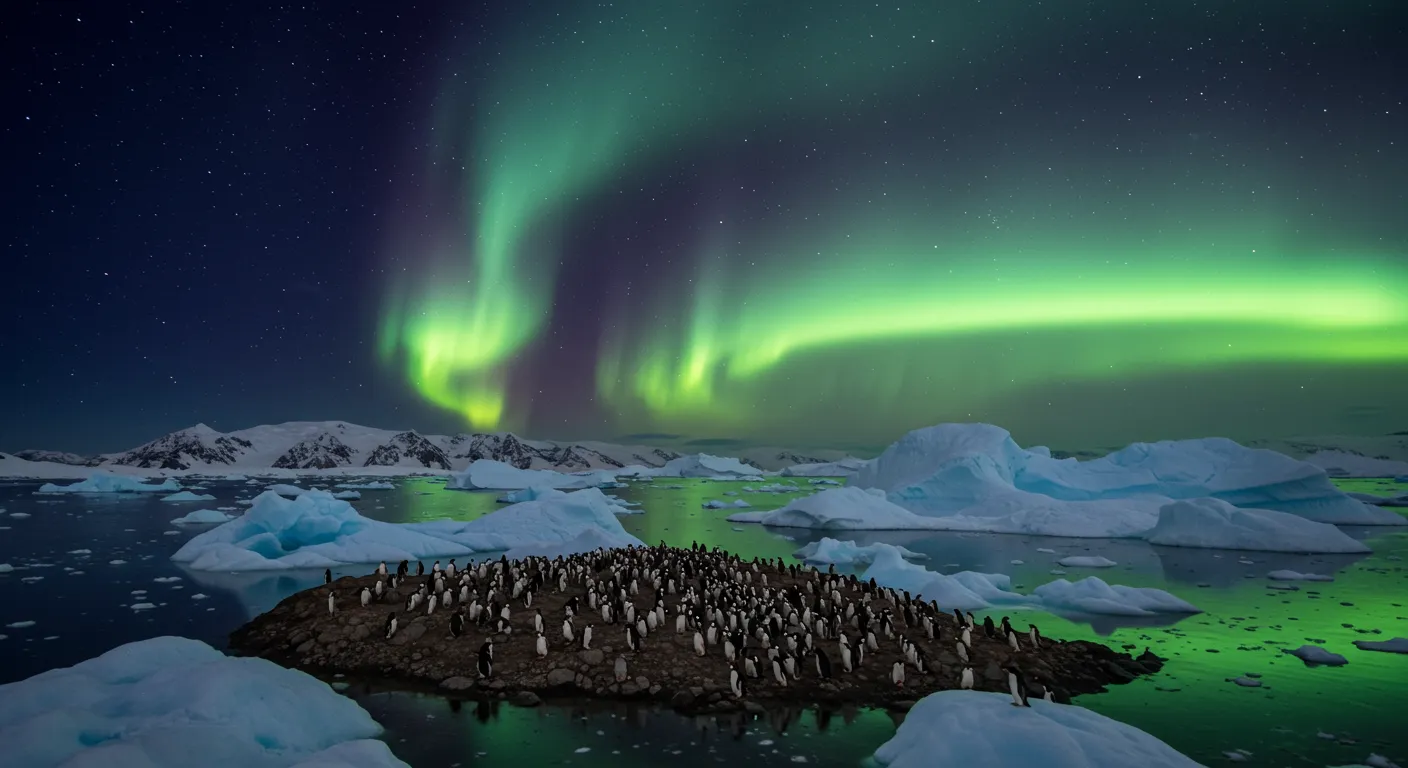
The final sailings of the year. Golden light returns, auroras become possible, and prices soften. Snow is stained by guano but wildlife remains abundant.
Strong value for photographers comfortable trading pristine snow for warmer light.
Polar Winter
Antarctica closes entirely to tourism. Sea ice expands to its maximum, temperatures plunge below -60°C inland, and only research-station personnel remain on the continent.
No tourist access — plan trips for the October–March window.
Where to Stay
Antarctica has no hotels, hostels, or Airbnbs in the conventional sense — your 'accommodation' is almost always your expedition ship cabin, with a handful of fly-in camps and research-adjacent lodges as alternatives. Pricing starts high and goes stratospheric; the real value question is cabin category, ship size (under 200 passengers means more landings), and whether you fly the Drake or sail it. Book 12–18 months out for prime December–February dates, especially for camps and small ships.
White Desert Whichaway Camp
Schirmacher Oasis, Queen Maud Land (interior)
Resort
ICONIC · PHOTO · BOOK AHEAD · SEASONAL · PERMIT NEEDED
Scenic Eclipse II
Ship-based, Antarctic Peninsula
Resort
ICONIC · BOOK AHEAD · WORKSHOP SPOT
Hondius (Oceanwide Expeditions)
Ship-based, Peninsula and South Shetlands
Hotel
PHOTO · WORKSHOP SPOT · BOOK AHEAD
Ocean Endeavour (Intrepid / Quark)
Ship-based, Peninsula
Hotel
VALUE · BOOK AHEAD
Ushuaia (G Adventures)
Ship-based, Peninsula (departs Ushuaia, Argentina)
Hostel
BUDGET · SOCIAL · SEASONAL
Plancius (Oceanwide Expeditions)
Ship-based, Peninsula
Hostel
BUDGET · VALUE
White Desert Echo Camp
Wolf's Fang, Queen Maud Land
Resort
UNIQUE · PHOTO · ICONIC · BOOK AHEAD · SEASONAL
Polar Latitudes Camping Add-On (various ships)
Peninsula shore, one-night bivouac
Guesthouse
UNIQUE · PHOTO · BOOK AHEAD · NIGHT SHOOT
Top Attractions
№ 1 · Essential
Lemaire Channel
★ ICONIC · PHOTO · GOLDEN HOUR · SEASONAL · BOOK AHEAD
An 11km passage flanked by towering cliffs and glaciers, nicknamed 'Kodak Gap' for good reason. The narrow waterway often mirrors the peaks above when calm. Genuinely lives up to the hype — not overrated.
Tip: Stake out the bow 30 minutes before transit and shoot wide. Captains sometimes turn back if ice clogs the channel, so don't save your best frames for the return.
Best: Late December to February, early morning for soft directional light and calmer winds.
Fees: Included in cruise fare
Deception Island (Whalers Bay)
A flooded volcanic caldera you sail directly into through a narrow gap called Neptune's Bellows. The black-sand beach is littered with rusted whaling-era boilers and a crumbling Norwegian station. Surreal and photogenic, though the 'polar plunge' here is more gimmick than geothermal spa.
PHOTOPort Lockroy (Goudier Island)
A restored British base from 1944 now operating as a museum, post office, and gift shop run by the UK Antarctic Heritage Trust. Gentoo penguins nest inches from the boardwalks. Touristy but charming, and your postcard genuinely gets stamped at the southernmost post office.
ICONICParadise Harbour
One of only two spots on the Antarctic mainland where cruise passengers actually set foot on the continent itself. Massive glaciers calve into a sheltered bay and the reflections on still days are unreal. This is the 'I touched Antarctica' landing for most travelers.
ICONICDay Trips
Deception Island (Whalers Bay & Telefon Bay)
Travel: From South Shetlands anchorage / Zodiac landing from expedition ship
Paradise Harbour
Travel: Zodiac excursion from ship, Antarctic Peninsula
Lemaire Channel & Petermann Island
Travel: Ship transit through channel, ~11 km long; landing at Petermann
Port Lockroy (Goudier Island)
Travel: Zodiac landing from ship, Palmer Archipelago
Cuverville Island
Travel: Zodiac landing from ship, Errera Channel
Half Moon Island
Travel: Zodiac landing, South Shetland Islands
Snow Hill or Weddell Sea Iceberg Cruising
Travel: Full-day ship navigation east of the peninsula
Scenic Routes
Lemaire Channel Passage
Driving
Route: Booth Island to Cape Renard
ICONIC · PHOTO · SEASONAL · CROWD WARNING
Neko Harbour Glacier Ridge Walk
Hiking
Route: Landing beach to ridge viewpoint
PHOTO · HARD HIKE · PERMIT NEEDED · ICONIC
Deception Island Caldera Crossing
Walking
Route: Whalers Bay to Neptunes Window
HIDDEN GEM · PHOTO · PERMIT NEEDED · EASY WALK
Paradise Harbour Zodiac Cruise
Driving
Route: Loop from anchored ship
PHOTO · GOLDEN HOUR · WORKSHOP SPOT · ICONIC
Cuverville Island Penguin Colony Walk
Walking
Route: Beach landing to upper rookery
EASY WALK · PHOTO · SEASONAL · FAMILY
Drake Passage Outer Deck Transit
Driving
Route: Ushuaia to South Shetlands
PHOTO · SEASONAL · BOOK AHEAD
Culture & History
Antarctica is the only continent with no indigenous human population, which makes its culture entirely one of visitors, scientists, and explorers — a layered identity built from heroic-age expeditions, Cold War-era cooperation, and a modern ethos of shared scientific stewardship. Its cultural weight comes from being humanity's last commons: a place governed by treaty rather than nation, where the prevailing 'local' traditions are those of research stations and the legacy of the men and ships that first mapped it.
Eat & Drink
Antarctica has no restaurants, no cafés, no bakeries, and no permanent population. Eating on the continent means eating aboard your expedition vessel, at a research station mess hall, or from a packed lunch handed to you before a Zodiac landing. The 'culinary scene' is really the galley culture of ships like those run by Quark, Hurtigruten, Aurora, Lindblad, and Ponant, plus the legendary hospitality at research bases such as Port Lockroy, Vernadsky, and Palmer. [ASSUMPTION]
Vernadsky Research Base Bar ★★★★★
homemade horilka (pepper vodka), borscht when offered, signed-shirt-on-the-wall culture
Galindez Island, Argentine Islands, Antarctic Peninsula
Restaurant
Port Lockroy (Bransfield House) Galley ★★★★★
tea, biscuits, and whatever the UKAHT team baked that morning
Goudier Island, Antarctic Peninsula
Restaurant
Ship Galley — Hurtigruten MS Roald Amundsen ★★★★
Nordic-leaning buffets, fresh fish loaded in Punta Arenas, hearty soups after landings
Onboard, Antarctic Peninsula itineraries
Restaurant · vegetarian_restaurant
Ship Galley — Quark Ultramarine ★★★★
international buffets, themed BBQ on deck when weather allows, strong pastry program
Onboard, Peninsula and Weddell Sea routes
Restaurant
Ship Galley — Ponant Le Commandant Charcot ★★★
French fine dining at 70°S, Alain Ducasse-curated menus
Onboard, deep-south Antarctic itineraries
Restaurant · vegan_restaurant
Ship Observation Lounge Espresso Bar
free flat whites while you scan for whales through floor-to-ceiling glass
Onboard most expedition ships
Coffee · cafe
Almacén Ramos Generales
submarino (hot milk + dark chocolate bar), strong coffee, old-world Patagonian café feel
Maipú 749, Ushuaia, Argentina (pre/post-Antarctic gateway)
Coffee · cafe
Cafe Tante Sara
alfajores, hot chocolate, decent espresso
San Martín 701, Ushuaia, Argentina
Coffee · cafe
Cafe Wake Up
specialty coffee, avocado toast, the closest thing to a third-wave café before you head south
Errázuriz 944, Punta Arenas, Chile
Coffee · cafe
Port Lockroy Brownie Tin
whatever the four-person summer team baked in a tiny historic-hut oven
Goudier Island, Antarctic Peninsula
Bakery · bakery
Panadería La Union
medialunas, facturas, empanadas — load up the morning of embarkation
Perito Moreno 860, Ushuaia, Argentina
Bakery · bakery · breakfast_restaurant
Ship Patisserie Counter
afternoon pastries, scones, occasional themed cakes for crossing the Antarctic Circle
Onboard most expedition ships
Bakery · bakery
Chiko Full Veggie
vegetarian and vegan empanadas, bowls, milanesas de soja
Gobernador Paz 1410, Ushuaia, Argentina
Vegetarian · vegetarian_restaurant
Ship Plant-Based Menu (Lindblad/Hurtigruten/Quark)
dedicated vegan mains at every service if pre-arranged
Onboard expedition ships
Vegetarian · vegan_restaurant
La Marmita
Patagonian comfort food with solid vegetarian options (squash stews, lentil dishes)
Antártida Argentina 135, Ushuaia, Argentina
Vegetarian · vegetarian_restaurant · vegan_restaurant
Shopping
Shopping in Antarctica is not a thing in any conventional sense — there are no towns, no markets, and no shopping districts. What little retail exists happens onboard expedition ships, at a handful of research station gift counters, and in the gateway ports of Ushuaia (Argentina) or Punta Arenas (Chile) where most trips begin.
Port Lockroy Post Office & Gift Shop
Mixed
The world's southernmost post office — postcards stamped and mailed from Antarctica, UKAHT-branded patches, beanies, pin badges, and small heritage prints. Proceeds fund the Antarctic Heritage Trust.
Market · ICONIC · HIDDEN GEM · BOOK AHEAD · SEASONAL
Vernadsky Station Souvenir Counter
Mixed
Hand-stamped certificates, station patches, and the famous bar's branded shot glasses. One of the only places on the continent with a genuine 'shop' run by residents rather than a trust.
Market · HIDDEN GEM · ICONIC · SEASONAL
Expedition Ship Onboard Boutique
Mixed
Branded parkas (often yours to keep), technical layers, books on polar history and wildlife, and decent-quality logo merch. Useful if you under-packed.
Market · BOOK AHEAD
Ushuaia — Avenida San Martín (gateway port, Argentina)
The main shopping strip of the world's southernmost city and the launch point for ~90% of Antarctic cruises. A mix of outdoor gear shops, Argentine wool and leather, and Tierra del Fuego souvenirs.
Last-minute technical gear (waterproof pants, merino base layers, gloves) at shops like Patagonia Outdoors; Fin del Mundo branded merchandise; Malbec and Fueguino craft beer to take onboard; alpaca and llama wool sweaters genuinely cheaper than in Buenos Aires.
District · TRANSIT-FRIENDLY · LOCAL
Punta Arenas — Zona Franca & Calle Bories (gateway port, Chile)
Alternative departure city for fly-cruise itineraries to King George Island. Zona Franca is a duty-free zone good for electronics and outdoor brands; Calle Bories has the boutiques and wool shops.
Chilean wool goods, lapis lazuli jewellery (a Chilean specialty), and the Patagonian-themed bookshops near Plaza Muñoz Gamero. Good place to grab a SIM card and last-minute camera batteries.
District · TRANSIT-FRIENDLY · BUDGET
Photo Spots
Seasonal light in Antarctica is unlike anywhere on Earth and dictates everything. The tourism window is November to March only. November brings pristine fresh snow, low sun angles all day, and pink-orange light from roughly 4am–7am and 8pm–11pm — but no penguin chicks yet and more pack ice can block southern landings. December and January are the 'midnight sun' months on the peninsula: at 64–65°S the sun dips just below the horizon briefly around 1am, producing a continuous 6–8 hour golden/blue hour from ~9pm through ~5am. This is when you sleep less and shoot more — many expedition photographers nap midday and work the long evenings. February brings chick activity at its peak, more open water, and the return of true sunsets (around 10pm). March means rapidly shortening days, fewer ships, and dramatic stormy light but real cold returning. [ASSUMPTION] Exact sun times vary by 30–60 min depending on your specific latitude on the peninsula. Gear-wise, this is a two-body destination if you can swing it: one with 24–70mm for landscapes and Zodiac work, one with 100–400mm for wildlife — swapping lenses on a wet, rolling deck is how sensors get ruined. Weather sealing is non-negotiable. Bring 2–3x the batteries you think you need (cold cuts capacity by 40%) and keep them inside your base layer. A circular polarizer is the single most useful filter for cutting water glare and deepening the blue of glacial ice; ND grads are largely unnecessary because the sun is always low. For editing, the dominant challenge is white balance — auto WB drifts cool and lifeless. Shoot RAW, set WB to 5500–6000K as a baseline, then push slightly warm in post to preserve the pink/gold tones the human eye actually sees. Pull highlights aggressively on snow (it will clip), and resist over-saturating the blue ice — the real color is closer to cyan-teal than royal blue, and pushing it looks fake fast. Dehaze sparingly; some atmospheric haze is honest to the place.
Lemaire Channel
The 'Kodak Gap' — a narrow 11km passage flanked by sheer 1000m peaks reflecting in glassy water, often with brash ice and tabular bergs. Shoot from the bow as the ship threads through; the symmetry of the channel walls converging is the signature composition.
Neko Harbour
One of the few continental landings — actual Antarctic mainland. Gentoo penguin colony in the foreground, calving glacier face directly across the bay. Wait for ice fall: the cracks echo seconds before the collapse. Wide environmental shots with penguins in the snow leading to the glacier work better than tight bird portraits here.
Paradise Harbour (Brown Station viewpoint)
Hike up the snow slope behind the Argentine Almirante Brown base for a 360° panorama of mirror-still water, blue icebergs, and surrounding peaks. The reflections here are the most reliable on the peninsula — it's a sheltered bay. Wide panoramic stitches and reflection symmetry shots.
Deception Island — Whalers Bay
Flooded volcanic caldera — you sail through Neptune's Bellows into a black-sand crater. Rusted whaling boilers, collapsed wooden buildings, and steaming beaches against snowfields. The juxtaposition of industrial decay and Antarctic wilderness is unique on the continent. Moody, high-contrast, almost post-apocalyptic.
Cuverville Island
Largest gentoo penguin rookery on the peninsula — roughly 6,500 breeding pairs. The 'penguin highways' (worn paths in the snow) leading from nests down to the sea make excellent leading-line compositions. Chicks visible late Dec through Feb. Behavioral shots: tobogganing, stealing pebbles, feeding.
Pléneau Bay 'Iceberg Graveyard'
Shallow bay where massive bergs run aground and slowly melt into surreal sculptural shapes — arches, spires, deep cobalt-blue caves. This is the destination for abstract ice photography. Zodiac cruise, not a landing. Tight crops of texture, color, and form beat wide shots.
Port Lockroy / Jougla Point
The historic British base (now museum/post office) is the touristy draw, but the real photo is across the cove at Jougla Point: whale bone piles weathered to bleached white, gentoo colony, and Mt. Français rising 2,800m behind. The bones provide rare foreground texture.
Drake Passage — Open Deck at Dawn
The 2-day crossing is dismissed as 'just transit' — it's not. Wandering albatross with 3.5m wingspans surf the ship's wake, and the storm light over the Southern Ocean is unlike anywhere else. Birds-in-flight against breaking waves; long-lens minimalism.
Suggested Itinerary
Nightlife
Antarctica's 'nightlife' is unlike anywhere else on Earth — there is no public scene, no city, no streets. What exists are research station bars, expedition ship lounges, and the occasional summer party at McMurdo or Vernadsky, all operating under midnight sun (Nov–Feb) when 'night' is a concept rather than a reality. It's overwhelmingly insider — scientists, support staff, and ship passengers — with zero walk-in tourism.
Faraday Bar (Vernadsky Research Base)
The southernmost bar on Earth, built by homesick British engineers in the 1940s and inherited by Ukrainians in 1996 — a wood-panelled room with a homemade brass still, walls covered in patches, flags, and the famous bra collection donated by female visitors.
Only accessible via Antarctic cruise ships that include a Vernadsky landing (Nov–Mar). House-distilled vodka is traded for souvenirs, bras, or a few dollars — cash USD works. No reservations; access entirely depends on weather and your ship's itinerary. Stamp your passport at the post office next door.
Gallagher's Pub (McMurdo Station)
A windowless wood-clad pub for US Antarctic Program staff that feels like a hunting lodge dropped into a shipping container — pool table, dartboards, station-brewed beer, and 200 scientists letting off steam after a 12-hour ice shift.
Strictly closed to the public — USAP personnel and authorised visitors only. Cash bar, cheap by any standard. Trivia nights and live band nights (staff bands) run weekly in summer season. [ASSUMPTION] Smoking section may still exist in a separate room.
Southern Exposure (McMurdo Station)
The smokier, rowdier sibling to Gallagher's — louder music, later hours, the bar where the heavy-equipment operators and fuelies drink.
USAP staff and credentialed visitors only. No cover, no dress code beyond 'clean Carhartts'. Cash or station card. Generally the last room standing on a Saturday.
Ship Lounge, MS Roald Amundsen / Equivalent Expedition Vessel
Floor-to-ceiling windows onto drifting icebergs, a pianist playing standards, scientists giving impromptu lectures over negronis — the closest thing to civilised Antarctic nightlife.
Open to ship passengers only; included in most expedition fares with drinks often charged to cabin. Smart casual after 7pm on Hurtigruten, Quark, Aurora, etc. Best on Peninsula nights when the ship parks in a sheltered bay and stays lit until 2am.
Carpenter's Shop (Port Lockroy)
Not a bar — a heritage hut and post office run by the UK Antarctic Heritage Trust where four women overwinter with gentoo penguins, and visiting ships sometimes get invited in for tea or whisky after the gift shop closes.
Day visits only via expedition ship; evening invitations are at the staff's discretion and rare. Bring a small gift (chocolate, fresh fruit) — it goes a long way. Cash GBP/USD for postcards.
Club 90 South (Amundsen-Scott South Pole Station)
A tiny, dim lounge at literal 90°S where everyone in the room has been awake for 24 hours of sunlight and is drinking at 2,835m altitude — the bragging rights bar of the polar world.
USAP personnel and the occasional VIP/media visitor only. No cover; drinks priced at near-cost. Altitude hits harder than the booze — pace yourself. [ASSUMPTION] Limited hours, typically evenings station time (NZ time).
The Wharf (Rothera Research Station)
British Antarctic Survey's social hub — a low-ceilinged bar with darts, a dog-eared book exchange, and the cheapest pint south of the Falklands.
BAS staff and authorised visitors only. Saturday night is the big night; midwinter (June) gets properly raucous. Cash GBP, honour-system tab.
Casey Station Wallow
An Aussie shed transplanted to the ice — schooner glasses, AFL on a screen via delayed satellite, and a 'Splinters' theatre next door that doubles as a gig room when expeditioners form bands.
Australian Antarctic Division personnel only. Annual highlights: Midwinter Swim afterparty (June) and the end-of-summer dress-up night.
Build your own Itinerary from this guide
Pick the places you care about — attractions, photo spots, map markers — and we'll lay out a day-by-day starting point. Yours to edit; guide updates never touch it.
Premium section
Special Interest
This part of the guide is included with a NextTripLabs account. Sign in to read it here — full guide unlocks and itineraries are available in the NextTripLabs app.
Premium section
Hidden Gems and Off the Beaten Path
This part of the guide is included with a NextTripLabs account. Sign in to read it here — full guide unlocks and itineraries are available in the NextTripLabs app.
Premium section
Sustainability Guide
This part of the guide is included with a NextTripLabs account. Sign in to read it here — full guide unlocks and itineraries are available in the NextTripLabs app.