Destination Guide • Photography • Planning

Mexico City, Mexico

Travel Guide — Photography & Planning

Where ancient ruins, muralism, and street food collide at altitude

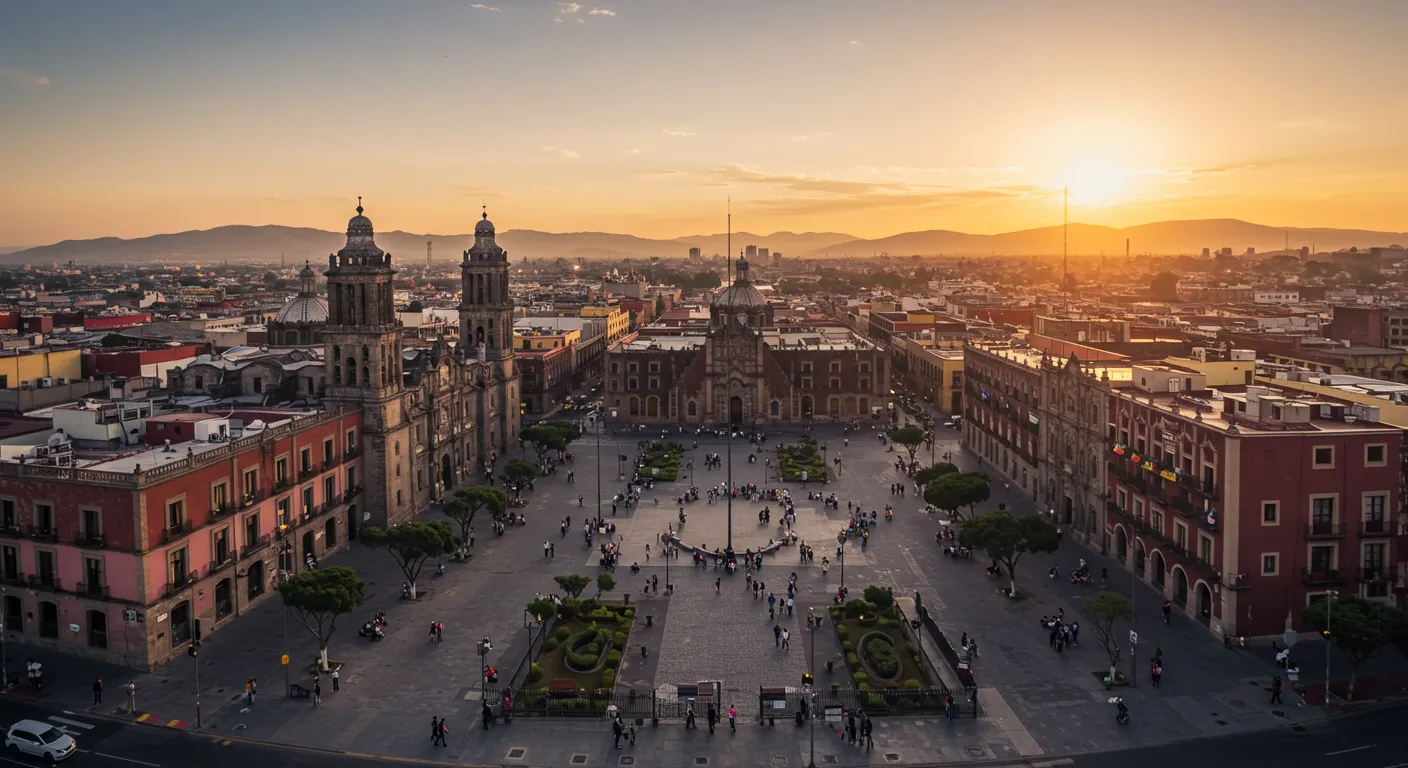
AI-generated hero image: Mexico City — Historic Centro with Colonial architecture and Zócalo plaza at gol

Photo by AI-Generated (Google Imagen)

Plan & Navigate

Quick Facts & Essentials

💰

Money & Costs

Currency: Mexican Peso (MXN), symbol $ or MX$. Roughly 17-18 MXN per 1 USD and around 19-20 MXN per 1 EUR. [ASSUMPTION] Rates fluctuate; check before you go.

Cards (Visa/Mastercard) are widely accepted in restaurants, hotels, and shops in central neighborhoods like Roma, Condesa, and Polanco. Carry cash for markets, street food, taxis, small tiendas, and tips. ATMs are plentiful — use bank-affiliated ones (BBVA, Santander, Banorte) inside branches over standalone machines to avoid skimming and high fees. Tipping: 10-15% at restaurants (check if propina is already added), 10-20 pesos for baggers and parking attendants, round up for taxis.

Budget: budget: 800-1,200 MXN/day (~$45-70) / mid-range: 2,000-3,500 MXN/day (~$115-200) / luxury: 6,000+ MXN/day (~$350+). Street food and the Metro keep costs genuinely low here.

🗣️

Language

Official: Spanish is the official language, spoken by virtually everyone citywide. Indigenous languages like Nahuatl exist but you won't encounter them as a traveller in the capital.

English is common in tourist zones, upscale hotels, and among younger staff in Roma/Condesa/Polanco. Outside those areas — markets, Metro, smaller eateries — expect little to no English. A few Spanish basics go a long way and locals appreciate the effort.

Useful: Buenos dias (Good morning), Cuanto cuesta? (How much does it cost?), La cuenta, por favor (The bill, please), Donde esta el bano? (Where is the bathroom?), No hablo espanol (I don't speak Spanish)

🚗

Getting Around

Mexico City is huge but well-connected. The Metro is dirt cheap and fast for crossing the city, but use rideshare (Uber/DiDi) for door-to-door, late nights, or carrying camera gear. Skip hailing street taxis. Traffic is brutal at rush hour — budget extra time or take the Metro under it.

Metro: Fast and extensive, covers most of the city. Avoid rush hour (7-9am, 6-8pm) when it's packed. Front cars are reserved for women and children during peak times. Buy a rechargeable card at any station. — 5 MXN per ride (~$0.30)

Uber / DiDi: The safest, most reliable point-to-point option. App-based fares avoid haggling and route disputes. Best for nights, gear, and unfamiliar areas. DiDi often runs cheaper than Uber. — 60-200 MXN for most in-city trips (~$3.50-12)

Metrobus: Dedicated-lane bus network, good for routes the Metro doesn't cover (like Reforma). Uses the same rechargeable card as the Metro. Less crowded than the Metro on some lines. — 6 MXN per ride (~$0.35)

Ecobici (bike share): Decent for Roma, Condesa, and Reforma which have bike lanes. Requires app registration. Not ideal for the whole city given traffic. — ~118 MXN for a 3-day pass (~$7)

⚠️ Safety Note: Petty theft and phone-snatching happen on crowded Metro cars and in markets — keep gear secured and avoid flashing expensive cameras in tight crowds. Roma, Condesa, Polanco, Coyoacan, and Centro Historico (daytime) are comfortable for walking. Use Uber/DiDi rather than street taxis to avoid scams and 'express kidnapping' risk. Don't accept drinks from strangers in bars. The city sits at 2,240m altitude — expect to feel winded the first day or two and go easy on alcohol. Air quality dips on still days, relevant if you have respiratory issues. Tap water isn't potable; stick to bottled or filtered.

Getting There

Almost everyone arrives in Mexico City by air — it's the busiest airport hub in Latin America with direct flights from across the Americas and Europe. There's no passenger rail to the city, so the realistic alternatives are long-distance coach or driving. The metro and a new airport line make getting from the airport into the centre cheap and quick if you skip the taxi queue.

✈️ By Air

Mexico City International Airport (Benito Juárez) (MEX)📍 5 km from the historic centre
Metro Line 5 (Terminal Aérea station) — 30–40 min, ~$0.30 USDMetrobús Line 4 to Zócalo/centre — 40–50 min, ~$2 USDAuthorized airport taxi (buy ticket at booth) — 25–45 min, $15–$25 USDUber/Didi (pickup from designated areas) — 25–45 min, $8–$18 USD
Felipe Ángeles International Airport (NLU)📍 50 km north of the centre
Mexibús + connections — 90+ min, ~$2–4 USDUber/Didi — 60–90 min, $30–$50 USDSuburban train + transfer [ASSUMPTION] — varies

MEX handles most international and domestic flights. NLU is newer, far from the centre, and used by some domestic and budget carriers (Viva Aerobus, Volaris) — check which airport your flight uses, as transfers between them take over an hour. Low-cost domestic competition keeps internal fares cheap.

🚗 By Car

From Acapulco / Cuernavaca3h45 from Acapulco, 1h15 from Cuernavaca

Toll road; expect several toll plazas. Carry pesos or a tag.

From Puebla1h45 from Puebla

Fast toll route; the free (libre) alternative is much slower.

From Querétaro2h30 from Querétaro

Main northern corridor; heavy truck traffic at peak hours.

Driving in the centre is stressful — heavy traffic, scarce parking, and the Hoy No Circula scheme restricts cars on certain days by plate (this catches out-of-state and foreign cars too). Use hotel parking or paid lots ($3–$8 USD/day); avoid driving in and rely on metro/Uber once you arrive.

🚌 By Bus / Coach

Terminal Central del Norte (TAPO is Oriente)ADO, ETN, Primera Plus, Futura

Mexico City has four directional terminals — Norte (north), TAPO/Oriente (Puebla, Oaxaca, Veracruz), Sur (Cuernavaca, Acapulco), and Poniente (Toluca). Choose your terminal by destination direction. ADO and ETN offer comfortable executive coaches; book on the operator sites or ClickBus. Puebla ~2h, Querétaro ~3h, Oaxaca ~6–7h.

🛂 Visa & Entry Requirements

US, UK, and EU citizens do not need a visa for tourism and can stay up to 180 days (the exact number is set by the immigration officer and written on your FMM/entry record). Bring proof of onward travel and accommodation. Mexico has moved from paper FMM cards to passport stamps at major airports — keep your stamp/entry record, as you may need it on departure. [ASSUMPTION] Rules and stay lengths can change; verify with official sources before travel.

💡 Arrival Tips

  • Skip the taxi touts inside the terminal — either buy a fixed-price authorized taxi ticket at the official booth, or order an Uber/Didi from the marked pickup zone for roughly half the price.
  • Pull pesos from a bank-branded ATM (BBVA, Santander, Banorte) in arrivals rather than using Euro/Travelex exchange counters, which give poor rates. Decline the 'with conversion' option on the screen.
  • Confirm whether your flight lands at MEX or NLU before booking transport — they're an hour-plus apart and a wrong assumption ruins your arrival.
  • The altitude is 2,240 m — go easy on alcohol the first night and drink water; many visitors underestimate the soroche (mild altitude effect).
  • Avoid arriving into MEX during evening rush (6–9 pm) if you can — traffic can double your transfer time to the centre.
  • Most arrivals overpay for a SIM at the airport — buy a Telcel SIM at an OXXO convenience store in the city instead, where setup is cheaper and easy.

Safety & Accessibility

🛡️ General Safety

Mexico City is moderately safe for tourists who stay alert and stick to well-trafficked neighborhoods, but it's not a place to switch off your situational awareness. The safest, most visitor-friendly zones are Roma Norte, Condesa, Polanco, Coyoacán, and the Centro Histórico core during daytime. Avoid Tepito, Doctores, parts of Iztapalapa, and the edges of the Centro after dark, and don't hail street taxis — use Uber, DiDi, or registered sitio cabs. Petty crime (phone snatching, pickpocketing) is the realistic everyday risk far more than violent crime against tourists.

⚠️ Common Risks

MEDIUM
Phone snatching and pickpocketing on Metro Lines 1, 2, and 3, at the Zócalo, and in crowded markets like La Merced

Keep your phone in a front pocket or zipped bag, don't film openly on crowded platforms, and use the women-only/family metro cars (front of the train) during rush hour

MEDIUM
Express kidnapping and card skimming via unregistered street taxis and rogue ATMs

Only use Uber/DiDi or hotel-arranged cars; withdraw cash from ATMs inside banks or malls during business hours, never freestanding street machines

LOW
Altitude — the city sits at 2,240m (7,350ft), causing fatigue, breathlessness, and worse hangovers

Take the first day slow, hydrate heavily, and go easy on alcohol until acclimatized; allow 24-48 hours before hard hikes or climbing pyramids at Teotihuacán

MEDIUM
Tap water is not potable and 'Moctezuma's revenge' (traveler's diarrhea) is common

Drink only bottled/purified water, including for brushing teeth; busy street stalls with high turnover are generally safer than empty ones

LOW
Earthquakes — the city sits on a former lakebed that amplifies seismic activity

Note the seismic alarm sound (loud alert that precedes shaking by seconds); if it sounds, move away from glass and follow green 'zona de seguridad' floor markers

🆘 Emergency Numbers

Police911National emergency line; limited English, ask hotel staff to call if possible
Ambulance911Same unified emergency number; Cruz Roja (Red Cross) is 065
Fire911
Tourist Police078ATención a Turistas / SECTUR tourist assistance line, English-speaking operators, generally 24/7

🏥 Healthcare Access

Mexico City has excellent private hospitals (Médica Sur, ABC Medical Center, Hospital Ángeles) with English-speaking staff and short waits, but they require upfront payment or insurance and can be expensive. Public hospitals exist but have long waits and language barriers for foreigners. Comprehensive travel insurance is strongly recommended — not boilerplate — because private care costs add up fast. Key health considerations: altitude (2,240m), non-potable tap water, and air-quality alerts on high-pollution days that can affect asthma/respiratory conditions.

♿ Accessibility

Mexico City is challenging for wheelchair users and those with mobility limitations, despite some modern improvements. Sidewalks in the Centro Histórico and Coyoacán are uneven, cobblestoned, often broken, and frequently blocked by parked cars or vendors, and curb cuts are inconsistent. Polanco, parts of Reforma, and modern malls and museums fare much better with ramps and elevators. Don't expect European-level step-free reliability — plan routes carefully and budget extra time and taxi use.

Step-Free Routes
  • Paseo de la Reforma central promenade — wide, mostly flat, good curb cuts near Angel de la Independencia
  • Polanco (Avenida Presidente Masaryk) — modern smooth sidewalks and ramped crossings
Accessible Transit
  • Metrobús BRT lines — level boarding at raised platforms and dedicated wheelchair spaces, far more reliable than the Metro
  • Uber/DiDi (request larger vehicles); some app options for accessible cars [ASSUMPTION: availability varies]
Accessible Attractions
  • Museo Soumaya (Plaza Carso) — fully accessible with elevators and ramps throughout
  • Museo Nacional de Antropología — elevators, ramps, and wheelchair availability, though grounds are large
Sensory Considerations

Mexico City is loud and stimulating — traffic noise, street vendors with amplified recorded calls, music, and crowds are near-constant in the Centro and markets. Markets like La Merced and Mercado de Sonora are intense for fragrance (spices, herbs, incense) and density. Large museums (Antropología, Soumaya) offer calmer, well-lit refuges. For lower-sensory days, residential Condesa parks (Parque México, Parque España) and Coyoacán's quieter side streets are much gentler.

Travel Insurance

Comprehensive travel insurance is strongly recommended here, not just standard advice. Private hospital care — the realistic choice for foreigners — requires payment guarantees and can be costly, and any medical evacuation would be expensive. If you plan day trips involving hiking (Teotihuacán pyramids), hot-air ballooning, or altitude activity, confirm your policy covers them. Also ensure coverage for theft, given the real phone-snatching risk.

When to Go

Januarymoderate crowds

Cool, clear, and calm after the holiday rush eases. Crisp blue skies make this a strong photography month, though mornings near freezing demand layers. Museums and markets feel unhurried.

🌤 High 22°C/72°F, low 7°C/45°F, almost no rain. Cold dawns, sunny afternoons.

Best for: solo travellers · photographers · families
Season: Seco (Dry Season)

Bottom Line: October and November are the standout window: rains have cleared the air to its annual best, temperatures stay mild for all-day walking, and Día de Muertos delivers unmatched color and energy. For pure photography clarity without festival crowds, target late September into early October.

Where to Stay

Mexico City delivers extraordinary value for design-forward stays — boutique hotels here cost a fraction of comparable spots in New York or London. The Roma-Condesa axis and Polanco anchor most quality lodging, with Centro Histórico offering grit-and-grandeur trade-offs. Booking gotcha: prices spike hard around Día de Muertos (late October to early November) and the Grand Prix weekend, so lock those dates early.

Luxury

Las AlcobasBoutique Hotel

A Yabu Pushelberg-designed sanctuary on the doorstep of Mexico City's best museums and dining. Warm walnut interiors, deep soaking tubs, and impeccable service make it ideal for travellers who want quiet luxury over flash. The location on Avenida Presidente Masaryk suits design and food pilgrims.

💰 $350–$550 per night📍 Polanco
Book 4–6 weeks ahead, longer for Día de Muertos. Direct booking via the Marriott Luxury Collection often matches OTA rates and adds perks. Rates climb in autumn.
Casa PolancoBoutique Hotel

A restored 1940s mansion turned 19-room hotel facing Lincoln Park. Garden terraces, a generous breakfast, and intimate scale make it feel like staying in a wealthy friend's home. Best for couples and photographers who want quiet leafy backdrops.

💰 $300–$480 per night📍 Polanco
Small property — book 6+ weeks ahead. Direct booking preferred for room-choice flexibility. [ASSUMPTION] Peak pricing around major events.

Mid-Range

Hotel CarlotaBoutique Hotel

A converted mid-century motel with a glass-walled courtyard pool that's become a design-set favourite. Minimalist rooms, a strong on-site restaurant, and a location bridging Reforma and Roma make it a versatile base. Suits design lovers and solo travellers who want polish without Polanco prices.

💰 $120–$190 per night📍 Cuauhtémoc
Book 3–4 weeks ahead. The courtyard pool draws photographers — request a courtyard-facing room directly. Mid-range rates hold steady outside autumn peaks.
Nima Local House HotelBoutique Hotel

A four-room townhouse hotel with personalised service and a curated breakfast cooked to order. Intimate, calm, and central to Roma's cafés and galleries. Best for travellers who value attentive hosts over hotel anonymity.

💰 $130–$200 per night📍 Roma Norte
Only four rooms — book 4–6 weeks out. Direct booking essential; limited OTA inventory. Fills fast during festival season.

Budget

Stayinn Barefoot CondesaHostel

A small, sociable hostel in leafy Condesa with dorms and a few privates. Rooftop hangouts and a low-key crowd make it easy to meet people without party-hostel chaos. Suits budget travellers who want a safe, walkable neighbourhood.

💰 $18–$45 per night📍 Condesa
Book 2–3 weeks ahead for privates, sooner in high season. Hostelworld and direct both work. Dorm prices rise modestly around major events.
Casa PanchaHostel

A bright, plant-filled hostel with a friendly communal kitchen and rooftop. Great base for first-timers wanting Roma's restaurant scene on a budget. Mixed dorms and private doubles available.

💰 $20–$50 per night📍 Roma Norte
Book 2 weeks ahead; privates go first. Hostelworld reliable. [ASSUMPTION] Higher demand around Día de Muertos.

Unique Stays

Círculo MexicanoBoutique Hotel

A Shaker-minimalist hotel in a 19th-century building steps from the Zócalo, with a rooftop pool and terrace overlooking the Metropolitan Cathedral. The pared-back rooms and historic-core location offer a sense of place no Roma hotel matches. Best for design travellers who want monumental cathedral views at sunrise.

💰 $180–$300 per night📍 Centro Histórico
Book 4 weeks ahead and request a cathedral-view room. Rooftop is the photo draw — go early. Centro can be loud and quiet on Sundays; weigh that trade-off.
Downtown MexicoHotel

Set in a 17th-century palacio with exposed stone walls, a rooftop pool bar, and a hostel wing below for mixed budgets. Staying inside a genuine colonial mansion is the draw. Suits travellers who want architecture and a lively rooftop scene.

💰 $160–$260 per night📍 Centro Histórico
Book 3–4 weeks ahead. The rooftop gets busy with non-guests at night — request a higher-floor room for quiet. Direct booking offers room-type clarity.

Booking Tips

Aim to book 3–6 weeks ahead for mid-range and boutique stays, and 6–8 weeks for small properties or anything during late-October Día de Muertos, when the whole city fills. Booking.com and Hostelworld dominate inventory here, but direct booking with boutique hotels frequently unlocks better rooms and breakfast perks at the same price. Pricing is otherwise stable year-round, with a soft rainy-season dip from June to September. The thing most visitors get wrong: chasing Polanco for prestige when Roma-Condesa offers better walkability, food, and value for the same money.

What to Experience

★★★★★ Templo Mayor

historical landmarkmuseum

The excavated heart of the Aztec capital sits right beside the cathedral in the Zocalo. The on-site museum is excellent and the layered ruins are genuinely moving once you understand the timeline. Not overrated — this is essential context for the whole city.

🕐 Best Time: Tuesday morning at 9am opening to beat school groups and harsh midday shadows on the stone.

💡 Insider Tip: Go to the museum FIRST, then walk the ruins on the elevated path. The dual-temple offerings on the upper floor make the outdoor site click.

💰 Fees: Around 95 MXN [ASSUMPTION]; free on Sundays for Mexican residents

🎟️ Booking: None

★★★★★ Museo Nacional de Antropologia

museumcultural landmark

Widely considered one of the world's great museums, and it earns it. The Aztec hall with the Sun Stone is the showstopper, but the Maya and Oaxaca rooms are equally rich. It's huge — don't try to do all of it.

🕐 Best Time: Weekday right at 9am opening; weekends are packed with local families.

💡 Insider Tip: Pick three culture halls in advance and skip the rest. The courtyard's massive umbrella fountain is a great rest-and-reset spot mid-visit.

💰 Fees: Around 95 MXN [ASSUMPTION]

🎟️ Booking: None

★★★★ Frida Kahlo Museum (Casa Azul)

museumcultural landmark

Frida's cobalt-blue Coyoacan home is intimate and atmospheric, with her studio and personal objects intact. It's genuinely worth it, but be honest: the timed crowds and tight rooms can blunt the experience. Manage expectations and you'll love it.

🕐 Best Time: First entry slot of the day; rooms are small and clog quickly.

💡 Insider Tip: Buy timed tickets online days ahead — walk-up tickets routinely sell out. Pair it with a stroll around Coyoacan's plazas, which are lovely and free.

💰 Fees: Around 270 MXN for foreign visitors [ASSUMPTION]

🎟️ Booking: Book online several days ahead

★★★★ Bosque de Chapultepec & Castle

historical landmarkviewpoint

A giant city park with a hilltop castle that offers some of the best views over Mexico City. The castle's painted ceilings and terraces are a strong combo of history and photography. The park itself is great for a low-key local afternoon.

🕐 Best Time: Morning for clear air and soft light; haze builds through the day.

💡 Insider Tip: Take the small uphill path to the castle early; the terrace views toward Reforma are best with morning light and clearer air.

💰 Fees: Park free; castle around 95 MXN [ASSUMPTION]

🎟️ Booking: None

★★★★ Palacio de Bellas Artes

cultural landmarkart gallery

A stunning Art Nouveau and Art Deco palace housing Rivera and Orozco murals. The exterior is iconic, but the secret is the interior murals and the view from above. Skip it only if you're truly short on time.

🕐 Best Time: Blue hour, when the building is lit and the dome glows against the sky.

💡 Insider Tip: Go up to the Sears cafe across the street for the classic elevated shot of the palace dome — order a coffee and shoot from the balcony.

💰 Fees: Building free to enter lobby; mural museum around 90 MXN [ASSUMPTION]

🎟️ Booking: None

★★★☆☆ Xochimilco Canals

historical placecultural landmark

Colorful trajinera boats drift through ancient Aztec canal waterways, often with mariachi and beer. It's festive and very photogenic, but it can feel like a party tourist trap on weekends. Worth it if you set the right vibe.

🕐 Best Time: Weekday morning for calm water and fewer party boats.

💡 Insider Tip: Go on a weekday morning for the quieter ecological route toward the chinampas and axolotl areas rather than the party stretch. Split a boat with others to cut the per-hour cost.

💰 Fees: Around 600 MXN per boat, per hour [ASSUMPTION]

🎟️ Booking: None

★★★☆☆ Mercado de Jamaica

hidden gemcultural landmark

A vast flower and food market that most tourists skip in favor of the famous markets. The walls of marigolds and roses are a riot of color and a photographer's dream. This is the local, unpolished version — go for atmosphere, not souvenirs.

🕐 Best Time: Early morning when fresh flowers arrive and the colors are peak before midday wilt.

💡 Insider Tip: Bring a fast lens and shoot the flower stalls from low angles; vendors are friendly if you buy a small bunch first. The food aisles serve cheap, excellent comida.

💰 Fees: Free

🎟️ Booking: None

★★★☆☆ Biblioteca Vasconcelos

hidden gemcultural landmark

A jaw-dropping megalibrary of floating glass bookshelves and a suspended whale skeleton. It's a free, surreal architectural space that far too many visitors miss. A genuine hidden gem for anyone who likes symmetry and lines.

🕐 Best Time: Midday when light pours through the glass roof and floods the interior.

💡 Insider Tip: Shoot from the upper levels looking down the central void for the strongest leading-line composition. It's near Buenavista station, easy to pair with another stop.

💰 Fees: Free

🎟️ Booking: None

Neighbourhoods in Mexico City, Mexico

Centro Histórico

Roma Norte

Condesa

Coyoacán

San Ángel

Polanco

Chapultepec & Bosque

Day Trips from Mexico City, Mexico

⏱️ Time: Half day

Highlights: Massive pre-Aztec pyramid complex with the Pyramid of the Sun and Moon and the Avenue of the Dead. Climbing access varies, but the scale alone is staggering. Hot-air balloon flights at dawn are the signature shot.

Arrive at opening (around 9am) to beat heat and crowds. Bring sun protection and water — almost no shade. Balloon rides BOOK AHEAD. Visit weekdays to avoid weekend domestic tourism.

⏱️ Time: Full day

Highlights: UNESCO colonial center with Talavera tiled facades, a baroque cathedral, and the colorful Callejon de los Sapos. Mole poblano and chiles en nogada are the food draws. Clear days give Popocatepetl volcano backdrops.

Frequent buses make this easy without a tour. Best paired with a quick stop in nearby Cholula for the church-on-a-pyramid. Comfortable year-round; chiles en nogada is SEASONAL (late summer/early fall).

⏱️ Time: Full day

Highlights: Pueblo Magico beneath dramatic cliffs. The Tepozteco pyramid hike rewards with valley views, and the weekend market is full of artisan crafts and street food. New-age, bohemian energy.

The Tepozteco climb is steep and rocky — sturdy shoes needed. Weekends are lively but crowded; weekdays are calmer. Rainy season (Jun–Sep) makes the trail slippery.

⏱️ Time: Half day

Highlights: Colorful trajinera boats drift through ancient Aztec canals with mariachis, food vendors, and floating fiestas. Technically within the city limits but feels like a world away. The eerie Island of the Dolls is a side trip.

Negotiate boat price per hour upfront — overcharging is common. Best Saturday afternoons for atmosphere, weekdays for quiet. Bring cash. Island of the Dolls requires a longer boat hire. [ASSUMPTION] Doll island access depends on your boat operator.

⏱️ Time: Full day

Highlights: Lakeside Pueblo Magico known for paragliding, sailing, and pine-forest scenery. Cobbled streets and red-tiled roofs make it feel alpine-Mexican. Monarch butterfly sanctuaries are within reach in season.

Realistically better as an overnight given the drive. Monarch migration is SEASONAL (Nov–Mar) and requires extra travel to nearby sanctuaries. Weekend traffic from CDMX is heavy. Renting a car is easiest.

⏱️ Time: Half day

Highlights: Toltec capital famous for the towering Atlantean warrior columns atop Pyramid B. Far less crowded than Teotihuacan and rarely on tour itineraries — a genuine archaeological surprise.

Minimal crowds means you can shoot the Atlantes freely. Little shade and exposed terrain — go early or late. Pair with the nearby cathedral fortress in town. Limited services, so bring water and snacks.

⏱️ Time: Full day

Highlights: The 'City of Eternal Spring' offers a mild climate, the Palacio de Cortes with Diego Rivera murals, and lush gardens like Borda. A pleasant low-key escape rather than a knockout draw.

Honestly a bit overrated compared to other options here — urban sprawl has eroded the old charm. Best for the murals and gardens if you've already done the bigger sites. [ASSUMPTION] Palacio de Cortes hours vary; verify before going.

Scenic Routes

Paseo de la Reforma Walk

📏 3km / 45min walk

  • The golden Angel monument is iconic at golden hour and best framed from the median traffic island
  • Wide tree-lined boulevard with rotating public sculptures and roundabout monuments
  • Sunday Ciclovia closes the road to cars, ideal for unobstructed street shots

Centro Historico Heritage Loop

📏 2.5km / 1hr walk

  • The Zocalo with the Metropolitan Cathedral and giant flag is the single most iconic plaza in the country
  • Palacio de Bellas Artes dome shot best from the Sears cafe terrace across the street
  • Dense colonial architecture, street life and food vendors along the pedestrian Madero corridor

Coyoacan and Frida Backstreets

📏 2km / 1hr walk

  • Cobblestone lanes and brightly painted colonial houses make rich color compositions
  • The blue walls of Casa Azul are a photo magnet [ASSUMPTION] book museum entry ahead to skip lines
  • Weekend market stalls and the twin churches around the leafy plaza

Xochimilco Canal Trajinera Cruise

📏 Variable / 2hr boat

  • Colorful flat-bottomed trajinera boats packed with flowers and mariachi
  • Network of canals and chinampas offering reflections and golden hour light over the water
  • [ASSUMPTION] Negotiate the per-hour boat rate before boarding to avoid overcharging

Chapultepec Park and Castle Climb

📏 2km / 1.5hr walk

  • Hilltop castle terraces give the best elevated skyline panorama over Reforma
  • Lake, forest paths and the Anthropology Museum exterior along the way
  • Stained glass and gardens inside the castle reward the uphill effort

Teotihuacan Day Drive

📏 50km / 1hr drive each way

  • Sunrise climb of the Pyramid of the Sun before tour buses arrive
  • Avenue of the Dead leading lines run straight toward the Pyramid of the Moon
  • Hot air balloon flights at dawn make a dramatic aerial subject [ASSUMPTION] book ahead seasonally

Street Art in Mexico City, Mexico

Mexico City has one of Latin America's deepest muralism legacies, running from the political giants of Rivera, Orozco and Siqueiros straight through to a contemporary street and graffiti scene that fills entire facades. The result is a city where state-sanctioned mural history and raw, fast-rotating street work coexist within a few metro stops of each other. You can shoot a 1930s fresco in the morning and a 2020s aerosol piece by lunch.

🗺️ Route: Start at Palacio de Bellas Artes (Centro Historico), end in Colonia Doctores via Roma Norte. Roughly 5 km, 4–5 hours walking with photo stops. Metro Bellas Artes and metro Cuauhtemoc bookend the route; ride between Centro and Roma to save time. Best started mid-morning for soft light on west-facing walls, finishing in Doctores for late golden hour.

★★★★★ Palacio de Bellas Artes murals

CommissionedICONICPHOTOBOOK AHEADTRANSIT-FRIENDLY

The single best concentration of Mexican muralism: Rivera's recreated Man at the Crossroads, plus Orozco and Siqueiros works on the upper floors. Essential context for everything on the street outside.

🎨 Artists: Diego Rivera, Jose Clemente Orozco, David Alfaro Siqueiros

📍 Location: Av. Juarez & Eje Central Lazaro Cardenas, Centro Historico

🕐 Best time: Opening hours, midday (interior, controlled light)

★★★★★ Roma Norte

UnknownPHOTOEASY WALKGOLDEN HOURWORKSHOP SPOT

Dense contemporary street art across facades, shutters and side streets. The most photogenic walk for current aerosol and paste-up work, with cafes for breaks. Walls rotate fast.

🎨 Artists: Rotating local and visiting muralists [ASSUMPTION]; much is Unknown/undocumented

📍 Location: Around Calle Orizaba & Alvaro Obregon, Roma Norte

🕐 Best time: Golden hour, late afternoon

★★★★ Colonia Doctores

UnknownPHOTOHIDDEN GEMCROWD WARNING

Grittier, large-format walls and a working-class backdrop favoured by photographers for texture and scale. Less polished than Roma, more raw energy.

🎨 Artists: Unknown; mixed local crews

📍 Location: Around Dr. Lavista & Dr. Vertiz, Colonia Doctores

🕐 Best time: Late golden hour into blue hour

★★★★ Regina & Centro pedestrian corridors

SanctionedEASY WALKFAMILYTRANSIT-FRIENDLYPHOTO

Sanctioned murals and pulque-bar facades along pedestrianised stretches in the historic core. Easy, lively, family-friendly shooting between colonial buildings.

🎨 Artists: Various commissioned local artists [ASSUMPTION]

📍 Location: Calle Regina, Centro Historico

🕐 Best time: Morning for even light on narrow streets

★★★☆☆ Coyoacan side streets

UnknownHIDDEN GEMFAMILYPHOTO

Smaller-scale, folk-inflected murals and crafts-influenced work in a leafy southern neighbourhood. Worth it if you are already visiting Frida Kahlo's Casa Azul nearby; otherwise a detour.

🎨 Artists: Unknown; local community artists

📍 Location: Around Jardin Centenario, Coyoacan

🕐 Best time: Late morning

💎 Hidden Gems

Skip the obvious Roma honeypots for an hour and wander the residential blocks of Doctores and the alleys off Calle Regina, where uncommissioned shutters and side-wall pieces go largely unphotographed. Pulqueria facades and small business roll-down shutters often carry custom artwork only visible when shops close in the evening, so an early evening pass reveals murals invisible at midday. Coyoacan's quieter lanes also hide community-painted walls that almost no street-art tour reaches.

📋 Practical Notes

Most of the central and Roma/Condesa routes are comfortable in daylight; Doctores warrants more caution, ideally daytime and ideally not alone with visible gear. Etiquette: ask before photographing people or shopfronts, and don't block working businesses for a shot. Work rotates quickly, especially festival-era walls, so anything specific may be gone within months. Several reputable operators run guided street-art and muralism walking tours in Roma and Centro [ASSUMPTION]; a guide adds artist context the walls rarely label. Carry small cash, use registered or app taxis at night, and keep phones discreet on quieter streets.

Cultural Significance

Mexico City is built directly atop Tenochtitlan, the Aztec capital, making it one of the few global metropolises where pre-Hispanic, colonial, and contemporary layers are physically stacked on the same ground. This palimpsest shapes everything — a city that has been a center of indigenous empire, Spanish viceroyalty, revolutionary upheaval, and modern artistic ferment. It resonates because the ancient and the now are not separated into museums; they coexist on the same streets.

Tenochtitlan and the Aztec foundation1325–1521 (foundational), ongoing legacy

The city was founded by the Mexica in 1325 on an island in Lake Texcoco. The Spanish razed the ceremonial center but built their capital on top of it — the Templo Mayor was only rediscovered in 1978 during utility work near the Zocalo. This buried-but-present past defines the city's identity and the national name 'Mexico' itself.

Walk the Centro Historico and notice the tilting colonial buildings sinking into the old lakebed. The Templo Mayor ruins sit beside the cathedral on the Zocalo, where Aztec, colonial, and modern Mexico literally overlap in one square.
The Mexican Muralist movement1920s–1950s

After the 1910 Revolution, the government commissioned vast public murals to forge a national identity and educate a largely illiterate population. Diego Rivera, Jose Clemente Orozco, and David Alfaro Siqueiros turned walls into political and historical statements, making Mexico City the birthplace of one of the 20th century's most influential art movements.

Rivera's murals at the Palacio Nacional and the Secretaria de Educacion Publica are free or low-cost to enter. Knowing the political context — indigenous pride, anti-imperialism, class struggle — transforms how you read them.
Day of the Dead (Dia de Muertos)Pre-Hispanic roots, living tradition

A UNESCO-recognized living tradition blending pre-Hispanic ancestor veneration with Catholic All Souls' Day. Far from morbid, it's a joyful reunion with the dead through ofrendas (altars), marigolds, sugar skulls, and pan de muerto. It expresses a distinctly Mexican relationship with mortality.

Late October to November 2. Visit neighborhood cemeteries respectfully, see ofrendas in homes and public buildings, and note the city's large parade — [ASSUMPTION] the modern downtown parade was inspired by a James Bond film scene and is newer than the tradition itself.
Basilica of Our Lady of Guadalupe1531–present

The most visited Catholic pilgrimage site in the Americas. The 1531 apparition of the Virgin to indigenous convert Juan Diego fused Catholic and indigenous identity and became a unifying national symbol — invoked in independence and revolution alike.

Free to visit in the Villa de Guadalupe area. December 12 draws millions of pilgrims. Dress modestly and move quietly; this is an active devotional site, not just a monument.
Mexico City's food culture and street traditionPre-Hispanic to present, living tradition

Mexican cuisine is UNESCO Intangible Cultural Heritage, and the capital is its proving ground — from tacos al pastor (a Lebanese-Mexican fusion via immigrant communities) to mole, tamales, and pre-Hispanic ingredients like nopal, huitlacoche, and chapulines (grasshoppers). Eating here is direct contact with deep culinary lineage.

Eat where lines form and tortillas are pressed fresh. Markets like Mercado de San Juan and Mercado Medellin show the range. Street stalls (puestos) are central to the culture, not a lesser option.
Lucha Libre1930s–present

Masked wrestling is a working-class theatrical spectacle that became a national pop-culture institution, with the mask itself carrying near-sacred status — losing it in a match is a profound humiliation. Figures like El Santo crossed into film and folk-hero status.

Catch a match at Arena Mexico or Arena Coliseo. It's loud, family-friendly, and theatrical. Buy masks from vendors outside. [ASSUMPTION] professional photography may be restricted inside; check at the venue.
Frida Kahlo and Coyoacan's artistic legacyEarly-mid 20th century, ongoing legacy

Kahlo turned personal pain, indigenous identity, and Mexican folk aesthetics into globally resonant art, becoming a feminist and cultural icon. The bohemian southern neighborhoods she inhabited remain centers of art, intellectual life, and Mexican identity.

Wander Coyoacan's plazas, churches, and markets even beyond the ticketed Casa Azul. The cobbled streets and cafe culture carry the same spirit. Weekends bring vibrant local crowds.

Living Culture

Contemporary Mexico City is one of Latin America's great cultural engines. The literary tradition runs deep — Octavio Paz and Carlos Fuentes shaped national self-reflection, and the city remains dense with bookstores, cafes, and a thriving publishing and film scene (the 'three amigos' directors Cuaron, Inarritu, and del Toro emerged from this milieu). Neighborhoods like Roma and Condesa anchor a galleries-and-design culture, while Centro and Doctores host underground music. Son jarocho, mariachi at Plaza Garibaldi, and a rising independent rock and electronic scene all coexist.

Visitor Respect

At churches and the Basilica of Guadalupe, dress modestly (cover shoulders and avoid very short shorts) and lower your voice during services. Always ask before photographing people, especially indigenous vendors, market sellers, and worshippers — many find candid shots intrusive or expect a small purchase. During Day of the Dead, treat cemeteries and family ofrendas as sacred space, not photo props; observe quietly and don't touch altars. Greetings tend to be warm — a handshake or, among acquaintances, a cheek kiss. Tipping (propina) of around 10–15 percent is expected at restaurants. Avoid loudly calling the city 'Mexico' to locals when you mean the country; here it's CDMX or simply 'la Ciudad.'

Eat & Drink

Mexico City eats across every register at once: a five-peso taco al pastor carved off the trompo on one corner, and a tasting menu reinterpreting pre-Hispanic ingredients on the next. The defining trait here is depth — corn, chiles, and centuries of regional cooking from Oaxaca, Puebla, and Yucatan all converge in one valley. Street food is not a lesser tier; it is the foundation everything else builds on.

Coffee, Cafés & Bakeries

Buna

Café

Specialty: single-origin Mexican coffee, roasted in-house

📍 Roma Norte

Go mid-morning for natural light and a calmer room. Strong filter program.

Almanegra Cafe

Café

Specialty: meticulous espresso and pour-over

📍 Centro Historico

Small and serious about extraction. Pair with a Centro walking morning.

Cafe Avellaneda

Café

Specialty: specialty coffee in a tiny space

📍 Coyoacan

Standing-room cafe near the Coyoacan market. Combine with Frida Kahlo museum.

Cucurucho

Café

Specialty: approachable specialty coffee, multiple branches

📍 Centro / Juarez

Reliable when you need a known quantity. Good for a quick reset between sights.

Panaderia Rosetta

Bakery

Specialty: guava roll, pan de muerto in season, croissants

📍 Roma Norte, Colima 179

Go early; the guava rolls sell out. Small queue is normal on weekends.

Pasteleria Ideal

Bakery

Specialty: old-school Mexican pan dulce by the tray

📍 Centro Historico, 16 de Septiembre 18

Grab a tray and tongs, self-serve, then pay at the register. Cheap and chaotic in the best way.

Breakfast & Brunch

Forte

BakeryBreakfast

Specialty: sourdough, pastries, full breakfast

📍 Condesa

Sit-down breakfast option. Arrive before 10am to avoid the brunch wait.

Lunch

★★★★★ El Turix

Specialty: cochinita pibil tacos and tortas

📍 Polanco, Emilio Castelar 212

Cash only, tiny counter, often a line. One dish done perfectly. Go before 2pm to beat the rush.

★★★★ Contramar

Specialty: tuna tostadas, pescado a la talla

📍 Roma Norte, Durango 200

The classic long CDMX seafood lunch. Reserve ahead for weekends; lunch only, closes by early evening.

Los Loosers

Vegan

Specialty: vegan Mexican comfort food

📍 Roma Norte

Friendly and casual, English menus available. Good entry point for plant-based travelers.

Por Siempre Vegana Taqueria

VegetarianVegan

Specialty: fully vegan street tacos

📍 Roma Norte, Manzanillo 154

Proof you don't sacrifice the taco experience going plant-based. Cheap and quick.

Dinner

★★★★★ Pujol

Specialty: mole madre aged over 2,000+ days, taco omakase bar

📍 Polanco, Tennyson 133

Book 1-2 months ahead online. The taco bar (Barra) is the better-value seat. Quieter on weeknights.

★★★★ Los Loosers

Vegetarian

Specialty: creative vegan tacos and bowls

📍 Roma Norte

Started as a delivery-only kitchen. Casual, inventive plant-based takes on Mexican classics.

★★★☆☆ Por Siempre Vegana Taqueria

Vegan

Specialty: vegan al pastor, suadero, and chorizo tacos

📍 Roma Norte, Manzanillo 154

Street taco stand format, fully plant-based. Open late, very affordable, cash preferred.

Pan Comido

Vegetarian

Specialty: vegetarian and vegan bowls, sandwiches

📍 Condesa / Roma

Bright, healthy, dependable. Several locations, easy to drop into without a reservation.

Budget Eating Strategy

Eat your biggest meal at a comida corrida fixed-price lunch (roughly 80-120 pesos for soup, main, and agua fresca) in Centro or Roma.

Street tacos al pastor are both the cheapest and often the best thing you'll eat; aim for stands with a busy trompo and high turnover.

Markets like Mercado de San Juan and Mercado Roma offer top ingredients and prepared food at a fraction of restaurant prices; go at lunch when stalls are busiest.

Shop

Mexico City rewards shoppers who hunt — from world-class artisan markets to design-forward boutiques in Roma and Condesa. It's a place where genuine craft (silver, textiles, ceramics, alebrijes) sits beside a lot of generic tourist filler, so knowing where to look matters.

Markets

Mercado de La CiudadelaCraft

Folk art from across Mexico under one roof: Talavera ceramics, Oaxacan textiles, alebrijes, Taxco silver, embroidered blouses, hammocks, and barro negro pottery.

🕐 Mon–Sat 10am–7pm, Sun 10am–6pm📍 Centro, near Balderas metro
Bazar SábadoCraft

Higher-end Mexican design and fine crafts: silver jewelry, hand-painted ceramics, contemporary art, and quality textiles. The surrounding plaza fills with painters selling original work.

🕐 Sat only, 10am–7pm📍 San Ángel
La LagunillaAntiques

Vintage and antique finds: old film cameras, mid-century furniture, vinyl, pre-1980s Mexican advertising, pulp magazines, and genuine retro curiosities.

🕐 Sun 9am–4pm (antiques section)📍 Centro, near Tepito

Shopping Districts

Roma Norte & Condesa

Hip, design-forward neighborhoods with independent boutiques, concept stores, and local fashion labels — Mexico City's creative shopping heart.

Mexican-designed clothing and accessories, indie bookstores, ceramics studios, mezcal-focused shops, and curated home goods. Look for local labels and small-batch makers rather than chains.

Polanco (Avenida Presidente Masaryk)

Mexico City's luxury corridor — international designer flagships and high-end department stores.

Global luxury brands at Palacio de Hierro, plus a few upscale Mexican designers. Honestly skippable unless you specifically want luxury goods you could buy anywhere; the Mexican design here is the only distinctive reason to come.

Centro Histórico shopping streets

Dense, specialized commercial streets where each block sells one category — lighting, party supplies, wedding goods, electronics.

Calle de Madero for a pedestrian stroll, and specialty streets nearby for bulk crafts, religious goods, and traditional items at local (non-tourist) prices. Great for seeing how the city actually shops.

What to Buy

Taxco silver (.925 sterling)

Mexico is a major silver source, and Taxco-style silverwork is genuinely high quality and far cheaper than abroad. Look for the .925 stamp to confirm sterling.

📍 La Ciudadela, Bazar Sábado, dedicated jewelers in Centro💰 $15–$150 depending on weight and design
Oaxacan & Chiapas textiles

Hand-embroidered blouses, huipiles, and woven rugs from southern Mexico are sold in CDMX at good variety. Backstrap-loom and naturally dyed pieces are real artisan work.

📍 La Ciudadela, Bazar Sábado💰 $25–$200+ for fine pieces
Alebrijes (carved painted figures)

These fantastical Oaxacan wood carvings are iconic Mexican folk art; CDMX markets carry a wide range of quality from many workshops.

📍 La Ciudadela, San Ángel💰 $8 for small to $300+ for collector pieces
Talavera ceramics (Puebla)

Authentic Talavera de Puebla is a denomination-of-origin product with distinctive glazed tin patterns. Mexico City is a convenient place to buy it.

📍 La Ciudadela, specialty Centro shops💰 $10 for small tiles to $100+ for large pieces
Mezcal & artisanal spirits

Small-batch mezcal selection in CDMX shops is excellent, including bottles hard to find abroad. Specialty stores let you taste before buying.

📍 Roma/Condesa mezcalerías and specialty bottle shops💰 $20–$80 per bottle
Lucha libre masks & memorabilia

Genuine wrestling masks are a fun, distinctly Mexican buy. Official ones from real maskmakers are durable leather-and-fabric, not the thin tourist versions.

📍 Shops near Arena México, Centro specialty stalls💰 $10–$50 for quality masks

Shopping Tips

Carry cash (pesos) for markets — many stalls don't take cards, and ATMs near markets can be sketchy, so withdraw beforehand. Bargaining is expected at La Ciudadela and Lagunilla but not at fixed-price boutiques in Roma or curated indoor bazaars. Most markets run roughly 10am–6/7pm; Sunday is essential for La Lagunilla antiques and Saturday for Bazar Sábado, while La Ciudadela is open daily. The thing most visitors miss: leave the Zócalo radius — the same crafts are 30–50% cheaper and better quality just a few blocks into the artisan markets.

See Through the Lens

Palacio de Bellas Artes

Best: Golden hour 6:00–7:00pm Jun, 5:00–6:00pm Dec; blue hour adds dramatic facade lighting 7:30pm Jun, 6:30pm Dec when the building is floodlit

Zócalo (Plaza de la Constitución)

Best: Sunrise 7:05am Jun, 7:25am Dec for empty-plaza shots; flag ceremony around 8:00am; night after 8pm for lit cathedral

Castillo de Chapultepec

Best: Open 10am–5pm, so plan golden-hour-adjacent late afternoon 4:00–5:00pm; the Reforma view is backlit late afternoon. [ASSUMPTION] closes before true sunset year-round

Biblioteca Vasconcelos

Best: Open 8:30am–7:30pm. Best soft diffused light midday 11am–2pm when sun fills the glass roof evenly. Avoid harsh shadow contrast late afternoon

Coyoacán & Casa Azul (Frida Kahlo Museum)

Best: Golden hour 6:00–7:00pm Jun, 5:00–6:00pm Dec lights the blue walls warm; morning 9am for empty streets before tour groups

Torre Latinoamericana Observation Deck

Best: Arrive 5:00pm Dec / 6:00pm Jun to catch sunset then blue hour 6:30pm Dec / 7:45pm Jun as city lights ignite

Mercado de Jamaica (Flower Market)

Best: Early 8:00–9:30am when stalls are freshly stocked and aisles are quiet; soft interior light all day. Cempasúchil peaks late October for Día de Muertos

Roma Norte Streets & Fuente de Cibeles

Best: Golden hour 6:15–7:00pm for warm facade light; jacaranda bloom mid-March to April is the signature seasonal window

Seasonal light in Mexico City is defined by its 2,240m altitude and tropical-highland position. The dry season (November–April) delivers the cleanest skies, crisp deep-blue middays, and the most reliable golden and blue hours — but expect haze and pollution to soften the horizon on still winter mornings, especially December–January. The rainy season (May–October) brings dramatic afternoon thunderheads that build daily around 4–6pm, ideal for moody skies but risky for evening shoots; mornings stay clear, so shoot landmarks before noon in summer. Day length varies only modestly given the low latitude: sunrise ranges roughly 7:05am (June) to 7:25am (December), and sunset from about 8:15pm (June) to 6:05pm (December), so plan winter golden hours dramatically earlier. The spring jacaranda bloom (mid-March–April) and the October–November cempasúchil/Día de Muertos season are the two unmissable photographic windows.

Plan Your Days

Suggested Itinerary

Generated with this Mexico City, Mexico guide — use it as a starting point for your own Itinerary.

How Long Do You Need?

Mexico City rewards slow exploration, but if you only have one day, anchor it in Centro Histórico: start at a quiet Zócalo at sunrise, dig into Aztec history at Templo Mayor, then close with golden then blue hour at Palacio de Bellas Artes. Top single recommendation: Museo Nacional de Antropologia — it's the one museum you regret skipping.

Day 1 — Centro Histórico Core

Morning: Arrive at the Zócalo by 7:00am (Dec ~7:25am sunrise; June ~7:05am) for an empty plaza, then linger for the 8:00am flag ceremony. Walk two minutes to Templo Mayor when it opens (~9am) for the Aztec ruins and museum — budget 2 hours.

Afternoon: Lunch near the cathedral, then explore the Palacio Nacional murals. Around 3:30pm walk to Palacio de Bellas Artes and the surrounding Alameda, scouting your evening compositions and visiting the interior murals.

Evening: Stay at Bellas Artes for golden hour, then dinner at a nearby cantina. Round off with a lit-cathedral night shot back at the Zócalo after 8pm.

📷 Photo Prime Time: Palacio de Bellas Artes: shoot golden hour 5:00–6:00pm (Dec) / 6:00–7:00pm (Jun), then wait for blue hour 6:30pm Dec / 7:45pm Jun when the floodlit facade pops against deep sky. Frame from the Sears café balcony across the street for the classic dome composition. [NEXTPIC]
Day 2 — Vasconcelos & Tower Views

Morning: Start at Mercado de Jamaica at 8:00am when flower stalls are freshly stocked and aisles are quiet — soft interior light, slow shopping. Metro back toward the centre.

Afternoon: Head to Biblioteca Vasconcelos for midday 11am–2pm when sun fills the glass roof evenly. Lunch in the Buenavista area, then make your way to the Torre Latinoamericana.

Evening: Arrive at the Torre observation deck by 5:00pm (Dec) / 6:00pm (Jun) to catch sunset, then stay through blue hour. Dinner afterward in Centro Histórico.

📷 Photo Prime Time: Torre Latinoamericana Observation Deck: arrive 5:00pm Dec / 6:00pm Jun for sunset, then hold for blue hour 6:30pm Dec / 7:45pm Jun as city lights ignite. Shoot through the open-air mesh and use the railing to steady long exposures of the grid below. [NEXTPIC]
Day 3 — Chapultepec & Anthropology

Morning: Open Museo Nacional de Antropologia at 9am — give it at least 3 hours; the Sun Stone and Maya halls are unmissable. It sits inside Bosque de Chapultepec.

Afternoon: Lunch in the park, then wander the Bosque grounds. Time your climb to Castillo de Chapultepec for 4:00–5:00pm late afternoon while it's still open.

Evening: Exit toward Roma Norte for dinner; Reforma is a short ride or walk. Easygoing café-bar evening to recover from the museum miles.

📷 Photo Prime Time: Castillo de Chapultepec: shoot the Reforma view 4:00–5:00pm — note it's backlit late afternoon, so meter for the sky and let the avenue silhouette, or shoot the castle's interior courtyards and stained glass instead. [ASSUMPTION] the castle closes before true sunset year-round, so don't bank on a sunset frame here.
Day 4 — Coyoacán & Casa Azul

Morning: Arrive in Coyoacán by 9:00am to walk empty cobbled streets before tour groups. Reserve your Frida Kahlo Museum (Casa Azul) timed entry in advance — it sells out daily. BOOK AHEAD.

Afternoon: Lunch around Jardín Centenario, explore the Coyoacán market and plaza, then linger so you're back near Casa Azul's blue walls before golden hour.

Evening: Catch the blue walls glowing warm at golden hour, then dinner in Coyoacán's plaza district before heading back.

📷 Photo Prime Time: Coyoacán & Casa Azul: golden hour 5:00–6:00pm Dec / 6:00–7:00pm Jun lights the cobalt walls warm — shoot the exterior corner with foliage softening the frame; or return to the 9am empty streets for clean architectural lines. [NEXTPIC]
Day 5 — Roma Norte & Xochimilco

Morning: Slow start with Roma Norte coffee and architecture; this is a leg-rest day. Mid-morning, head south to the Xochimilco canals (allow travel time) for a trajinera boat ride — bright, family-friendly, photogenic.

Afternoon: Float for a couple of hours with food and music, then return to Roma Norte to wander Fuente de Cibeles and the tree-lined streets ahead of golden hour.

Evening: Stay in Roma Norte for the city's best casual dining scene — taquerías to tasting menus. End the trip with a relaxed walk.

📷 Photo Prime Time: Roma Norte Streets & Fuente de Cibeles: golden hour 6:15–7:00pm for warm facade light — frame the fountain against a leafy avenue. If you visit mid-March to April, the jacaranda bloom is the signature purple-canopy seasonal window. [NEXTPIC]

Premium section

Special-interest guides for Mexico City, Mexico

This part of the guide is included with a NextTripLabs account. Sign in to read it here — full guide unlocks and itineraries are available in the NextTripLabs app.

Nightlife

Mexico City's nightlife runs late and layered — dinner rarely starts before 9pm and bars don't fill until 11pm or midnight, with clubs peaking around 2am. The scene splits between sophisticated cocktail dens in Roma and Condesa, sweaty cantinas in Centro, mezcal bars everywhere, and a serious electronic music underground. It's overwhelmingly local-driven; tourists cluster in Roma-Condesa but the best nights are where chilangos drink, not where guidebooks point.

Licorería LimantourLATE
Cocktail Lounge$$$📍 Roma Norte (Álvaro Obregón)

"A polished, dependably excellent cocktail bar that put Mexico City on the world's-best-bars map; their Margarita Al Pastor is the signature and it earns the hype."

No cover. Smart casual. Walk-ins possible early but expect a wait after 9pm — go before 8pm or reserve. Two locations; Roma is the original.

Hanky PankyLATE
Cocktail Lounge$$$📍 Juárez

"A genuine speakeasy hidden behind a taquería — you get an address by reservation only and walk through a fridge door into a low-lit room of serious mixology."

Reservation essential; you receive the secret entrance details after booking. Intimate, no large groups. Among the city's best cocktails.

Salón TenampaLATE
Live Music$$📍 Plaza Garibaldi

"The cathedral of mariachi since 1925 — muraled walls, roaming bands, and tequila by the bottle in a room that is gloriously touristy and gloriously real at once."

No cover but you pay mariachis per song (around 150–200 pesos). Garibaldi is rough at its edges — arrive by rideshare and don't wander the surrounding streets late. Best weekend nights.

Bar La Ópera
Bar$$📍 Centro Histórico

"An ornate 1870s cantina with a bullet hole in the ceiling allegedly left by Pancho Villa; gilded mirrors, white-jacketed waiters, and old-school formality."

No cover. Historic and atmospheric, leans tourist but worth it. Closes earlier than nightlife venues — more of an early-evening stop. Good botanas with drinks.

DepartamentoLATE
Club$$📍 Roma Norte

"A rooftop-plus-warehouse electronic spot drawing the city's house and techno crowd; sweaty, design-conscious, and serious about its DJ bookings."

Cover varies 150–300 pesos depending on lineup. Smart casual works. Fills after 1am, runs till sunrise on big nights. Check listings for guest DJs.

Pulquería Las Duelistas
Bar$📍 Centro Histórico

"A psychedelically muraled pulque joint serving the fermented agave drink in flavors like oatmeal and guava to a mix of students, punks, and curious travelers."

No cover, dirt cheap. Pulque is an acquired taste — viscous and sour. Loud and friendly. Daytime into early evening crowd; not a late venue.

Mama RumbaLATE
Club$$📍 Roma / San Rafael

"A live salsa institution where a tight Cuban band keeps a packed floor moving and the dancing skill level is humbling — come to watch or get pulled in."

Cover around 100–150 pesos. Best Thursday–Saturday. Live band rather than DJ. Smart casual; dance shoes help. Reserve a table on weekends.

Baltra BarLATE
Cocktail Lounge$$$📍 Condesa

"A tiny, science-themed cocktail bar from the Limantour team — Darwin and the Galápagos as a motif, precise drinks, and an intimate neighborhood feel."

No cover. Very small — go early or expect to wait. Excellent for a focused two-drink stop rather than a big night out.

Pata NegraLATE
Pub$📍 Condesa

"A relaxed, unpretentious bar with live music upstairs and a tapas-and-beer ground floor — the kind of spot where a casual night accidentally runs long."

No cover most nights. Good for groups and a low-key start. Live bands several nights a week. Solid Spanish-style food. [ASSUMPTION] schedule varies — check ahead.

Departamento de Mezcalería / BósforoLATE
Bar$$📍 Centro Histórico

"A dim, unmarked mezcal bar with a vast selection of small-batch agave spirits, cumbia on the speakers, and zero pretension despite cult status."

No cover. Hard to spot the entrance — look for the unlabeled door near Luis Moya. Small, gets packed. Trust the bartender's mezcal recommendations.

🎶 Live Music Scene

Mexico City has a deep live scene spanning mariachi at Plaza Garibaldi, salsa and son cubano at Mama Rumba and Salón Los Ángeles (a legendary old dance hall worth seeking out), and rock, jazz, and electronic across Roma-Condesa. Foro Shakespeare and various Roma bars host indie acts, while Multiforo Alicia is the grungy heart of the punk and rock scene. Thursday through Saturday are strongest; check listings as bookings rotate constantly.

🌙 Safety at Night

Roma, Condesa, Juárez, and Polanco are comfortable late and well-trafficked. Centro Histórico is lively until around 10–11pm but empties and grows sketchy after; Plaza Garibaldi specifically is risky on its surrounding streets — go and leave by rideshare, never on foot. Avoid Tepito, Doctores, and Iztapalapa at night entirely. Use Uber or Didi rather than hailing street taxis after dark — rideshare is cheap, reliable, and the standard local choice. The Metro stops around midnight; rely on rideshare late. Keep your phone discreet and don't flash valuables.

💡 Practical Notes

  • Cover charges: most bars and cantinas have none; clubs charge 100–300 pesos depending on the night and lineup, sometimes including a drink.
  • Dress code is generally relaxed — smart casual gets you anywhere. Polanco clubs are stricter (no shorts, no athletic wear); Roma-Condesa is forgiving.
  • Bars typically run until 1–2am; clubs go until 3–6am on weekends. Cantinas close earlier, often by midnight.
  • Reservations are essential for speakeasies like Hanky Panky and recommended for top cocktail bars and weekend club tables; cantinas and pulquerías are walk-in.
  • Locals eat dinner around 9–10pm and arrive at bars after 11pm; clubs don't truly fill until 1–2am, so an 11pm club arrival means an empty room.

Build your own Itinerary from this guide

Pick the places you care about — attractions, photo spots, map markers — and we'll lay out a day-by-day starting point. Yours to edit; guide updates never touch it.

Traveller's Guide

Mexico City moves at the rhythm of overlapping eras — Aztec ruins peek out beneath colonial cathedrals, which sit beside Art Deco towers and avant-garde galleries. It's a high-altitude megacity (2,240m) that rewards slow neighborhood-by-neighborhood exploration: tree-lined Roma and Condesa feel worlds apart from the dense, monumental Centro Histórico. For all its size, it's surprisingly green, walkable in pockets, and ferociously proud of its food.

Altitude is real — pace yourself the first 48 hours

At 2,240m, expect shortness of breath on stairs, faster intoxication from alcohol, and stronger sun. Hydrate aggressively, go easy on mezcal night one, and don't pack your arrival day with a hard itinerary. Sunscreen matters even when it's cloudy.

The neighborhood system is your planning key

Think in colonias: Centro Histórico for monuments and the Zócalo, Roma Norte and Condesa for cafés and design, Coyoacán for Frida Kahlo's Casa Azul (book timed tickets online — walk-ups sell out), Polanco for upscale dining, and Xochimilco for the canal trajineras. Basing yourself in Roma/Condesa gives the best walkable-to-everything balance.

Entry and visa reality

Most visitors from the US, Canada, EU, UK, Australia, and many others enter visa-free for tourism. Mexico has phased out the paper FMM tourist card at many airports — your passport stamp now states your authorized days. [ASSUMPTION] Confirm your stamped duration before leaving immigration; don't assume 180 days automatically. Keep your boarding pass and accommodation address handy.

Connectivity setup that actually works

Telcel has the widest coverage; buy a SIM at any Oxxo convenience store or at the airport and top up (recarga) at Oxxo. Airalo or Holafly eSIMs work well if your phone supports them and save the queue. Download offline Google Maps for the city — it handles the chaotic street grid well. Uber and Didi both operate and are cheaper and clearer than street taxis.

Cash, tipping, and payment etiquette

Cards work in restaurants and shops, but markets, taquerías, and trajineras are cash-only. Tip 10–15% in restaurants (check if propina is already included). Round up for Uber drivers and tip mercado helpers a few pesos. Carry small bills — vendors rarely break large notes.

Eat where Mexicans eat — and at the right times

Lunch (comida) is the main meal, roughly 2–4pm; dinner is late and lighter. Street stalls busy with locals are your safest, best bet — tacos al pastor from a trompo, suadero, and barbacoa on weekends. El Vilsito (a mechanic shop by day) and El Huequito are reliable. Avoid spots that are empty or aggressively touristy near the Zócalo.

Sunday and Monday rhythms

Most museums close Monday — plan accordingly. Many museums are free for residents on Sundays (busier then). On Sundays, Paseo de la Reforma closes to cars for cyclists and pedestrians (Muévete en Bici), making it a calm photo opportunity in the morning light.

Practical Notes

Entry is straightforward for most travellers: tourism is visa-free for many nationalities, but the system shifted from the paper FMM card to a passport stamp specifying your authorized stay. Check the stamp at the counter and photograph it — disputes over overstays fall on you, not the officer. Have your hotel address and return ticket ready, as these are sometimes asked. For connectivity, Telcel is king for coverage; grab a physical SIM at the airport or any Oxxo (they're on nearly every corner) and recharge there too. eSIM options like Airalo or Holafly skip the line if your phone is compatible. Download offline maps before you arrive, and install Uber and Didi — both are widely used, safer than hailing street cabs, and let you avoid cash haggling. Socially, Mexico City is warm and polite. Greet with 'buenos días/tardes,' don't rush transactions, and avoid loud public phone calls. Mealtimes run late — showing up for dinner at 6pm marks you as a tourist. Bargaining is fine in markets but not in shops or restaurants. Personal space is closer than in Northern Europe or North America; this isn't aggression, just the norm. Two unlocks experienced travellers rely on: first, build your day around museum closures (Mondays) and Sunday's car-free Reforma for crowd-free shooting and walking. Second, use the Turibus or simply Uber between distant colonias rather than fighting peak-hour Metro crowds — but ride the Metro midday for the murals and the experience (Line 2's Bellas Artes and the pyramid model at Pino Suárez station).

Resources

  • https://www.mexicocity.gob.mx (CDMX official tourism)
  • https://www.gob.mx/inm (Instituto Nacional de Migración — entry rules)

Premium section

More from the full Mexico City, Mexico guide

This part of the guide is included with a NextTripLabs account. Sign in to read it here — full guide unlocks and itineraries are available in the NextTripLabs app.