Destination Guide • Photography • Planning

Montenegro

Travel Guide — Photography & Planning

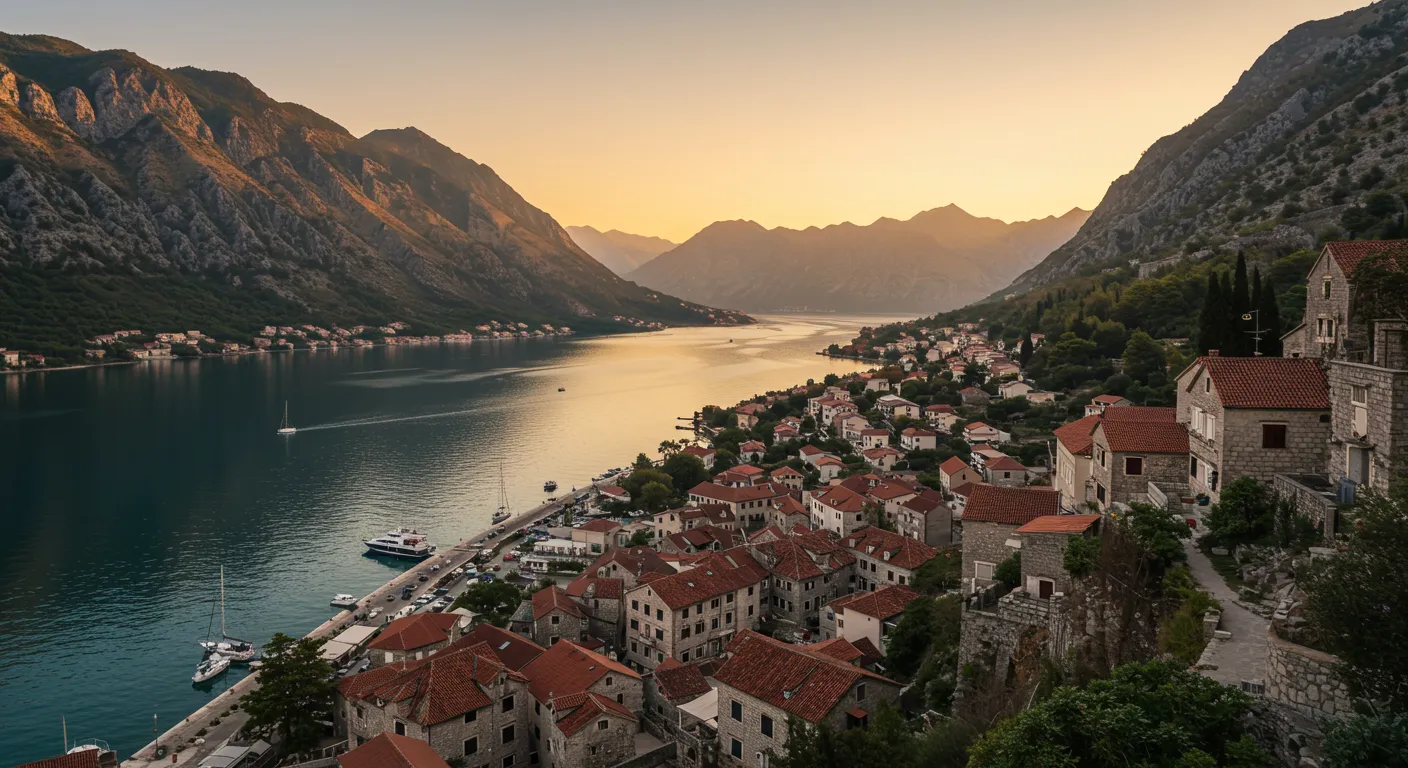
Black mountains plunge straight into the Adriatic

AI-generated hero image: Montenegro — Bay of Kotor at sunset with medieval villages clinging to dramatic

Photo by AI-Generated (Google Imagen)

Plan & Navigate

Quick Facts & Essentials

💰

Money & Costs

Currency: Euro (EUR, €). Montenegro uses the euro despite not being in the EU. ~1 EUR = 1.08 USD [ASSUMPTION: rate fluctuates]

Cards accepted in hotels, larger restaurants, and supermarkets in tourist towns (Kotor, Budva, Podgorica). Cash still rules at markets, small konobas, taxis, beach bars, and rural areas. ATMs are common in coastal towns but sparse in the mountains — carry cash before heading to Durmitor or remote villages. Watch for ATM operator fees; bank-branded machines (CKB, NLB) are safer than standalone ones. Tipping: round up or leave 10% in restaurants; not mandatory but appreciated.

Budget: Budget: €40-55/day (~$43-60) hostel/guesthouse, market food, buses. Mid-range: €80-130/day (~$86-140) private room or 3-star, restaurant meals, some taxis/tours. Luxury: €250+/day (~$270+) Boka Bay boutique hotels, yacht day trips, fine dining in Porto Montenegro.

🗣️

Language

Official: Montenegrin (official), mutually intelligible with Serbian, Croatian, and Bosnian. Serbian widely spoken; Albanian common in the south near Ulcinj. Both Latin and Cyrillic scripts appear — Latin dominates on the coast.

Low-to-moderate. English is solid in coastal tourist hubs (Kotor, Budva, Tivat) and among younger people. In the interior and with older locals, expect gaps — basic phrases and a translation app go a long way.

Useful: Zdravo (Hello), Hvala (Thank you), Molim (Please / You're welcome), Koliko košta? (How much does it cost?), Gdje je...? (Where is...?)

🚗

Getting Around

Renting a car is the honest best option — Montenegro is small but mountainous, and public transit doesn't reach the scenic spots (Durmitor, Lovćen, hidden Boka coves). Coastal towns are walkable and bus-connected, but to actually chase the views you'll want wheels. Roads are good on main routes but narrow and winding inland; the Kotor serpentines and Tara canyon roads test your nerve.

Rental car: The freedom pick. Essential for national parks, mountain villages, and sunrise/sunset spots. Book a small car — parking and narrow roads punish big vehicles. Bring an international driving permit to be safe. — €25-45/day; fuel ~€1.40-1.60/L [ASSUMPTION]

Intercity buses: Reliable and cheap between major towns (Kotor-Budva-Podgorica-Bar). Buy tickets at the station; some charge a small fee for stowed luggage. Good for backpackers without a car. — €3-10 for short hops; €8-15 longer routes

Taxis / ride apps: Use metered local taxi companies in towns or call ahead — avoid unmarked cars at ferry/bus terminals that overcharge. Apps like CarGo operate in Podgorica. Agree on price for longer trips. — €1.50-2 start, ~€1/km

Kotor-Lepetane ferry: Shortcut across Boka Bay that saves the long drive around the fjord — handy heading to/from Tivat airport or Luštica. — ~€4.50 per car [ASSUMPTION]

⚠️ Safety Note: One of Europe's safer destinations — violent crime against tourists is rare. The real risks are on the road: aggressive overtaking, hairpin mountain bends with no guardrails, and tunnels with poor lighting. Drive defensively and don't tackle the Kotor serpentines at night if you're tired. Coastal swimming is generally safe but some beaches are pebbly with sudden drop-offs — watch kids. Petty theft happens in crowded Budva nightlife areas; keep an eye on bags. Wildfire risk in dry summers can close roads — check locally. Tap water is safe to drink in most towns.

Getting There

Most visitors fly into Tivat or Podgorica, with Tivat closest to the coastal hotspots of Kotor and Budva. Many travellers also fly into Dubrovnik (Croatia) and drive across the border — it's often cheaper and better connected than Montenegro's own airports. Trains exist but are slow and limited; buses and cars are the realistic way to get around.

✈️ By Air

Tivat Airport (TIV)📍 8 km from Tivat, ~20 km from Kotor
Taxi to Kotor — 30 min, €15–€25Taxi to Budva — 40 min, €25–€35Local bus to Tivat town then onward bus — slow, under €5
Podgorica Airport (TGD)📍 11 km from Podgorica centre
Taxi to Podgorica centre — 15 min, €10–€15Taxi to Budva — 1h, €60–€70No direct public bus from terminal — walk to main road for local bus [ASSUMPTION]
Dubrovnik Airport (Croatia) (DBV)📍 20 km from Dubrovnik; ~1h30 to Kotor including border
Shuttle/transfer to Kotor — ~2h with border, €25–€40Rental car — most flexible for crossingTaxi cross-border — €70–€100

Tivat is heavily seasonal — many routes are summer-only (May–Sept) with strong low-cost carrier presence. Podgorica runs more year-round flights. Dubrovnik often has the widest international connections; factor in the Croatia–Montenegro land border.

🚗 By Car

From Dubrovnik, Croatia1h30–2h to Kotor (border dependent)

Croatia–Montenegro border crossing at Debeli Brijeg; queues can be long in summer. Coastal road is scenic but winding and slow. Confirm rental car cross-border permission and green card insurance.

From Podgorica1h to Budva via Sozina tunnel

Sozina tunnel toll ~€3.50. The Bar–Boljare motorway (first section) speeds up the Podgorica–north corridor. Mountain roads beyond require care.

Old towns (Kotor, Budva) are pedestrian-only — park outside the walls in paid lots (roughly €1–€2/hr, daily caps common). Kotor's lots fill fast in peak season; arrive early or use lots further out and walk in.

⛴️ By Sea

Port of KotorPrimarily a cruise ship port; no major scheduled passenger ferry lines [ASSUMPTION]

Cruise calls are heavy in summer and cause big crowd surges in the old town. Local water taxis and short Bay of Kotor crossings (e.g. Kamenari–Lepetane car ferry) operate within the bay.

🚌 By Bus / Coach

Kotor Bus StationBlue Line, Olimpia Express and regional carriers; international routes via Flixbus and partner lines

Frequent coastal connections: Budva ~40 min, Podgorica ~2h, Dubrovnik ~2h30 (border). Buy tickets at the counter or via getbybus.com / Flixbus.

Podgorica Bus StationNational and international coach operators; cross-border to Serbia, Croatia, Bosnia, Albania

Main hub for the interior and northern routes. Belgrade ~8–9h. Book popular long-distance routes ahead in summer.

🛂 Visa & Entry Requirements

Montenegro is visa-free for US, UK, and EU citizens for stays up to 90 days within a 180-day period — passport only, no fee. Montenegro is not in the Schengen Area, so this allowance is separate. Register with local authorities within 24 hours of arrival (hotels do this automatically). Montenegro is moving toward EU accession and the EU's ETIAS may eventually affect travel patterns — check current rules before booking, as entry policies can change.

💡 Arrival Tips

  • Montenegro uses the euro despite not being in the EU — no currency exchange needed for euro-zone travellers; carry small cash as card acceptance is patchy in smaller towns.
  • If flying into Dubrovnik, confirm your rental car company permits crossing into Montenegro — many require advance notice and a cross-border fee/green card.
  • Tivat taxis often lack meters — agree the fare before getting in, or pre-book a transfer to Kotor/Budva.
  • Avoid arriving mid-afternoon in peak summer on the coastal road — the Kotor bay and old-town parking get gridlocked; early morning or evening is smoother.
  • Don't assume trains are useful for the coast — the rail line serves Bar–Podgorica–Bijelo Polje toward Serbia, not the main resort towns; use buses or a car instead.

Safety & Accessibility

🛡️ General Safety

Montenegro is genuinely safe for travelers, with violent crime against tourists rare. The coastal towns (Kotor, Budva, Tivat) and the capital Podgorica are safe to walk day and night, though Budva's nightlife strip gets rowdy in peak summer. Petty crime is low but not absent — opportunistic theft happens in crowded Old Towns and on busy beaches. The bigger real-world risks here are road safety on mountain routes and water conditions, not crime.

⚠️ Common Risks

HIGH
Dangerous mountain driving on the Kotor-Lovcen serpentine road and roads through the Tara Canyon — narrow, no guardrails, blind hairpins, and locals overtaking aggressively

Drive slowly, use horn before blind bends, never overtake on hairpins, and avoid the old Kotor-Cetinje road if inexperienced. Consider hiring a driver for the serpentine sections.

MEDIUM
Beach and sea hazards — strong currents off some Budva-area and open Adriatic beaches, plus sea urchins on rocky shorelines around Kotor Bay and Sveti Stefan

Wear water shoes on rocky entries, heed any flag warnings, and swim near populated beaches. Sea urchin spines require careful removal — clinics handle this routinely.

LOW
Taxi overcharging and unmetered fares, especially at Tivat/Podgorica airports and Budva taxi ranks

Use app-based or radio taxi companies (e.g. local metered firms), agree a price before departure, or pre-book airport transfers. Insist on the meter.

MEDIUM
Summer sun and heat exposure on the coast and exposed hiking trails in Durmitor and Lovcen national parks

Carry water, start hikes early, use sun protection. Mountain weather changes fast — pack a layer even in summer.

🆘 Emergency Numbers

Police122112 also works as the unified EU emergency number. English not guaranteed but increasingly available in tourist areas.
Ambulance124112 connects to all services.
Fire123
Roadside/Mountain Rescue112Use 112 for mountain rescue and roadside emergencies.

🏥 Healthcare Access

Montenegro has public hospitals in Podgorica (the main Clinical Centre), Kotor, Bar and other towns, plus private clinics in coastal areas that are faster and more tourist-friendly. Public facilities can have long waits and limited English; private clinics are quicker but charge upfront. Tap water is generally safe in cities and the coast, but bottled is wise in rural mountain areas. No special vaccinations are required beyond routine ones. [ASSUMPTION] Standard EU-level care is available in towns but serious cases may require evacuation to a major center or abroad.

♿ Accessibility

Montenegro is challenging for wheelchair users and those with limited mobility. The headline attractions — Kotor and Budva Old Towns — are medieval, with cobblestones, steps, and narrow lanes that are largely inaccessible. Newer coastal promenades (parts of Budva, Tivat's Porto Montenegro) and modern hotels are far better. Mountain national parks are mostly unsuited to wheelchair access. Do not expect consistent step-free infrastructure outside purpose-built modern developments.

Step-Free Routes
  • Porto Montenegro waterfront promenade in Tivat — flat, modern, well-paved
  • Budva's seafront promenade (Slovenska Plaza area) outside the Old Town walls
Accessible Transit
  • Modern airport transfer vehicles and pre-booked accessible taxis [ASSUMPTION]
  • Some newer intercity coaches, though most public buses are not wheelchair-accessible
Sensory Considerations

Coastal Old Towns and Budva's beaches get extremely crowded and loud in July-August, with bars blasting music late into the night. Kotor's Old Town can feel overwhelming when multiple cruise ships dock simultaneously. Outside peak season and away from the coast, the mountains and inland towns are quiet and calm. Markets carry strong food and fish smells; construction is common in fast-developing coastal zones.

Travel Insurance

Comprehensive travel insurance is strongly recommended — Montenegro is not in the EU, so EHIC/GHIC cards do not apply, and private clinics expect upfront payment. If you plan adventure activities (rafting in Tara Canyon, hiking Durmitor, ziplining, watersports), confirm your policy covers them explicitly, as these are common here and exclusions are frequent. Ensure coverage includes medical evacuation given the remote mountain terrain.

When to Go

Januarylow crowds

Deep low season. The coast is mild but wet and many tourist businesses are shuttered, while the mountains deliver proper snow for ski touring. Kotor's old town is yours alone on the dry days.

🌤 Coast 10–13C (50–55F) and rainy; Zabljak below freezing with snow.

Best for: solo travellers · photographers · budget travellers
Season: Bura Wind Season

Bottom Line: Late May and September are the standout window — warm enough for sea swimming, cool enough for hiking Lovcen and Durmitor, and crowds are manageable. September edges ahead for photography thanks to clearer air, golden light on the Bay of Kotor, and still-warm water. Food is at its best in autumn when local produce and fresh seafood hit the markets.

Where to Stay

Montenegro packs wild price swings into a tiny country: the Bay of Kotor and Budva Riviera command Croatia-adjacent rates in July-August, while inland Cetinje, Podgorica, and the northern mountains stay genuinely cheap year-round. The best value is a self-catering apartment in a stone old town or a family guesthouse; the worst value is a generic beachfront resort during peak season. Book the coast 3-5 months ahead for summer — last-minute coastal availability in August is brutal and overpriced.

Luxury

Regent Porto MontenegroResort

Venetian-inspired five-star on the superyacht marina with two pools, a serious spa, and easy water-taxi access across the bay. Best for travellers who want polished service and a base for day-trips to Kotor and Perast without staying in a cramped old town.

💰 $300–$650 per night📍 Tivat, Porto Montenegro marina
Book 3-4 months ahead for summer; shoulder season (May, late Sept) drops rates 30-40%. Direct booking often includes breakfast and spa credits over OTAs.
Hotel HippocampusBoutique Hotel

Restored palazzo inside Kotor's UNESCO walls — you wake up steps from the bay and the fortress trail. Suits photographers who want blue-hour shots of the old town without a commute. [ASSUMPTION] Some rooms have limited natural light due to historic stone construction.

💰 $220–$420 per night📍 Kotor Old Town
Old-town properties book out fastest; reserve 4+ months for July-August. Note cruise-ship day crowds — quiet returns by evening.

Mid-Range

Palazzo DruskoGuesthouse

Antique-filled rooms in a genuine medieval building, run by a hospitable family who pour homemade rakija on arrival. Excellent value for an in-the-walls location; ideal for couples wanting character over chain polish.

💰 $90–$160 per night📍 Kotor Old Town
Small property, fills early — book 3 months ahead for summer. Direct email sometimes beats OTA rates.
Hotel SoaHotel

Modern alpine-style hotel near Black Lake and the Durmitor trails — a smart base for the mountainous north when the coast is overheated and overpriced. Best for hikers and anyone chasing the Tara Canyon and rafting.

💰 $70–$130 per night📍 Žabljak, Durmitor National Park
Mountain season peaks July-August and around winter skiing; book 6-8 weeks ahead. Coast-priced gouging doesn't apply up here.

Budget

Old Town Hostel KotorHostel

Lively, well-run hostel inside the walls with a stone-vaulted bar and organised hikes up to the fortress. Best for solo travellers and the social backpacker crowd.

💰 $18–$35 per dorm bed📍 Kotor Old Town
Cheap beds vanish fast in summer — book 1-2 months ahead. Private rooms available but jump to mid-range pricing in peak.
Montenegro Hostel B&B BudvaHostel

Central, cheap, and walkable to the beach and nightlife — Budva is the party hub and this puts you in the middle of it. Suits younger travellers who prioritise location over quiet.

💰 $15–$30 per dorm bed📍 Budva Old Town
Budva is loud in summer; light sleepers should look elsewhere. Book a few weeks ahead for July-August.

Unique Stays

Stone houses of Gornja LastvaVilla

Restored 19th-century stone village houses in a near-abandoned hillside hamlet with sweeping bay views and total quiet — a world away from the marina below. For travellers wanting authenticity, stars at night, and golden-hour panoramas. [ASSUMPTION] Specific rentals vary by season; search the village name on rental platforms.

💰 $110–$220 per night📍 Gornja Lastva, above Tivat
Limited inventory and a car strongly recommended. Book 2-3 months ahead for summer; these go to repeat guests.
Eco Resort Čarapića MliniResort

Watermill-and-river eco retreat with traditional Montenegrin cooking and waterfall scenery, away from coastal crowds. Best for those exploring the interior and wanting a rural, table-to-fork experience. [ASSUMPTION] Exact amenities vary seasonally.

💰 $90–$170 per night📍 near Podgorica / Cijevna river area
Rural location needs a car. Quieter shoulder seasons offer best availability and rates.

Booking Tips

For the coast, book 3-5 months ahead for July-August — availability collapses and prices spike hard, while May and late September deliver the same weather for 30-40% less. Booking.com dominates Montenegro inventory and is the practical default, but small old-town guesthouses often give better rates by direct email. The mistake most visitors make is assuming the whole country is summer-priced: the northern mountains (Durmitor, Tara) and inland towns stay cheap and uncrowded year-round, so split your trip rather than overpaying for a beach base. If you want a stone old-town room in Kotor or Budva, treat it as the first thing you lock in — those sell out long before the surrounding modern hotels.

What to Experience

★★★★★ Bay of Kotor

natural wonderviewpoint

A dramatic fjord-like bay ringed by limestone mountains and medieval towns, and it absolutely earns the hype. The light bouncing off the water at the right hour is the reason photographers keep coming back. Not overrated, but the town of Kotor itself can feel cramped at peak.

🕐 Best Time: Early morning or golden hour; the low sun rakes across the water and avoids midday haze.

💡 Insider Tip: Drive the Kotor Serpentine (Kotor–Lovcen old road) up to around the 25th switchback for the classic aerial bay shot without paying the fortress entry fee.

💰 Fees: Free (the bay and viewpoints); driving costs fuel

🎟️ Booking: None

★★★★★ Kotor Old Town & City Walls

historical landmarkcultural landmark

A walled Venetian-era old town with marble streets, churches, and a steep wall climb to San Giovanni Fortress. The climb is genuinely worth it for the bay panorama. Cruise-ship days turn the lanes into a crush, so timing matters.

🕐 Best Time: Sunrise for the wall climb; blue hour for the lit ramparts from across the bay.

💡 Insider Tip: Start the fortress climb before 8am to beat both the heat and the ticket booth — early access is sometimes free or unstaffed [ASSUMPTION]. Bring water; there's little shade.

💰 Fees: City walls approx 8 EUR; old town free to enter

🎟️ Booking: None

★★★★ Sveti Stefan

historical landmarkviewpoint

An iconic islet of stone villas connected to the mainland by a causeway, now a private luxury resort. You can't walk onto the island without being a guest, which surprises many visitors — it's a view, not an experience. Still one of Montenegro's most photographed spots.

🕐 Best Time: Golden hour from the upper viewpoint, when warm light hits the red rooftops.

💡 Insider Tip: Shoot from the elevated viewpoint on the main road north of the island, or from Praskvica path above. Skip paying for beach access just to get closer — the postcard angle is from above.

💰 Fees: Free to view; island access guests only

🎟️ Booking: None

★★★★★ Durmitor National Park & Black Lake

national parknatural wonder

A high-altitude wonderland of glacial lakes, pine forest, and limestone peaks near Zabljak. The Black Lake (Crno Jezero) loop is an easy walk with serious reward, while the surrounding peaks offer real hikes. A different Montenegro from the coast and well worth the drive inland.

🕐 Best Time: Late spring to early autumn; mornings are calmest for lake reflections.

💡 Insider Tip: Combine the visit with the Tara Canyon and the Durdevica Tara Bridge on the way — golden morning light makes the canyon depth pop.

💰 Fees: Park entry approx 3 EUR

🎟️ Booking: None

★★★★ Ostrog Monastery

religious sitehistorical landmark

A Serbian Orthodox monastery carved dramatically into a vertical cliff face, an important pilgrimage site. The architecture-into-rock effect is striking and unlike anything else in the country. Expect pilgrims and a modest dress code; it's a working religious site, not a tourist attraction.

🕐 Best Time: Mid-morning when sun lights the white facade against the dark cliff.

💡 Insider Tip: Park at the lower monastery and walk the path up rather than driving the narrow upper road if you're nervous behind the wheel. Cover shoulders and knees.

💰 Fees: Free (donations welcome)

🎟️ Booking: None

★★★★ Lake Skadar National Park

national parkviewpoint

The largest lake in the Balkans, full of birdlife, water lilies, and tiny island monasteries. Boat trips from Virpazar or Rijeka Crnojevica are relaxed and underrated. The famous horseshoe river bend viewpoint is one of Montenegro's best-kept secrets.

🕐 Best Time: Late spring for blooming water lilies; early morning for mist and calm water.

💡 Insider Tip: Head to the Pavlova Strana viewpoint above Rijeka Crnojevica for the sweeping river-meander shot — far fewer people than the coast and excellent in soft morning light.

💰 Fees: Park entry approx 4 EUR; boat tours from approx 15 EUR

🎟️ Booking: Book boat tour 1 day ahead in peak season

★★★★ Old Town Perast & Our Lady of the Rocks

cultural landmarkreligious site

A tiny baroque waterfront town with no real beach but gorgeous palazzos, plus a short boat ride to an artificial islet church. Calmer and more elegant than Kotor, and a favorite for photographers who want symmetry and stillness. A genuine alternative to the busier bay towns.

🕐 Best Time: Early morning for glassy water reflections and quiet streets.

💡 Insider Tip: Catch the first boat to the islet for empty interiors, then shoot Perast's bell towers from the water on the return.

💰 Fees: Boat to islet approx 5 EUR; church entry small fee

🎟️ Booking: None

★★★☆☆ Budva Old Town

historical landmarkbeach

A compact walled medieval town on the Adriatic, surrounded by the country's busiest beach-resort strip. The old town is charming but small and gets mobbed; the surrounding nightlife-and-development sprawl is, frankly, overrated. Good for a half-day, not a base.

🕐 Best Time: Sunset from the citadel walls; avoid midday crowds in July–August.

💡 Insider Tip: Climb to the Citadel for the rooftop-and-sea view, then leave the resort zone for quieter coastal villages. Sunset from the old town walls beats the packed beaches.

💰 Fees: Citadel approx 5 EUR; old town free

🎟️ Booking: None

Day Trips from Montenegro

⏱️ Time: Full day

Highlights: Fjord-like bay framed by limestone mountains, the walled Old Town of Kotor, and a brutal but rewarding climb up the city walls to San Giovanni fortress for the classic aerial bay shot. Perast adds Baroque waterfront and the man-made island church of Our Lady of the Rocks, reachable by short boat.

Cruise ships pack the Old Town midday — shoot the fortress climb at sunrise or late afternoon to dodge crowds and heat. Wear real shoes for the 1,350 steps. Boat to the island runs frequently in season.

⏱️ Time: Full day

Highlights: High-alpine landscape of glacial lakes, pine forest, and jagged peaks. The Black Lake (Crno Jezero) offers an easy reflective loop walk; the drive in via the Tara Canyon — Europe's deepest — and the Đurđevića Tara bridge is the real show.

Best June–October; mountain roads can be snow-bound in winter. The full loop is a long day from the coast — consider an overnight if you want serious hikes. [ASSUMPTION] Park entrance fee applies at Black Lake.

⏱️ Time: Half day

Highlights: The old Kotor–Cetinje switchback road delivers Montenegro's most dramatic bay panorama from above. At the top, climb 461 steps to the Njegoš Mausoleum for a 360-degree view across to the Adriatic and inland mountains.

The serpentine road is narrow and not for nervous drivers — go early to avoid oncoming traffic. Combine with Cetinje for a fuller day. [ASSUMPTION] Mausoleum has a small entry fee and seasonal hours.

⏱️ Time: Half day

Highlights: Sveti Stefan is the postcard islet-resort — terracotta roofs on a tied island, best shot from the public viewpoint above the access road. Budva offers a compact medieval Old Town and beach scene.

The islet itself is a private resort — you photograph it, you don't walk it unless you're a guest. Budva is busy and a bit overrated for nightlife; come for the viewpoint and Old Town, not the party. Viewpoint is free.

⏱️ Time: Half day

Highlights: Montenegro's historic capital, a low-key town of former embassies, monasteries, and museums. Cetinje Monastery and the National Museum give cultural depth missing from the coastal resorts.

A good rainy-day or culture-focused pairing with Lovćen, which sits on the same road. Quieter and more authentic than the coast. Some museums close on Mondays [ASSUMPTION].

⏱️ Time: Full day

Highlights: A whitewashed monastery built dramatically into a vertical cliff face — one of the most striking religious sites in the Balkans and a major Orthodox pilgrimage destination.

Modest dress required (covered shoulders and knees). The upper monastery road is steep and gets congested with pilgrims, especially weekends and feast days. Free to visit; arrive early for parking and quiet.

⏱️ Time: Full day

Highlights: The walled city of Dubrovnik — marble streets, the famous city walls walk, and sweeping Adriatic views. A blockbuster day trip across the border for those wanting an extra UNESCO town.

Border queues can be brutal in peak summer — start early and carry your passport. Walls walk requires a paid ticket; book ahead in season. Heavily touristed and pricey — go for the walls at opening, not midday.

Scenic Routes

Kotor to Lovcen Serpentine Road (Old Kotor Road)

📏 Approx 40km / 1.5hr drive (slow, technical)

  • 25-plus hairpin switchbacks climbing the wall above Kotor, with the bay opening up beneath you at every turn
  • The famous panoramic viewpoint over Kotor's fjord-like bay, best shot in late afternoon golden light
  • Stops in Njegusi village for traditional smoked ham (prsut) and cheese

Bay of Kotor Coastal Drive

📏 Approx 43km / 1hr+ drive without stops

  • Hugs the waterline past Perast, Risan, and the twin islets of Our Lady of the Rocks and St George
  • Boat hop to Our Lady of the Rocks for the church and votive paintings
  • Quiet stone villages and reflective water that make for mirror-calm morning photos

Durmitor Ring Road (Sedlo Pass)

📏 Approx 80km / 3hr loop with stops

  • High alpine peaks, glacial lakes, and the dramatic Sedlo Pass at over 1900m
  • Black Lake (Crno jezero) base for easy walks and reflections of the surrounding pines
  • Open meadows and remote mountain scenery far from the coastal crowds

Tara Canyon and Djurdjevica Tara Bridge

📏 Approx 70km / 2hr drive

  • Europe's deepest canyon, plunging up to 1300m, lined with forested cliffs
  • The arched concrete Djurdjevica Tara Bridge, a classic photo stop with a zipline across the gorge
  • Turquoise river water that pops in midday sun, plus rafting put-in points

Kotor City Walls Walk

📏 Approx 1350 steps / 1.5-2hr round trip

  • Steep stone staircase climbing 260m above the rooftops for the definitive Kotor bay panorama
  • Church of Our Lady of Remedy roughly halfway up as a rest and photo stop
  • Top fortress ruins delivering the postcard shot, best at sunrise to beat heat and crowds

Sveti Stefan Coastal Promenade Walk

📏 Approx 3-5km / 1-2hr easy walk

  • The iconic fortified islet of Sveti Stefan framed by pink beaches, the most photographed spot on the Montenegrin coast
  • Shaded pine-lined paths connecting small coves and swimming spots
  • Late-day light that warms the islet's stone roofs for golden hour shots

Street Art in Montenegro

Montenegro is not a heavyweight street art destination the way Lisbon or Belgrade are, but a real, growing scene exists, concentrated in the capital Podgorica and increasingly in coastal towns. Podgorica's reconstruction history and large blank socialist-era facades have made it a canvas for festival-driven murals and political stencils. The country also hosts occasional mural festivals that bring in regional Balkan artists, so the quality is higher than the quantity suggests. [ASSUMPTION] Expect a compact scene you can cover in a half-day rather than a multi-day crawl.

🗺️ Route: Start in central Podgorica around Hercegovacka pedestrian street, end near the Moraca riverbank and Stara Varos old quarter. Roughly 2.5–3 km, 2–3 hours on foot. Fully walkable and transit-friendly from the bus/train hub. Best in late afternoon golden hour when low sun rakes across the larger facades.

★★★★ Hercegovacka Street area

CommissionedPHOTOEASY WALKTRANSIT-FRIENDLYGOLDEN HOUR

Podgorica's pedestrian core and surrounding blocks carry the densest cluster of commissioned murals and smaller pieces, plus cafe-wall art. Good entry point and easy to combine with food stops.

🎨 Artists: Mix of regional Balkan muralists; many Unknown

📍 Location: Hercegovacka, central Podgorica

🕐 Best time: Late afternoon golden hour

★★★★ Blok V and residential facades

SanctionedPHOTOICONICTRANSIT-FRIENDLY

Large socialist-era apartment blocks here have hosted festival murals on full building gables. These are the scene's signature big-format works and read best from a distance for scale.

🎨 Artists: Festival-invited regional artists; [ASSUMPTION] some Unknown

📍 Location: Blok V district, west-central Podgorica

🕐 Best time: Morning to midday when sun hits the gable faces

★★★☆☆ Stara Varos (Old Town)

UnsanctionedPHOTOHIDDEN GEMBLUE HOUR

The Ottoman-era old quarter mixes crumbling plaster, stencils, and tags with the clock tower and old mosques. Texture-rich backdrops rather than headline murals; good for layered, gritty frames.

🎨 Artists: Unknown / local writers

📍 Location: Stara Varos, east bank of the Ribnica

🕐 Best time: Blue hour for moody contrast

★★★☆☆ Moraca riverbank underpasses

UnknownPHOTONIGHT SHOOTFREE

Bridge underpasses and embankment walls along the Moraca collect rotating graffiti and the occasional commissioned panel. Honest, fast-changing work; useful for moody river-and-concrete shots.

🎨 Artists: Unknown

📍 Location: Moraca riverbank near Millennium Bridge

🕐 Best time: Late afternoon into blue hour

★★☆☆☆ Kotor and coastal towns

UnknownCROWD WARNINGPHOTOSEASONAL

The walled coastal towns are heritage-protected so genuine street art is sparse inside the walls; look to outskirts, tunnels, and newer towns like Budva for small pieces. Worth a glance only if you're already on the coast.

🎨 Artists: Unknown

📍 Location: Outskirts of Kotor and Budva

🕐 Best time: Morning before crowds

💎 Hidden Gems

Most visitors stick to Kotor and the coast and never see Podgorica's murals at all, which is exactly why the capital is the move for street art. The Stara Varos backstreets and Moraca underpasses reward anyone willing to wander off the cafe strip, and the big Blok V gables are essentially ignored by tourists. If a mural festival is running during your visit, fresh work appears fast, so ask local cafe owners what went up recently.

📋 Practical Notes

Podgorica is safe and walkable; normal city awareness applies and the underpass and riverbank areas are best shot before full dark. Etiquette: ask before photographing people and respect that residential-block murals are people's homes. Rotation is moderate, festival pieces last years while underpass tags change often. Organized street art tours are essentially nonexistent, so self-guide; a local creative or hostel staffer is your best source for current spots. [ASSUMPTION]

Cultural Significance

Montenegro punches far above its size culturally — a small Balkan nation where Orthodox Christianity, Ottoman and Venetian legacies, and a fierce mountain warrior ethos collide. Its identity was forged in the rugged Dinaric highlands, where clans resisted empires for centuries, and refined along an Adriatic coast shaped by Venice. The result is a place that feels both stubbornly local and richly cross-pollinated.

The Old Royal Capital of Cetinje and Montenegrin Statehood15th century–present

Cetinje was the seat of the prince-bishops (vladikas) who ruled Montenegro as a theocratic state, and it remains the symbolic heart of national identity and independence. Montenegro is one of the few Balkan territories never fully subjugated by the Ottomans, a fact central to how Montenegrins see themselves.

Wander Cetinje's old embassy quarter and small museums; understanding it as the cradle of statehood reframes the whole country. The town hosts cultural events tied to national heritage.
Njegoš and the Epic Poetry Tradition19th century, rooted in older oral tradition

Petar II Petrović-Njegoš, prince-bishop and poet, wrote 'The Mountain Wreath,' a foundational work of South Slavic literature. The oral epic tradition — long narrative poems sung to the gusle, a single-stringed bowed instrument — carried history, honour codes, and identity through illiterate centuries.

The gusle is still played at gatherings and festivals; hearing it live is rare and worth seeking. Njegoš's mausoleum sits atop Mount Lovćen, a pilgrimage of national meaning.
Orthodox Monasteries and the Ostrog Pilgrimage17th century–present

Montenegrin Orthodox spirituality is deeply tied to dramatic mountain monasteries. Ostrog, carved into a sheer cliff, draws pilgrims of multiple faiths and is one of the most visited Christian sites in the Balkans, symbolising endurance and devotion.

Pilgrims and tourists alike visit Ostrog; modest dress is essential. Smaller monasteries around Lake Skadar and the coast offer quieter encounters with living monastic life.
Venetian Coastal Heritage of the Bay of Kotor15th–18th century

The Adriatic coast bears centuries of Venetian rule, visible in stone towns, maritime guilds, and seafaring traditions. Perast and the Bay of Kotor reflect a Mediterranean Catholic culture distinct from the Orthodox highlands — Montenegro's dual face.

The Boka Navy (Bokeljska Mornarica), a maritime fraternity dating back centuries, still performs ceremonial dances in traditional dress on feast days. [ASSUMPTION] Check local calendars around late spring and summer saints' days.
Montenegrin Food Culture: Njeguši and the Mountain TableLiving tradition

Food traces the country's split geography — Adriatic seafood and olive oil on the coast, smoked meats and cheese in the highlands. The village of Njeguši is famed for air-dried prosciutto (pršut) and cheese, cured in the specific microclimate where coast meets mountain.

Stop in Njeguši for pršut and cheese tastings; on the coast, try fresh fish and black risotto. Rakija (fruit brandy) is offered as hospitality and refusing it outright can read as rude.
Contemporary Festivals and Coastal Cultural Life1980s–present

Montenegro's modern cultural scene blends Mediterranean leisure with revived local traditions. Summer brings open-air theatre, music, and town festivals that animate medieval squares, while a young arts scene grows in Podgorica and Kotor.

Kotor's summer festivals and the offbeat Kotor cat tradition (cats are a beloved local symbol) animate the old town. Town squares double as evening social hubs — the korzo stroll is a living ritual.

Living Culture

Cultural life in Montenegro is intensely social and seasonal. In summer, coastal towns like Kotor, Budva, and Herceg Novi fill with open-air concerts, theatre festivals, and the nightly korzo — the communal evening stroll where generations mix in the squares. The gusle and epic poetry survive at family gatherings, slava (saint's day) celebrations, and cultural events, keeping an oral tradition alive that predates the printing press. Podgorica, the modern capital, hosts a quieter but growing scene of galleries, cafés, and contemporary music.

Visitor Respect

At Orthodox monasteries and churches, especially Ostrog, dress modestly — covered shoulders and knees for everyone, and women may want a scarf. Ask before photographing inside churches and during religious ceremonies; many forbid it. When offered rakija, coffee, or food in someone's home, accepting even a little is a sign of respect. Be sensitive discussing identity and politics — questions of Montenegrin versus Serbian identity, the Orthodox church split, and the Yugoslav wars are genuinely contested and best approached with listening, not opinions.

Eat & Drink

Montenegrin food splits cleanly along its geography: the coast leans Mediterranean and Italian-influenced, with fresh Adriatic seafood, olive oil, and buzara-style mussels, while the mountainous interior goes hearty and meat-heavy with smoked Njeguski prosciutto, lamb cooked under the sajthe bell, and dense cheeses. The Skadar Lake region adds freshwater carp and eel to the mix. It's a small country, so quality varies wildly between tourist-trap konobas and genuine family-run spots.

Coffee, Cafés & Bakeries

Forza Cafe

Café

Specialty: reliable espresso and a lively local crowd

📍 Budva, near the marina

Go mid-morning to people-watch with a strong macchiato.

Cafe Pjaca

Café

Specialty: classic square-side coffee in a stone old-town setting

📍 Kotor Old Town, main square

Touristy but the location is unbeatable for a slow break.

Caffe Bar Pinnochio

Café

Specialty: casual coffee and cake near the waterfront

📍 Herceg Novi, old town

Quiet morning spot before the cruise crowds arrive.

Gusti Mora

Café

Specialty: seafront coffee with Adriatic views

📍 Petrovac promenade

Best at sunset with a coffee or local rakija.

Pekara Marija

Bakery

Specialty: burek, sirnica, fresh bread

📍 Podgorica, central

Go early; burek sells out by late morning.

Pekara Kalce

Bakery

Specialty: krofne (doughnuts) and savory pastries

📍 Budva, near the bus station

Convenient grab-and-go for transit days.

Breakfast & Brunch

Pekara Vukovic

BakeryBreakfast

Specialty: cheese pies and breakfast pastries

📍 Kotor, outside the old town walls

Cheap, fast breakfast before climbing the fortress trail.

Lunch

★★★★ Konoba Badanj

Specialty: lamb under the sac, smoked prosciutto, mountain cheese

📍 near Cetinje, rural Njegusi road

Traditional interior fare; call ahead so the lamb is ready when you arrive.

Konoba Akustik

Vegetarian

Specialty: grilled vegetables, fresh salads, cheese plates

📍 Kotor Old Town

One of the more reliably veg-friendly konobas on the coast.

Lupo di Mare

VegetarianVegan

Specialty: Mediterranean pasta and vegetable dishes

📍 Budva, Slovenska plaza area

[ASSUMPTION] Italian menu makes plant-based ordering easy.

Dinner

★★★★★ Konoba Catovica Mlini

Specialty: fresh trout, seafood, lamb in a converted watermill

📍 Morinj, Kotor Bay (near the old mill stream)

Book ahead in summer; ask for a table by the water. Worth the drive from Kotor.

★★★★★ Galion

Specialty: grilled Adriatic fish, oysters, seafood platters with bay views

📍 Kotor, Suranj waterfront below the old town walls

Upscale and pricey; sunset tables face the fjord. Reserve for golden hour.

★★★★ Konoba Akustik

Vegetarian

Specialty: vegetable-forward Mediterranean plates, grilled veg, local cheese

📍 Kotor Old Town, near the clock tower

Cozy stone interior, good for plant-based eaters in a meat-heavy region.

★★★☆☆ The Old House Restaurant

Vegan

Specialty: lake fish, vegan-adaptable salads and grilled vegetables

📍 Virpazar, Skadar Lake

[ASSUMPTION] Ask about vegan options; lakeside setting good after a boat tour.

Pod Volat

Vegan

Specialty: grilled veg, ajvar, kajmak and traditional sides done meat-free

📍 Podgorica, old town near the clock tower

[ASSUMPTION] Many sides are naturally vegan; ask the staff.

Budget Eating Strategy

Eat burek and sirnica from local pekaras (bakeries) for 1-2 EUR instead of sit-down breakfasts.

Head inland or to konobas away from the old town squares; coastal tourist spots inflate prices 30-50%.

Order the daily fixed lunch or grilled fish 'by the kilo' at family konobas, and split large meat platters which easily feed two.

Shop

Montenegro's shopping is small-scale and craft-driven — think Old Town artisan stalls, mountain village producers, and honest local goods rather than glossy retail. Shoppers who love hand-made textiles, regional spirits, and Adriatic-coast craft over branded merchandise will do best here.

Markets

Kotor Old Town Market (Pjaca od salate)Mixed

Beyond produce, look for Njeguši-region dried goods stalls, local honey, lavender products, and handmade soaps from Boka Bay sellers.

🕐 Daily, roughly 7am–2pm (busiest Sat morning)📍 Outside the main gate of Kotor's Old Town, by the city walls
Green Market (Zelena pijaca), PodgoricaMixed

Non-food finds here include rakija in reused bottles, local honey, dried herbs, woolen socks and basic handicrafts sold by rural vendors.

🕐 Daily, roughly 6am–3pm📍 City center, Podgorica
Budva Old Town Craft StallsCraft

Hand-painted ceramics, filigree silver jewelry, and lace — but quality varies wildly, so inspect closely.

🕐 Daily in season, roughly 10am–10pm (reduced in winter)📍 Lanes inside Budva's walled Old Town

Shopping Districts

Cetinje historic center

The old royal capital with small artisan workshops and a slower, authentic feel — far less touristy than the coast.

Look for traditional crafts, regional honey and rakija, and items tied to Montenegrin heritage near the museums and main street Njegoševa.

Kotor Old Town lanes

Stone-paved maze of small shops mixing genuine artisan studios with cruise-day souvenir stalls.

Seek out independent jewelers doing filigree work, lavender and natural-cosmetics shops, and small galleries; skip the magnet-and-keychain windows.

Porto Montenegro, Tivat

Polished marina retail with international luxury brands and designer boutiques aimed at yacht visitors.

High-end fashion, watches, and waterfront concept stores — pleasant to walk but offers nothing locally specific to buy.

What to Buy

Njeguši region products (dried meat is food — buy the honey, brandy, and woolens instead)

The Njeguši highlands are Montenegro's most famous artisan-producer area; honey and homemade rakija from here are genuinely high quality.

📍 Roadside stalls on the Kotor–Cetinje serpentine road, Cetinje shops, Kotor market.💰 $8–$25
Rakija (fruit brandy)

Homemade lozovača (grape) and kruška (pear) rakija is a national staple and far better value than imported spirits.

📍 Village stalls, Cetinje, Podgorica Green Market, family producers.💰 $6–$20 per bottle
Filigree silver jewelry

Traditional Balkan filigree metalwork is a regional craft, and a few Kotor and Cetinje jewelers still make it by hand.

📍 Independent jewelers in Kotor Old Town and Cetinje.💰 $25–$150+
Lavender and natural cosmetics

The Adriatic climate supports lavender and herb growing; soaps, oils, and sachets make light, genuine gifts.

📍 Kotor Old Town shops, coastal markets, herb stalls.💰 $4–$20
Handmade woolen socks and knitwear

Rural mountain women still hand-knit thick wool socks and items — practical, durable, and authentically local.

📍 Podgorica Green Market, Cetinje, village roadside vendors.💰 $5–$20
Olive oil from the Bar/Ulcinj region

Southern Montenegro has ancient olive groves (including one of Europe's oldest trees), and small producers sell excellent oil.

📍 Bar and Ulcinj area producers, local markets.💰 $10–$30 per bottle

Shopping Tips

Cash is king outside Porto Montenegro and big-town shops — bring euros (Montenegro uses the euro despite not being in the EU). Markets run mornings, so arrive by 8–9am for the best selection and to dodge midday cruise crowds in Kotor; many craft stalls don't open until late morning. Light bargaining is acceptable on craft and non-food market goods but not on produce or in fixed shops. The thing most visitors miss: the genuinely good stuff is inland — Cetinje and the Njeguši road — not the coastal Old Town stalls where prices double and goods are often imported.

See Through the Lens

Sveti Stefan Viewpoint

Best: golden hour 6:45–7:45pm Jun, 4:00–4:45pm Dec; sunset light hits the west-facing roofs warmly. Also strong at sunrise 5:20am Jun, 7:10am Dec for soft side light and zero crowds

Kotor Old Town from the Fortress Walls

Best: sunrise 5:15am Jun, 7:05am Dec — climb starts ~45 min before to be in position; light is soft and the town is shaded then sidelit. Blue hour 8:45pm Jun, 5:15pm Dec for town lights vs deep blue bay

Our Lady of the Rocks, Perast

Best: sunrise 5:20am Jun, 7:10am Dec — calmest water and warm light on the dome before boat wakes ripple the bay. Avoid midday glare entirely

Black Lake (Crno Jezero), Durmitor

Best: sunrise 5:10am Jun, 7:00am Dec for windless mirror reflections; golden hour 6:30–7:30pm Jun lights the peaks. Midday is fine here too thanks to altitude haze being low

Tara Canyon & Đurđevića Tara Bridge

Best: sunrise to mid-morning 6:00–9:00am Jun for mist in the canyon and side-lit bridge; golden hour 6:30–7:30pm Jun for warm light on the arches. Winter dawn ~7:15am with frost

Old Bar (Stari Bar) Ruins

Best: golden hour 6:45–7:45pm Jun, 4:00–4:45pm Dec — low warm light rakes across the stone textures. Early opening also good; harsh midday flattens the ruins

Mala Crna Gora & the Sedlo Pass Road

Best: golden hour 6:00–7:30pm Jun for long shadows across the ridges; sunrise 5:15am Jun for cold blue mountain light and low cloud. Best Jun–Sep — snowbound otherwise

Seasonal light in Montenegro swings hard with its latitude (~42°N) and its split geography. On the coast — Kotor, Budva, Sveti Stefan — June gives you sunrises around 5:15am and sunsets near 8:30pm, so dawn shoots are punishingly early but the long golden hours are generous. December compresses everything: sunrise near 7:10am, sunset around 4:30pm, meaning a single well-planned afternoon can catch golden hour and blue hour back to back. The Adriatic haze softens summer light and adds atmosphere at dawn; clearer, crisper light arrives in spring and autumn (Apr–May, Sep–Oct), which are the sweet-spot months — fewer crowds, calmer bay water for reflections, and dramatic skies. Inland Durmitor runs colder and clearer, with frequent dawn mist in the canyons and a real winter snow season that closes high passes roughly Nov–Apr.

Plan Your Days

Suggested Itinerary

Generated with this Montenegro guide — use it as a starting point for your own Itinerary.

How Long Do You Need?

Montenegro packs fjords, monasteries and alpine lakes into a country smaller than Connecticut — if you only have one day, base yourself in the Bay of Kotor and climb the Kotor City Walls at first light. The single top recommendation: be on the fortress walls for sunrise over the bay.

Day 1 — Kotor Walls at Dawn & the Bay

Morning: Be at the City Walls trailhead in Kotor Old Town by 4:30am (Jun) to start the climb ~45 min before the 5:15am sunrise. Shoot from the fortress as soft light sidelights the town. Descend by 7:30am, refuel with burek and coffee in the Old Town, then explore the squares and St Tryphon Cathedral while crowds are thin.

Afternoon: After lunch, drive or take the bus 12km north along the bay to Perast (~25 min). Walk the waterfront, then catch a short boat (€5 return) to Our Lady of the Rocks. Explore the island church and museum in the early afternoon, accepting some glare — you return at dawn tomorrow for the best light.

Evening: Dinner in Perast at Conte with fresh seafood on the water, or return to Kotor Old Town. Stay back on the fortress walls or the bay edge for blue hour at 8:45pm (Jun) when town lights glow against the deep blue bay.

📷 Photo Prime Time: Kotor Old Town from the Fortress Walls — sunrise 5:15am Jun (start the climb ~4:30am). Frame the red rooftops with the switchback wall leading the eye down to the bay; expose for the sky as the town is still shaded then sidelit. [NEXTPIC]
Day 2 — Perast Dawn & the Budva Riviera

Morning: Return to Perast for the 5:20am (Jun) sunrise boat or shoot Our Lady of the Rocks from the waterfront with a long lens before boat wakes ripple the bay. Calmest water and warm light hits the dome. Linger over breakfast in Perast, then drive south toward Budva (~40 min).

Afternoon: Explore Budva Old Town (Stari Grad) — the citadel, narrow lanes and sea-facing ramparts. It's the most touristy stop, so treat it as a walkthrough rather than a half-day. Mid-afternoon, continue 10 min south to the Sveti Stefan area and scout the viewpoint above the causeway.

Evening: Position at the Sveti Stefan Viewpoint for golden hour 6:45–7:45pm (Jun). Dinner afterward in Sveti Stefan village or back in Budva at Jadran for grilled fish.

📷 Photo Prime Time: Sveti Stefan Viewpoint — golden hour 6:45–7:45pm Jun. Shoot from the elevated road viewpoint as sunset light warms the west-facing terracotta roofs; use the curving causeway as a leading line into the islet. [NEXTPIC]
Day 3 — Old Bar Ruins & the Southern Coast

Morning: Drive south from Budva to Old Town Bar / Stari Bar (~50 min). Arrive at opening to walk the ruined fortress town in soft early light, exploring the aqueduct, hammam and ramparts before any heat. The textures read best at the edges of the day.

Afternoon: Have a long lunch in modern Bar or a konoba near Stari Bar, then drive back north, breaking the journey at a quiet beach. Time your return so you reach Old Bar ruins again before evening, or stay nearby if you want maximum golden light.

Evening: Be back among the Old Bar ruins for golden hour 6:45–7:45pm (Jun) — avoid midday, which flattens the stone. Dinner at a family konoba in Stari Bar with local olive oil and lamb.

📷 Photo Prime Time: Old Bar (Stari Bar) Ruins — golden hour 6:45–7:45pm Jun. Position so the low warm light rakes across the rough stone walls to maximize texture; shoot a doorway or arch with the mountains behind.
Day 4 — Ostrog Monastery & Lake Skadar

Morning: Early start inland toward Ostrog Monastery (~2 hrs from the coast). Visit the upper monastery built into the cliff before tour buses peak — go early and dress modestly. The white facade against the rock is the shot. [ASSUMPTION] Allow ~1.5 hrs on site.

Afternoon: Drive south to Lake Skadar National Park (~1.5 hrs). Take a small boat tour from Virpazar or Rijeka Crnojevića through the lily-covered channels; this hidden gem is best explored slowly by water. Watch for pelicans and the famous horseshoe river bend.

Evening: Dinner lakeside in Virpazar at a konoba serving fresh carp and Vranac wine. Stay overnight near the lake or in Podgorica to position for tomorrow's push north.

📷 Photo Prime Time: Lake Skadar at the Rijeka Crnojevića horseshoe bend — aim for late afternoon soft light avoiding harsh midday glare; shoot the river meander from the roadside overlook with a wide lens for the full S-curve.
Day 5 — North to Durmitor & Tara Canyon

Morning: Long scenic drive north toward Durmitor National Park (~3 hrs). Time arrival at the Đurđevića Tara Bridge for mid-morning, 6:00–9:00am window if you start very early, to catch canyon mist and side-lit arches. Otherwise stop late afternoon on the way in.

Afternoon: Continue to Žabljak, the gateway town to Durmitor. Check in, then do the easy ~3.5km loop around Black Lake (Crno Jezero) under the Bobotov Kuk peaks — midday is fine here thanks to low altitude haze.

Evening: Dinner in Žabljak at a mountain restaurant — hearty cicvara and local trout. Early night for tomorrow's sunrise at the lake.

📷 Photo Prime Time: Tara Canyon & Đurđevića Tara Bridge — sunrise to mid-morning 6:00–9:00am Jun for canyon mist and a side-lit bridge. Shoot the arches from the canyon-rim viewpoint with the gorge dropping away below.
Day 6 — Black Lake Mirror & the Peaks

Morning: Be at Black Lake (Crno Jezero) for the 5:10am (Jun) sunrise — windless conditions give perfect mirror reflections of the peaks. Walk the quiet shore while the surface is glass. Hike further into Durmitor on a trail toward the higher tarns if energy allows.

Afternoon: Rest mid-day, then explore the Sedlo Pass road and Mala Crna Gora area in the afternoon, scouting ridge compositions. This route is Jun–Sep only — snowbound otherwise.

Evening: Stay on the Sedlo Pass Road for golden hour 6:00–7:30pm (Jun) when long shadows rake across the ridges. Dinner back in Žabljak.

📷 Photo Prime Time: Black Lake (Crno Jezero), Durmitor — sunrise 5:10am Jun for windless mirror reflections; or golden hour 6:30–7:30pm Jun lights the peaks. Compose with a foreground rock or shoreline pine and the peak reflected in the still water. [NEXTPIC]
Day 7 — Sedlo Pass Light & Return to the Bay

Morning: Catch sunrise 5:15am (Jun) on the Mala Crna Gora & Sedlo Pass Road for cold blue mountain light and low cloud pooling in the valleys — a completely different mood from golden hour. Then begin the drive back toward the coast (~3 hrs).

Afternoon: Break the long return with a stop in Cetinje, the old royal capital, to walk the historic core and museums. Continue down to the Bay of Kotor or Budva for your final night.

Evening: Final dinner back in Kotor Old Town. If clear, end on the bay edge for blue hour at 8:45pm (Jun) — a fitting bookend to Day 1's fortress climb.

📷 Photo Prime Time: Mala Crna Gora & the Sedlo Pass Road — sunrise 5:15am Jun for cold blue light and low cloud. Shoot the empty switchback road as a leading line into layered, hazy ridges; best Jun–Sep only. [NEXTPIC]

Premium section

Special-interest guides for Montenegro

This part of the guide is included with a NextTripLabs account. Sign in to read it here — full guide unlocks and itineraries are available in the NextTripLabs app.

Nightlife

Montenegro's nightlife is overwhelmingly coastal and seasonal — the real action runs June through early September along the Budva Riviera, where beach clubs blur into open-air superclubs that don't peak until 1–2am. Outside summer and outside the coast, it shrinks dramatically: Podgorica has a steady year-round cafe-bar culture, while mountain towns and the Bay of Kotor lean toward intimate wine bars and old-town lounges. Budva is heavily tourist-driven (think Serbian, Russian, and regional party crowds); Kotor and Podgorica feel more local and relaxed.

Top HillLATE
Club$$$📍 Topliški Put hill above Budva

"Montenegro's flagship open-air megaclub — a hilltop amphitheatre of bass, lasers, and international DJs where the whole coast seems to converge once the sun is long gone."

Summer only (roughly June–Sept). Cover varies by event, typically 15–30 EUR, more for headline DJs. Book table/bottle service ahead for big nights. Doesn't fill until after midnight; runs till dawn. [ASSUMPTION] Taxi is the only sane way up and down.

Greco Beach ClubLATE
Bar$$$📍 Rafailovići beachfront, Budva Riviera

"A beach lounge that morphs from sunbed cocktails to a sandy late-night dancefloor, all sea breeze and house music."

[ASSUMPTION] Daytime entry casual; evening events may have entry/minimum spend. Sunset here is excellent for photos — golden hour over the water. Reserve a bed for prime spots.

Old Town bars, BudvaLATE
Pub$$📍 Stari Grad (Old Town), Budva

"A warren of stone-walled bars packed shoulder-to-shoulder in summer, spilling music and tourists into narrow medieval lanes until the early hours."

Cluster of venues — wander and pick. No cover at most. Loud, crowded, and unapologetically touristy in peak season. CROWD WARNING applies July–August.

LetrikaLATE
Live Music$$📍 Old Town, Kotor

"A cozy, slightly bohemian bar in Kotor's stone alleys where live acoustic and rock sets draw a mixed local-and-traveller crowd."

[ASSUMPTION] No cover for most gigs. Best on weekend nights. Small space — arrive early if there's a band. Good rainy-day refuge inside the walls.

MaximusLATE
Club$$$📍 Old Town edge, Budva

"A long-running indoor superclub with a theatrical multi-level dancefloor that's been the default Budva big-night-out for years."

Cover typically 10–25 EUR depending on lineup. Summer-focused. Dress up — smart casual minimum. Fills after 1am. Reserve tables for groups.

Bokun Wine Bar
Wine Bar$$📍 Old Town, Kotor

"An intimate, candlelit nook pouring Montenegrin Vranac and regional wines to a quiet, conversational crowd well away from the club noise."

Try local Vranac (red) and Krstač (white). No cover, no dress code. Closes earlier than the bars — more an evening than a late-night spot. Great for a slow night.

Cafe Berlin / Buda Bar area
Cocktail Lounge$$$📍 Stari Grad, Budva

"Lantern-lit courtyard cocktail spots with hookah, low cushions, and a Mediterranean-meets-Balkan lounge feel."

[ASSUMPTION] Cocktails 8–12 EUR. No cover. Good for a pre-club drink in a calmer setting. Pretty for photos at blue hour.

Caffe Bar Maxim / Njegoševa cafe strip
Bar$📍 Njegoševa pedestrian street, Podgorica

"The capital's year-round social engine — open-fronted cafe-bars where locals nurse coffee by day and beer and rakija by night, with little tourist presence."

This is where actual Montenegrins go. No cover, casual dress. Buzzy on weekend evenings. Closes around midnight on weeknights, later weekends. Genuinely local.

Culture Club TarantinoLATE
Club$$📍 Podgorica centre

"Podgorica's go-to dance and live venue — a year-round mix of DJ nights, regional acts, and a young local crowd that doesn't depend on the summer tourist tide."

[ASSUMPTION] Cover varies by event, often 5–15 EUR. Weekends are the nights. Smart casual. One of the few reliably busy clubs out of season.

🎶 Live Music Scene

Live music in Montenegro is informal and seasonal rather than a defined scene — expect acoustic sets, cover bands, and rock/folk in Old Town bars (Kotor and Budva) through summer, plus occasional DJ-driven events. Kotor's KotorArt festival (summer) and Podgorica's year-round venues like Tarantino offer the most consistent live programming; weekend nights are your best bet.

🌙 Safety at Night

Montenegro is generally very safe at night by European standards — violent crime against tourists is rare. Budva and Kotor Old Towns are fine to walk late, though Budva gets messy-drunk in peak summer (typical pickpocket and bag-watch caution in crowds). Podgorica's centre is calm. The real risk is the road: late-night taxis and walking on unlit coastal roads near Budva/Rafailovići demand care, and drink-driving is a regional hazard. Public transport effectively stops late — buses don't run through the night. Taxis are cheap and the standard way home; agree the fare or insist on the meter, and use a known company or app where possible. [ASSUMPTION] Rideshare apps are limited; local taxi firms are more reliable.

💡 Practical Notes

  • Cover charges: most bars and wine bars are free; big Budva clubs (Top Hill, Maximus) and event nights charge 10–30 EUR, sometimes more for headline DJs.
  • Dress code: Old Town bars are casual; the major clubs expect smart casual — closed shoes, no beachwear, and effort gets you in, especially for table service.
  • Last call: bars typically wind down around midnight to 1am off-season and 2–3am in summer; coastal clubs run until dawn (4–6am) in peak months.
  • Reservations: needed for table/bottle service at Top Hill, Maximus, and beach clubs on big summer nights; bars and wine bars are walk-in.
  • Local custom: nights start late — locals eat around 9–10pm, bars fill near midnight, and clubs are empty before 1am, so pacing matters in summer.

Build your own Itinerary from this guide

Pick the places you care about — attractions, photo spots, map markers — and we'll lay out a day-by-day starting point. Yours to edit; guide updates never touch it.

Traveller's Guide

Montenegro packs Adriatic coastline, glacial mountain lakes, and Ottoman-Venetian old towns into a country smaller than Connecticut — you can swim in Kotor Bay at noon and stand on a glacial peak in Durmitor by sunset. It feels like a compressed greatest-hits of the Balkans, with a slow-living 'polako' rhythm that resists the rush. The coast is genuinely world-class but increasingly crowded; the rugged north remains startlingly empty.

Cultural identity: a young country with deep layers

Montenegro only became independent from Serbia in 2006, but its name (Crna Gora, 'Black Mountain') and fierce highland identity go back centuries. Orthodox Christianity dominates, but coastal towns like Kotor and Perast carry strong Venetian Catholic heritage. Language is Montenegrin (mutually intelligible with Serbian/Croatian/Bosnian) — learn 'hvala' (thanks) and 'molim' (please/you're welcome).

Entry reality for most travellers

Not yet in the EU or Schengen, but Montenegro grants visa-free entry for up to 90 days to EU, UK, US, Canada, Australia, and many other nationalities. Schengen, US, UK, and Irish visa holders can also enter. You're legally required to register your stay within 24 hours — hotels do this automatically, but if you stay in private/Airbnb lodging, confirm the host files it. [ASSUMPTION] Check exact rules for your nationality before travel.

Connectivity: SIMs and offline maps

The main carriers are Crnogorski Telekom (T-Mobile), One (formerly Telenor), and m:tel. Pick up a prepaid SIM at the airport or in any town with your passport — One and Telekom have the best coastal and mountain coverage. eSIMs (Airalo, Holafly) work well if your phone supports them. Download Maps.me or Google Maps offline regions before heading into Durmitor or the north, where signal drops out.

Local customs and social norms

Coffee culture is sacred — sitting for an hour over one espresso is the point, not the exception. Dress modestly when entering Orthodox monasteries (Ostrog, Cetinje) — covered shoulders and knees, scarves available at the door. Montenegrins are warm but reserved with strangers; a firm handshake and eye contact go far. Tipping is appreciated but modest — rounding up or 10% in restaurants is plenty.

Coast vs. mountains: the great unlock

Most visitors never leave the Budva-Kotor coastal strip, which gets brutally crowded July-August. The honest move: base on the coast for 2-3 days, then drive inland to Durmitor National Park, Tara Canyon (Europe's deepest), and Lake Skadar. The Kotor-to-Lovcen serpentine road (25 hairpins) delivers the single best Bay of Kotor view — go at golden hour and you'll have the country's most iconic shot.

Practical setup: cash, driving, ferries

Montenegro uses the euro despite not being in the EU. Cards work in coastal towns and hotels, but carry cash for the north, small konobas (taverns), and national park fees. Renting a car is the real key to the country — public transport thins out fast inland. Use the Kamenari-Lepetane ferry across Kotor Bay to skip the long drive around; it runs every 15 minutes and saves serious time.

Overrated heads-up: Sveti Stefan

Sveti Stefan, the islet on every postcard, is a private Aman resort — you cannot walk onto it unless you're a guest or dining there. The famous view is shot from the public overlook on the road above, free and stunning at sunset. Don't waste time trying to access the island itself; shoot it from above and move on.

Practical Notes

Entry is straightforward for most Western travellers — visa-free stays up to 90 days, with the one quirk being mandatory stay registration within 24 hours. Hotels handle this; for private rentals, confirm your host files it or you risk a fine on exit. Keep your passport entry stamp. For connectivity, grab a prepaid SIM from One or Crnogorski Telekom on arrival (passport required) — data is cheap and coverage is strong on the coast. eSIM services like Airalo work if you'd rather not swap cards. Critically, download offline maps before heading inland: the Tara Canyon and Durmitor areas have real dead zones, and GPS routing can fail on the mountain serpentines. Socially, embrace 'polako' (slowly) — service is unhurried by design, not neglect. Coffee is a social institution, not a transaction. Cover up at monasteries, and don't expect things to start exactly on time. A little Montenegrin or Serbian goes a long way in the non-touristy north. Two unlocks experienced travellers rely on: first, rent a car — it transforms Montenegro from a coastal package trip into a real exploration, opening Lake Skadar's wineries and the empty northern peaks. Second, time the Lovcen serpentine drive above Kotor for golden hour and use the Kamenari-Lepetane ferry to cut Bay of Kotor driving time dramatically.

Resources

  • https://www.montenegro.travel (National Tourism Organisation of Montenegro)
  • https://www.nparkovi.me (National Parks of Montenegro — fees, trails, permits)

Premium section

More from the full Montenegro guide

This part of the guide is included with a NextTripLabs account. Sign in to read it here — full guide unlocks and itineraries are available in the NextTripLabs app.