Essentials
Currency, language, transit & safety — tap to expand.
Currency — Australian Dollar (AUD), symbol $. Roughly 1 USD = 1.55 AUD, 1 EUR = 1.70 AUD as of mid-2025 [ASSUMPTION]
Cash vs card — Card is king. Tap-and-go (contactless) is accepted almost everywhere, even at farmers markets and food trucks. ATMs are widespread in cities but sparse in remote outback towns — carry some cash if driving through the interior. Tipping is NOT expected. Australians earn livable wages. Rounding up or leaving 10% at a nice restaurant is appreciated but never required. No one will chase you down for not tipping.
Budget — Budget: AUD 80-120/day (USD 50-80) — hostels, supermarket meals, free beaches. Mid-range: AUD 200-350/day (USD 130-225) — boutique hotels, cafe brunches, one tour. Luxury: AUD 500+/day (USD 320+) — resort stays, private tours, fine dining. Australia is genuinely expensive. Food, accommodation, and domestic flights will surprise visitors from most countries.
Language — English is the official and universally spoken language. Over 250 Indigenous languages exist, with some still actively spoken in remote communities.
Language barrier — Zero language barrier for English speakers. Australians speak fast, use heavy slang, and shorten every word imaginable, but you will be understood perfectly everywhere.
Getting around — Australia is enormous — roughly the size of the contiguous United States. Domestic flights are essential for covering big distances (Sydney to Perth is 4+ hours by air). Within cities, public transit varies wildly in quality. Renting a car is the best way to experience coastal drives and national parks. Rideshare apps work well in all capital cities.
Safety — Australia is very safe for travellers, but nature is the real danger. Swim only between the red and yellow flags at patrolled beaches — rip currents kill more people than sharks. Apply SPF 50+ sunscreen religiously; the UV index regularly hits extreme levels even on overcast days. In the outback, distances are deceptive — carry at least 4 litres of water per person per day and tell someone your route. Bushfire season (October-March) can close roads and parks with little notice — check the Rural Fire Service apps. Dangerous wildlife is real but overhyped: watch where you step in bushland, shake out shoes left outside, and avoid swimming in northern rivers and estuaries (saltwater crocodiles). Emergency number is 000.
Highlights
Australia hits differently because of its sheer scale and emptiness — you can drive for eight hours and pass through one town. It combines a laid-back coastal culture with genuinely dangerous wildlife and landscapes that look like another planet. The Indigenous heritage stretching back 65,000+ years gives the land a depth that surprises most first-time visitors.
Indigenous Cultural Awareness
Australia's First Nations culture is the oldest continuous culture on Earth. Learn Acknowledgement of Country protocols before you arrive — you will hear them at events, tours, and public gatherings. Seek out Indigenous-led experiences like Mossman Gorge Centre in Queensland, Brambuk Cultural Centre in the Grampians, or NAIDOC Week events (July). Avoid climbing or photographing sacred sites — Uluru's climb closed permanently in 2019 and many rock art sites restrict photography. Ask before photographing any Indigenous art or ceremony.
ICONIC · BOOK AHEAD
ETA and eVisitor Visa System
Most travellers do not need a physical visa stamp. US, Canadian, and many Asian passport holders apply for an ETA (subclass 601) via the official Australian ETA app — costs AUD 20 and is usually approved in minutes. EU and UK passport holders use the free eVisitor (subclass 651) online. Both allow 90-day stays. Do NOT use third-party visa websites that charge inflated fees — the official Home Affairs site (immi.homeaffairs.gov.au) and the Australian ETA app are the only legitimate sources. Processing can slow during peak season (Nov–Feb), so apply at least two weeks ahead.
BOOK AHEAD
SIM Cards and Connectivity
Buy a prepaid SIM at the airport from Telstra, Optus, or Vodafone. Telstra has the best regional and outback coverage by a wide margin — their prepaid plans start around AUD 30 for 40GB/28 days. Optus is cheaper but drops signal outside metro corridors. For road trips into the Outback, Kimberley, or Tasmania's west coast, Telstra is non-negotiable. Download offline Google Maps for your route — cell coverage gaps of 200+ km are normal on outback highways. Free WiFi exists at most cafes and libraries but speeds are mediocre by global standards.
PLUGIN TIP
Tipping and Payment Culture
Australia does not have a tipping culture — service workers earn a living wage. Tipping 10% at upscale restaurants is appreciated but never expected. Tap-to-pay is universal; many places are cashless-only, especially in Sydney and Melbourne. Apple Pay, Google Pay, and contactless cards work virtually everywhere including farmers markets and food trucks. Carry a small amount of cash only for remote roadhouses and rural markets.
BUDGET
The Distances Will Fool You
Sydney to Melbourne is roughly the same distance as London to Edinburgh. Sydney to Perth is further than New York to Los Angeles. Do not plan to casually drive the Great Ocean Road and then pop up to the Daintree — that is a 3,000 km journey. Internal flights on Qantas, Jetstar, Virgin Australia, and Rex Regional Express are essential for covering ground. Book domestic flights 6–8 weeks ahead for best prices. The Greyhound bus network exists but trips are brutally long.
PLUGIN TIP
Sun Protection Is Not Optional
Australia sits under the thinnest part of the ozone layer. UV index regularly hits Extreme (11+) even on overcast days, especially October through March. Slip-Slop-Slap is a real national health campaign: slip on a shirt, slop on SPF 50+ sunscreen, slap on a hat. Reapply sunscreen every two hours. Foreign visitors consistently underestimate this — severe sunburn within 15 minutes of midday exposure is genuinely possible. Buy Australian-made sunscreen (Cancer Council brand is excellent and sold at every pharmacy) as it meets stricter SPF testing standards.
ICONIC
Seasonal Strategy and School Holidays
Australia's seasons are flipped — December through February is summer. The country has staggered state school holidays that create rolling domestic tourism waves. Check schoolholidaysaustralia.com.au before booking accommodation in coastal towns — prices triple during holidays. For the tropical north (Cairns, Darwin, Kimberley), visit May through October to avoid the wet season's cyclones, flooding roads, and box jellyfish. For the south (Melbourne, Tasmania, Great Ocean Road), December through March gives the best weather. The Red Centre (Uluru, Alice Springs) is best April through September when daytime temps are bearable.
SEASONAL · CROWD WARNING · BOOK AHEAD
When to Go
For the ideal combination of walkable weather, peak food-and-wine events, and golden-hour photography, aim for late March through May in southeastern Australia—harvest festivals fill the wine regions, autumn light turns the Blue Mountains amber, and summer crowds have cleared. Alternatively, October offers superb Great Barrier Reef visibility and wildflower spectacles in Western Australia with comfortable southern temperatures.
Tropical Wet Season
The monsoon dominates Australia's Top End, Far North Queensland, and the Kimberley. Torrential downpours, dramatic electrical storms, and swollen waterfalls define the landscape. Roads flood, croc activity increases, and box jellyfish close beaches.
Many outback roads and national park tracks close; scenic flights replace 4WD access, but waterfalls are at their most spectacular for photography.
Top End Dry Season
The premier window for Australia's tropical north. Zero rainfall, warm days, cool nights, and accessible dirt roads open up Kakadu, Litchfield, the Kimberley, and the Gibb River Road. Wildlife concentrates around shrinking waterholes.
Best for 4WD touring, croc-spotting cruises, and Aboriginal cultural tours; book Kimberley accommodations 6+ months ahead as capacity is limited.
Whale Migration Season
Humpback whales migrate north along the east coast from June, returning south with calves from September. Southern right whales visit the Great Australian Bight and Victorian coasts. Peak numbers pass Sydney and Hervey Bay in August–September.
Hervey Bay is the whale-watching capital with calm-water encounters; book boat tours in advance for August–September peak.
WA Wildflower Season
Over 12,000 species of wildflower bloom across Western Australia in a wave that begins in the northern Pilbara and Coral Coast in July and reaches the southern forests and coast by October–November. It is one of the world's largest floral displays.
Best accessed by self-drive through the Coral Coast and Midwest regions; timing varies annually so check WA wildflower tracker before booking.
Australian Summer Holiday Peak
School holidays run roughly mid-December through late January, creating the most intense domestic travel period. Coastal towns from Byron Bay to the Mornington Peninsula swell to capacity. Prices hit annual highs.
Book coastal accommodation 3–6 months ahead; consider inland or city stays for better value and thinner crowds.
Harvest Season
Grape harvest runs across Australia's 65+ wine regions, with the Barossa Valley, McLaren Vale, Hunter Valley, and Margaret River hosting cellar-door events, grape-stomping festivals, and long-table dinners among the vines.
Best for food-and-wine travellers; many wineries offer harvest experiences and behind-the-scenes tours only available during this window.
Where to Stay
Australia's accommodation landscape spans world-class luxury lodges in remote wilderness to buzzing city hostels, with prices generally higher than Southeast Asia but competitive with Western Europe. Sydney and Melbourne command the highest urban rates, while regional gems like Tasmania and the Red Centre offer extraordinary unique stays. Book well ahead for school holidays (mid-Dec to late Jan, Easter, late Jun to mid-Jul) when domestic demand sends prices soaring 40-80%.
Park Hyatt Sydney
The Rocks, Sydney
Hotel
ICONIC · PHOTO · BOOK AHEAD
Saffire Freycinet
Coles Bay, Tasmania
Resort
ICONIC · HIDDEN GEM · BOOK AHEAD
QT Melbourne
CBD, Melbourne
Boutique Hotel
CENTRAL · PHOTO · TRANSIT-FRIENDLY
Crystalbrook Riley
Esplanade, Cairns
Hotel
CENTRAL · FAMILY
Wake Up! Sydney
Central Station, Sydney
Hostel
BUDGET · TRANSIT-FRIENDLY · CENTRAL
Bounce Melbourne
CBD, Melbourne
Hostel
BUDGET · CENTRAL
Longitude 131
Uluru-Kata Tjuta, Northern Territory
Resort
ICONIC · SUNRISE · SUNSET · BOOK AHEAD · NEXTPIC
Paperbark Camp
Jervis Bay, New South Wales
Resort
HIDDEN GEM · PHOTO · SEASONAL
Top Attractions
№ 1 · Essential
Daintree Rainforest
★ ICONIC · PHOTO · GOLDEN HOUR · HIDDEN GEM · SEASONAL
The oldest continuously surviving rainforest on Earth at over 180 million years. Where ancient tropical jungle meets the Great Barrier Reef at Cape Tribulation — the only place on the planet where two UNESCO World Heritage sites converge.
Tip: Take the Daintree River cable ferry across and stay overnight at Cape Tribulation rather than day-tripping from Cairns. The night sounds alone are worth it, and you can do an early morning croc-spotting river cruise before the tour buses arrive.
Best: May to September (dry season). Mornings before 9am for wildlife activity and misty jungle photography.
Fees: Free to enter. Cable ferry crossing approximately AUD $32 return per car. Guided walks AUD $40-90.
Sydney Harbour Bridge (BridgeClimb)
Climbing the iconic coathanger is one of Australia's most exhilarating experiences, with 360-degree views across the Opera House, harbour, and city skyline. Worth every dollar — this is not an overrated tourist trap but a genuinely breathtaking activity.
ICONICKangaroo Island
Australia's third-largest island is essentially a wildlife sanctuary where you can see koalas, sea lions, echidnas, and kangaroos in the wild without crowds. Remarkable Rocks and Admirals Arch are otherworldly geological formations that photograph like another planet.
ICONICQueen Victoria Market, Melbourne
Melbourne's sprawling 19th-century open-air market is the real soul of the city — far more authentic than the touristy Southbank dining strips. The deli hall alone is worth the visit for cheese, charcuterie, and olive tastings from vendors who have been there for decades.
ICONICDay Trips
Blue Mountains from Sydney
Travel: 100 km / 2 hr by train from Central Station
Great Ocean Road from Melbourne
Travel: 260 km to Twelve Apostles / 3.5 hr drive one way
Barossa Valley from Adelaide
Travel: 65 km / 1 hr by car
Daintree Rainforest from Cairns
Travel: 110 km / 2 hr drive north
Rottnest Island from Perth
Travel: 19 km offshore / 25 min fast ferry from Fremantle
Dandenong Ranges from Melbourne
Travel: 40 km / 1 hr by car or train to Belgrave
Hunter Valley from Sydney
Travel: 160 km / 2 hr drive north
Scenic Routes
Great Ocean Road
Driving
Route: Torquay to Allansford (Victoria)
ICONIC · PHOTO · GOLDEN HOUR · SUNSET · CROWD WARNING · NEXTPIC
Blue Mountains Grand Canyon Track
Walking
Route: Evans Lookout car park loop (Blackheath, NSW)
HIDDEN GEM · PHOTO · RAINY DAY · HARD HIKE · FREE
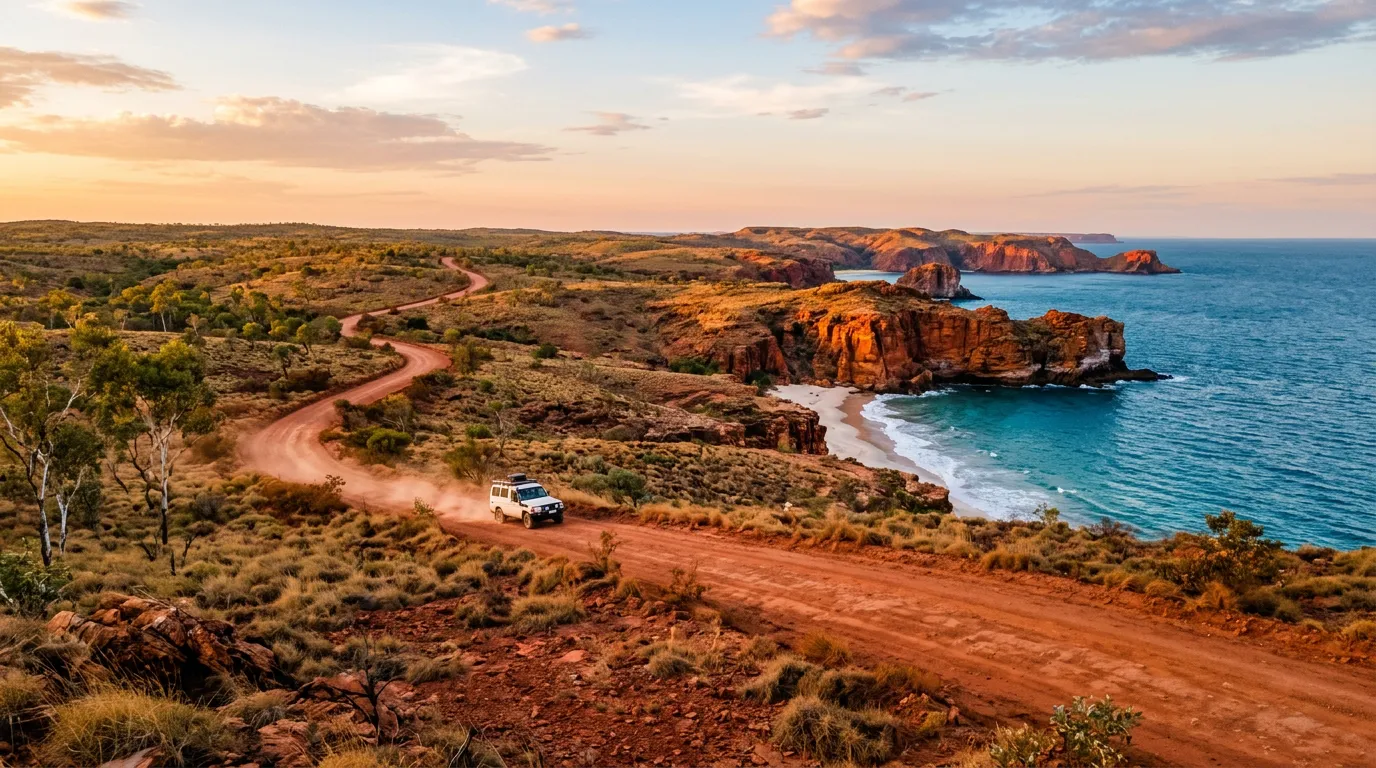
Gibb River Road
Driving
Route: Derby to Kununurra (Western Australia, the Kimberley)
ICONIC · PHOTO · SEASONAL · PERMIT NEEDED · HARD HIKE
Bondi to Coogee Coastal Walk
Walking
Route: Bondi Beach to Coogee Beach (Sydney, NSW)
ICONIC · EASY WALK · SUNRISE · PHOTO · FREE · TRANSIT-FRIENDLY · SEASONAL
Cradle Mountain Overland Track
Hiking
Route: Cradle Mountain to Lake St Clair (Tasmania)
ICONIC · PHOTO · BOOK AHEAD · HARD HIKE · PERMIT NEEDED · SEASONAL · NEXTPIC
Captain Cook Highway (Cairns to Port Douglas)
Driving
Route: Cairns to Port Douglas (Far North Queensland)
PHOTO · EASY WALK · GOLDEN HOUR · FREE · HIDDEN GEM
Street Art
Australia boasts one of the world's most vibrant and respected street art scenes, anchored by Melbourne but thriving in cities nationwide. Melbourne's Hosier Lane is globally iconic, but the real depth lies in surrounding laneways and suburbs like Fitzroy and Collingwood where entire building facades become rotating canvases. Sydney's Newtown and Marrickville corridors offer a grittier, more politically charged aesthetic, while Brisbane's Fortitude Valley and Adelaide's Port Adelaide precincts have emerged as serious contenders. Australian street art culture benefits from strong council support, dedicated festivals like Melbourne's PROVOCARE and Brisbane's WALLS, and a deep bench of internationally recognized artists including Rone, Lushsux, Adnate, and Fintan Magee.
Hosier Lane and Rutledge Lane
The most photographed street art location in the Southern Hemisphere. Every surface from pavement to roofline is covered in paste-ups, stencils, and spray work. Art rotates weekly in sections. Rutledge Lane around the corner is less crowded and often has fresher pieces. The cobblestones and narrow walls create dramatic perspective shots.
Hosier Lane off Flinders Street, Melbourne CBD
ICONIC · PHOTO · BLUE HOUR · CROWD WARNING · FREE · TRANSIT-FRIENDLY · NEXTPIC
Fitzroy and Collingwood, Melbourne
This is where Melbourne's street art scene lives and breathes beyond the tourist laneways. Johnston Street, Smith Street, and the connecting side streets feature massive multi-story murals, often by Australia's top talent. Unlike Hosier Lane, you get full sunlight on facades and can step back for wide shots. Rose Street has artist markets on weekends adding extra texture. Collingwood Yards is a creative precinct with curated walls.
Johnston Street to Smith Street corridor, Fitzroy to Collingwood
PHOTO · GOLDEN HOUR · EASY WALK · FREE · HIDDEN GEM
Newtown, Sydney
Sydney's street art heartland runs along King Street and the surrounding residential blocks of Newtown and Enmore. The vibe is more political and countercultural than Melbourne's scene, with strong Indigenous art representation, feminist themes, and social commentary. The I Have a Dream mural on King Street is a landmark. Enmore Road extending south has larger-scale commissioned works on pub and shop walls.
King Street from Newtown Station to Enmore Road, Newtown NSW
PHOTO · GOLDEN HOUR · TRANSIT-FRIENDLY · FREE · EASY WALK
Fortitude Valley, Brisbane
Brisbane's street art scene has exploded in recent years, driven by the Brisbane Street Art Festival and council-supported programs. The Valley's laneways, particularly Bakery Lane and Winn Lane, combine street art with cafe culture and boutique shops. Walls here tend to be large-scale, colorful, and well-maintained. The subtropical light gives murals a saturated pop that photographs differently from southern cities.
Bakery Lane and Winn Lane, Fortitude Valley QLD
PHOTO · RAINY DAY · FREE · EASY WALK · TRANSIT-FRIENDLY
Port Adelaide, South Australia
An unexpected street art destination that rewards the detour. The old port warehouses and industrial buildings provide massive canvases, and the Wonderwalls Festival has transformed the precinct with world-class murals. Far fewer tourists than Melbourne or Sydney, giving you clean shots of enormous pieces against industrial backdrops. The maritime heritage architecture adds unique framing opportunities.
St Vincent Street and surrounding blocks, Port Adelaide SA
HIDDEN GEM · PHOTO · GOLDEN HOUR · FREE
Culture & History
Australia's cultural identity is shaped by the world's oldest continuous living culture — Aboriginal and Torres Strait Islander peoples have inhabited this continent for over 65,000 years. Layered onto that ancient foundation is a complex colonial history, waves of global immigration, and a fierce contemporary creativity that spans Indigenous art movements, a world-class food scene, and distinctive literary and musical traditions. The tension between honoring First Nations heritage and reckoning with colonial violence remains central to Australian identity today.
Eat & Drink
Australia's food scene is a reflection of its extraordinary multiculturalism, with waves of immigration from Southeast Asia, the Mediterranean, the Middle East, and beyond layering onto a foundation of British-colonial pub fare and Indigenous bush tucker. Cities like Melbourne and Sydney rival any global capital for dining depth, and regional areas from the Barossa Valley to Margaret River deliver world-class produce matched with ambitious cooking. Coffee culture here is genuinely elite — flat whites were born in this part of the world, and the average neighborhood cafe pulls shots that would embarrass many European capitals.
Attica ★★★★★
Multi-course tasting menu celebrating Australian native ingredients including marron, saltbush, and bunya nut. The dessert course with Davidson plum is unforgettable.
Ripponlea, Melbourne — 74 Glen Eira Rd
Restaurant · msw:dinner
Mr. Wong ★★★★★
Cantonese roast duck, dim sum dumplings, and wok-fried king prawns. The crispy-skin duck is the signature — order it immediately.
CBD Sydney — 3 Bridge Ln
Restaurant · msw:lunch
Transformer ★★★★
Entirely vegetarian menu with Middle Eastern and Asian influences. Smoked eggplant with pomegranate, mushroom dumplings, and seasonal tasting plates.
Fitzroy, Melbourne — 97 Rose St
Restaurant · vegetarian_restaurant
Saint Peter ★★★★
Nose-to-tail seafood dining. The fish charcuterie board is unlike anything else in Australia. Whole fish cooked over coals is the showstopper.
Paddington, Sydney — 362 Oxford St
Restaurant · msw:lunch
Vegie Bar ★★★
Massive portions of globally inspired plant-based food. The laksa, Buddha bowl, and vegan nachos are crowd favorites.
Fitzroy, Melbourne — 380 Brunswick St
Restaurant · vegan_restaurant · vegetarian_restaurant
Industry Beans
Single-origin pourovers and inventive coffee cocktails. Their coffee-infused dishes blur the line between cafe and restaurant. Beautifully designed warehouse space.
Fitzroy, Melbourne — 3/62 Rose St
Coffee · cafe
Single O
Pioneers of the Sydney specialty coffee movement. Batch brew on tap, immaculate espresso, and a no-fuss approach that lets the beans speak.
Surry Hills, Sydney — 60-64 Reservoir St
Coffee · cafe
ONA Coffee
World Barista Championship-winning roaster. Their geisha pourovers are extraordinary if you want to understand why Australian coffee culture leads globally.
Marylebone, Canberra — 6/30 Lonsdale St, Braddon
Coffee · cafe
Skittle Lane Coffee
Tiny laneway cafe with rotating guest roasters and arguably the best flat white in the Melbourne CBD for under five dollars.
CBD, Melbourne — Skittle Ln off Little Lonsdale St
Coffee · cafe
Lune Croissanterie
Widely considered Australia's best croissant — possibly the Southern Hemisphere's. The twice-baked almond croissant and cruffin are legendary. Lamination is flawless.
Fitzroy, Melbourne — 119 Rose St
Bakery · bakery
Bourke Street Bakery
Pork and fennel sausage roll that changed Sydney bakery culture. Ginger brulee tart and sourdough loaves are outstanding. Multiple locations but the original has the most character.
Surry Hills, Sydney — 633 Bourke St
Bakery · bakery · breakfast_restaurant
Agathé Pâtisserie
French-trained pastry with Australian ingredients. The kouign-amann and seasonal fruit tarts use local produce beautifully. Everything is precise without being pretentious.
South Melbourne — 145 Clarendon St
Bakery · bakery
Yellow
Upscale plant-based dining from Brent Savage. Seasonal vegetable tasting menus with serious wine pairings. Dishes treat vegetables with the technique usually reserved for protein.
Potts Point, Sydney — 57 Macleay St
Vegetarian · vegetarian_restaurant
Smith & Daughters
Vegan Italian-Latin mashup. The vegan parmigiana is disturbingly good. Hearty, flavor-forward food that makes carnivores forget there is no meat.
Fitzroy, Melbourne — 175 Brunswick St
Vegetarian · vegan_restaurant
Shift Eatery
All-vegan cafe with excellent burgers, loaded fries, and acai bowls. Comfort food done entirely plant-based without apology.
Surry Hills, Sydney — 590 Crown St
Vegetarian · vegetarian_restaurant · vegan_restaurant
Shopping
Australia rewards shoppers who look beyond the boomerang-and-stuffed-koala aisle. Indigenous art, opals, locally made skincare, quality wool and leather, and a thriving maker-market culture across every capital city make this a country where the best buys are genuinely local and hard to replicate elsewhere.
Queen Victoria Market
Mixed
Australian sheepskin products, locally designed clothing and jewellery from the String Bean Alley shipping-container shops, vintage denim, handmade leather goods, and affordable Aboriginal-designed textiles. The general merchandise sheds have hidden gems between the tourist tat.
Market · ICONIC · PHOTO · BUDGET · EASY WALK
Salamanca Market
Craft
Tasmanian-made wooden homewares (Huon pine is extraordinary), handmade soaps and skincare using native botanicals like leatherwood honey and boronia, hand-blown glass, and fine art prints of Tasmanian wilderness. One of Australia's most genuinely artisan markets.
Market · ICONIC · PHOTO · HIDDEN GEM
The Rocks Markets
Craft
Australian-designed jewellery especially opal pieces, photography prints of Sydney and the bush, handmade candles using native scents like lemon myrtle and eucalyptus, and original artwork. The location under the Harbour Bridge makes it scenic.
Market · ICONIC · PHOTO · EASY WALK · CROWD WARNING
Eumundi Markets
Craft
Handmade clothing in natural fibres, beeswax wraps, essential oils, hand-turned timber bowls, local pottery, and one of the best selections of artisan skincare in the country. Over 600 stalls on Saturdays.
Market · HIDDEN GEM · PHOTO · BUDGET
Melbourne CBD Laneways and Arcades
A labyrinth of heritage arcades and graffiti-lined laneways packed with independent Australian fashion designers, vintage stores, specialty bookshops, and local jewellers. This is where Australian street style lives.
Royal Arcade and Block Arcade for heritage charm. Flinders Lane for emerging Australian fashion labels like Gorman, Alpha60, and Kuwaii. Cathedral Arcade for vintage. Centre Place and Degraves Street for browsing between espresso stops. Craft Victoria shop for curated Australian-made objects.
District · ICONIC · PHOTO · EASY WALK
Paddington and Woollahra, Sydney
Upscale village-feel shopping along Oxford Street and Queen Street with a strong mix of Australian designer fashion, contemporary art galleries, and antique dealers. Less corporate than Pitt Street Mall, more curated than Bondi.
Zimmermann flagship on Oxford Street, Australian ceramics at Planet, antique dealers on Queen Street Woollahra, Parlour X for luxury consignment of Australian designers. Saturday brings the Paddington Markets at the Uniting Church with emerging designers.
District · ICONIC · EASY WALK
Todd Mall and surrounds, Alice Springs, NT
The best place in Australia to buy authentic Aboriginal art directly connected to community art centres. Galleries here represent artists from remote desert communities and carry works with provenance documentation.
Papunya Tula Artists gallery for Western Desert dot painting. Mbantua Gallery for watercolours from the Namatjira tradition. Talapi Gallery for museum-quality pieces. Todd Mall Market on alternate Sundays for smaller crafts. Always ask for a certificate of authenticity.
District · ICONIC · HIDDEN GEM
Photo Spots
Australia spans from tropical latitude 10S to temperate 43S, so light timing and quality varies enormously by region and season. In the tropical north (Cairns, Darwin, Whitsundays) golden hour is compressed — roughly 20-25 minutes — because the sun drops steeply near the equator. Plan to be set up and shooting before the light peaks. Southern locations (Melbourne, Tasmania, Great Ocean Road) enjoy long, lingering golden hours especially in winter (Jun-Aug) when the sun tracks low across the sky for extended periods of beautiful warm sidelight. Summer in the south (Dec-Feb) brings sunrise as early as 5:30am and sunset after 8:30pm, giving enormous shooting windows but a harsh midday lasting 6+ hours. The best months for landscape photography across most of Australia are April-May and September-October: shoulder seasons with moderate temperatures, lower humidity reducing haze, and balanced day length. Winter in the Red Centre (Uluru, Alice Springs) is ideal — crisp clear skies, cool temperatures, and the Milky Way core visible for astro work. Avoid the tropical Top End November through March due to monsoonal humidity, cyclone risk, and impenetrable cloud cover. Gear-wise, a polarising filter is non-negotiable in Australia — the harsh southern hemisphere sun creates intense glare off water and foliage, and a polariser transforms flat scenes into punchy, saturated compositions. Carry ND filters (6-stop and 10-stop) for coastal long exposures along the Great Ocean Road and tropical reef scenes. A graduated ND is essential for sunrise and sunset at Uluru where the contrast between bright sky and shadow rock exceeds any sensor's dynamic range. Lens-wise, pack a wide zoom (16-35mm) for landscapes and astro, a mid-range zoom (24-70mm) for versatile coverage, and a telephoto (70-200mm) for compressing scenes like Whitehaven's sand patterns or isolating individual Pinnacles. For editing, Australian light tends toward warm yellow-amber tones — resist the temptation to push warmth further in post. Instead, balance warm highlights with cooler shadows for depth. Dehaze and clarity sliders are your friends for cutting through tropical humidity and outback dust haze. Shoot RAW always — the extreme dynamic range situations across Australia (think dark red rock against blazing white sky) demand maximum post-processing latitude.
Sydney Opera House from Mrs Macquaries Chair
The classic composition: Opera House sails with Harbour Bridge behind, reflected in the harbour at high tide. The curved stone wall of Mrs Macquaries Chair provides strong foreground leading lines. At sunrise the sails catch pink and orange light while the city skyline behind remains in cool shadow, creating beautiful contrast. At blue hour the city lights up and the sails glow white against deep blue sky.
Uluru (Ayers Rock) Sunset Viewing Area
Uluru changes colour dramatically during golden hour — from burnt orange to deep crimson to violet as the sun drops. The designated sunset viewing area faces the western flank and captures the full monolith against an enormous outback sky. After rain, waterfalls stream down the grooves and the red rock intensifies. The Milky Way core rises over Uluru from roughly March through October for astro shots.
Twelve Apostles, Great Ocean Road
Towering limestone sea stacks against crashing Southern Ocean waves. The main boardwalk lookout gives the wide composition everyone knows, but the real shot is from the beach at Gibson Steps 1km east — you get the stacks at eye level with dramatic scale. Helicopter flights give the overhead perspective showing turquoise shallows against ochre cliffs. Morning light hits the eastern faces and backlit spray creates halos around the stacks.
Whitehaven Beach from Hill Inlet Lookout, Whitsundays
The swirling turquoise and white sand patterns at Hill Inlet are one of Australia's most photogenic scenes. The patterns change with every tide — incoming tide creates the most dramatic swirl effect as water pushes through channels of pure silica sand. The sand is so white it can blow highlights, so bracket aggressively. From the lookout, a 70-200mm compresses the patterns beautifully while a wide angle captures the full sweep of the inlet.
Melbourne Laneways — Hosier Lane and AC/DC Lane
Melbourne's street art laneways are a constantly evolving gallery — the walls change weekly. Hosier Lane is the most famous with floor-to-ceiling murals and paste-ups. Shoot portraits against the walls for incredible colour-saturated backgrounds. AC/DC Lane nearby has grittier, more punk aesthetic. The trick is shooting on overcast days or when the lane is in full shade — direct sun creates harsh contrast stripes between buildings. Reflections in puddles after rain double the colour impact.
Cradle Mountain Dove Lake Circuit, Tasmania
Cradle Mountain reflected in the perfectly still surface of Dove Lake on a calm morning is one of Australia's great landscape images. The boathouse on the northern shore provides a classic foreground element. In autumn (Apr-May) the fagus — Australia's only deciduous tree — turns brilliant gold and orange on the mountain slopes. Winter snow dusts the jagged dolerite peaks. The circuit walk passes through ancient rainforest with textures perfect for intimate landscape work.
Kangaroo Point Cliffs, Brisbane
Brisbane CBD skyline reflected in the river bend, shot from the clifftop parklands at Kangaroo Point. This is an underrated city skyline — the river curves create leading lines and at blue hour the Story Bridge lights up in warm tones against cool sky. During weekday evenings the office towers glow and the reflections stretch across the calm river. Climbers on the cliff face add human interest if you shoot from the riverside path below.
The Pinnacles, Nambung National Park, Western Australia
Thousands of limestone pillars up to 3.5 metres tall rising from yellow desert sand — an otherworldly landscape that looks like another planet. At golden hour the pillars cast long dramatic shadows across the sand and glow warm amber. At night the Milky Way arcs overhead with zero light pollution, and you can light-paint individual pinnacles for foreground. After rain (rare but spectacular) pools form between the pillars reflecting sky and stone.
Suggested Itinerary
Nightlife
Australia's nightlife is sprawling and city-specific but united by a few throughlines: a deep pub culture, a world-class live music scene (especially in Melbourne), and a growing wave of speakeasy-style cocktail bars hidden behind unmarked doors. Things kick off around 9–10pm in most cities, with clubs not filling until midnight. The scene is local-dominated outside of tourist strips like Sydney's Darling Harbour or the Gold Coast's Surfers Paradise. Lockout laws that once strangled Sydney's nightlife have been mostly repealed, and the city is clawing its energy back.
Frankie's Pizza by the Slice
A neon-drenched rock and roll dive beneath the streets of Sydney where the pizza is cheap, the drinks are strong, and bands play loud enough to rattle your fillings past midnight.
No cover most nights. Free pizza slices at the bar. Live rock bands downstairs Thursday through Saturday. Gets packed after 11pm — arrive by 10 if you want breathing room. Cash-friendly but cards accepted. Closed Sundays.
Cherry Bar
A sweaty, legendary rock bar on the laneway literally named after AC/DC — the walls are plastered with band posters and the stage is so close you'll wear the drummer's sweat.
Cover charge $5–$15 depending on the act. Live bands 7 nights a week. Best nights are Friday and Saturday when touring acts play. No dress code — the rattier the band tee the better. Open until 3am most nights.
Maybe Sammy
A Rat Pack–era fantasy with velvet curtains, gold fixtures, and bartenders in waistcoats who make theatrically perfect cocktails while crooning along to Sinatra on the speakers.
Ranked among the World's 50 Best Bars. Cocktails $28–$35. No reservations for walk-ins at the bar but book a booth for groups. Smart casual dress — no thongs or singlets. Closes around midnight most nights. Go early on a weekday for the full experience without the wait.
The Caxton Hotel
A century-old Queensland pub with wide verandahs, cold schooners, and a crowd that swells from after-work beers into raucous weekend nights with live bands and rugby league on every screen.
No cover. Multiple levels and bars — rooftop is best in the subtropical evenings. Live music Friday and Saturday. Gets wild on State of Origin nights. Kitchen open late. Open until 3am weekends.
Revolver Upstairs
Melbourne's marathon dance institution where the party starts Saturday night and literally does not stop until Monday morning — a dark, sweaty temple for house and techno purists.
Cover $15–$25 on weekends. The legendary Sunday morning session (6am onwards) is a Melbourne rite of passage. Two rooms — main floor for house and techno, second room rotates genres. No strict dress code but bouncers can be selective. Earplugs recommended.
Bar SK
A narrow, moody neighbourhood bar on Newtown's main strip where the natural wine list is serious, the playlist leans post-punk, and the crowd is artists and writers who actually live around the corner.
No cover. Small space — maybe 40 people before it feels full. Great natural wine and craft beer selection. No cocktails. Open until midnight weeknights, 1am weekends. No bookings, just show up.
Barrio Cellar
A subterranean mezcal and agave spirits den in Canberra's hipster strip where the lighting is candlelit amber and the bartenders know more about tequila than most people in Mexico City.
Over 200 agave spirits. Cocktails $20–$28. No reservations needed most nights but weekends fill up. Relaxed dress code. Open until midnight. Proof that Canberra has more going on after dark than parliament jokes suggest.
The Woolshed on Hindley
Adelaide's unapologetic party barn — a cavernous, chaotic nightclub where backpackers, uni students, and locals collide on a sticky dance floor under a haze of fog machines and mainstream bangers.
Cover $5–$10. Cheap drink specials — expect $5 basics. Busiest Wednesday (uni night) and Saturday. Dress code is basically just wear shoes. Gets messy after 1am. Open until 5am weekends.
Tiny's
A dim, effortlessly cool neighbourhood bar in Perth's Leederville strip where the cocktail list changes seasonally and the bartenders treat every drink like a small creative project.
No cover. Cocktails around $20–$24. Intimate space, maybe 60 capacity. Open until midnight. Good date spot. No reservations — first come, first served.
Monsoons
Darwin's backpacker-meets-local institution where the tropical humidity follows you inside, everyone's in thongs and shorts, and the wet season storms outside make the beers taste colder.
No cover. Cheap jugs of beer. Live music some nights. The crowd is a mix of backpackers, FIFO workers, and locals. Open late, especially during dry season (May–October). Air conditioning is the real attraction.
The Wharf Hotel
A waterfront beer garden on Hobart's harbour where you drink Tasmanian craft beers as the sun drops behind Mount Wellington and fishing boats bob in the foreground — the most photogenic pint in the country.
No cover. Excellent Tasmanian beer and cider list. Outdoor seating is first-come. Kitchen serves wood-fired pizzas. Closes around 11pm most nights — Hobart is not a late-night city. Best in summer when it stays light until 9pm.
Build your own Itinerary from this guide
Pick the places you care about — attractions, photo spots, map markers — and we'll lay out a day-by-day starting point. Yours to edit; guide updates never touch it.