Essentials
Currency, language, transit & safety — tap to expand.
Currency — US Dollar (USD, $). Roughly 1 USD = 0.92 EUR / 0.79 GBP as of early 2025 [ASSUMPTION - check before you go]. No local currency quirks: Chicago is the same dollar as everywhere else in the US.
Cash vs card — Card is king. Tap-to-pay works on CTA turnstiles, taxis, and nearly every bar and restaurant. Carry $20-40 cash for tipping hotel staff, older dive bars (Rainbo Club and a few Wrigleyville holdouts are cash-friendly), and street food at Maxwell Street Market. Bank ATMs (Chase, BMO, Fifth Third) are everywhere downtown with $3-4 fees; avoid the standalone ATMs inside liquor stores and bars that charge $5-7. Tipping is not optional in practice: 18-20 percent at sit-down restaurants, $1-2 per drink at bars, 15-20 percent for rideshare and taxis, $2-5 per bag for porters, 20 percent for barbers and tour guides. Many restaurants now add a 3-4 percent 'kitchen service fee' or 'wellness fee' to the bill — read the fine print, it does not replace the tip. Illinois sales tax in the city is 10.25 percent and is not shown on menu or shelf prices.
Budget — Budget: $110-150/day (hostel or shared room $50-70, CTA day pass $5, deep dish slice and Italian beef $25-30, free museum days and lakefront walks). Mid-range: $250-400/day (hotel $180-280 in Loop or West Loop, two sit-down meals with drinks $90-120, one paid attraction $30-40). Luxury: $700+/day (Peninsula/Langham/St. Regis $500-800, tasting menu at Alinea or Smyth $250-400 per person before wine, private architecture boat charter). Hotel tax is 17.4 percent on top of the room rate — the highest in the country and it will surprise you at checkout.
Language — English is the official working language. Spanish is the strong second language and functionally dominant in Pilsen, Little Village, Back of the Yards and parts of Albany Park — you will see Spanish-first signage and hear it at counters. Polish remains audible in Jefferson Park, Portage Park and Avondale; Chicago has one of the largest Polish populations outside Poland. Mandarin and Cantonese in Chinatown, Arabic and Assyrian along Devon and in West Ridge, Ukrainian in Ukrainian Village.
Language barrier — Zero barrier for English speakers. If you speak only Spanish you will get by comfortably in the neighbourhoods listed above and in most kitchens and construction sites citywide. Where visitors actually stumble is local vocabulary and geography, not language — see phrases below.
Getting around — Get a Ventra card or just tap your phone and ride the L. Chicago is one of the few American cities where skipping a rental car is genuinely the better choice — parking downtown runs $40-60 a day, Lower Wacker will eat your sense of direction, and the L reaches both airports directly. The Blue Line from O'Hare to the Loop is $5 and takes 45 minutes; a taxi is $50-60 and can take longer in traffic. For photographers the L is a subject in itself — the Loop elevated tracks at Lake and Wabash, and the Quincy station with its restored 1897 woodwork, are worth deliberate trips. Build in walking: the Loop to River North to Streeterville is entirely walkable, and the Lakefront Trail runs 18 miles of uninterrupted shoreline. Where transit genuinely fails is crosstown travel — going from Logan Square to Hyde Park means a downtown detour or a $30 rideshare.
Safety — Chicago's reputation is wildly out of proportion to what a visitor actually experiences. Violence is concentrated in specific South and West Side neighbourhoods, and it is overwhelmingly not random — the areas tourists visit have crime rates comparable to any large American city. The real risks are far more boring. Phone snatching is the number one visitor crime: thieves on bikes or scooters grab phones from outstretched hands along the Riverwalk, Michigan Avenue, and outside Loop L stations. Keep your phone in two hands or a strap. Camera gear on a tripod at night is fine in the Loop, Streeterville and along the lakefront, but do not leave a bag unzipped on the ground while you shoot; work with a partner in the Riverwalk underpasses after dark. Cars get broken into constantly — visible bags, even empty ones, in a parked car will cost you a window. Weather is the genuine hazard: winter windchill along the lakefront can hit -20F/-29C with nothing to block it, and hypothermia sneaks up during long exposure sessions at North Avenue Beach or the Adler planetarium point. Layer properly and set a time limit. Summer brings the reverse — lake water stays cold into July, rip currents at the beaches are real and drownings happen every year, so swim where there are lifeguards. The Lakefront Trail is well-lit and busy until roughly 10pm, quiet after. Late-night L rides on the Red Line south of Roosevelt and Blue Line west of Western are where locals get more alert; ride in the car with the conductor. Skip the underpasses at Lower Wacker for street photography unless you know the area. Emergency number is 911. [ASSUMPTION] Millennium Park has an enforced curfew for unaccompanied minors on summer weekend evenings — verify current policy if travelling with teens.
Highlights
Chicago is a city built to be looked at: a dense downtown of engineering firsts wedged between a freshwater sea and a river that was literally reversed to make the place work. Unlike New York or LA, the skyline is legible from a single spot, the museums are world-class but walkable, and the real texture of the city lives in 77 fiercely distinct neighbourhoods where the food is better and cheaper than anything on Michigan Avenue. It swings hard by season, from lake-effect blizzards to festival-saturated summers, so when you come changes what city you get.
Architecture is the actual main attraction
Chicago invented the skyscraper and it still shows. The Chicago Architecture Center's river cruise aboard Chicago's First Lady is the single best orientation to the city and worth its higher price over competitors because the docents are trained volunteers, not scripted staff. Follow it on foot through the LaSalle Street canyon, the Rookery lightcourt, and the Monadnock Building. Open House Chicago (mid-October, free) opens 150+ normally private buildings including bank vaults and private clubs.
ICONIC · PHOTO · BOOK AHEAD · SEASONAL · EASY WALK
Entry reality: ESTA or visa, plus a long CBP queue
Visa Waiver Program travellers (UK, EU, Japan, Australia, South Korea and ~40 others) need an approved ESTA before boarding, applied for at esta.cbp.dhs.gov at least 72 hours ahead. [ASSUMPTION] Fee is around USD 21 as of 2025 — verify on the official site, and ignore third-party sites charging markups. Everyone else needs a B1/B2 visa with interview waits that can run months. O'Hare Terminal 5 immigration can take 60-90 minutes at peak; Mobile Passport Control (free CBP app) often beats the main line.
BOOK AHEAD
Connectivity and payments setup
Buy an eSIM before you land: Airalo, Nomad or Ubigi all run on T-Mobile or AT&T towers and cost far less than roaming. For longer stays, Mint Mobile and Visible are the cheapest physical prepaid options, both T-Mobile-based with strong downtown coverage. Contactless cards and Apple/Google Pay work essentially everywhere including taxis and small taquerias. Download offline Google Maps for the whole city — the L's subway tunnels and the Pedway have no signal.
BUDGET · PLUGIN TIP
Food customs that mark you as a tourist
Deep dish is a tourist dish locals eat maybe twice a year; if you want it, Pequod's caramelised crust beats Giordano's queues. What Chicagoans actually eat is tavern-style thin crust cut in squares (Vito & Nick's, Marie's), Italian beef dipped wet (Johnnie's Beef in Elmwood Park), and steamed hot dogs dragged through the garden. Do not ask for ketchup on a hot dog. Head to Pilsen for Mexican, Devon Avenue for South Asian, Argyle Street for Vietnamese, Bridgeport for Chinese-Polish overlap.
HIDDEN GEM · BUDGET
Social norms and naming things right
Nobody who lives here says Chi-town. It's the Willis Tower on paper but locals still say Sears; Cloud Gate is universally the Bean; Comiskey is now Guaranteed Rate Field and White Sox fans resent both changes. Tip 18-20 percent at sit-down restaurants and a dollar or two per drink at bars. Chicagoans are genuinely chatty with strangers and will give directions unprompted — Midwestern friendliness is real, not performative. Sports allegiance splits the city North Side Cubs / South Side Sox; do not assume.
EASY WALK
Skyline views: what's worth it and what isn't
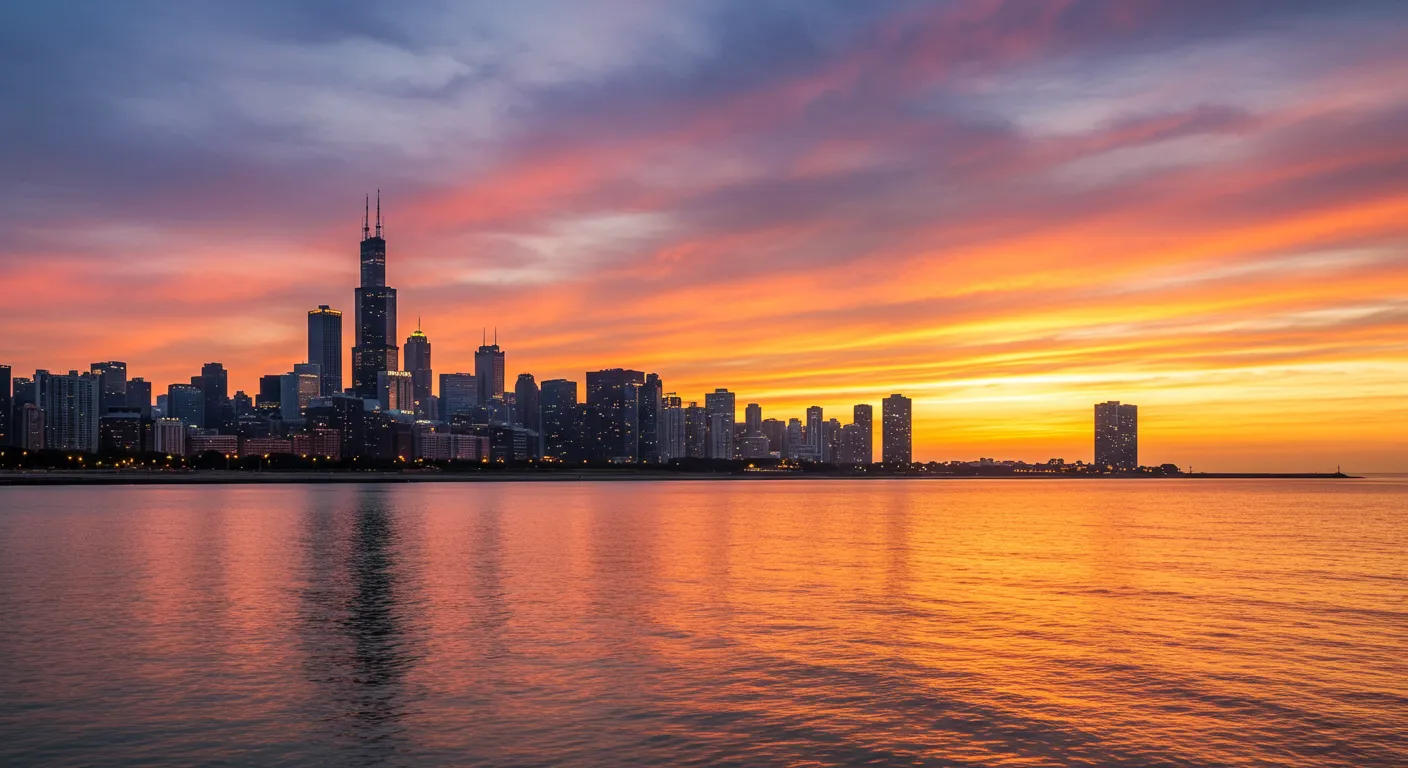
Skydeck at Willis Tower has the longest queues and the worst light because the glass boxes face into haze; 360 Chicago at 875 North Michigan gives the better composition because the Willis Tower is in the frame. Cheaper still: the free 99th-floor Signature Lounge for the price of a cocktail, or shoot the classic skyline for nothing from the lakefront path near Adler Planetarium at blue hour. The Bean is genuinely great before 7am and genuinely miserable after 10am.
PHOTO · BLUE HOUR · CROWD WARNING · FREE
Free-culture unlocks locals actually use
Chicago Greeter pairs you with a volunteer resident for a free 2-4 hour neighbourhood walk — request it about 10 days ahead via the official site. Millennium Park's Jay Pritzker Pavilion hosts the free Grant Park Music Festival and Summer Music Series June through August, with lawn seating and permitted picnics including alcohol. Note that most museum free days apply to Illinois residents only, so budget full admission for the Art Institute and Field Museum. The Chicago Cultural Center and its Tiffany dome are free year-round and an excellent rainy-day stop.
FREE · BOOK AHEAD · RAINY DAY · SEASONAL · HIDDEN GEM
When to Go
Late September through mid-October is the single best window: highs around 20-24C/68-75F, low humidity, clean directional light for skyline work, and outdoor patios still open. May is the close runner-up for cost and blossom colour but carries real rain risk. If you want the city at its liveliest and don't mind heat and crowds, aim for June before the July humidity settles in.
Lake Effect Freeze
Lake Michigan drives Chicago's harshest weather, pushing wind chills far below the thermometer reading and coating the lakefront in ice shelves and frozen spray. Streets empty out, hotel rates bottom out, and the indoor culture scene carries the city.
Cheapest hotels and emptiest museums, but dress for -20C/-4F wind chill and expect boat tours and rooftops to be closed.
Thaw and Bloom
The city shifts from grey to green over roughly ten weeks, starting with the St Patrick's Day river dyeing and ending with tulips on Michigan Avenue. This is the wettest stretch of the year, but also the best value before summer pricing.
Great value and blossom colour from late April, but pack a rain shell and expect swings of 10C in a single day.
Festival Season
Chicago's outdoor calendar runs nonstop - Millennium Park free concerts, Taste of Chicago, the Air and Water Show, and Lollapalooza in Grant Park. Beaches open, rooftops fill, and sunset sits near 8:30pm in late June.
Book hotels, restaurants and architecture boat tours weeks ahead; expect peak pricing and heavy crowds at the Bean and Navy Pier.
Crisp Light Window
Humidity collapses, the sky clears, and the light turns hard and directional - the best photographic conditions of the year for skyline and architecture work. Open House Chicago in October opens buildings normally shut to the public.
Best all-round window for walking and photography; only avoid Chicago Marathon weekend unless you book far in advance.
Holiday Lights Run
Beginning with the Magnificent Mile Lights Festival, the city commits fully to holiday displays - Christkindlmarket in Daley Plaza, ZooLights at Lincoln Park Zoo, and skating in Millennium Park. Blue hour arrives around 4:30pm, making night shooting easy.
Excellent for night and blue hour photography with early sunsets, but downtown gets congested through late December.
Where to Stay
Chicago is one of the better-value big US cities to sleep in, but the price swings are brutal: a Loop room that costs $130 on a February Tuesday can hit $450 when McCormick Place has a big trade show or Lollapalooza takes over Grant Park. The city's hotel tax stack is among the highest in the country at roughly 17.4 percent [ASSUMPTION], so quoted rates are not the rate you pay, and many downtown properties add a $25–$35 nightly destination fee on top. Photographers should weight location by what they want to shoot: Streeterville and the Loop put you inside walking distance of the river and Michigan Avenue for blue hour, while Wicker Park or Wrigleyville trade skyline access for cheaper rooms and better late-night food.
The Peninsula Chicago
Streeterville / Magnificent Mile
Hotel
ICONIC · PHOTO · BLUE HOUR · TRANSIT-FRIENDLY · BOOK AHEAD
The Langham Chicago
River North / Chicago Riverwalk
Hotel
ICONIC · PHOTO · GOLDEN HOUR · BLUE HOUR · WORKSHOP SPOT
Chicago Athletic Association Hotel
The Loop, facing Millennium Park
Boutique Hotel
ICONIC · PHOTO · SUNRISE · TRANSIT-FRIENDLY · CROWD WARNING
The Robey
Wicker Park
Boutique Hotel
HIDDEN GEM · PHOTO · GOLDEN HOUR · SEASONAL · TRANSIT-FRIENDLY
Hotel Zachary
Wrigleyville / Lakeview
Boutique Hotel
PHOTO · NIGHT SHOOT · SEASONAL · TRANSIT-FRIENDLY · FAMILY
HI Chicago Hostel
South Loop, 24 E Congress Parkway
Hostel
BUDGET · TRANSIT-FRIENDLY · EASY WALK · BOOK AHEAD
Found Hotel Chicago River North
River North
Hostel
BUDGET · TRANSIT-FRIENDLY · EASY WALK
Emil Bach House
Rogers Park, near the lakefront
Guesthouse
HIDDEN GEM · PHOTO · WORKSHOP SPOT · BOOK AHEAD · GOLDEN HOUR
Top Attractions
№ 1 · Essential
Cloud Gate (The Bean), Millennium Park
★ ICONIC · PHOTO · FREE · BLUE HOUR · CROWD WARNING · TRANSIT-FRIENDLY
A genuinely great sculpture that rewards close-up abstraction as much as the standard wide reflection shot. It is mobbed nearly all day, so the photo everyone wants requires odd hours. Worth the hype, but only if you time it.
Tip: Shoot from underneath in the omphalos (the concave chamber) with a wide lens pointed straight up for a warped kaleidoscope frame nobody else in the crowd bothers to get. Wipe the lens after; the plaza mist and fingerprints of 10,000 people fog everything.
Best: 6:00-7:00am for near-empty reflections, or blue hour when the skyline lights hit the steel
Fees: Free
Art Institute of Chicago
One of the best encyclopedic museums on the planet, and the Impressionist and American wings alone justify the ticket. The Modern Wing's Griffin Court is an architecture photo in its own right. Budget three hours minimum or you will resent rushing it.
ICONICChicago Riverwalk and the Architecture Boat Tour
The single best way to understand why Chicago matters architecturally, and the low water-level angle on the towers is impossible to replicate from the sidewalk. The Chicago Architecture Center tours have the strongest docents; cheaper operators lean on jokes over content. The Riverwalk itself is free and walkable if you skip the boat.
ICONICSkydeck Willis Tower vs. 360 Chicago
Skydeck is the famous one with the glass Ledge boxes, but the wait can hit 90 minutes and the view lacks the Willis Tower itself. 360 Chicago at the former Hancock building is the better photograph because you see the lakefront curve and Willis in frame. Pick one; doing both is redundant and expensive.
ICONICNeighbourhoods
The Loop and Riverwalk
Chicago's dense downtown core, where the elevated tracks rattle overhead and the river cuts a canyon between 1920s terracotta towers and modern glass. It empties out after office hours, which is exactly when the light and the reflections get good.
Must do: Walk the Chicago Riverwalk from Lake Shore Drive to Lake Street for bridgehouse and skyline reflections; shoot the Wabash and Lake elevated crossing where four tracks stack over the street; go up to the Cindy's rooftop or the Chicago Architecture Center for a Michigan Avenue cliff view, then loop through Millennium Park for Cloud Gate.
ICONIC · PHOTO · BLUE HOUR · NIGHT SHOOT · TRANSIT-FRIENDLY · CROWD WARNING · EASY WALK
West Loop and Fulton Market
Former meatpacking district turned Chicago's densest restaurant strip, where loading docks and cobbles sit under new hotels and murals. Randolph Street is the spine and it is loud, moneyed, and genuinely good at food.
Must do: Eat along Randolph Street between Halsted and Ogden; queue at Girl and the Goat or book Au Cheval for the burger; walk Fulton Market in early morning for remaining meat wholesalers, loading bays, and mural walls with almost nobody in frame.
PHOTO · BOOK AHEAD · TRANSIT-FRIENDLY · GOLDEN HOUR · NIGHT SHOOT
Pilsen
A historically Czech then Mexican neighbourhood on the Lower West Side with the best concentration of public murals in the city and a fiercely local identity that predates and resists the galleries creeping in.
Must do: Walk 16th Street along the railroad embankment for a continuous mural corridor; visit the National Museum of Mexican Art, which is free and excellent; eat at a taqueria on 18th Street and photograph the Aztec mosaic work inside the 18th Street Pink Line station.
PHOTO · HIDDEN GEM · FREE · BUDGET · TRANSIT-FRIENDLY · EASY WALK
Hyde Park and Jackson Park
A leafy South Side university district built around the University of Chicago's Gothic quadrangles and the last standing building of the 1893 World's Fair. Slower, greener, and more intellectual than anywhere north of the river.
Must do: Tour Frank Lloyd Wright's Robie House, book ahead as tours sell out; walk the university's Main Quadrangle for cloisters and gargoyles; shoot the Statue of the Republic and the Garden of the Phoenix in Jackson Park, then hit Promontory Point for the best skyline view in the city, especially at sunset when downtown lights up across the water.
PHOTO · SUNSET · BOOK AHEAD · TRANSIT-FRIENDLY · EASY WALK · FAMILY
Wicker Park and Bucktown
The Six Corners junction of Milwaukee, North, and Damen is Chicago's vintage-and-record-shop heartland, dense with bars, murals, and Victorian greystones on the side streets. Commercialised now but still the most walkable nightlife grid in the city.
Must do: Browse Reckless Records and the vintage racks on Milwaukee Avenue; photograph the Damen Blue Line platform for a raw elevated frame; drink at the Violet Hour behind the unmarked mural door, then walk the 606 elevated trail east for skyline compression at golden hour.
PHOTO · TRANSIT-FRIENDLY · NIGHT SHOOT · GOLDEN HOUR · EASY WALK · CROWD WARNING
Logan Square and Avondale
Wide boulevards, a monumental stone column at the centre, and the current locus of Chicago's interesting kitchens and low-key cocktail rooms. Feels like a neighbourhood that lives its life rather than performing for visitors.
Must do: Shoot the Illinois Centennial Monument column and the Logan and Kedzie boulevard trees; eat at Lula Cafe or grab pizza at Kim's Uncle or Paulie Gee's; hit the Sunday farmers market in season, and drink at Lost Lake or Billy Sunday.
HIDDEN GEM · TRANSIT-FRIENDLY · SEASONAL · BOOK AHEAD · GOLDEN HOUR
Chinatown and Bridgeport
A compact, functioning Chinatown on the near South Side with the Nine Dragon Wall, Ping Tom Memorial Park on the river, and gritty working-class Bridgeport next door with cheap studios and stubborn old taverns.
Must do: Eat dim sum on Wentworth or hot pot on Archer; walk Ping Tom Memorial Park for a pagoda-framed skyline view along the South Branch, one of the most underrated frames in Chicago; browse Bridgeport Art Center's studio floors and its top-floor view.
BUDGET · PHOTO · HIDDEN GEM · TRANSIT-FRIENDLY · EASY WALK · FAMILY
Day Trips
Indiana Dunes National Park and Indiana Dunes State Park
Travel: About 80 km / 1 hr 15 min by car; 1 hr 20 min on the South Shore Line train from Millennium Station to Dune Park or Beverly Shores
Milwaukee, Wisconsin
Travel: About 150 km / 1 hr 30 min on the Amtrak Hiawatha from Union Station; similar by car outside rush hour
Oak Park (Frank Lloyd Wright Home and Studio, Unity Temple)
Travel: About 16 km / 25-35 min on the CTA Green Line to Harlem/Lake or Metra UP-West to Oak Park
Starved Rock State Park, Illinois
Travel: About 150 km / 1 hr 45 min by car (I-55 to I-80); no practical transit connection
Saugatuck and Douglas, Michigan
Travel: About 225 km / 2 hr 30 min by car around the bottom of the lake; add an hour for Friday traffic
Lake Geneva, Wisconsin
Travel: About 130 km / 1 hr 30 min by car; no direct train, some seasonal bus and shuttle options [ASSUMPTION: verify current coach service]
Galena, Illinois
Travel: About 270 km / 3 hr by car each way; no transit
Scenic Routes
Chicago Lakefront Trail
Cycling
Route: Ardmore Avenue (Edgewater) to 71st Street (South Shore)
ICONIC · PHOTO · SUNRISE · BLUE HOUR · FREE · TRANSIT-FRIENDLY · EASY WALK · NEXTPIC
Chicago Riverwalk
Walking
Route: Lake Shore Drive at the Chicago River to Lake Street
ICONIC · PHOTO · BLUE HOUR · NIGHT SHOOT · FREE · EASY WALK · TRANSIT-FRIENDLY · CROWD WARNING
DuSable Lake Shore Drive
Driving
Route: Hollywood Avenue (north terminus) to 57th Street (Hyde Park)
ICONIC · GOLDEN HOUR · FREE · CROWD WARNING
The 606 / Bloomingdale Trail
Walking
Route: Walsh Park at Ashland Avenue to Ridgeway Avenue (Humboldt Park)
HIDDEN GEM · PHOTO · GOLDEN HOUR · FREE · EASY WALK · TRANSIT-FRIENDLY
Loop Architecture and Bridge Walk
Walking
Route: Chicago Cultural Center (Michigan and Washington) to Willis Tower via Wacker Drive
ICONIC · PHOTO · RAINY DAY · FREE · EASY WALK · TRANSIT-FRIENDLY · BOOK AHEAD · WORKSHOP SPOT
North Branch Trail to Chicago Botanic Garden
Cycling
Route: Gompers Park (Foster and Pulaski) to Chicago Botanic Garden, Glencoe
HIDDEN GEM · SEASONAL · FREE · PHOTO · FAMILY · TRANSIT-FRIENDLY
Street Art
Chicago has one of the deepest mural traditions in North America, and it is not a tourist-manufactured one. The city's community mural movement traces to the late 1960s with the Wall of Respect on the South Side, and that lineage runs straight through Pilsen and Little Village, where Mexican-American muralists have used building walls as public memory for fifty years. Layered on top is a newer, glossier scene: the Wabash Arts Corridor in the South Loop, where Columbia College turned a few blocks of parking-garage flanks and warehouse walls into a gallery of building-scale international work, and the Logan Square/Wicker Park stretch of Milwaukee Avenue, where local names like Sentrock have gone from alley pieces to brand commissions.
Pilsen: 16th Street Mural Corridor and 18th Street
The single densest and most meaningful mural concentration in the city. The elevated railway embankment along 16th Street carries a near-continuous run of large-scale work stretching many blocks, mixing community-organised pieces with veteran Chicago and visiting muralists. Two blocks north, 18th Street and its side streets carry older Mexican-American murals, painted storefronts and mosaic work. Hector Duarte's Gulliver in Wonderland, wrapping his own house and studio at 1900 W Cullerton, is the essential single stop: a giant figure bound by barbed wire, an immigration allegory that has been there for two decades.
16th St between Blue Island Ave and Ashland Ave; 18th St between Halsted and Damen; Gulliver at 1900 W Cullerton St; start at 18th St Pink Line station, 1710 W 18th St
ICONIC · PHOTO · TRANSIT-FRIENDLY · EASY WALK · FREE · WORKSHOP SPOT
Wabash Arts Corridor, South Loop
Columbia College's outdoor gallery, concentrated on South Wabash between roughly Balbo and 13th. This is the big-wall stuff: multi-storey pieces on parking garages and loft buildings, visible from the street and from the L. The headline is Collin van der Sluijs and Super A's Moose Bubblegum Bubble, a huge moose blowing a pink bubble that has become an unofficial Chicago photo landmark. Nearby on State Street, Eduardo Kobra's kaleidoscopic Muddy Waters portrait towers over the block. Easy, compact, and stacked with strong subjects within a few blocks.
S Wabash Ave between E Balbo Dr and E 13th St; Moose mural near 1006 S Wabash Ave; Muddy Waters at 17 N State St
ICONIC · PHOTO · GOLDEN HOUR · TRANSIT-FRIENDLY · EASY WALK · FREE · NEXTPIC
Paseo Boricua, Humboldt Park
Division Street between Western and California, bookended by two 45-ton steel Puerto Rican flags arching over the road. The corridor between them is lined with community murals celebrating Puerto Rican history, independence figures, salsa musicians and neighbourhood elders. This is a living cultural district rather than an art installation, which makes it more rewarding and more demanding of respect than the Instagram walls downtown. The flags themselves are a strong wide-angle subject at either end.
W Division St between N Western Ave and N California Ave; steel flags at Division/Western and Division/Mozart
HIDDEN GEM · PHOTO · GOLDEN HOUR · TRANSIT-FRIENDLY · FREE
Milwaukee Avenue: Logan Square to Wicker Park
A long ribbon of commissioned walls, alley pieces and rolling tags along the Blue Line's diagonal. Logan Square's stretch has become Sentrock's home turf; his masked bird-boy character shows up on walls, shutters and murals across the corridor. Further south around North/Damen/Milwaukee, the Greetings from Chicago postcard mural is the most photographed wall in the city and, honestly, overrated as an image but useful as a route anchor. The better material is in the alleys and on the rear elevations one block off Milwaukee.
N Milwaukee Ave between Logan Blvd and N Ashland Ave; Greetings from Chicago at 2226 W North Ave
PHOTO · CROWD WARNING · TRANSIT-FRIENDLY · EASY WALK · FREE
Hubbard Street Murals, River West
A long railway viaduct wall running along Hubbard Street that has functioned as a rotating open-air gallery since the early 1970s, when it began as a youth arts project. Panel after panel of wildly uneven quality, some faded, some freshly repainted, all readable in one walk. It is not a polished destination and it is often gritty and traffic-heavy, but it is a real piece of Chicago mural history and it photographs well as a receding line of panels with a long lens.
W Hubbard St between N Ogden Ave and N Desplaines St
HIDDEN GEM · PHOTO · EASY WALK · FREE
Culture & History
Chicago is the American city that rebuilt itself into a manifesto: after the 1871 fire it invented the skyscraper, and after the Great Migration it invented modern electrified blues, gospel, and later house music. It is a city of neighborhoods rather than a single center, shaped by Polish, Mexican, Black Southern, Irish, Puerto Rican, Lithuanian, Assyrian, and Desi arrivals, and by a labor movement that gave the world May Day. The identity here is working-class, argumentative, architecturally proud, and deeply suspicious of pretension.
Eat & Drink
Chicago eats like a city built by immigrants who all decided to stay. The famous stuff is real (deep-dish pan pizza, Italian beef dunked wet, char-charred hot dogs with neon relish), but the actual depth is in the neighbourhoods: Filipino in Ukrainian Village, Mexican in Pilsen and Little Village, Vietnamese on Argyle Street, South Asian on Devon Avenue, Scandinavian and Middle Eastern in Andersonville. You can eat a Michelin tasting menu and a $9 pork sandwich in the same day, and the sandwich might photograph better. For shooters: the city's food rooms are dark and moody, which means fast primes and window seats. Lunch counters and bakeries in the morning give you clean north light; dinner rooms in the West Loop and Logan Square are tungsten-and-candle territory. Deep-dish is genuinely hard to shoot well because it slumps once cut, so photograph the pie whole and steaming, then eat. Also worth saying plainly: deep-dish is a once-per-trip novelty, not the best pizza in town. Tavern-style thin crust cut in squares is what locals actually order.
Alinea ★★★★★
Multi-course modernist tasting menu; the edible helium balloon and the tabletop dessert painted directly onto the table
Lincoln Park, 1723 N Halsted St
Restaurant · msw:dinner
Kasama ★★★★★
Filipino bakery-cafe by day: breakfast sandwich on brioche, longanisa plate, ube pastries, adobo fried rice
Ukrainian Village, 1001 N Winchester Ave
Restaurant · cafe · msw:lunch
Bad Hunter ★★★★
Vegetable-forward small plates: charred greens, grain bowls, house pasta, plus a strong low-ABV cocktail list
West Loop, 802 W Randolph St
Restaurant · vegetarian_restaurant · msw:dinner
Pequod's Pizza ★★★★
Pan pizza with a caramelized burnt-cheese crust ring; sausage and giardiniera is the order
Lincoln Park, 2207 N Clybourn Ave
Restaurant · msw:lunch
Chicago Diner ★★★
Meat-free diner classics since 1983: vegan Radical Reuben, buffalo seitan wings, thick vegan milkshakes
Lakeview, 3411 N Halsted St
Restaurant · vegan_restaurant · msw:dinner
Sawada Coffee
The Military Latte: matcha, espresso, cocoa powder dusted through a stencil. Espresso is serious, the room is a hockey-themed warehouse
West Loop, 112 N Green St
Coffee · cafe
Metric Coffee
Local roaster with a genuinely technical bar; single-origin pour-overs and one of the better espressos in the city
Kinzie Industrial Corridor, 2021 W Fulton St
Coffee · cafe
Ipsento 606
Signature Ipsento latte with coconut milk, honey and cayenne; big communal room right off the 606 trail
Bucktown, 1813 N Milwaukee Ave
Coffee · cafe
Dark Matter Coffee, Star Lounge
Heavily muralled, unapologetically loud local roaster; dark roasts, nitro cold brew and rotating art
Ukrainian Village, 2521 W Chicago Ave
Coffee · cafe
Lost Larson
Scandinavian baking: cardamom bun, kanelbulle, rye sourdough, seasonal Nordic pastries and excellent coffee
Andersonville, 5318 N Clark St
Bakery · bakery · cafe
Bang Bang Pie and Biscuits
Buttermilk biscuits with seasonal jam and honey butter, whole fruit and cream pies by the slice
Logan Square, 2051 N California Ave
Bakery · bakery · breakfast_restaurant
D'Amato's Bakery
Coal-fired Italian bread, pizza bread by the slab, sesame loaves out of a century-old oven
West Town / Grand Avenue, 1124 W Grand Ave
Bakery · bakery
Handlebar
Mostly vegetarian bar-and-grill: black bean burger, fried avocado tacos, tofu banh mi, big patio
Wicker Park, 2311 W North Ave
Vegetarian · vegetarian_restaurant · msw:lunch
Bloom Plant Based Kitchen
Fully vegan dinner plates and cocktails; mushroom-forward mains, cashew-cream pastas, plant-based desserts
Wicker Park, 1478 N Milwaukee Ave
Vegetarian · vegan_restaurant · msw:dinner
Soul Veg City
Vegan soul food: barbecue-style protein, mac and cheese, greens, cornbread, house-made ginger and fruit punches
Bronzeville, 203 E 75th St
Vegetarian · vegetarian_restaurant · vegan_restaurant · msw:lunch
Shopping
Chicago is a secondhand and specialist city more than a luxury one: deep Midwestern estate supply feeds outstanding vintage clothing, vinyl and architectural salvage, while a handful of legit local makers (Optimo hats, Horween leather) sell things you genuinely cannot buy better elsewhere. Shoppers who like neighbourhood crawls on the L will do far better here than anyone hoping the Magnificent Mile is Fifth Avenue.
Randolph Street Market Festival
Antiques
Mid-century furniture and lighting, industrial salvage, costume jewellery, vintage denim and workwear, old Chicago ephemera such as Marshall Field's boxes, CTA signage and World's Fair souvenirs.
Market · ICONIC · PHOTO · BOOK AHEAD · TRANSIT-FRIENDLY
Maxwell Street Market
Flea
Tools, work clothes, Mexican textiles and blankets, religious statuary, secondhand electronics, guitars and car audio, plus stacks of cheap socks and sneakers. The city descendant of the original Jewish immigrant market that gave Chicago electric blues.
Market · ICONIC · BUDGET · PHOTO · TRANSIT-FRIENDLY
Christkindlmarket
Craft
Actual German-made goods: Kathe Wohlfahrt-style blown glass ornaments, Erzgebirge nutcrackers and smokers, beeswax candles, wooden pyramids, and the collectible souvenir boot mug you keep for a deposit.
Market · SEASONAL · CROWD WARNING · NIGHT SHOOT · FAMILY · TRANSIT-FRIENDLY
Wolff's Flea Market
Flea
Estate-clearance boxes, garage-sale-grade tools, sports cards and memorabilia, old Chicago sports pennants, and unpicked household lots priced far below Randolph Street.
Market · HIDDEN GEM · BUDGET · TRANSIT-FRIENDLY
Wicker Park and Bucktown (Milwaukee Ave, Division St, N Damen)
The city's best concentration of curated vintage, records and independent design, all walkable from the Damen Blue Line stop. Prices have crept up with the neighbourhood but the stock quality is unmatched in the Midwest.
Reckless Records for vinyl, Kokorokoko for 80s-90s wear, Una Mae's and Store B for curated vintage and jewellery, Myopic Books for three floors of used titles, Penelope's for indie labels, Wolfbait & B-Girls for locally made goods. Do it as one long crawl down Milwaukee.
District · ICONIC · EASY WALK · TRANSIT-FRIENDLY · PHOTO
Andersonville and Edgewater (N Clark St, N Broadway)
Independent, low-key, genuinely local shopping with almost no chains: bookshops, home goods, antiques and vintage at prices below Wicker Park.
Women & Children First, one of the country's oldest feminist bookstores; Foursided for framing and cards; Brimfield for Hudson Bay blankets and rustic home goods; the Broadway Antique Market a few blocks east for serious mid-century furniture and lighting under one roof on a rainy afternoon.
District · HIDDEN GEM · RAINY DAY · EASY WALK · TRANSIT-FRIENDLY
The Magnificent Mile (N Michigan Ave)
Flagship chains and mall anchors. Honest verdict: overrated as a shopping destination. Everything here exists in your own country, the vertical malls are half-empty post-pandemic, and the ground-floor souvenir shops sell identical printed junk.
Worth a stop only for a few specifics: the Chicago Architecture Center store at 111 E Wacker just off the strip, Garrett's and the flagship museum shops, and Jeweler's Row on S Wabash a few blocks south, where dozens of independent dealers in the Mallers Building sell loose stones and repairs at trade-adjacent prices.
District · CROWD WARNING · TRANSIT-FRIENDLY · RAINY DAY
Photo Spots
SEASONAL LIGHT. Chicago sits at 41.9°N, which means the shooting day swings wildly: sunset moves from 4:23pm in late December to 8:30pm in late June, a four-hour spread, and sunrise from 7:18am to 5:15am. Plan around that, not around a generic 'golden hour'. December and January are the underrated months — the sun never climbs high, so you get raking warm light on the west faces of the Loop towers from roughly 2:30pm onward, blue hour lands at a civilised 4:45pm, and lake-effect steam fog on sub-zero mornings can bury the lower thirty floors of the skyline. February and March bring pack ice at the Adler and along the lakefront path. The equinox weeks (March 19–23, September 20–24) are the only time to shoot Chicagohenge. Summer gives you long, generous blue hours near 9:00pm but harsh flat midday from 11am to 4pm and heavy haze over the lake; it is the worst season for the skyline and the best for the Riverwalk and beaches. Late September through early November is the peak window overall: clear post-frontal air, low humidity, sunset around 6:30pm, and the strongest colour in Millennium Park and Lincoln Park. Note that November through March are genuinely grey — budget a rainy-day plan like the Cultural Center dome for at least one day in three. GEAR AND EDITING. The dominant subjects here are reflective steel, glass curtain walls and long night exposures over water, so bring three things above all: a circular polarizer (cuts glare on the river and deepens the sky against light-toned buildings, though use it sparingly on Cloud Gate where it kills the reflections you came for), a solid tripod with enough mass for lakefront wind, and a fast wide prime around 20–24mm f/1.8 for the 'L' platforms and interiors where tripods are banned. A 70–200mm is not optional in Chicago — skyline compression from the Adler, Palmisano Park and down the Madison Street canyon is what separates a Chicago portfolio from a snapshot set. Add a rubber collapsible lens hood if you plan to shoot through the glass at 360 Chicago or Skydeck; it seals against the pane and kills interior reflections instantly. For editing: the city's mixed lighting is a real problem after dark — sodium, LED and warm interior tungsten in the same frame — so shoot RAW, set a manual white balance around 3800–4200K for night skylines, and use local colour adjustments rather than a global slider. Modern glass towers clip highlights fast; expose for the brightest window, bracket three frames at blue hour, and blend. Dehaze at +10 to +15 helps summer lakefront shots; keep clarity low on the Tiffany dome and other stained glass or the leading turns to mud.
Cloud Gate (The Bean), Millennium Park
The polished steel underside — the 'omphalos' chamber — warps the Michigan Avenue skyline into a fisheye swirl. Shoot straight up from directly beneath, then step 15 feet southeast for the classic wide frame where the Aon Center and Prudential towers wrap across the curve. The east face catches first sun and turns copper for about 12 minutes. Bring a person in a solid-colour coat; the mirror finish eats busy patterns.
Chicago Riverwalk at the Wabash Avenue Bridge
The single densest skyline compression in North America: Marina City's corncob towers, 330 N Wabash (the black Mies IBM building), the Trump Tower setbacks and the green-glass river canyon all stack in one 35mm frame. Shoot west from the Wabash bridge deck for the classic layered canyon, then drop to the Riverwalk lower level for reflections and long-exposure water. The architecture tour boats leave usable light trails on 4–8 second exposures.
Adler Planetarium Lakefront Point
The postcard: the entire Loop skyline seen across Monroe Harbour from a peninsula, with the Willis Tower, the Aon Center and the Hancock all separated rather than overlapping. There is a semicircular walkway on the north side of the planetarium — the sweet spot is the east end of it. At sunrise the sun clears Lake Michigan behind you and lights the western faces of every tower simultaneously. In winter, shelf ice and steam fog off the lake add a layer nothing else in the city gives you.
Quincy/Wells 'L' Station and the Loop Elevated
Quincy is the restored 1897 station — cream ironwork, gooseneck lamps, wooden canopy — and it is the most photogenic transit structure in the city. Shoot from the platform down the curve of the track toward the Wells Street canyon, and from street level looking up through the girders as trains pass overhead. The Wells & Lake corner gives you the tightest steel-and-train geometry. Slow shutter for train blur under the sodium/LED station lights; the Brown and Orange lines run frequently enough that you can compose and wait.
Chicagohenge — Madison Street looking west from Wabash
Chicago's street grid is aligned almost exactly east-west, so twice a year the setting sun drops perfectly into the slot between the buildings on Madison, Washington, Adams and Randolph. Shoot east-facing streets at sunrise, west-facing at sunset. Madison at Wabash puts the 'L' tracks in the foreground silhouette with the sun disc filling the canyon behind — the single best combination of grid alignment and Chicago iconography. Works for roughly four days either side of each equinox.
Ping Tom Memorial Park, Chinatown
A pagoda-style pavilion on the South Branch of the Chicago River with the downtown skyline framed dead-centre behind it. The 18th Street bascule bridge — a rusted red vertical-lift railway bridge, permanently raised — anchors the north end of the frame and is the element nobody outside Chicago has in their portfolio. Freight and Amtrak trains cross the adjacent bridge; time one and you have movement. The riverside boardwalk on the north extension gives a cleaner, lower water-level angle.
Stearns Quarry / Henry Palmisano Park, Bridgeport
A former limestone quarry and landfill turned into a spiralling grass mound with a boardwalk fishing pond at the bottom. From the summit you get the Willis Tower and the full Loop stack rising over the low-rise South Side rooftops — an angle no tour bus reaches. The switchback path and prairie grasses give you a strong foreground lead-in, which the lakefront viewpoints lack. Very good for silhouettes and for wide skyline-plus-landscape compositions.
Preston Bradley Hall, Chicago Cultural Center
The world's largest Tiffany stained-glass dome — 38 feet across, roughly 30,000 pieces of glass — over a rotunda of white Carrara marble and mother-of-pearl mosaic. Lie flat on the floor with a wide lens and shoot straight up for the symmetrical mandala. The secondary shot is the grand staircase mosaic on the way up, and the darker green Healy & Millet dome in the north rotunda on the third floor. This is the answer to a Chicago rainy day and it is completely free.
Suggested Itinerary
Nightlife
Chicago's night runs later than most American cities: standard bars close at 2am (3am Saturdays), but venues with late licences go until 4am, or 5am on Saturday nights, which is why the city has a genuine after-hours culture. The dominant scene is live music, blues, jazz, house, indie rock, spread across neighbourhood rooms rather than a single district, and most of it is local-dominated. The tourist-heavy exception is River North, where bottle-service clubs and the Division Street bar strip in Old Town deliver overpriced drinks and closing-time chaos; skip north and west into Logan Square, Avondale, Uptown and Ukrainian Village for the real thing.
The Green Mill Cocktail Lounge
A green-lit 1907 jazz room with Al Capone's old booth still in the corner, where the band plays inches from your table and talking over the music gets you shushed by the bartender.
Cover roughly $10-20 depending on the act; cash only for cover and often for drinks (ATM inside). No food. Open until 4am, 5am Saturday. Sunday night is the long-running Uptown Poetry Slam; Saturday late sets get packed by 11pm. Sit at the bar if the booths are gone. Low light plus red-and-green neon, so bring a fast lens and expect to shoot wide open.
Buddy Guy's Legends
A big, unpretentious blues barn with Cajun food and walls of memorabilia, where the house bands are genuinely excellent even when the room is half tourists.
Cover typically $10-20 evenings; the free acoustic sets in the late afternoon are the best-value blues in the city. All ages until around 8pm, then 21+. Buddy Guy himself historically plays a January residency, tickets sell out fast, book ahead. Closes around 2am. More reliable and less of a tourist markup than Kingston Mines, though Kingston Mines' two-stage 4am format is the one to hit if you want blues after last call.
The Violet Hour
Behind an unmarked, repainted mural facade sits a candlelit room of tall wingback chairs where the bartenders work in silence and the drink list changes with the season.
No sign; look for the yellow bulb and the wooden door. House rules: no standing, no phone calls, no photos of other guests, seating only. Cocktails around $17-20. Weekday nights walk in easily; Friday and Saturday expect a queue by 9pm. Closes around 2am, earlier on quiet weeknights. Not a photo venue by design, respect it.
Delilah's
A black-walled punk dive with an absurdly deep whiskey list, horror films projected on the wall and DJs spinning soul, garage and country on vinyl upstairs.
Hundreds of whiskeys with genuinely cheap pours and shot-and-beer deals; no cover most nights. Cash-friendly, 21+, no food. Open until 2am (3am Saturday). Tuesday punk rock nights and Sunday DJ sets are the core. This is the antidote to the sports-bar sprawl elsewhere in Lincoln Park.
Smart Bar
A low-ceilinged basement that has been Chicago's house and techno church since 1982, dark enough that nobody is looking at you and loud enough that nobody is talking.
Cover $10-25, cheaper before midnight or with advance tickets; big-name bookings sell out, book ahead. 21+, ID checked hard. No dress code whatsoever, trainers and a t-shirt are correct. Doors around 10pm, runs to 4am and 5am on Saturday, and the floor does not fill until 1am. Combine with a Metro gig upstairs, same building.
Empty Bottle
A scuffed, sticker-plastered room with a resident cat and a stage that has hosted half of American indie rock before anyone had heard of them.
Tickets usually $12-25; Monday shows are traditionally free. Cheap beer, back-room pool table, cash for the tip jar. 21+ for most shows. Sets typically start late (10pm plus) and bar closes around 2am, 3am Saturday. Bus 49 on Western runs all night; the Blue Line is a 15-minute walk east.
Hopleaf
A wood-and-brass Belgian beer hall with no televisions and no music loud enough to interrupt, where people actually talk to each other over mussels and frites.
200-plus beers with a serious Belgian and sour focus; the CB and J sandwich and the mussels are the reasons regulars come. 21+ at all times. No reservations for small parties, expect a wait at the front bar on weekends; back dining room is quieter. Closes around 2am. Red Line to Berwyn, then a short walk.
Maria's Packaged Goods & Community Bar
A former liquor store on the South Side where craft beer nerds, Sox fans, artists and old-timers drink side by side, with a bottle shop up front and Kimski's Korean-Polish kitchen out back.
No cover, no attitude, excellent draft list and shot-and-beer specials. Get the Maria's Standard sandwich or the kraut mustard pierogi. Cash and card. Closes around 2am. Orange Line to Halsted or a rideshare; the walk from the station is fine but poorly lit. One of the few genuinely great late bars south of the Loop.
Sidetrack
A sprawling multi-room gay video bar where show-tune Mondays have hundreds of people belting Sondheim at the screens, and the rooftop deck stays busy all summer.
Usually no cover; 21+ with strict ID checks. Monday and Sunday show tunes are the signature, Thursday and Saturday are the dance nights. Closes around 2am, 3am Saturday. Halsted between Belmont and Addison is walkable between a dozen bars, and the Belmont Red/Brown/Purple station is two blocks away. Rainbow pylons on Halsted make decent blue-hour frames.
Sleeping Village
A woodsy front bar with a firepit courtyard opening onto a purpose-built back music room with sound good enough that touring bands request it.
Front bar and garden are free to enter; back-room shows are ticketed, roughly $15-30, book ahead for anything with buzz. Strong draft and cocktail list, food available. Garden is the summer draw and heated shoulder-season nights are pleasant. Closes around 2am. Blue Line to Belmont, then a 10-minute walk, or the 77 bus.
Webster's Wine Bar
A dim, low-key room of small tables and mismatched chairs where the staff will happily talk you through an obscure Jura white without a trace of condescension.
By-the-glass list runs deep and rotates; cheese and charcuterie boards rather than full dinner. Reservations useful Friday and Saturday. Closes around midnight to 1am, earlier than the bars around it, so treat it as the first stop before Milwaukee Avenue's late venues. Blue Line to Logan Square or California.
Cindy's Rooftop
A glassed-in greenhouse bar looking straight down at Millennium Park and the Bean, with the Michigan Avenue wall lighting up as the sky drops to blue.
The best civilian view in the Loop, and yes, it is crowded and expensive, cocktails $18 plus. Reserve for sunset and blue hour, walk-ins wait. Smart casual, no athletic wear or shorts on busy nights. Closes around midnight to 1am. Shoot through the glass with a lens hood pressed to the pane to kill reflections; the terrace side is better if the weather cooperates. If it is booked, the Millennium Park skyline works fine from the street for free.
Build your own Itinerary from this guide
Pick the places you care about — attractions, photo spots, map markers — and we'll lay out a day-by-day starting point. Yours to edit; guide updates never touch it.
Premium section
Special Interest
This part of the guide is included with a NextTripLabs account. Sign in to read it here — full guide unlocks and itineraries are available in the NextTripLabs app.
Premium section
ISKCON Centers
This part of the guide is included with a NextTripLabs account. Sign in to read it here — full guide unlocks and itineraries are available in the NextTripLabs app.
Premium section
Record Stores
This part of the guide is included with a NextTripLabs account. Sign in to read it here — full guide unlocks and itineraries are available in the NextTripLabs app.
Premium section
Walkability Scores
This part of the guide is included with a NextTripLabs account. Sign in to read it here — full guide unlocks and itineraries are available in the NextTripLabs app.
Premium section
unesco world heritage sites
This part of the guide is included with a NextTripLabs account. Sign in to read it here — full guide unlocks and itineraries are available in the NextTripLabs app.
Premium section
Sustainability Guide
This part of the guide is included with a NextTripLabs account. Sign in to read it here — full guide unlocks and itineraries are available in the NextTripLabs app.