Essentials
Currency, language, transit & safety — tap to expand.
Currency — Euro (EUR, €). Croatia adopted the euro on 1 January 2023, replacing the kuna. Roughly €1 ≈ $1.08 USD [ASSUMPTION: rate fluctuates].
Cash vs card — Cards widely accepted in cities, hotels, and larger restaurants. Carry some cash for small konobas (taverns), island shops, markets, farmers, and rural areas. ATMs are common — avoid Euronet machines, which offer poor conversion rates; use bank-branded ATMs and always decline dynamic currency conversion. Tipping: not obligatory but appreciated — round up or leave 10% for good service.
Budget — Budget: €50–70/day (~$54–76) — hostels, self-catering, buses. Mid-range: €120–180/day (~$130–195) — private rooms/3-star, sit-down meals, some tours. Luxury: €300+/day (~$325+) — boutique hotels, boat charters, fine dining. Dubrovnik and peak-season coast run noticeably higher.
Language — Croatian (Hrvatski) is the official language, spoken nationwide. Italian is co-official in parts of Istria.
Language barrier — Low barrier. English is widely spoken in tourist areas, by younger people, and in hospitality. German and Italian are also common on the coast. You'll rarely be stuck.
Getting around — No comprehensive national rail network worth relying on — buses are the backbone of intercity travel and cover far more of the country. For the islands, ferries and catamarans are essential. Renting a car is the single best move for photographers chasing coastline, national parks, and light — public transit gets you between hubs but strands you at the good spots.
Safety — Croatia is one of Europe's safer destinations — violent crime is rare and solo travel is comfortable. Real concerns are practical: petty pickpocketing in crowded Dubrovnik and Split old towns in peak season; slippery limestone and unfenced drops at Plitvice and Krka (wear grippy shoes); strong currents and sharp rocks on beaches (water shoes help). Wildfire risk on the coast in dry summer months — heed local warnings. Some inland/border regions from the 1990s conflict still have residual landmine areas; stay on marked paths and never wander into fenced or overgrown terrain. Driving the coastal D8 (Jadranska Magistrala) is beautiful but demands attention — plenty of blind curves.
Highlights
Croatia is a country that rewards slow travel across dramatically different faces: the Venetian-tinged Dalmatian coast with its walled cities and island-hopping ferries, the Habsburg-flavoured capital Zagreb, and the waterfall-laced interior of Plitvice and Krka. It feels distinct because the Adriatic light here is genuinely different — hard, clear, and cinematic — bouncing off limestone and terracotta roofs in a way that flatters every camera.
Regional identity is real — Dalmatia vs. Istria vs. continental
Don't treat Croatia as one flavour. Istria (Rovinj, Pula) leans Italian with truffles, olive oil, and Roman ruins. Dalmatia (Split, Dubrovnik, Hvar) is coastal-Mediterranean and tourism-heavy. Continental Croatia (Zagreb, Slavonia) is Central European and far less visited. Konavle and the Zagorje hills are where you escape the crowds.
HIDDEN GEM · PHOTO
Entry: Schengen and euro since 2023
Croatia joined both the Schengen Area and the eurozone on 1 January 2023. This means no separate border wait if arriving from another Schengen country, and no more Croatian kuna — everything is in euros now. Land crossings to Bosnia and Herzegovina and Montenegro remain external borders with passport checks.
TRANSIT-FRIENDLY
Connectivity: A1, Hrvatski Telekom, or an eSIM
For physical SIMs, A1 and Hrvatski Telekom (T-Mobile) have the best coverage; A1 tourist SIMs are sold at airports and kiosks with generous data. EU roaming applies if you already hold an EU SIM. For most travellers an Airalo or Holafly eSIM is simplest. Download offline maps for Plitvice, island interiors, and coastal driving where signal drops. [ASSUMPTION] Coverage on smaller islands like Vis can be patchy inland.
PLUGIN TIP
Ferries are the real transit network
Jadrolinija runs the state car and passenger ferries; Krilo (Kapetan Luka) runs faster catamarans between Split, Hvar, Korčula, and Dubrovnik. Book Jadrolinija online in advance for summer car ferries — foot passengers usually fine to walk up, but cars sell out. Catamarans are passenger-only and go fast; buy ahead in July–August.
BOOK AHEAD · SEASONAL
Coffee culture and dining rhythm
Coffee (kava) is a slow social ritual — sitting for an hour over one espresso is normal, not rude, and rushing waiters is frowned upon. Lunch and dinner run late; kitchens in coastal towns often peak 8–10pm. Tipping is appreciated but modest — round up or leave 10% for good service. Bring cash for small konobas (family taverns), though cards are widely accepted.
Dubrovnik is overrated at midday — shoot it at the edges
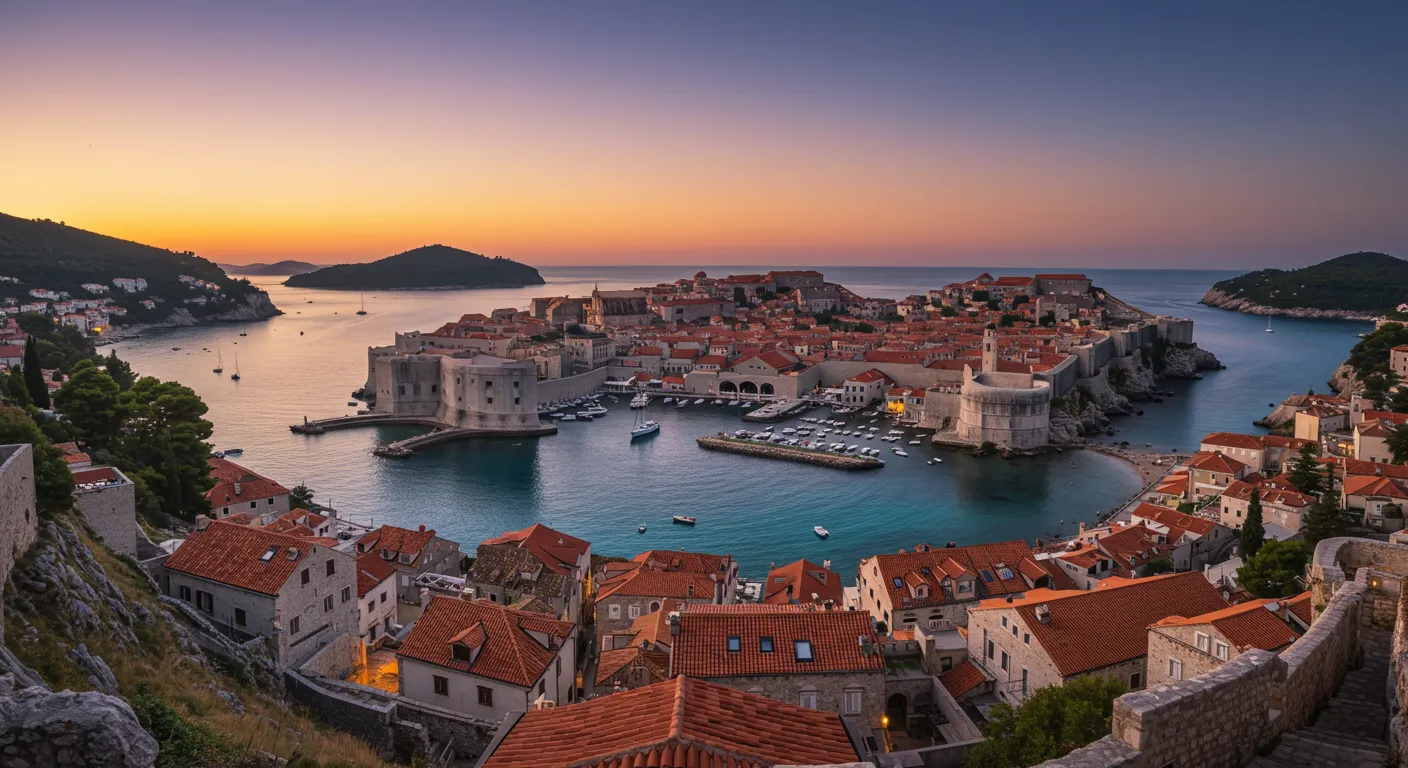
Dubrovnik's Old Town is genuinely stunning but chokes on cruise-ship crowds 10am–4pm. Walk the city walls right at opening (8am) or in the last hour before closing for empty stone and golden light. The Srđ cable car at sunset and blue hour gives the classic elevated shot. Consider basing in Cavtat or Lopud and daytripping in.
ICONIC · CROWD WARNING · SUNSET · BLUE HOUR · GOLDEN HOUR
Plitvice needs a timed ticket and an early start
Plitvice Lakes now uses timed-entry tickets that must be booked online in advance for peak season — walk-ups can sell out. Enter at opening to beat tour buses, and shoot the wooden boardwalks over turquoise water before crowds fill the frame. A polarising filter cuts glare on the lakes dramatically.
BOOK AHEAD · PHOTO · SUNRISE · CROWD WARNING · PERMIT NEEDED
When to Go
Late May to mid-June and all of September form the sweet spot: warm enough for swimming, soft enough for photography, and calm enough to actually enjoy the old towns. September edges it for food (harvest season) and golden light without July's brutal midday glare. If crowds are your enemy, early June beats August every time.
Adriatic Shoulder
The bookends of the coastal season, when weather is warm but crowds and prices ease. May–June and September–October offer swimmable seas without the August crush. This is when Croatia is at its most balanced.
Best for photography, walking and value; the ideal window to visit the coast and islands.
Sailing Peak
The height of yacht and flotilla season, when the Adriatic fills with boats and coastal towns hit maximum capacity. Warmest sea and guaranteed sun come with extreme crowds and top prices. [ASSUMPTION] marina berths book out well in advance.
Book everything months ahead; expect crowds and shoot at sunrise or blue hour.
Waterfall Season
Snowmelt and spring rain push Plitvice and Krka waterfalls to their fullest, most dramatic flow. Parks are lush and green with far fewer visitors than summer. Cool weather keeps beach tourism away.
Prime time for waterfall and landscape photography with minimal crowds.
Dead Coast
The coastal off-season when many island hotels, restaurants and ferry routes reduce service or close entirely. Old towns empty out, offering solitude but limited amenities. Bura winds frequently disrupt ferry crossings.
Great for solitary photography but check ferry schedules and closures carefully.
Advent Season
Zagreb transforms into one of Europe's most celebrated Christmas market destinations, with lights, food stalls and events across the city. It is a distinctly inland, urban highlight while the coast sleeps.
Base yourself in Zagreb; a strong reason to visit Croatia in deep winter.
Where to Stay
Croatia's accommodation value swings wildly by season — a Dubrovnik apartment that's 60 EUR in April can hit 200 EUR in August, and the Dalmatian coast is genuinely expensive in peak summer. The best value is in family-run apartments (sobe/apartmani) and konoba-style guesthouses, while true luxury clusters in Dubrovnik, Hvar, and Istria. Book far ahead for July–August; shoulder season (May–June, September) is the sweet spot for price and photography light.
Hotel Excelsior Dubrovnik
Ploče, Dubrovnik
Hotel
ICONIC · GOLDEN HOUR · PHOTO · SUNSET
Hotel Park Split
Bačvice, Split
Hotel
CENTRAL · PHOTO
Meneghetti Wine Hotel & Winery
Istria (near Bale)
Boutique Hotel
HIDDEN GEM · SEASONAL · BOOK AHEAD
Villa Nai 3.3
Dugi Otok island
Villa
UNIQUE · HIDDEN GEM · SPLURGE · PHOTO
Lighthouse Savudrija
Savudrija, Istria
Guesthouse
UNIQUE · SUNSET · BLUE HOUR · HIDDEN GEM
Divota Apartment Hotel
Varoš, Split
Boutique Hotel
CENTRAL · VALUE · PHOTO · FAMILY
Villa Adriatica
Zadar / Dalmatian coast
Guesthouse
VALUE · FAMILY · TRANSIT-FRIENDLY
Hostel Angelina Old Town
Old Town, Dubrovnik
Hostel
BUDGET · SOCIAL · CENTRAL · SUNRISE
Top Attractions
№ 1 · Essential
Dubrovnik Old Town Walls
★ ICONIC · PHOTO · GOLDEN HOUR · CROWD WARNING · BOOK AHEAD
The medieval walls encircling Dubrovnik are the real deal and genuinely worth the steep ticket. The 2km circuit delivers constant sea-and-rooftop views. Be warned: it's punishingly hot and crowded midday in summer.
Tip: Enter at the Ploce gate rather than the main Pile gate to walk against the crowd flow. Bring water — vendors up top charge triple.
Best: Right at 8am opening or the last two hours before closing for golden light and thinner crowds.
Fees: Around 35 EUR adults [ASSUMPTION]
Plitvice Lakes National Park
A cascade of 16 terraced turquoise lakes linked by waterfalls and boardwalks — one of Europe's most stunning natural sites and not overrated. The wooden walkways get congested, so timing matters enormously.
ICONICDiocletian's Palace, Split
A Roman emperor's retirement palace that became the living core of Split's old town — you wander through it, not around it. Shops and cafes fill the ancient substructures, which is charming but very commercial. Free to roam the streets; specific sites charge.
ICONICKrka National Park Waterfalls
Often pitched as a swimmable alternative to Plitvice, though swimming near the main falls is now restricted. Skradinski Buk is genuinely photogenic with boardwalk access. Less dramatic than Plitvice but easier and less crowded.
PHOTODay Trips
Plitvice Lakes National Park
Travel: [ASSUMPTION] ~130 km / 2 hr by car or bus from Zagreb; ~250 km / 3 hr from Split
Krka National Park
Travel: [ASSUMPTION] ~85 km / 1 hr by car from Split; ~15 km from Šibenik
Hvar Island (from Split)
Travel: [ASSUMPTION] ~1 hr by fast catamaran ferry from Split
Rovinj, Istria
Travel: [ASSUMPTION] ~250 km / 3+ hr by car from Zagreb; short hop within Istria
Zadar Old Town
Travel: [ASSUMPTION] ~160 km / 1.5 hr by car from Split; ~290 km from Zagreb
Mostar, Bosnia and Herzegovina
Travel: [ASSUMPTION] ~140 km / 2.5 hr by car from Split (border crossing)
Trakošćan Castle
Travel: [ASSUMPTION] ~85 km / 1.5 hr by car from Zagreb
Scenic Routes
Adriatic Highway (Jadranska Magistrala D8)
Driving
Route: Rijeka to Dubrovnik
ICONIC · PHOTO · GOLDEN HOUR · SEASONAL
Plitvice Lakes Lower-to-Upper Boardwalk Loop
Walking
Route: Entrance 1 to Entrance 2 (loop via boat)
ICONIC · PHOTO · BOOK AHEAD · CROWD WARNING · EASY WALK
Dubrovnik City Walls Circuit
Walking
Route: Pile Gate loop back to Pile Gate
ICONIC · PHOTO · BLUE HOUR · CROWD WARNING · EASY WALK
Krka National Park Skradinski Buk Trail
Walking
Route: Skradin/Lozovac entrance loop
PHOTO · FAMILY · EASY WALK · SEASONAL
Peljesac Peninsula Coastal Drive
Driving
Route: Ston to Orebic
HIDDEN GEM · PHOTO · GOLDEN HOUR
Premuzic Trail, Northern Velebit
Hiking
Route: Zavizan to Alan mountain hut
HIDDEN GEM · HARD HIKE · PHOTO · PERMIT NEEDED · SEASONAL
Street Art
Croatia's street art scene punches above its weight, concentrated mainly in Zagreb, Rijeka, and Split. Zagreb leads with a maturing legal-wall culture and festival-driven murals, while Rijeka earned real credibility as a 2020 European Capital of Culture with edgy, industrial-flavoured work. The coastal cities lean more sporadic and tourist-adjacent, but there are genuine finds if you look past the old-town postcard cores.
Branimirova Wall (Branimir Centre)
A long, legal graffiti wall running alongside the railway near the train station. Croatia's most reliable, consistently refreshed stretch of large-scale work, with everything from lettering to full pieces.
Branimirova ulica, alongside the railway near Branimir Centre, Zagreb
PHOTO · ICONIC · TRANSIT-FRIENDLY · GOLDEN HOUR
Martićeva & Kvaternik Square area
Zagreb's more bohemian pocket with commissioned murals, shutter art, and smaller pieces tucked into side streets and courtyards. Good density for a wander.
Martićeva ulica toward Trg Eugena Kvaternika, Zagreb
PHOTO · EASY WALK · HIDDEN GEM
Delta & Port district, Rijeka
Post-industrial waterfront and warehouse zone that became the heart of Rijeka's Capital of Culture murals. Larger, grittier, more conceptual work than Zagreb, set against port infrastructure.
Delta area near the port, Rijeka
PHOTO · GOLDEN HOUR · TRANSIT-FRIENDLY
Split urban fringe (Kman/Split 3 blocks)
Skip the old-town core, which is heritage-protected and mural-free. The socialist-era apartment blocks and underpasses on the city's edge hold scattered pieces and tags with more honest local energy.
Kman and Split 3 residential districts, east of the centre
HIDDEN GEM · PHOTO
Zagreb tunnel and underpass tags
Various pedestrian underpasses hold quick tags and throw-ups. Honestly overrated as a destination on their own, but useful filler if you're passing through and want texture shots.
Assorted underpasses, central Zagreb
NIGHT SHOOT · RAINY DAY
Culture & History
Croatia sits on a fault line between empires — Roman, Venetian, Habsburg, Ottoman, and Yugoslav — and its culture is a layered record of all of them, expressed in stone, cuisine, dialect, and song. Its identity is fiercely regional: a Dalmatian coast dweller, an Istrian, and a Slavonian inland farmer share a nation but very different traditions. What resonates is the density of it — 2,000 years of continuous urban life packed into a small, walkable country.
Eat & Drink
Croatian food splits along its geography: the Adriatic coast leans Mediterranean, with olive oil, grilled fish, black cuttlefish risotto, and Dalmatian peka (meat or octopus slow-cooked under a bell-shaped lid). Inland and Zagreb pull toward Central European comfort food, with stews, strukli (baked cheese pastry), and hearty roasts. Istria is its own quiet powerhouse, trading in truffles, wild asparagus, and some of Europe's most underrated olive oils and wines.
Pelegrini ★★★★★
modern Dalmatian tasting menus, local fish, Sibenik-region produce
Sibenik, Jurja Dalmatinca 1, opposite St James Cathedral
Restaurant · msw:dinner
Konoba Batelina ★★★★★
nose-to-tail seafood, fish offal, whatever came off the boat that day
Banjole near Pula, Cimulje 25
Restaurant · msw:dinner
Zinfandel's ★★★★
seasonal Croatian produce, veggie-forward plates, refined mains
Zagreb, Esplanade Hotel, Mihanoviceva 1
Restaurant · vegetarian_restaurant
Konoba Marjan ★★★★
grilled fish, black risotto, Dalmatian classics
Split, Senjska ul. 1, near Old Town
Restaurant · msw:lunch
Nishta ★★★
vegan curries, wraps, and bowls with global flavours
Dubrovnik, Prijeko ul. 30, Old Town
Restaurant · vegan_restaurant
Cogito Coffee
Croatia's leading specialty roaster, single-origin espresso
Zagreb, multiple locations incl. Varsavska
Coffee · cafe
D16 Coffee
Dubrovnik's serious third-wave coffee, pour-overs
Dubrovnik, Old Town near the walls
Coffee · cafe
Kavana Bar Grad
classic Croatian kava culture, long lingering coffees
Split, Riva waterfront
Coffee · cafe
Eliscaffe
long-running micro-roaster, espresso classics
Zagreb, Ilica 63
Coffee · cafe
Mlinar
burek, krafne (doughnuts), savory and sweet pastries
Nationwide chain, found in most towns
Bakery · bakery
Kruh i to
artisan sourdough, breakfast pastries, sandwiches
Zagreb, city centre
Bakery · bakery · breakfast_restaurant
Kraš Choco Bar
Croatian chocolate, Bajadera pralines, pastries
Zagreb, Ilica
Bakery · bakery
Vege Fina
daily-changing vegetarian buffet, home-style plates
Zagreb, city centre
Vegetarian · vegetarian_restaurant
Barba
plant-forward small plates and creative bowls
Split area
Vegetarian · vegan_restaurant
Falafel Bar
falafel wraps, hummus, quick vegan bites
Zagreb, Tkalciceva area
Vegetarian · vegetarian_restaurant · vegan_restaurant
Shopping
Croatia rewards shoppers who prize craft over kitsch — this is a country of small artisan workshops, coastal lace traditions, and regional food-adjacent goods like lavender and salt. Skip the mass-produced 'Croatia' magnets and you'll find genuinely distinctive objects tied to specific towns and islands.
Dolac Market
Mixed
Beyond the famous produce section, the covered lower level and surrounding stalls carry handmade textiles, wooden kitchenware, Licitar hearts, and Croatian honey products. Great for craft and mixed non-food goods.
Market · ICONIC · PHOTO · TRANSIT-FRIENDLY · GOLDEN HOUR
Hrelić Flea Market
Flea
Yugoslav-era memorabilia, vintage tools, old cameras, vinyl, antiques, and genuine curios. This is the real deal for collectors, not a tourist market.
Market · HIDDEN GEM · BUDGET · BARGAIN · PHOTO
British Square Antiques Market (Britanac)
Antiques
Sunday-only antiques and collectibles — postcards, jewellery, silverware, old prints, and small furniture. Curated and calmer than Hrelić.
Market · ANTIQUES · TRANSIT-FRIENDLY · BARGAIN
Tkalčićeva Street & Radićeva, Zagreb
Cobbled Upper Town streets lined with independent boutiques, artisan shops, and design studios rather than chains.
Croatian design collectives (Take Me Home, I-GLE), local jewellery, handmade leather goods, and Licitar and craft shops. Good for authentic gifts.
District · LOCAL · PHOTO
Stradun & side streets, Dubrovnik Old Town
Tourist-heavy main drag with a mix of overpriced souvenir shops and a few genuine artisan holdouts on the side streets.
Konavle embroidery, coral and filigree jewellery, and local olive-wood goods — but hunt the quieter side lanes off Stradun to avoid markup. The main strip is largely a CROWD WARNING.
District · ICONIC · CROWD WARNING · LUXURY
Diocletian's Palace lanes, Split
Historic core with small craft shops tucked into Roman-era stone passages, alongside inevitable tourist stalls.
Handmade sandals, local ceramics, and Dalmatian textiles. The best independent makers are in the narrow lanes away from Peristyle Square.
District · LOCAL · PHOTO · HIDDEN GEM
Photo Spots
Seasonal light: Croatia sits around 43–45°N, so day length swings hard. In June sunrise is roughly 5:15–5:30am and sunset 8:40–8:50pm, giving long, generous golden and blue hours — plan two shoots a day with a long midday break when the Adriatic sun is brutally contrasty. In December sunrise slides to ~7:15am and sunset to ~4:30pm, compressing everything but delivering lower, softer, warmer light all day that flatters the terracotta towns. Shoulder seasons (May, late Sept–Oct) are the sweet spot: workable temperatures, dramatic skies over the sea, thinner crowds at Plitvice and the walled cities, and clean water color before summer algae. Coastal haze builds through July–August, softening distant mountain layers — a polarizer and a bit of dehaze in post recover it. Gear and editing: The dominant subjects here are turquoise water, warm limestone, and terracotta roofs against blue sea — a circular polarizer is the single most valuable filter in the country, doing more for water and rooftop saturation than any slider. Bring a 6–10 stop ND for the travertine falls at Plitvice and Krka. Lens kit: a 16–35mm for old-town interiors and Sea Organ foregrounds, and a 70–200mm for the rooftop and cliff compression that defines the coast. A sturdy travel tripod earns its weight at blue hour in Rovinj, Zadar, and the dawn Peristyle in Split. In editing, resist over-pushing the teal — the water is genuinely that color, so protect highlights and pull cyan luminance rather than cranking saturation, which quickly looks fake. For terracotta towns, warm the white balance slightly and lift shadows gently; the limestone holds detail that flat processing kills. Shoot RAW throughout — the high dynamic range between shaded stone alleys and blown Adriatic sky demands it.
Dubrovnik City Walls
The terracotta rooftops packed inside the medieval walls, with the Adriatic behind. Shoot from the highest western section near Minceta Tower looking east across the Old Town, or south toward Lokrum Island. The compression of orange roofs against blue sea is the signature Dalmatia shot.
Plitvice Lakes — Upper Lakes Boardwalks
Turquoise terraced lakes and travertine waterfalls linked by wooden boardwalks. The classic Veliki Slap overlook and the layered cascades between Gavanovac and Kaluderovac. Long exposures turn the water silky against vivid mineral color.
Rovinj Old Town from Sveta Katarina
The stacked pastel houses rising to the St. Euphemia bell tower, mirrored in the harbor. Shoot from the waterfront or from Sveta Katarina island across the channel. This is Istria's postcard and it delivers at blue hour when tower lights kick in.
Zadar Sea Organ & Greeting to the Sun
The circular solar installation glowing in shifting LED colors at dusk, set against a legendary Adriatic sunset. Shoot low to capture the illuminated glass disc with silhouetted people and the sun dropping over the sea. Alfred Hitchcock called this the best sunset in the world.
Baska Voda / Makarska Riviera Cliffs
The Biokovo mountains dropping straight into clear turquoise water, with pebble coves and pine-framed viewpoints. Less-photographed than the walled cities, this stretch gives you dramatic land-meets-sea layering and empty foregrounds.
Split Diocletian's Palace — Peristyle & Cellars
The Roman colonnaded Peristyle courtyard at dawn with no crowds, and the atmospheric stone Substructures below. Above ground: warm limestone glowing at first light. Below: moody shafts of light through ancient arches — an underrated interior shoot.
Kotor-adjacent Perast Views — Croatian Border Skip; use Ston Walls
The 'European Great Wall' of Ston — 5km of medieval fortifications climbing the hillside above the salt pans and red rooftops. A genuinely under-shot spot: hikers and photographers get switchback lines of stone wall snaking up the ridge with the bay below.
Krka Waterfalls — Skradinski Buk
Broad multi-tiered waterfalls tumbling over travertine into wide emerald pools, with boardwalk viewpoints framing the full cascade. Less iconic than Plitvice but the falls are wider and the light more open, making it a strong midday-alternative water shoot.
Suggested Itinerary
Nightlife
Croatia's nightlife splits sharply between the coast and the capital: summer means beach clubs, open-air bars and international DJ events along the Adriatic, while Zagreb runs a year-round scene of caffè-bars, craft-beer spots and basement clubs. Things start late — dinner runs until 22:00, bars fill after 23:00, and clubs don't peak until well past 01:00. The islands (Hvar, Pag) are heavily tourist-driven in peak season; Zagreb and Rijeka stay more local.
Carpe Diem Beach
A boat-access island club where the party runs from sunset until sunrise in a haze of house music, sea spray and expensive rosé.
Summer only (roughly June–September). Taxi boat from Hvar town harbour; last boats back run near dawn. Table reservations advised on event nights. Cover varies by DJ lineup, often 20–40 EUR. [ASSUMPTION] Exact 2024 prices vary.
Kiva Bar
A tiny, sweaty stone-walled bar in a narrow lane where the crowd spills into the street and the bartenders pour shots faster than you can order.
No reservations, no cover. Gets rammed by midnight in summer. Good pre-club warmup spot. Cash and card accepted.
Bacchus Jazz Bar
A cellar-and-terrace spot tucked into the palace walls where mellow live jazz and wine draw a mixed local-tourist crowd on warm evenings.
Live sets several nights a week in season. No cover typically. Terrace fills first — arrive before 21:00 for a good table. Good for a slower evening.
Bacvice / Zbirac area
An open-air beach-bar strip where locals play picigin by day and drink under string lights by night, more relaxed than the palace crowd.
Cheapest drinks in Split. Casual dress, no cover. Busiest on weekend nights. Walkable from the old town in about 15 minutes.
Hemingway Bar
A polished harbourside cocktail lounge with sea views, well-made classics and a see-and-be-seen summer crowd.
Smart-casual expected. Reservations wise for waterfront tables in peak season. Cocktails 12–16 EUR. Multiple locations across Croatia.
Medvedgrad Pivnica
A no-nonsense Croatian brewpub with house-brewed lagers, hearty grilled food and a loud, unpretentious after-work local crowd.
Great for a relaxed year-round night. No cover, no dress code. Multiple branches in Zagreb. Try the Zlatni Medvjed (Golden Bear) lager.
Tkalciceva Street
A pedestrian street lined wall-to-wall with caffè-bars and terraces where Zagreb's evening flows from coffee to cocktails without missing a beat.
Not a single venue but the city's main bar strip. Bar-hop freely; no covers. Busiest Thursday–Saturday. Great for people-watching.
Vintage Industrial Bar
A converted industrial space hosting indie, rock and electronic gigs for an alternative local crowd who came for the band, not the selfies.
Cover depends on the act (often 5–15 EUR). Check their event schedule before going — dead on non-gig nights. Casual dress.
Papaya Club
A massive open-air beach superclub that is the epicentre of Croatia's summer festival scene — pure daytime-to-dawn EDM excess.
Summer only, tourist-dominated. Big-name DJ nights sell tickets in advance — BOOK AHEAD. Overrated outside festival dates; midweek it can feel empty. Pack for heat and sand.
Bacchus / Nokturno wine bars
Intimate stone-walled wine spots pouring Croatian Plavac Mali and Posip within the city walls, a calmer alternative to the cruise-crowd bars.
Dubrovnik nightlife is pricey and tourist-heavy. Better value found just outside the walls. Glasses of local wine 6–10 EUR. No cover.
Build your own Itinerary from this guide
Pick the places you care about — attractions, photo spots, map markers — and we'll lay out a day-by-day starting point. Yours to edit; guide updates never touch it.
Premium section
Special Interest
This part of the guide is included with a NextTripLabs account. Sign in to read it here — full guide unlocks and itineraries are available in the NextTripLabs app.
Premium section
ISKCON Centers
This part of the guide is included with a NextTripLabs account. Sign in to read it here — full guide unlocks and itineraries are available in the NextTripLabs app.
Premium section
Record Stores
This part of the guide is included with a NextTripLabs account. Sign in to read it here — full guide unlocks and itineraries are available in the NextTripLabs app.
Premium section
Walkability Scores
This part of the guide is included with a NextTripLabs account. Sign in to read it here — full guide unlocks and itineraries are available in the NextTripLabs app.
Premium section
unesco world heritage sites
This part of the guide is included with a NextTripLabs account. Sign in to read it here — full guide unlocks and itineraries are available in the NextTripLabs app.
Premium section
Hidden Gems and Off the Beaten Path
This part of the guide is included with a NextTripLabs account. Sign in to read it here — full guide unlocks and itineraries are available in the NextTripLabs app.
Premium section
Sustainability Guide
This part of the guide is included with a NextTripLabs account. Sign in to read it here — full guide unlocks and itineraries are available in the NextTripLabs app.