Essentials
Currency, language, transit & safety — tap to expand.
Currency — Japanese Yen (¥ / JPY). Roughly ¥155 = $1 USD / ¥168 = €1 EUR as of mid-2025 [ASSUMPTION]
Cash vs card — Japan has shifted dramatically toward cards and IC cards (Suica/PASMO) post-COVID, but cash is still king at small restaurants, shrines, rural ryokans, and street food stalls. Always carry ¥10,000–¥20,000 in cash. 7-Eleven and Japan Post ATMs reliably accept foreign cards 24/7. Tipping is NOT expected and can actually cause confusion — don't do it. Some high-end restaurants add a service charge (otoshi) automatically.
Budget — Budget: ¥8,000–¥12,000/day ($50–$75 USD) — hostels, convenience store meals, local trains. Mid-range: ¥20,000–¥35,000/day ($130–$225 USD) — business hotels, sit-down restaurants, JR Pass travel. Luxury: ¥60,000+/day ($390+ USD) — ryokans with kaiseki, shinkansen green car, high-end sushi counters.
Language — Japanese (Nihongo) is the sole official language, spoken by virtually the entire population of 125 million.
Language barrier — English proficiency is limited outside major tourist zones. Train stations and airports have excellent English signage. Hotel front desks in cities are usually fine. At local restaurants and in rural areas, expect a real language barrier. Google Translate with the camera feature is genuinely essential — download the Japanese offline pack before you arrive. Younger Japanese in cities understand basic English but may be shy about speaking it.
Getting around — Japan's public transit is the best in the world — punctual to the second, clean, and comprehensive. The Japan Rail Pass (JR Pass) is worth it if you're doing 2+ long-distance shinkansen trips, but prices rose significantly in late 2023 (7-day ordinary now ¥50,000). For Tokyo/Osaka-only trips, skip the JR Pass and buy individual tickets or use IC cards. Get a Suica or PASMO card immediately at any station — it works on virtually all trains, buses, and convenience stores nationwide.
Safety — Japan is one of the safest countries on Earth for travelers. Violent crime against tourists is essentially nonexistent. You can walk any neighborhood at any hour. Lost wallets are routinely turned in with cash intact. Real concerns: earthquakes are frequent — download the Yurekuru Call app for early warnings and know your hotel's evacuation plan. Typhoon season runs June through October and can disrupt travel plans significantly. Heatstroke is a genuine danger July–September — humidity is brutal, carry water and take breaks. Cycling while drunk is illegal and enforced. Be aware of groping on crowded trains — women-only cars exist during rush hours on most major lines. Deer in Nara can bite and headbutt if you tease them with crackers. Hiking trails (especially Mt. Fuji) are well-marked but altitude sickness and weather shifts catch people off guard every year.
Highlights
Japan operates on a frequency unlike anywhere else — ancient ritual and hyper-modern efficiency coexist without contradiction. The experience is defined by an almost obsessive attention to detail in everything from convenience store onigiri to temple garden raking. It rewards travelers who slow down enough to notice the craft behind every interaction, yet moves fast enough to keep even seasoned travelers slightly off-balance.
The Convenience Store Is a Destination
7-Eleven, Lawson, and FamilyMart are not what you think. Fresh egg sandwiches, seasonal desserts, strong coffee, ATMs that accept foreign cards, event tickets, and bill payment. Lawson's karaage-kun fried chicken and 7-Eleven's onigiri are genuinely good meals. Their ATMs (especially 7-Eleven and Japan Post Bank) are the most reliable way to withdraw cash with a foreign card. Visit one within your first hour.
BUDGET · HIDDEN GEM
Visa-Free Entry for Most Nationalities
Citizens of 68 countries including the US, UK, Canada, Australia, and most EU nations get 90-day visa-free tourist entry. You will fill out a customs declaration and Visit Japan Web form before arrival — complete Visit Japan Web (vjw.digital.go.jp) at least 24 hours before landing to generate a QR code that speeds up immigration. Passport must be valid for duration of stay. No visa-on-arrival fee.
BOOK AHEAD
Cash Still Matters More Than You Expect
Despite IC cards and QR payments, many ryokan, small restaurants, shrines, and market stalls are cash-only. Carry 10,000–20,000 yen in small bills and coins at all times. IC cards like Suica and PASMO (now available as mobile Suica on iPhone and Apple Watch) work for transit and many convenience stores and chain restaurants, but do not replace cash entirely. Credit card acceptance has improved significantly in cities since 2023 but remains patchy in rural areas.
BUDGET · PLUGIN TIP
SIM and Connectivity Setup
Get an eSIM before you fly — Ubigi, Mobal, and IIJmio are reliable options with data-only plans from around 1,500 yen for 3GB. Physical SIM vending machines exist at Narita and Kansai airports from providers like b-mobile and Sakura Mobile. Free WiFi is unreliable outside Starbucks and train stations. Download Google Maps offline maps for your regions and the Japan Official Travel App (by JNTO) before departure. Google Maps transit directions in Japan are exceptionally accurate — trust them over Apple Maps.
PLUGIN TIP · TRANSIT-FRIENDLY
Etiquette That Actually Matters
Remove shoes when entering homes, ryokan rooms, some restaurants, and temple interiors — look for a genkan (entry step) and slippers. Do not tip anywhere, ever — it causes confusion and can be seen as rude. Eat ramen and noodles loudly (slurping is correct), but do not eat while walking in public outside of festival contexts. On escalators, stand left in Osaka and stand right in Tokyo. Bow slightly when thanking someone. Talking on phones on trains is considered very rude — set to manner mode (silent).
ICONIC
Ekiben and Train Food Culture
Buying a regional ekiben (train station bento) before boarding a Shinkansen is one of Japan's best food experiences. Each major station curates local specialties — Tokyo Station alone has over 200 varieties at Ekiben-ya Matsuri on the Shinkansen concourse. Look for seasonal limited editions. Pair with a tall can of Asahi or Kirin from the platform kiosk. This is expected behavior on long-distance trains, though eating on local commuter trains is frowned upon.
ICONIC · HIDDEN GEM · BUDGET
The Coin Locker System
Japan's train stations have extensive coin locker networks in small (400 yen), medium (500 yen), and large (600–700 yen) sizes. Many now accept IC cards and give you a receipt code instead of a key. Use the Coin Locker Navi app or website (coinlocker-navi.com) to find available lockers at major stations. This unlocks day-trip flexibility — store your bag at a hub station and explore a nearby city unburdened. Lockers at popular stations like Kyoto fill by 10am on weekends.
TRANSIT-FRIENDLY · PLUGIN TIP · BUDGET
When to Go
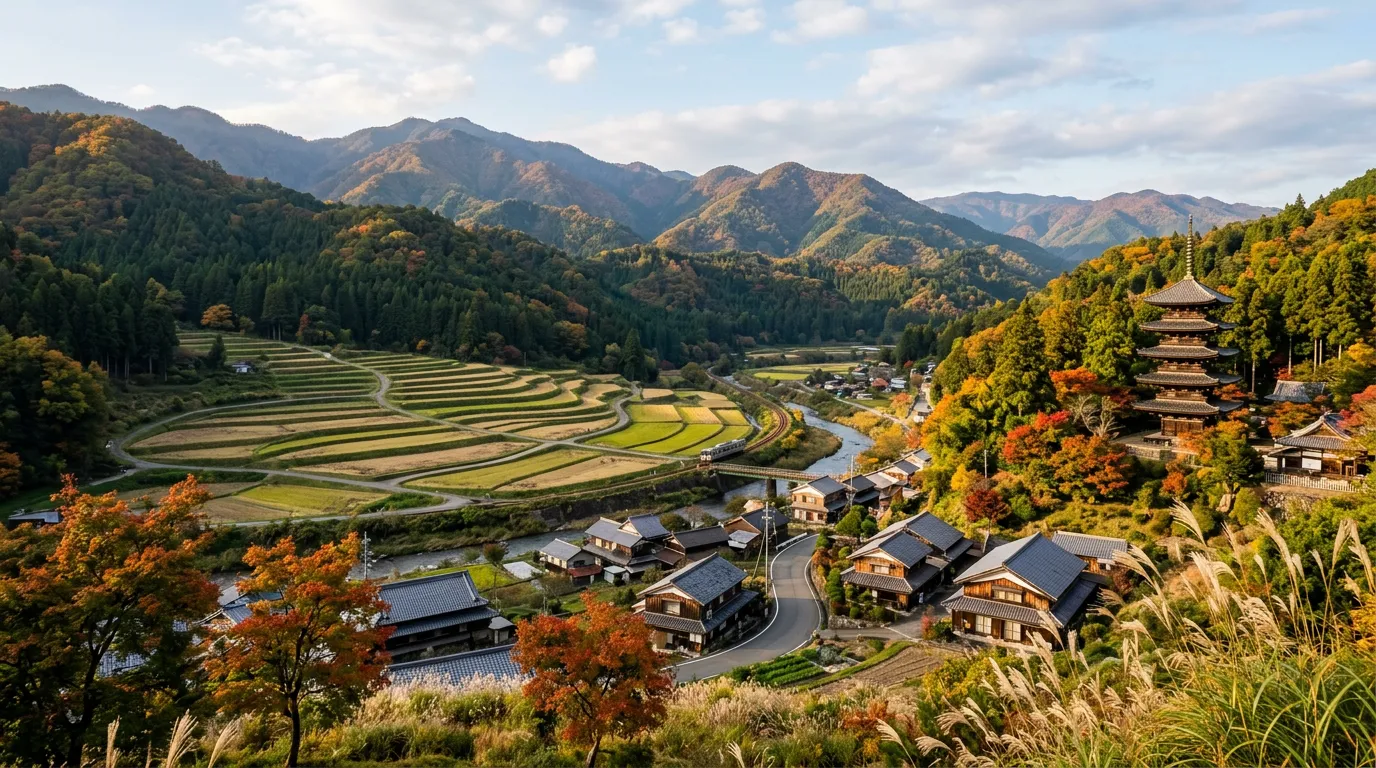
Late October through mid-November offers Japan's finest convergence of comfortable walking weather, spectacular koyo foliage, peak seasonal cuisine, and the year's best golden-hour light for photography. Early April is the iconic alternative for cherry blossoms, but expect higher prices and denser crowds. For the best balance of all three priorities, target the first two weeks of November.
Sakura (Cherry Blossom) Season
Japan's most celebrated natural event. The cherry blossom front sweeps from Kagoshima in late March to Hokkaido in mid-May. Full bloom lasts roughly one week per location, making timing critical.
Book Kyoto and Tokyo hotels 3–6 months ahead for late March through mid-April; expect 2–3x pricing at peak spots.
Tsuyu (Rainy Season)
A sustained band of rain blankets Honshu, Shikoku, and Kyushu for roughly five weeks. Hokkaido is largely exempt. Humidity is oppressive but hydrangea blooms are stunning.
Budget-friendly window if you target Hokkaido or pack rain gear; expect indoor-heavy itineraries elsewhere.
Matsuri (Festival) Season
Japan's great summer festivals concentrate in these two months — Gion Matsuri, Tenjin Matsuri, Nebuta, Awa Odori, and thousands of local bon odori and fireworks events.
Book festival-city accommodation months ahead; transport is strained during Obon week (Aug 13–16).
Typhoon Season
Tropical cyclones track across southern and central Japan, occasionally reaching Tokyo. Peak risk is September. Flights and ferries cancel with little notice; Okinawa and Kyushu are most exposed.
Always buy travel insurance with disruption cover; build buffer days into island and coastal itineraries.
Koyo (Autumn Foliage) Season
Autumn colour descends from Hokkaido in early October to Kyushu by early December. Peak in Kyoto is typically mid-to-late November. Night illuminations transform temple gardens.
Best photography season; Kyoto mid-November rivals sakura for crowds and pricing.
Ski Season
Japan's legendary powder — Hokkaido (Niseko, Furano, Rusutsu) and Nagano (Hakuba, Nozawa) offer some of the world's deepest, driest snow. Season extends into April in some Hokkaido resorts.
Niseko peak weeks (late Dec–early Feb) require booking 6+ months ahead; midweek visits offer dramatically shorter lift lines.
Where to Stay
Japan offers one of the widest accommodation spectrums in the world, from ultra-luxury ryokan with kaiseki dinners to spotless capsule hotels that cost less than a nice lunch. Value is generally excellent in the midrange tier, especially business hotels that punch well above their price with impeccable cleanliness and clever room design. Key gotcha: peak seasons (cherry blossom late March-mid April, autumn foliage November, Golden Week late April-early May, and New Year) can double or triple prices and sell out months ahead.
Aman Tokyo
Otemachi, Tokyo
Hotel
ICONIC · PHOTO · BOOK AHEAD
Gora Kadan
Hakone, Kanagawa
Resort
ICONIC · BOOK AHEAD · HIDDEN GEM
Mitsui Garden Hotel Kyoto Shinmachi Bettei
Nakagyo-ku, Kyoto
Boutique Hotel
CENTRAL · PHOTO · TRANSIT-FRIENDLY
Dormy Inn Premium Namba
Namba, Osaka
Hotel
BUDGET · CENTRAL · TRANSIT-FRIENDLY
Nine Hours Shinjuku
Shinjuku, Tokyo
Hostel
BUDGET · TRANSIT-FRIENDLY · ICONIC
Piece Hostel Sanjo
Sanjo, Kyoto
Hostel
BUDGET · TRANSIT-FRIENDLY · HIDDEN GEM
Trunk Hotel
Shibuya, Tokyo
Boutique Hotel
PHOTO · NEXTPIC · CENTRAL
Yoshina Saryo
Ine, Kyoto Prefecture
Guesthouse
HIDDEN GEM · PHOTO · SUNRISE · BOOK AHEAD
Top Attractions
№ 1 · Essential
Fushimi Inari Taisha
★ ICONIC · PHOTO · SUNRISE · FREE · CROWD WARNING · EASY WALK · NEXTPIC
Thousands of vermillion torii gates snake up Mount Inari in one of Japan's most photographed scenes. The full hike takes 2-3 hours but most tourists only do the first 10 minutes, meaning the upper trails are surprisingly peaceful. Worth every bit of hype — this is not overrated.
Tip: Start at 6am or after 5pm to shoot the gates without crowds. The intersection at Yotsutsuji is the best viewpoint over Kyoto and marks the halfway point where 90% of visitors turn back.
Best: Early morning before 7am for empty gate tunnels and soft diffused light filtering through the torii
Fees: Free
Hiroshima Peace Memorial Park and Museum
The A-Bomb Dome and surrounding peace park form one of the most emotionally powerful sites on Earth. The completely renovated museum uses personal artifacts and survivor testimonies rather than graphic shock, making it deeply moving without being exploitative. Essential for understanding modern Japan.
ICONICArashiyama Bamboo Grove
The towering bamboo stalks are genuinely beautiful but this is one of Kyoto's most overcrowded spots — by 9am the narrow path is shoulder-to-shoulder tourists with selfie sticks. Honestly, the photos you see online are shot at 5:30am or heavily edited. Still worth seeing but manage expectations.
ICONICNara Park and Todai-ji Temple
Over 1,000 free-roaming deer bow for crackers in this ancient park, and Todai-ji houses a 15-meter bronze Buddha inside the world's largest wooden building. It is genuinely magical and very family-friendly. An easy day trip from Kyoto or Osaka taking about 45 minutes by train.
ICONICDay Trips
Nikko (from Tokyo)
Travel: 150 km / 2 hr by Tobu Railway or JR Shinkansen + local line
Miyajima Island (from Hiroshima)
Travel: 30 km / 1 hr by JR train + 10-min ferry
Kamakura (from Tokyo)
Travel: 50 km / 1 hr by JR Yokosuka Line
Mount Koya / Koyasan (from Osaka)
Travel: 80 km / 2 hr by Nankai Railway + cable car
Hakone (from Tokyo)
Travel: 90 km / 1.5 hr by Odakyu Romance Car
Shirakawa-go (from Takayama or Kanazawa)
Travel: 50 km from Takayama / 75 km from Kanazawa — 50 min / 1.25 hr by bus
Kurama and Kibune (from Kyoto)
Travel: 12 km / 30 min by Eizan Railway
Scenic Routes
Shimanami Kaido
Cycling
Route: Onomichi (Hiroshima) to Imabari (Ehime)
ICONIC · PHOTO · NEXTPIC · GOLDEN HOUR · BOOK AHEAD
Nakasendo Trail — Magome to Tsumago
Walking
Route: Magome-juku to Tsumago-juku (Nagano/Gifu border)
ICONIC · PHOTO · EASY WALK · HIDDEN GEM · FREE
Venus Line (Utsukushigahara Skyline)
Driving
Route: Chino to Utsukushigahara Highlands (Nagano Prefecture)
HIDDEN GEM · PHOTO · SEASONAL · FREE · GOLDEN HOUR
Kumano Kodo — Nakahechi Route (Takijiri to Hongu)
Hiking
Route: Takijiri-oji to Kumano Hongu Taisha
ICONIC · HARD HIKE · PHOTO · BOOK AHEAD · NEXTPIC
Philosopher's Path (Tetsugaku no Michi)
Walking
Route: Ginkaku-ji (Silver Pavilion) to Nanzen-ji, Kyoto
ICONIC · EASY WALK · PHOTO · SEASONAL · CROWD WARNING · TRANSIT-FRIENDLY
Aspite Line (Hachimantai)
Driving
Route: Goshogake Onsen to Hachimantai Summit (Akita/Iwate border)
HIDDEN GEM · PHOTO · SEASONAL · FREE · SUNRISE
Street Art
Japan's street art scene is a fascinating contradiction. In a culture that prizes order, cleanliness, and respect for shared spaces, unsanctioned graffiti is extremely rare and socially condemned. Yet Japan has cultivated some of the world's most distinctive mural districts, commissioned art projects, and artist-driven neighborhoods. The scene thrives in curated pockets: Osaka's Amerikamura, Tokyo's Shimokitazawa and Harajuku backstreets, and entire rural towns revitalized through large-scale art installations. Japanese street art leans heavily toward character illustration, pop surrealism, and precision craft rather than Western-style wildstyle graffiti.
Harajuku Backstreets & Cat Street
The narrow lanes behind Takeshita-dori and along Cat Street host rotating commissioned murals, paste-ups, and shop facades painted by local illustrators. The area blends fashion culture with visual art in a way unique to Tokyo. Walls change seasonally as brands collaborate with artists for shop exteriors.
Cat Street (between Jingumae 5-chome and 6-chome), Shibuya-ku, Tokyo
ICONIC · PHOTO · GOLDEN HOUR · EASY WALK · TRANSIT-FRIENDLY
Shimokitazawa
Tokyo's bohemian neighborhood is packed with tiny live houses, vintage shops, and indie cafes. The narrow alleys feature small-scale murals, stencil art, sticker bombing, and hand-painted shop signage that blurs the line between commercial and street art. The recent redevelopment around Shimokitazawa Station (Bonus Track area) has added curated mural walls.
Kitazawa 2-chome and 3-chome backstreets, Setagaya-ku, Tokyo
HIDDEN GEM · PHOTO · EASY WALK · TRANSIT-FRIENDLY · RAINY DAY
Amerikamura (American Village), Osaka
Osaka's answer to Harajuku is far grittier and more authentically street. The Triangle Park area and surrounding alleys have Osaka's densest concentration of murals, throw-ups, and paste-ups. This is where Japanese hip-hop culture and West Coast American street art aesthetics collide. The energy here is distinctly Osakan: louder, more colorful, and less restrained than Tokyo's scene.
Around Triangle Park, Nishi-Shinsaibashi 1 and 2-chome, Chuo-ku, Osaka
ICONIC · PHOTO · GOLDEN HOUR · EASY WALK · CROWD WARNING · NEXTPIC
Naoshima Art Island
Not traditional street art but an entire island transformed into an open-air contemporary art experience. Yayoi Kusama's yellow pumpkin on the pier is one of Japan's most photographed art installations. Abandoned houses have been converted into immersive art pieces by the Art House Project. This is street art philosophy scaled to an island.
Naoshima Island, Kagawa Prefecture (ferry from Uno Port or Takamatsu)
ICONIC · PHOTO · SUNSET · BOOK AHEAD · NEXTPIC · CROWD WARNING
Kogane-cho, Yokohama
A former red-light district deliberately reimagined through public art. The Koganecho Art Management initiative has placed commissioned murals, sculptures, and installations under and along the elevated train tracks. It is a rare Japanese example of using street art as explicit urban renewal. Dozens of artist studios occupy former illicit establishments, and many open their doors to visitors.
Under the elevated tracks between Koganecho and Hinodecho stations, Naka-ku, Yokohama
HIDDEN GEM · PHOTO · RAINY DAY · FREE · TRANSIT-FRIENDLY · EASY WALK
Culture & History
Japan's culture emerges from an extraordinary tension between preservation and reinvention — a volcanic archipelago that absorbed Chinese writing, Indian Buddhism, and Western technology while forging something unmistakably its own. Centuries of island isolation under the Tokugawa shogunate concentrated artistic refinement to an almost obsessive degree, producing aesthetic philosophies like wabi-sabi and mono no aware that continue to shape global design, cuisine, and storytelling. The result is a society where a 1,300-year-old shrine coexists with bleeding-edge robotics, and neither feels out of place.
Eat & Drink
Japan's food culture is a universe unto itself, where a lifetime of mastery might be devoted to perfecting a single dish. From Michelin-starred kaiseki temples in Kyoto to standing-room-only ramen counters in Tokyo's train stations, the obsession with quality ingredients, seasonal awareness, and precise technique is universal. Sushi, tempura, tonkatsu, yakitori, soba, udon, and okonomiyaki each have dedicated artisans who have spent decades refining their craft, and even a convenience store onigiri can be genuinely excellent.
Sukiyabashi Jiro Honten ★★★★★
Omakase sushi, legendary rice seasoning, pristine nigiri of seasonal fish
Ginza, Chuo-ku, Tokyo - Tsukamoto Sogyo Bldg B1F, 4-2-15 Ginza
Restaurant · msw:dinner
Ichiran Ramen Shibuya ★★★★★
Tonkotsu ramen with customizable spice, richness, and noodle firmness via paper order form
Shibuya, Tokyo - 1-22-7 Jinnan
Restaurant · msw:lunch
Shigetsu at Tenryuji ★★★★
Shojin ryori, traditional Buddhist vegetarian cuisine served in a Zen temple setting with garden views
Arashiyama, Kyoto - inside Tenryuji Temple grounds
Restaurant · vegetarian_restaurant
Kichi Kichi Omurice ★★★★
Theatrical omurice where the chef slits open a silky omelet at the table over fried rice
Pontocho, Kyoto - Kiyamachi-dori, Nakagyo-ku
Restaurant · msw:lunch
Ain Soph Journey Shinjuku ★★★
Vegan fluffy pancakes, plant-based burgers, cruelty-free tiramisu
Shinjuku 3-chome, Tokyo - 3-8-9 Shinjuku
Restaurant · vegan_restaurant
Fuglen Tokyo ★★★★
Norwegian-roasted specialty coffee by day, craft cocktails by night, in a vintage mid-century interior
Tomigaya, Shibuya-ku, Tokyo
Coffee · cafe
% Arabica Kyoto Higashiyama ★★★★
Beautifully pulled espresso drinks with a direct view of the Yasaka Pagoda from the doorstep
Higashiyama, Kyoto - 87-5 Hoshinocho
Coffee · cafe
Onibus Coffee Nakameguro ★★★
Single-origin pour-over in a converted warehouse with open roasting area
Nakameguro, Meguro-ku, Tokyo
Coffee · cafe
Vermillion Espresso Bar ★★★
Specialty espresso served steps from Fushimi Inari Shrine, great pre-hike fuel
Fukakusa, Fushimi-ku, Kyoto
Coffee · cafe
Boulangerie Bonheur ★★★★
Japanese-French hybrid pastries including matcha croissants, red bean danish, and exceptional shokupan milk bread
Kagurazaka, Shinjuku-ku, Tokyo
Bakery · bakery
Pelican Cafe ★★★★
Toast and sandwiches made from Pelican Bakery's legendary shokupan, baked since 1942
Asakusa, Taito-ku, Tokyo - 1-1 Kotobuki 3-chome [ASSUMPTION]
Bakery · bakery · breakfast_restaurant
Sizuya Bakery ★★★
Kyoto institution famous for karneh bread, curry pan, and seasonal flavors at extremely reasonable prices
Kawaramachi, Nakagyo-ku, Kyoto
Bakery · bakery
Bon Shojin Ryori ★★★★
Refined multi-course Buddhist vegetarian cuisine with seasonal ingredients, entirely plant-based and made without alliums
Taito-ku, Tokyo - 1-2-11 Ryusen
Vegetarian · vegetarian_restaurant
Tosca Vegan ★★★★
Creative vegan Italian-Japanese fusion, plant-based ramen, and cashew-based desserts
Shimokitazawa, Setagaya-ku, Tokyo [ASSUMPTION]
Vegetarian · vegan_restaurant
Mumokuteki Cafe ★★★
Organic vegan and vegetarian set meals including curry, grain bowls, and soy-based dishes
Nakagyo-ku, Kyoto - Gokomachi-dori
Vegetarian · vegetarian_restaurant · vegan_restaurant
Shopping
Japan is a shopper's paradise where centuries-old craft traditions sit alongside cutting-edge design, streetwear culture, and the world's best stationery. Whether you hunt vintage kimono, handmade ceramics, or limited-edition sneakers, the quality-to-price ratio and sheer variety reward every type of shopper.
Toji Temple Flea Market (Kobo-san)
Flea
Antique ceramics, vintage kimono and obi, woodblock prints, old lacquerware, handmade incense, calligraphy brushes. One of Japan's best sources for affordable vintage textiles.
Market · ICONIC · PHOTO · BUDGET · HIDDEN GEM
Oedo Antique Market
Antiques
Edo-period ceramics, vintage jewelry, old maps and prints, retro Showa-era household items, tansu chests, and small antique furniture pieces. Strong selection of affordable blue-and-white pottery.
Market · ICONIC · EASY WALK · TRANSIT-FRIENDLY · PHOTO
Kitano Tenmangu Flea Market (Tenjin-san)
Flea
More local and less tourist-oriented than Kobo-san. Excellent for vintage kimono fabric bolts, old tea ceremony utensils, used woodworking tools, and seasonal handmade crafts.
Market · HIDDEN GEM · BUDGET · PHOTO
Setagaya Boroichi
Flea
Over 700 stalls selling antiques, vintage clothing, handmade crafts, and bric-a-brac. A 400-year-old market tradition. Great for Showa-era collectibles and quirky one-of-a-kind finds.
Market · SEASONAL · ICONIC · CROWD WARNING
Shimokitazawa, Tokyo
Tokyo's vintage and indie culture capital. Narrow lanes packed with secondhand clothing stores, independent record shops, and small designer boutiques. Anti-chain, anti-corporate energy.
Flamingo and Stick Out for curated vintage Americana and Japanese streetwear. Chicago Shimokitazawa for volume vintage at low prices. New York Joe Exchange for designer secondhand under 2000 yen. Rainbow Shimokitazawa for vinyl records. Reload complex for emerging Japanese designers.
District · HIDDEN GEM · BUDGET · PHOTO · TRANSIT-FRIENDLY
Higashiyama District, Kyoto
Traditional craft shopping along the lanes leading to Kiyomizu-dera. Ceramics, textiles, incense, and tea ware from long-established artisan families alongside tourist shops. The key is knowing which stores are genuine.
Asahi-do for Kiyomizu-yaki ceramics with five generations of history. Shoyeido on Teramachi for premium incense. Ichihara Heibei for handmade chopsticks — legitimately the best chopstick shop in Japan. Kasagen for handmade wagasa umbrellas. Skip the mass-produced fan shops near the temple entrance.
District · ICONIC · PHOTO · CROWD WARNING · EASY WALK
Namba and Amerikamura, Osaka
Osaka's youth fashion and streetwear hub. Amerikamura (America Village) is the Harajuku equivalent with a grittier, less curated vibe. Namba proper has department stores and the massive Namba Parks complex.
2nd Street Amerikamura for premium secondhand streetwear and sneakers. Village Vanguard for eccentric Japanese pop culture gifts. Doguyasuji Street nearby for professional-grade kitchen knives and cookware — a must for anyone serious about Japanese blades. Shinsaibashi-suji arcade for mainstream Japanese fashion brands.
District · BUDGET · TRANSIT-FRIENDLY · PHOTO
Photo Spots
Japan's light varies dramatically by season and latitude. Tokyo sunrise shifts from 4:25am in late June to 6:50am in late December. Kyoto is about 15 minutes later. Winter (Dec-Feb) brings the clearest skies and best Fuji visibility but short golden hours of barely 20 minutes. Spring (late Mar-mid Apr) cherry blossom season has soft, often overcast light ideal for portraits and temple shots but unpredictable rain. Summer (Jun-Aug) means hazy skies and harsh midday sun but spectacular thunderstorm drama and firefly season in rural valleys. Autumn (mid Nov-early Dec) is the sweet spot: warm low-angle light, vivid maple color, morning mist, and Fuji's snow cap returning. Rainy season (tsuyu) in June creates moody, saturated greens perfect for bamboo, moss, and garden photography — do not avoid it. The best single month for overall photo quality is mid-November. Gear-wise, pack a versatile zoom (24-70mm f/2.8) as your primary lens — it handles temples, street scenes, and food. Add a 70-200mm for Fuji compression shots and deer portraits in Nara. A fast prime (35mm or 50mm f/1.4) is essential for shrine interiors and night markets. Circular polarizer is critical for cutting reflections on lacquered temple surfaces and deepening autumn foliage colors. Japan's dominant palette is saturated reds, greens, and warm wood tones — in editing, boost vibrance selectively on reds and oranges while keeping skin tones neutral. Shoot slightly underexposed in high-contrast shrine environments and recover in post. For night city scenes (Shibuya, Dotonbori, Shinjuku), white balance around 3800-4200K preserves the neon color variety without an overall orange cast. Rain is frequent — a rain cover for your body and a microfiber cloth are daily carry items, not optional accessories.
Chureito Pagoda with Mt. Fuji
The iconic five-story pagoda framed against Mt. Fuji with cherry blossoms (late March-mid April) or autumn foliage (mid November). Shoot from the viewing platform at the top of the 398-step staircase. The pagoda sits left of frame with Fuji filling the right — the single most reproduced composition in Japan. Use a 70-200mm to compress the pagoda and mountain together. Without telephoto the mountain feels distant and small.
Fushimi Inari Thousand Torii Gates, Kyoto
The endless tunnel of vermillion torii gates climbing up Mt. Inari. The most productive section is the Senbon Torii (double-row gates) in the first 10 minutes of the trail. Shoot looking uphill for the compressed tunnel effect at 35-50mm. The interplay of light filtering through gaps between gates creates gorgeous striped shadows on the stone path. Go deeper — past the Yotsutsuji intersection (30min up) the crowds vanish and you get single-person compositions.
Shibuya Scramble Crossing from Shibuya Sky
The world's busiest pedestrian crossing seen from 230m above. The rooftop observation deck at Shibuya Sky (Shibuya Scramble Square building) gives a direct-down view of the crossing with its radiating crosswalks. At blue hour the neon and car trails create layered compositions. Also shoot the Tokyo skyline with Mt. Fuji visible on clear winter days to the west. The Mag's Park level (lower outdoor deck) has glass-free shooting angles.
Arashiyama Bamboo Grove at Dawn, Kyoto
Towering moso bamboo forming a cathedral-like tunnel along a curving path. The key composition is the curve in the path roughly 200m in from the north entrance (Nonomiya Shrine side) where the bamboo arches overhead and the path bends left. Shoot vertical at 24mm to emphasize the height. Overcast days are actually better — direct sun creates harsh contrast through the canopy. A person in traditional kimono at the path's vanishing point elevates every frame.
Miyajima Floating Torii at Low Tide, Hiroshima Prefecture
The great torii gate of Itsukushima Shrine appears to float at high tide and stands on exposed tidal flats at low tide — both are worth shooting but the reflection at high tide with blue hour sky is the definitive image. At low tide you can walk directly to the base for scale shots. Shoot from the stone lantern on the beach to the east for the classic centered composition with the shrine buildings behind the gate. A 16-35mm captures both gate and shrine; a 200mm isolates the gate with mountain bokeh behind it.
Nara Park Deer in Morning Mist
Wild sika deer resting on grass clearings in front of ancient temple buildings, especially Todai-ji and the Ukimido floating pavilion on Sagi-ike pond. In autumn and winter, morning mist rises off the grass and the deer sit in clusters — it looks otherworldly. The deer are habituated and will hold still for close portraits with a 85mm or 135mm. The key is backlighting: position yourself so the rising sun rims the deer and illuminates the mist. Cherry blossom season adds fallen petals around resting deer.
Yanaka Cemetery and Ginza District, Tokyo
Yanaka is old-Tokyo preserved — narrow lanes, wooden shopfronts, temple gates, and a sprawling cemetery with cherry tree canopy. The Yanaka Ginza shopping street is a 175m slope of tiny family-run shops with hanging cat sculptures and retro signage. Shoot from the top of the Yuyake Dandan staircase looking down the street at sunset — the sky fills the background perfectly because the street runs due west. The cemetery itself has beautiful light filtering through mature cherry and maple trees onto mossy stone paths year-round.
Koyasan Okunoin Cemetery Night Walk, Wakayama
Japan's most atmospheric spiritual site: a 2km path through a forest of 200,000 ancient moss-covered tombstones and towering cedars leading to the mausoleum of Kobo Daishi. At night, stone lanterns along the path cast pools of warm light through mist — it feels like a scene from a Kurosawa film. The Torodo Hall at the end has 10,000 lanterns burning perpetually. Shoot the lantern-lined path at wide aperture with a person silhouetted for scale. The moss-covered statues along the first kilometer are extraordinary for detail work.
Suggested Itinerary
Nightlife
Japan's nightlife is a universe unto itself — from the neon-drenched yokocho alley bars of Tokyo to the refined whisky lounges of Osaka and the sweaty underground clubs of Shibuya. The night starts around 8–9pm with after-work nomikai (drinking gatherings) at izakayas, shifts to bars and karaoke by 11pm, and the club scene doesn't peak until 2–3am. Trains stop around midnight, creating a culture of staying out until the first train at 5am. It's heavily local-dominated outside of tourist hotspots like Golden Gai and Roppongi.
Bar High Five
A hushed, reverential cocktail temple where bartender Hidetsugu Ueno hand-carves ice and reads your mood before choosing your drink — you don't order here, you trust.
No menu; the bartender interviews you about your preferences. Seats about 10 people at the bar. Reservations strongly recommended. Cocktails run 2000-3000 yen each. Smart casual dress. Closes around midnight. No photography of the bartender without permission.
Golden Gai
Six cramped alleys packed with 200+ micro-bars seating 4-8 people each, where you might drink elbow-to-elbow with a film director, a drag queen, and a salaryman in a space the size of a walk-in closet.
Many bars charge a cover (seating charge) of 500-1500 yen. Some bars are regulars-only — if there's no English sign or the door feels unwelcoming, move on. Look for bars with signs saying 'Tourists Welcome.' Best explored Thursday-Saturday after 9pm. Each bar has a theme — horror movies, punk rock, photography. Don't bar-hop too fast; stay and talk.
Womb
A four-floor techno and house institution with a massive mirror ball, punishing sound system, and a crowd that actually dances rather than posing — sweat drips from the ceiling by 3am.
Cover 2500-4000 yen depending on the night and lineup. ID required (passport for foreigners — carry it). No dress code enforced but avoid overly casual beachwear. Peak nights Friday and Saturday. Opens at 11pm, best after 1am. Drinks 800-1200 yen. The smoking areas double as social zones.
Zaza
A dim basement jazz bar on Kyoto's most atmospheric alley where elderly Japanese jazz cats play standards to a room of maybe 20 people sipping Suntory highballs — the opposite of everything loud and modern.
Music charge typically 500-1000 yen. Sets usually start around 8pm and 10pm. No reservations needed on weeknights. Cash only. Drinks 700-1200 yen. Perfect after dinner in Pontocho. Closes around midnight.
Toyo
A legendary standing-only cocktail bar inside a semi-derelict building where the 80-something bartender Toyo flips bottles and free-pours with theatrical flair — part performance, part serious craft.
Cash only. Cocktails around 500-800 yen, impossibly cheap for the quality. No seats — everyone stands. Open evenings but hours are irregular; check locally. The Misono Building itself is a surreal warren of tiny bars worth exploring. [ASSUMPTION] Toyo's health and operating schedule may vary — confirm before visiting.
Contact
A members-and-guest-list techno club with Funktion-One sound, no-phone policy enforced with camera stickers, and a dark dancefloor where the music is genuinely the point.
Guest list via website or social media recommended. Cover 2000-3500 yen. Strict no-photography policy on the dancefloor. Attracts serious electronic music heads. Open Friday-Sunday typically. Best after 2am. The door can be selective. Bring passport ID.
Rock Bar Mother
A sweaty, poster-plastered rock bar where the bartender is also the DJ, spinning everything from Black Sabbath to Boris at volume, and strangers headbang together over cheap whisky.
No cover charge usually. Drinks from 500 yen. Request songs and the bartender will find the vinyl. Tiny space — maybe 15 people max. Open late, often until 5am on weekends. Cash preferred. Part of Kabukicho's cluster of themed music bars.
Bar K
An impossibly refined whisky bar with hundreds of Japanese and Scottish bottles backlit like museum specimens, where the bartender speaks in near-whispers and every pour feels ceremonial.
Japanese whisky pours 1500-8000+ yen depending on rarity. Seats around 8-10. Smart casual expected. Best visited early evening before it fills. Cash and card accepted. No rowdy groups. Closes around midnight.
Aisotope Lounge
A welcoming, glitter-flecked LGBTQ+ bar in Japan's gayborhood that hosts drag shows and themed party nights, drawing a mixed crowd of locals and visitors in a celebratory, zero-judgment atmosphere.
Cover varies by event night, typically 1000-2000 yen including one drink. Drag shows on weekends are the highlight. Ni-chome has 300+ LGBTQ+ bars; Aisotope is one of the most foreigner-friendly. Open from 8pm, busiest after 11pm. Some bars in Ni-chome are specific to Japanese-only clientele — look for English-friendly signage.
Craft Beer Market
A buzzy, high-ceilinged beer hall with 30 taps of Japanese craft beer where young professionals and beer nerds post up after work — more convivial canteen than precious tasting room.
Beers from 500 yen for a small pour. No cover. Food menu is solid izakaya fare. Gets packed 6-9pm with after-work crowds. No reservations needed for bar seating. Good for groups. Closes around 11:30pm.
Circus Osaka
A concrete-walled basement club in Osaka's youth culture epicenter where local and international DJs play house, techno, and hip-hop to a crowd that skews young, local, and unpretentious.
Cover 2000-3000 yen usually including one drink. Events listed on social media. Amemura is Osaka's answer to Harajuku — explore the surrounding bars before and after. Open late on weekends until 5am. Passport ID required.
Build your own Itinerary from this guide
Pick the places you care about — attractions, photo spots, map markers — and we'll lay out a day-by-day starting point. Yours to edit; guide updates never touch it.
Premium section
Vegetarian, Jain & Indian Food
This part of the guide is included with a NextTripLabs account. Sign in to read it here — full guide unlocks and itineraries are available in the NextTripLabs app.