Essentials
Currency, language, transit & safety — tap to expand.
Currency — Nepalese Rupee (NPR, symbol: रू or Rs). Roughly 133 NPR = 1 USD, 145 NPR = 1 EUR as of mid-2025 [ASSUMPTION]
Cash vs card — Nepal is heavily cash-based outside Kathmandu and Pokhara. Cards accepted at upscale hotels, some restaurants, and trekking agencies in tourist hubs, but expect to pay cash almost everywhere else. ATMs are common in Kathmandu, Pokhara, and Chitwan but unreliable in rural and trekking areas — withdraw extra before heading out. ATMs dispense max NPR 10,000-35,000 per transaction with fees around NPR 500. Tipping is not mandatory but appreciated: 10% at restaurants if no service charge, NPR 500-1,000/day for trekking porters, NPR 700-1,500/day for trekking guides.
Budget — Budget: NPR 2,500-4,000/day (roughly $19-30 USD) — basic guesthouses, dal bhat, local buses. Mid-range: NPR 6,000-12,000/day ($45-90 USD) — decent hotels, sit-down restaurants, private transport. Luxury: NPR 20,000+/day ($150+ USD) — boutique lodges, guided tours, domestic flights.
Language — Nepali (official). Over 120 ethnic languages spoken including Maithili, Bhojpuri, Tamang, Newari, and Sherpa. Nepali is the lingua franca understood nearly everywhere.
Language barrier — English is decent in Kathmandu, Pokhara, and along popular trekking routes — guides, hotel staff, and younger people generally communicate well. Off the beaten path, English drops off sharply. Learn a few Nepali phrases and you will get dramatically warmer receptions.
Getting around — Getting around Nepal requires patience. Roads are narrow, winding, and often rough. Domestic flights save enormous time but cancel frequently due to weather. Tourist buses between Kathmandu, Pokhara, and Chitwan are the sweet spot of cost and comfort. Within cities, taxis and ride-hailing apps work. For trekking regions, you walk — that is the whole point.
Safety — Nepal is generally very safe for travelers — violent crime against tourists is rare. Real risks: altitude sickness is the number one medical danger on treks — ascend slowly, know the symptoms, carry Diamox. Road safety is genuinely poor — landslides in monsoon (June-September) close highways regularly, and night buses on mountain roads are statistically dangerous, so avoid them. Petty theft happens in crowded Thamel and on buses — use a money belt. Tap water is not safe to drink anywhere — use purification tablets, a SteriPen, or buy sealed bottles. Stray dogs are common; avoid touching them (rabies risk). Earthquake preparedness: Nepal sits on a major fault line, so note exit routes in your hotel. Trekking permits (TIMS and national park fees) are mandatory and now checked more strictly. Solo female travelers generally report feeling safe, though conservative dress outside tourist areas earns more respect. Political strikes (bandhs) occasionally shut down transport with little warning — keep flexible travel days.
Highlights
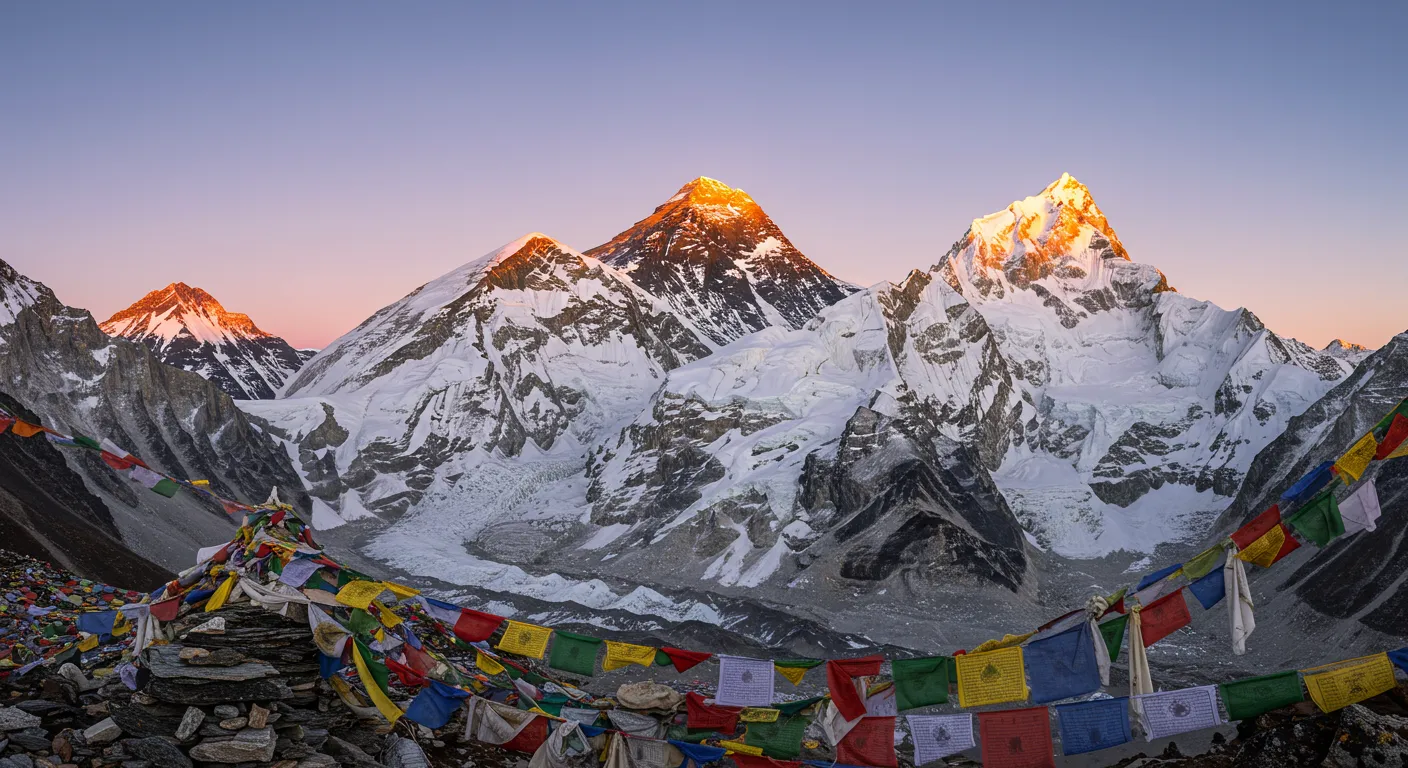
Nepal is one of the few places on Earth where you can stand at 60 meters above sea level in the Terai lowlands and look up at 8,849-meter Sagarmatha (Everest) — all within a country smaller than Arkansas. It runs on a unique mix of Hindu and Buddhist traditions that blend rather than clash, producing temple squares where stupas and pagodas share walls. The travel experience here is physical, spiritual, and occasionally chaotic in ways that feel genuinely unrepeatable anywhere else.
The Living Goddess and Newari Culture
Kathmandu Valley's Newar people maintain traditions found nowhere else, including the Kumari — a living goddess selected from the Shakya clan who resides in Kumari Ghar at Kathmandu Durbar Square. Newari architecture, cuisine (try bara, choila, and yomari), and jatra festivals define the valley far more than generic 'Himalayan culture.' Visit during Indra Jatra (September) to see the Kumari's chariot procession. The three Durbar Squares — Kathmandu, Patan, and Bhaktapur — each have distinct character; Bhaktapur is best preserved and charges a separate entry fee (1,500 NPR for foreigners) that's valid for the length of your visa if you register at the ticket office.
ICONIC · PHOTO · BOOK AHEAD · SEASONAL
Visa On Arrival Is Real but Slow
Most nationalities get visa on arrival at Tribhuvan International Airport (KTM). Fill out the electronic form at the kiosks before joining the payment queue — this alone saves 20-40 minutes. Bring exact USD cash: 30-day visa is $50, 90-day is $125. The machines accept cards but frequently fail. Indian nationals need no visa. If you plan to extend, the Department of Immigration in Kathmandu (Kalikasthan) handles extensions for $2/day beyond your initial visa. Arrive before 10am; the office closes at 2pm and lines build fast. TIMS cards for trekking are obtained separately at the Nepal Tourism Board office in Bhrikutimandap.
BUDGET
SIM Cards and Staying Connected
Ncell is the best SIM for travellers — wider data coverage in trekking regions than Nepal Telecom, and you can buy one at the airport arrivals hall for about 500 NPR with a data bundle. Bring a passport photo and your passport. Get the largest data pack available (around 30GB for 28 days). Signal disappears above roughly 4,000m on most treks, though Everest Base Camp trail has intermittent Ncell coverage to Gorak Shep. Teahouse WiFi on popular treks costs 300-500 NPR per device per stop — it is slow and unreliable. Download offline maps via maps.me or Google Maps before leaving Kathmandu or Pokhara.
PLUGIN TIP
Temple and Monastery Etiquette
Always walk clockwise around Buddhist stupas, chortens, and mani walls — keeping the sacred object to your right. Remove shoes before entering any Hindu temple or Buddhist gompa. Many Hindu temple inner sanctums (like Pashupatinath's main temple) are closed to non-Hindus; this is strictly enforced and not negotiable. Photography of cremation ghats at Pashupatinath is permitted from the east bank but pointing cameras directly at grieving families is deeply disrespectful. At Boudhanath Stupa, early morning (6-7am) is when monks do kora and butter lamp offerings — far more meaningful than the tourist-heavy afternoon.
ICONIC · PHOTO · SUNRISE
Trekking Permits Decoded
The permit system confuses everyone. For Annapurna region you need an Annapurna Conservation Area Permit (ACAP, 3,000 NPR) plus a TIMS card (2,000 NPR for independent trekkers). For Everest, you need a Sagarmatha National Park permit (3,000 NPR, bought at the park entrance in Monjo) plus TIMS. Restricted areas like Upper Mustang, Upper Dolpo, and Manaslu require a special permit ($500 for Upper Mustang for 10 days) and a mandatory licensed guide. As of late 2023, solo trekking without a guide in national park areas has been debated but enforcement varies — check Nepal Tourism Board updates before your trip. All permits are easiest to arrange at the Nepal Tourism Board office in Kathmandu or through a registered agency in Thamel.
PERMIT NEEDED · BOOK AHEAD · HARD HIKE
Dal Bhat Power and Food Strategy
Dal bhat (lentil soup, rice, vegetables, pickles) is the backbone of Nepali eating and is almost always unlimited refills — making it the best calorie-per-rupee deal in the country. On treks, dal bhat is the safest and freshest option since ingredients are simple and cooked thoroughly. Avoid salads and unpeeled fruit above 2,500m where water purification is inconsistent. In Kathmandu, the Newari food scene in Patan (try Honacha or Bota) is vastly more interesting than Thamel tourist restaurants. Momo are everywhere but the best are found in local bhatti pasal (small eateries), not tourist menus.
BUDGET · HIDDEN GEM
Altitude and the Golden Rule of Acclimatization
Acute Mountain Sickness kills trekkers in Nepal every year, and the single most important rule is: above 3,000m, do not increase your sleeping altitude by more than 500m per day, and build in a rest day every 1,000m gained. Diamox (acetazolamide, 125-250mg twice daily) is available cheaply over the counter at pharmacies in Kathmandu and Pokhara — start it 24 hours before ascending above 3,000m if you choose to use it. Helicopter rescue is expensive ($3,000-$5,000+), and many travel insurance policies require pre-authorization. Carry your insurance policy number and emergency contact card on your person. The CIWEC clinic in Kathmandu and the PAHS hospital are the most reliable medical facilities for foreigners.
HARD HIKE
When to Go
October and November are Nepal's undisputed best window — stable weather, crystal mountain views, and vibrant post-monsoon greenery make every trail and temple photogenic. For food lovers, Dashain and Tihar bring seasonal feasts of sel roti, meat curries, and sweets found nowhere else in the calendar. Photographers should target late October for golden hour shots of the Himalayan chain from Nagarkot or Sarangkot with virtually zero haze.
Dry Winter
Cold, clear, and dry across the middle hills and Kathmandu Valley. The Terai lowlands offer pleasant daytime warmth while the high Himalayas are locked in deep freeze. Festivals like Maghe Sankranti and Shivaratri punctuate the season.
Best for Terai wildlife safaris and cultural sightseeing; high passes above 5000m are often impassable without serious mountaineering gear.
Spring Trekking Season
Nepal's second-best trekking window brings warming trails, blooming rhododendrons above treeline, and the Everest climbing season. Visibility degrades through the season as haze and dust build in the valleys before monsoon clears everything out.
Ideal for high-altitude treks and wildflower photography but book Lukla flights and permits early as cancellations increase through May.
Pre-Monsoon Transition
A brief volatile period where afternoon thunderstorms become daily events and humidity climbs sharply. The last summit windows close on 8000m peaks and lowland Nepal becomes uncomfortably hot and sticky.
Only recommended for experienced travellers comfortable with weather disruptions and flexible schedules.
Monsoon
The great green season when Nepal receives 80 percent of its annual rainfall. Landslides reshape roads annually, leeches colonize every forest trail, and mountain views vanish behind cloud. But rice terraces glow emerald and waterfalls are thunderous.
Budget travellers benefit from rock-bottom prices; viable trekking limited to rain-shadow areas like Upper Mustang and Dolpo which require special permits.
Autumn Trekking Season
Nepal's legendary trekking window delivers the clearest skies, most stable weather, and most photogenic conditions of the year. The post-monsoon landscape is washed clean with snow-fresh peaks against deep blue skies. Dashain and Tihar festivals add cultural richness.
The absolute best window for trekking and mountain photography but requires booking flights, teahouses, and permits months in advance due to extreme demand.
Where to Stay
Nepal offers some of the best travel value in Asia, with luxury properties running a fraction of what you would pay in Europe and budget guesthouses still clean and welcoming for under ten dollars a night. Kathmandu's Thamel district is the classic base for first-timers, but Patan and Boudha offer quieter alternatives with more character. In trekking regions like Pokhara, Chitwan, and the Everest and Annapurna corridors, teahouse lodges replace hotels and prices fluctuate sharply between peak season (October-November, March-April) and monsoon low season.
Dwarika's Hotel
Battisputali, Kathmandu
Hotel
ICONIC · PHOTO · BOOK AHEAD
Tiger Mountain Pokhara Lodge
Lekhnath hillside above Pokhara
Resort
ICONIC · PHOTO · SUNRISE · BOOK AHEAD
Hotel Yala Peak
Thamel, Kathmandu
Boutique Hotel
CENTRAL · TRANSIT-FRIENDLY
Hotel Middle Path
Lakeside, Pokhara
Boutique Hotel
PHOTO · GOLDEN HOUR
Alobar1000
Thamel, Kathmandu
Hostel
BUDGET · CENTRAL · TRANSIT-FRIENDLY
Zostel Pokhara
Lakeside, Pokhara
Hostel
BUDGET · CROWD WARNING
Barahi Jungle Lodge
Meghauli, Chitwan National Park buffer zone
Resort
HIDDEN GEM · PHOTO · BOOK AHEAD · SEASONAL
Niva Niwa Lodge
Patan (Lalitpur), Kathmandu Valley
Guesthouse
HIDDEN GEM · PHOTO · BOOK AHEAD · NEXTPIC
Top Attractions
№ 1 · Essential
Patan Durbar Square
★ ICONIC · PHOTO · GOLDEN HOUR · EASY WALK
Often considered more beautiful and less chaotic than Kathmandu's own Durbar Square, Patan's royal plaza is a masterclass in Newari architecture. The Krishna Mandir and the Patan Museum inside the old royal palace are genuinely world-class. Less tourist-saturated than Bhaktapur but equally impressive.
Tip: Enter from the northern gate near Mangal Bazaar for the best first impression. The Patan Museum cafe on the upper floor has a courtyard view that most visitors walk right past.
Best: Early morning before 8am for photography without crowds, or late afternoon for golden hour light hitting the western temple facades
Fees: NPR 1000 for foreigners (approx $7.50), Patan Museum separate ticket NPR 600
Nagarkot
The most accessible Himalayan viewpoint from Kathmandu, offering panoramic views of the range including Everest on clear days. The sunrise here is legitimately spectacular when conditions cooperate. Be warned: during monsoon season (June-September) you may see nothing but cloud, and even in peak season visibility is not guaranteed.
ICONICLumbini (Birthplace of Buddha)
The UNESCO-listed birthplace of Siddhartha Gautama is one of the most important pilgrimage sites on earth. The sacred garden with the Mayadevi Temple, Ashoka Pillar, and the ancient marker stone is profoundly moving regardless of your faith. The surrounding monastery zone features temples built by Buddhist nations worldwide, each in their own architectural style.
ICONICBandipur
This beautifully preserved hilltop Newari trading town between Kathmandu and Pokhara is the Nepal that most tourists drive right past. No honking traffic, no touts — just cobblestone streets, traditional shopfronts, and jaw-dropping Himalayan views from Tundikhel meadow. It is genuinely one of the most charming small towns in all of South Asia.
HIDDEN GEMDay Trips
Nagarkot (from Kathmandu)
Travel: 32 km / 1.5 hr by car or local bus from Kathmandu
Bhaktapur Durbar Square (from Kathmandu)
Travel: 13 km / 30-45 min by local bus or taxi from Kathmandu
Panauti and Namo Buddha (from Kathmandu)
Travel: 32 km to Panauti / 40 km to Namo Buddha / 2 hr by car or local bus
Bandipur (from Kathmandu or Pokhara)
Travel: 143 km from Kathmandu (4-5 hr by bus/car) or 80 km from Pokhara (2-3 hr)
Sarangkot and World Peace Pagoda (from Pokhara)
Travel: Sarangkot 10 km / 30 min by taxi from Pokhara Lakeside; Peace Pagoda 6 km / 20 min boat + 45 min hike
Chitwan National Park edge visit (from Kathmandu or Pokhara)
Travel: 150 km from Kathmandu or Pokhara / 5-6 hr by tourist bus to Sauraha
Pharping and Dakshinkali (from Kathmandu)
Travel: 22 km / 1 hr by taxi or local bus from Kathmandu
Scenic Routes
Annapurna Circuit Trek
Hiking
Route: Besisahar to Jomsom (or Nayapul via full circuit)
ICONIC · PHOTO · HARD HIKE · PERMIT NEEDED · SEASONAL · NEXTPIC · GOLDEN HOUR
Everest Base Camp Trek
Hiking
Route: Lukla to Everest Base Camp (5364m) and Kala Patthar (5644m)
ICONIC · PHOTO · HARD HIKE · PERMIT NEEDED · BOOK AHEAD · SUNRISE · CROWD WARNING · SEASONAL · NEXTPIC
Kathmandu to Nagarkot Sunrise Drive and Walk
Driving
Route: Kathmandu (Bhaktapur) to Nagarkot viewpoint
SUNRISE · PHOTO · EASY WALK · GOLDEN HOUR · NEXTPIC · BUDGET
Prithvi Highway - Kathmandu to Pokhara
Driving
Route: Kathmandu to Pokhara
PHOTO · BUDGET · CROWD WARNING
Poon Hill Trek (Ghorepani Circuit)
Hiking
Route: Nayapul to Poon Hill (3210m) via Ghorepani, returning via Tadapani
ICONIC · PHOTO · SUNRISE · SEASONAL · PERMIT NEEDED · FAMILY · NEXTPIC · GOLDEN HOUR
Lakeside Walk and Phewa Lake Circuit - Pokhara
Walking
Route: Pokhara Lakeside (Baidam) to World Peace Pagoda and back by boat
EASY WALK · PHOTO · SUNRISE · GOLDEN HOUR · BUDGET · FREE · FAMILY
Street Art
Nepal's street art scene is concentrated almost entirely in the Kathmandu Valley, where a growing movement of muralists and community art projects has transformed aging brick walls and earthquake-damaged facades into vibrant canvases. Much of the momentum came after the devastating 2015 earthquake, when organizations like Artudio and Kolor Kathmandu launched large-scale mural projects to restore morale, beautify reconstruction zones, and address social issues like gender equality, climate change, and cultural preservation. The style blends traditional Nepali iconography (mandalas, mythological figures, Newari patterns) with global street art influences. Artists like Kiran Maharjan (KMKZ), Sushil Ganveer, and collectives tied to the Kathmandu Triennale have left significant marks. Outside the capital, Pokhara has a small but growing mural presence. Expect raw, textured backdrops of red brick and weathered concrete that photograph beautifully, especially in golden hour light filtering through Kathmandu's hazy skies.
Thamel backstreets
The tourist hub of Kathmandu has the densest concentration of murals. Back alleys between the main Thamel Marg and Chhetrapati reveal large-scale pieces addressing social themes, psychedelic Himalayan imagery, and portraits. Several walls were painted during the Kolor Kathmandu festival. The contrast of neon murals against crumbling brick is visually stunning and uniquely Nepali.
Backstreets between Thamel Marg and Chhetrapati Chowk, Kathmandu
ICONIC · PHOTO · EASY WALK · NEXTPIC · GOLDEN HOUR
Freak Street (Jhochhen Tole)
The legendary hippie trail destination from the 1960s-70s now hosts a mix of faded nostalgia and new murals. Post-earthquake reconstruction opened up wall space, and local artists have painted tributes to Nepali heritage alongside more contemporary pieces. The narrow lanes with overhanging Newari wooden windows create incredible framing for street art photography. Some walls rotate or deteriorate quickly due to monsoon damage.
Jhochhen Tole, south of Kathmandu Durbar Square
HIDDEN GEM · PHOTO · GOLDEN HOUR · EASY WALK
Patan (Lalitpur) creative corridor
Patan has emerged as the more artistic, design-conscious sibling to Kathmandu. Walls around Patan Durbar Square and the streets leading to Mangal Bazaar feature murals that lean heavily on traditional Newari art motifs reimagined in contemporary scale. The Srijana Art Gallery area and surrounding lanes have several notable walls. Patan's relative calm compared to Kathmandu makes shooting easier and more pleasant.
Streets surrounding Patan Durbar Square and near Srijana Art Gallery, Lalitpur
PHOTO · EASY WALK · TRANSIT-FRIENDLY · NEXTPIC
Kolor Kathmandu walls along Bagmati corridor
The Kolor Kathmandu initiative specifically targeted walls along the polluted Bagmati River corridor to draw attention to environmental issues. Large-scale murals depicting river ecology, mythological water deities, and climate messaging stretch along embankment walls near Thapathali and Teku. The juxtaposition of vivid environmental art against the reality of the river creates powerful, if uncomfortable, photography. Some pieces are weathering badly due to monsoon exposure.
Bagmati River embankment walls near Thapathali Bridge and Teku, Kathmandu
PHOTO · HIDDEN GEM · SEASONAL
Pokhara Lakeside murals
Pokhara's tourist Lakeside strip has a modest but growing collection of murals, mostly on restaurant and hostel walls. Themes lean toward mountain culture, adventure sports imagery, and peace messaging. The scene is less curated than Kathmandu but worth a quick detour if you are already in town for trekking. A few walls near the old bazaar area feature more authentic local work. The Annapurna range as a distant backdrop behind colorful walls makes for a unique composite shot on clear mornings.
Lakeside Road (Baidam) and streets near Old Bazaar, Pokhara [ASSUMPTION]
EASY WALK · PHOTO · SUNRISE · BUDGET
Culture & History
Nepal is one of the few countries never colonized, forging a cultural identity that blends Hindu and Buddhist traditions into something entirely its own. Sandwiched between India and China, its Himalayan geography created isolated valleys where Newar, Tibetan, Tharu, and dozens of other ethnic groups developed distinct art forms, languages, and rituals that survive today. It is simultaneously the birthplace of Siddhartha Gautama (the Buddha) and the only former Hindu kingdom in the world — a duality that defines every temple square and festival calendar.
Eat & Drink
Nepal's food scene is shaped by its geography and cultural crossroads. The Kathmandu Valley draws from Newari feasting traditions with dishes like choila, yomari, and bara, while Tibetan-influenced momos and thukpa dominate the hills. Dal bhat — lentil soup with rice, greens, pickles, and often meat — is the backbone of daily eating and varies by region. Indian spice traditions creep in from the Terai lowlands, and you will find surprisingly competent global cuisine in Thamel and Patan thanks to decades of catering to trekkers and expats.
Krishnarpan Restaurant ★★★★★
Multi-course Nepali tasting menu with up to 22 courses, featuring dishes like mas ko bara, wild boar sekuwa, and yomari dessert
Dwarika's Hotel, Battisputali, Kathmandu
Restaurant · msw:dinner
Bhojan Griha ★★★★★
Traditional Newari feast served in a restored 150-year-old mansion with live cultural performances, wild boar, gundruk, and sel roti
Dillibazar, Kathmandu
Restaurant · msw:dinner
Honacha ★★★★
Authentic Newari vegetarian dishes including chataamari, bara, aalu tama, and kwati served in a courtyard setting
Kirtipur, southwest of Kathmandu
Restaurant · vegetarian_restaurant · msw:dinner
Thakali Kitchen ★★★★
Thakali dal bhat thali with marinated mutton, timur-spiked pickles, and seasonal greens — the gold standard of Nepal's national meal
Thamel, Kathmandu
Restaurant · msw:lunch
Places Restaurant and Bar ★★★
Creative vegan Nepali fusion bowls, jackfruit momos, plant-based thali, and seasonal smoothie bowls
Lazimpat, Kathmandu
Restaurant · vegan_restaurant · msw:dinner
Himalayan Java Coffee ★★★★
Nepal-grown single-origin coffee roasted in-house, reliable espresso drinks, and solid Wi-Fi. The original specialty coffee brand in Nepal.
Thamel, Kathmandu (multiple locations)
Coffee · cafe
Cafe Soma ★★★★
Third-wave pour-overs, cold brew, and locally roasted beans in a calm courtyard away from Thamel noise
Jhamsikhel, Lalitpur (Patan)
Coffee · cafe
Kaldi Coffee ★★★
Small-batch Nepali beans, knowledgeable baristas, and a cupping experience if you ask
Jhamsikhel, Lalitpur
Coffee · cafe
Yellow House Coffee ★★★
Specialty espresso drinks in a heritage building, good pastries, relaxed vibe popular with Kathmandu creatives
Sanepa, Lalitpur
Coffee · cafe
French Bakery (Pumpernickel Bakery) ★★★★
Croissants, apple strudel, brown bread, cinnamon rolls — a Thamel institution since the early trekking days
Thamel, Kathmandu
Bakery · bakery
Cafe du Temple ★★★★
Fresh baguettes, pain au chocolat, eggs Benedict, and full breakfast sets with good espresso in a temple-view courtyard
Patan Durbar Square, Lalitpur
Bakery · bakery · breakfast_restaurant
Bakers Cafe ★★★
Affordable Nepali-style baked goods, cream rolls, puff pastries, and savory patties loved by locals
New Road, Kathmandu
Bakery · bakery
OR2K ★★★★
Middle Eastern and Nepali vegetarian fusion: falafel platters, hummus, stuffed peppers, dal bhat, all served on cushioned floor seating
Thamel, Kathmandu
Vegetarian · vegetarian_restaurant
Sarangi Vegetarian Restaurant ★★★★
Organic Nepali vegetarian thali, vegan momo, mushroom choila, and seasonal farm-to-table dishes
Boudhanath, Kathmandu
Vegetarian · vegan_restaurant
New Orleans Cafe ★★★
Plant-based wraps, vegan burgers, large salads, and Nepali veg set meals in a garden setting
Jhamsikhel, Lalitpur
Vegetarian · vegetarian_restaurant · vegan_restaurant
Shopping
Nepal is a treasure trove for handmade textiles, metalwork, and Himalayan crafts — the kind of shopping where you can watch artisans at work and buy directly from makers. Collectors of Tibetan and Buddhist art, pashmina lovers, and anyone who values handcraft over mass production will be in heaven here.
Asan Bazaar
Mixed
Traditional Nepali bead necklaces (pote), brass and copper utensils, incense, handmade lokta paper goods, and Nepali dhaka fabric. The surrounding lanes branch into specialty alleys for metalwork, textiles, and religious supplies.
Market · ICONIC · PHOTO · BUDGET · CROWD WARNING
Indra Chowk Market
Craft
Pashmina shawls sold from upstairs showrooms around the square, traditional glass bead jewelry, wool blankets, and khukuri knives. This is the historic textile trading hub of the Kathmandu Valley.
Market · ICONIC · HIDDEN GEM · BUDGET
Boudhanath Stupa Market Circuit
Craft
Authentic Tibetan Buddhist thangka paintings, singing bowls, dorje and bell sets, prayer wheels, mala beads, and Tibetan carpet shops. Many vendors are Tibetan refugees with genuine connections to monastic traditions.
Market · ICONIC · PHOTO · BOOK AHEAD
Patan Dhoka Saturday Market
Mixed
Local handicrafts, second-hand goods, handmade soap, lokta paper products, and Newari metalwork. A genuine local market rather than a tourist-facing one, great for observing everyday Nepali commerce.
Market · HIDDEN GEM · BUDGET · FREE · EASY WALK
Thamel
The tourist district of Kathmandu — dense with shops selling trekking gear, pashmina, singing bowls, and generic souvenirs. Convenient but heavily marked up and full of counterfeit brand-name gear and low-quality mass-produced crafts.
Genuinely useful for last-minute trekking gear rentals and purchases — several shops sell reliable second-hand gear from returning trekkers at fair prices. Pilgrims Book House is excellent for maps, guidebooks, and books on Himalayan culture. For quality crafts, skip the street-level tourist shops and look for fair-trade cooperatives like Dhukuti and Sana Hastakala.
District · CROWD WARNING · TRANSIT-FRIENDLY
Patan (Lalitpur) Artisan Quarter
The historic craft capital of the Kathmandu Valley, home to generations of Newari metalworkers, woodcarvers, and thangka painters. This is where serious craft shopping happens — workshops and showrooms where you buy directly from makers.
Rudra Varna Mahavihar area for traditional lost-wax bronze casting — you can commission custom Buddhist and Hindu statues. Mahabouddha temple area for metalwork. Patan Industrial Estate houses several cooperatives. Janabahaa area for woodcarving. The Patan Museum shop is one of the best curated gift shops in Nepal with high-quality reproductions at fixed prices.
District · ICONIC · HIDDEN GEM · WORKSHOP SPOT
Bhaktapur Pottery and Woodcarving District
The best-preserved medieval city in the valley with active pottery squares and woodcarving traditions that have continued for centuries. Less touristy than Kathmandu, more authentic craft buying.
Pottery Square (Talako) where potters still work with traditional kick-wheels — buy directly from them. The surrounding streets have excellent peacock window woodcarvings and hand-carved wooden stamps. Bhaktapur is also known for handmade papier-mache masks used in Newari festivals — far more interesting than the mass-produced versions sold in Thamel.
District · ICONIC · PHOTO · WORKSHOP SPOT · EASY WALK
Photo Spots
Nepal's light varies dramatically by season and altitude. October-November (post-monsoon) is the gold standard: crystal-clear skies, low humidity, warm golden light, and the mountains are fully visible almost daily. December-February brings excellent visibility but shorter days, harsh midday light at altitude, and deep blue shadows in valleys that go cold fast. March-April can be hazy at lower elevations due to agricultural burning and dust, but wildflowers (rhododendrons) add color. The monsoon (June-September) kills mountain photography most days, but creates dramatic cloud formations, waterfalls, and lush green terracing that works beautifully for intimate landscape work. Sunrise shifts from roughly 5:15am in June to 6:50am in December in Kathmandu; at higher elevations mountains catch light earlier than valley floors, so plan for alpenglow 10-15 minutes before official sunrise. Gear-wise, bring a versatile zoom like a 24-70mm f/2.8 as your workhorse and a 70-200mm f/2.8 or f/4 for mountain compression and temple detail isolation. A fast prime (50mm or 85mm f/1.4-1.8) is invaluable for portraits of sadhus, monks, and local craftspeople in low interior light. Pack a circular polarizer for cutting haze and boosting mountain contrast, and a 3-stop graduated ND for balancing bright Himalayan peaks against shadowed valleys. Sensor dust is a real problem due to dusty roads and high wind; bring a rocket blower and clean daily. For editing, Nepal's dominant palette is warm earth tones (brick, terracotta, saffron robes) against cool blue mountain light; avoid over-saturating blues and let the natural warmth lead. Slight dehaze in post is almost always needed for mountain shots below 3,000m. Shoot RAW without exception; the dynamic range between sunlit snow peaks and shadowed temples regularly exceeds 10 stops.
Nagarkot View Tower - Himalayan Panorama
The single best accessible panorama of the eastern Himalayan range from Annapurna to Everest. At sunrise the peaks glow pink-to-gold in sequence from east to west. Use a telephoto (200mm+) to isolate Everest, Lhotse, and Makalu, or go wide to capture the full 300km sweep with terraced foreground. The layered foothills create natural depth when haze is low.
Boudhanath Stupa - Prayer Flag Canopy at Blue Hour
The massive white dome with the all-seeing eyes of Buddha framed by radiating prayer flags. The real magic is blue hour when the stupa is lit by warm floodlights against a deep blue sky. Shoot from the rooftop restaurants on the north or east side for an elevated angle that includes the mandala geometry of the circular walking path with devotees doing kora. During Losar (Tibetan New Year, usually Feb) monks fill the plaza.
Sarangkot - Annapurna and Machhapuchhre Sunrise
The definitive Annapurna range sunrise with Machhapuchhre (Fishtail) as the centerpiece. At sunrise the 7,000m+ peaks catch alpenglow while Pokhara and Phewa Lake remain in shadow below, creating a powerful contrast. Paragliders launch from here after 9am adding dynamic foreground subjects. A 70-200mm isolates Fishtail perfectly; wide angle captures the full Annapurna I to Annapurna IV sweep.
Bhaktapur Pottery Square - Morning Light and Craft Portraits
Potters hand-throwing and sun-drying thousands of clay pots in a medieval brick square. The warm terracotta tones of the pottery match the ancient brick buildings. Morning sidelight rakes across the textures beautifully. This is Nepal's best environmental portrait location: potters are generally friendly and happy to be photographed. Rows of drying pots create leading lines. Combine with the ornate Peacock Window nearby.
Patan Durbar Square - Newari Architecture and Krishna Mandir
The most architecturally refined of the three Durbar Squares. Krishna Mandir's stone shikhara temple is best shot from the steps of the old Royal Palace opposite, framing intricate carvings with the temple's symmetry. Late afternoon light warms the red brick and carved wood. During festivals (especially Rato Machhindranath in Apr-May or Krishna Janmashtami in Aug-Sep) the square transforms with crowds, oil lamps, and ceremony.
Bandipur Hilltop Village - Mist and Mountain Layers
An off-the-beaten-path Newari hilltop village with a main bazaar street of preserved 18th-century buildings. The real prize is the Thani Mai viewpoint on the ridge above town: pre-dawn mist fills the valleys below while Manaslu, Himalchuli, and the Annapurnas line the northern horizon. The village main street with its carved wooden windows is a golden hour dream with virtually no tourists. Atmospheric on misty mornings when clouds thread between the ridges.
Pashupatinath Cremation Ghats - Evening Aarti Ceremony
The Hindu cremation ghats along the Bagmati River offer some of Nepal's most powerful documentary photography. Funeral pyres burn on the stone platforms while sadhus in saffron and ash sit on the opposite bank. The evening aarti ceremony (when held) features fire, bells, and incense. Shoot from the east bank looking west for cremation ghat context with temple spires behind. Sadhus near the entrance will pose for tips. The real photographic depth is the quieter upstream ghats where families gather.
Phewa Lake Tal Barahi - Reflection Shot with Machhapuchhre
Early morning mirror reflections of Machhapuchhre (Fishtail) and the Annapurna range in Phewa Lake, with colorful wooden boats in the foreground. The Tal Barahi island temple adds a mid-ground subject. Best from the eastern shore near Barahi Chowk where boats are moored. The combination of boats, water, mountains, and the pagoda temple is a layered composition that works at multiple focal lengths. On still mornings the reflection is near-perfect.
Suggested Itinerary
Nightlife
Nepal's nightlife is almost entirely concentrated in Kathmandu's Thamel district, with a smaller pocket in Lakeside Pokhara. The scene is a mix of tourist backpackers, expats, and young Nepali urbanites crowding into bars and clubs that rarely get going before 9pm. Most venues close by midnight or 1am due to government-imposed curfew-style closing regulations, so the energy compresses into a short window — don't show up at 11pm expecting a long night.
Sam's Bar
The default Thamel watering hole where sunburned trekkers, NGO workers, and local regulars crowd around sticky tables under dim lights while Nepali rock plays just loud enough to shout over
No cover. Cheap draught beer (around 300-400 NPR). Pool table upstairs. Gets packed by 9pm on Fridays and Saturdays. Cash preferred. House specialty is cheap cocktail pitchers that are stronger than expected.
Purple Haze Rock Bar
A sweaty, loud rock bar plastered with band posters where Nepali rock and metal bands play covers and originals to a crowd that genuinely came for the music, not the drinks
Live bands most nights from around 8pm. No cover charge on weekday shows, occasional 200-500 NPR cover for special acts. Draught beer is the move. Best nights are Friday and Saturday. Small venue so arrive by 8pm for a seat.
LOD - Living Room of Debauchery
The closest thing Kathmandu has to a proper nightclub — a dark, bass-heavy room where young Nepalis and tourists dance to EDM and Bollywood remixes under cheap laser lights
Cover charge typically 500-1000 NPR on weekends, sometimes includes a drink. DJs play a mix of EDM, hip-hop, and Bollywood. Gets going around 10pm. Dress code is relaxed but no flip-flops or trekking gear. Closes around 12:30-1am. ID sometimes checked at door.
Rum Doodle Restaurant & 40,000 1/2 Ft Bar
A legendary mountaineering institution where the walls are covered in signed cardboard yeti footprints left by Everest summiteers — you're drinking in the same room where climbing legends celebrated their ascents
More of a dinner-and-drinks spot than a late-night venue. Free meal policy for verified Everest summiteers. Good cocktails, decent food. Worth visiting for the history alone. Closes around 10:30-11pm most nights. Sign the yeti footprint on your way out.
Busy Bee Cafe
A laid-back Pokhara institution where acoustic acts play mellow covers to a crowd of tired trekkers unwinding after the Annapurna circuit, lake reflections visible through the windows
Live acoustic music most evenings from 7pm. No cover. Menu is a mix of Nepali and Western food alongside cheap beers. Closes by 10-10:30pm — Pokhara shuts down earlier than Kathmandu. Good spot to meet other trekkers.
Club Deja Vu
Kathmandu's more upscale club option where wealthier young Nepalis dominate the dance floor and the music leans heavier on Bollywood bangers and commercial hip-hop
Cover charge 1000-1500 NPR on weekends, usually includes one drink. Dress code enforced — smart casual minimum, no trekking clothes. Popular with Kathmandu's moneyed crowd. Bottle service available. Closes around 1am. Book a table for groups on weekends.
Tom & Jerry Pub
A no-frills Thamel pub with a pool table, cheap beer, and the comfortable feel of a place where nobody is trying too hard — expats and backpackers in equal measure
One of the cheapest drink options in Thamel. Pool table is the main attraction. No cover. Simple cocktails and draught beer. Good for a low-key start to the evening. Open until around midnight.
Karma Coffee & Cocktail Bar
A quieter, more curated space south of the river where Kathmandu's creative class sips craft cocktails in a modern interior that feels miles away from the Thamel tourist circuit
Cocktails run 600-900 NPR. Good espresso martinis. Popular with expats and young Nepali professionals. Much calmer than Thamel — if you want conversation over chaos, come here. Closes around 10:30-11pm. No cover. Reservations not usually needed but helpful for groups on weekends.
Funky Buddha
A multi-level Thamel bar with a rooftop terrace where the crowd is 80 percent international backpackers swapping trail stories over buckets of cheap cocktails
Rooftop has decent views if you can get a seat. Cocktail buckets are the house specialty — sweet and dangerous. Music gets louder as the night goes on. No cover. Can feel like a Southeast Asia party hostel transplanted to Kathmandu. Open until midnight or so.
Build your own Itinerary from this guide
Pick the places you care about — attractions, photo spots, map markers — and we'll lay out a day-by-day starting point. Yours to edit; guide updates never touch it.
Premium section
Special Interest
This part of the guide is included with a NextTripLabs account. Sign in to read it here — full guide unlocks and itineraries are available in the NextTripLabs app.
Premium section
Walkability Scores
This part of the guide is included with a NextTripLabs account. Sign in to read it here — full guide unlocks and itineraries are available in the NextTripLabs app.
Premium section
unesco world heritage sites
This part of the guide is included with a NextTripLabs account. Sign in to read it here — full guide unlocks and itineraries are available in the NextTripLabs app.
Premium section
Sustainability Guide
This part of the guide is included with a NextTripLabs account. Sign in to read it here — full guide unlocks and itineraries are available in the NextTripLabs app.