Essentials
Currency, language, transit & safety — tap to expand.
Currency — Japanese Yen (¥ / JPY). As of mid-2025, roughly ¥155 = $1 USD, ¥170 = €1 EUR. Rates have been volatile — check before you go.
Cash vs card — Japan has shifted significantly toward card acceptance, but cash is still king in smaller restaurants, izakayas, shrines, and vending machines. 7-Eleven and Japan Post ATMs reliably accept foreign cards — most bank ATMs do not. Tipping is not practiced and can actually cause confusion or offense. Do not tip at restaurants, hotels, or taxis.
Budget — Budget: ¥8,000–12,000/day ($50–75 USD) staying in hostels, eating at conveyor sushi and ramen shops, using a rail pass. Mid-range: ¥20,000–35,000/day ($130–225 USD) for business hotels, sit-down meals, and taxis when needed. Luxury: ¥60,000+/day ($390+ USD) for ryokan stays, omakase dinners, and private transfers.
Language — Japanese is the sole official language, spoken by virtually everyone. Written Japanese uses three scripts: hiragana, katakana, and kanji. Most signage in Tokyo also includes romaji (Latin alphabet) transliterations.
Language barrier — English proficiency is limited in daily conversation but improving rapidly in tourist areas. Train stations, airports, and major attractions have excellent English signage. Staff at hotels and chain restaurants often speak basic English. At local izakayas and neighborhood shops, expect to rely on translation apps — Google Translate's camera mode is genuinely useful here.
Getting around — Tokyo has arguably the best public transit system on Earth. The combination of JR lines, Tokyo Metro, and Toei Subway will get you within walking distance of anything. Get a Suica or Pasmo IC card immediately — it works on all trains, buses, and even convenience stores. Driving in Tokyo is pointless. Last trains run around midnight, so plan accordingly or budget for a late-night taxi.
Safety — Tokyo is one of the safest major cities in the world. Violent crime against tourists is essentially nonexistent. You can walk alone at night in virtually any neighborhood. That said: watch for bicycle collisions on sidewalks — cyclists rarely signal. Earthquakes are a real consideration — familiarize yourself with your hotel's evacuation plan and download the Yurekuru Call app for alerts. Summer heat (July-August) is dangerously humid — heatstroke hospitalizations spike every year, so hydrate aggressively and carry a hand towel. Petty scams are rare but exist in Kabukicho (Shinjuku) — avoid aggressive touts inviting you to bars, as drink prices can be extortionate. Train gropers exist on crowded lines — women-only cars are available during rush hours. Lost property? You'll likely get it back. Report to the nearest koban (police box).
Highlights
Tokyo is a city that operates on a frequency entirely its own — hyper-efficient yet deeply ritualistic, neon-drenched yet temple-quiet within a single city block. It rewards the curious traveller who wanders without a rigid plan, because the best discoveries happen in the gaps between subway stations, down unnamed alleys, and on the eighth floor of unremarkable office buildings hiding world-class bars. No other megacity manages to feel simultaneously overwhelming and perfectly ordered.
The Vertical City — Look Up and Go Underground
Tokyo's real geography is vertical. Restaurants, bars, galleries, and shops stack ten stories high in narrow buildings, each floor a different world. Always check upper floors — a building that looks like a boring office block at street level may have a jazz bar on the 6th floor, a ramen counter on the 3rd, and a vintage kimono shop on the 4th. Likewise, the underground mall networks beneath stations like Shinjuku and Tokyo Station are cities unto themselves with excellent food options. Use Google Maps floor indicators or the Tabelog app to discover what each floor hides.
HIDDEN GEM · PLUGIN TIP
Visa-Free Entry and Immigration Reality
Citizens of 70+ countries including the US, Canada, UK, EU, Australia, and most of Southeast Asia receive visa-free entry for 90 days (some nationalities 15 or 30 days). Since April 2023, Visit Japan Web replaced the old paper customs and immigration forms — fill it out online before your flight to breeze through arrival at Narita or Haneda. You will get your passport stamped and a residence card stapled in. No COVID documentation is required as of 2024. Landing at Haneda is significantly more convenient for reaching central Tokyo than Narita.
BOOK AHEAD
SIM Cards, eSIM, and Staying Connected
Japan has excellent 4G/5G coverage everywhere including subway tunnels. Best options: Ubigi or Airalo eSIMs purchased before departure work instantly on landing. If you prefer physical SIM, grab a Mobal or IIJmio SIM at airport convenience stores or BIC Camera. Free Wi-Fi exists at konbini (convenience stores like 7-Eleven, FamilyMart, Lawson) and most train stations but is unreliable. Download offline Google Maps for Tokyo — cell signal can drop in deep underground station corridors. For payments, most places now accept IC cards (Suica/Pasmo), credit cards, and PayPay, but smaller ramen shops and izakayas are still cash-only, so always carry 5,000-10,000 yen in bills and coins.
BUDGET · PLUGIN TIP
Japanese Etiquette That Actually Matters
Three customs that genuinely affect your experience: (1) No eating while walking — it is considered rude and you will get looks; eat street food at or near the stall where you bought it. (2) Shoes off indoors — watch for raised entryways (genkan) at restaurants, temples, and ryokan; socks without holes matter. (3) Quiet on trains — talking loudly or taking phone calls on trains is a serious social violation. Tipping does not exist and attempting it can cause confusion or offense. Bowing is appreciated but nobody expects tourists to master it — a slight nod of the head works perfectly.
ICONIC
Tabelog Over Google for Restaurant Discovery
Google Maps reviews in Tokyo are unreliable — many are from tourists rating places they cannot compare. Japanese locals use Tabelog (tabelog.com), where a 3.5 rating is genuinely excellent and anything above 3.7 is exceptional. The site has a partial English version but the Japanese version via browser translation is more complete. Search by neighborhood and cuisine type. For reservations at high-end spots, use Omakase (omakase.in) or TableAll — many top sushi and kaiseki restaurants do not accept walk-ins or foreign phone calls, and these services bridge that gap for a small fee.
HIDDEN GEM · PLUGIN TIP
Konbini Culture Is a Lifestyle
Japanese convenience stores — 7-Eleven, Lawson, and FamilyMart — are not what you expect from back home. They serve genuinely excellent onigiri (rice balls, 120-180 yen), egg sandwiches, nikuman (steamed buns), and seasonal desserts that rival dedicated shops. They also handle ATM withdrawals (7-Eleven ATMs accept all foreign cards), ticket purchases, package shipping (takkyubin), bill payments, and event reservations. A konbini breakfast of coffee and an onigiri for under 300 yen is one of the best budget moves in the city. Lawson's premium line Uchi Cafe has surprisingly good sweets.
BUDGET · ICONIC · FREE
Timing Your Visit and Crowd Strategy
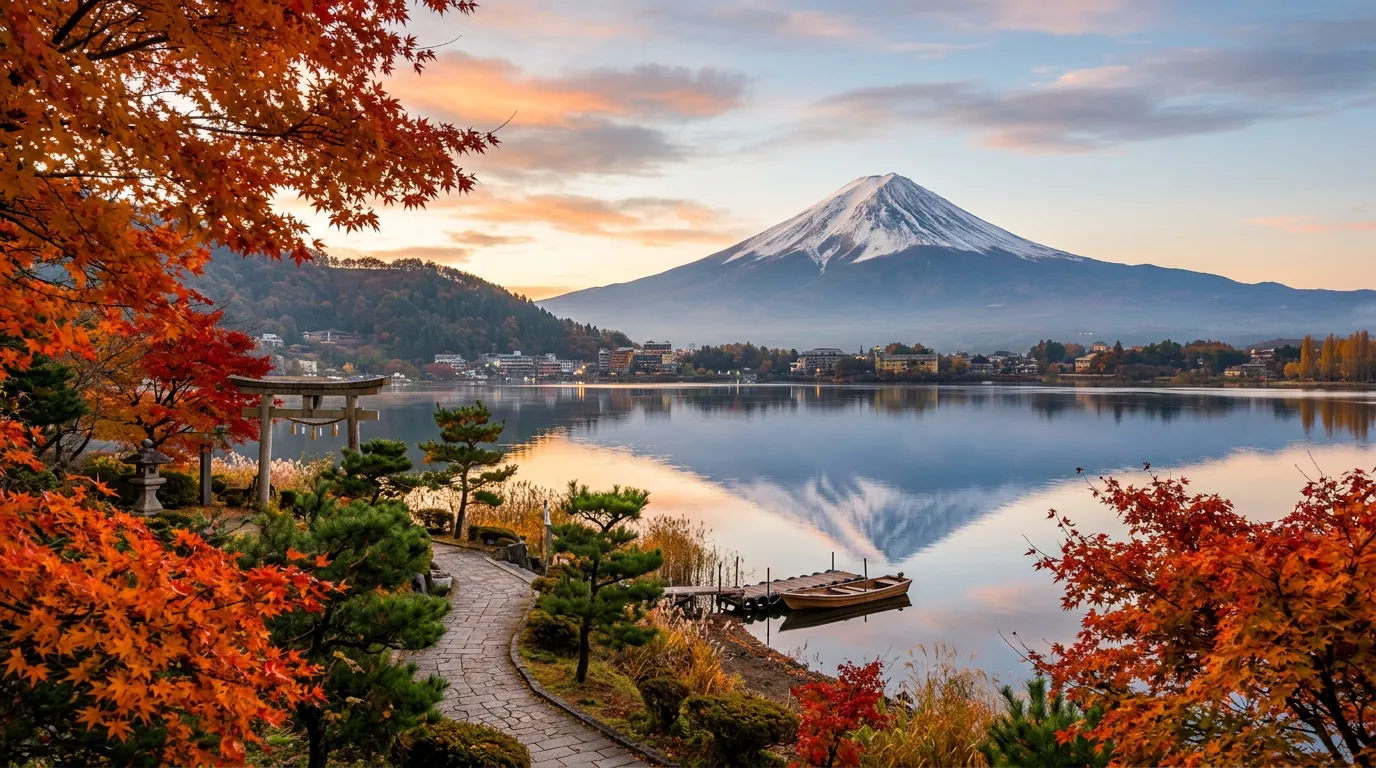
Cherry blossom season (late March to mid-April) and autumn foliage (mid-November to early December) are peak periods with premium hotel prices and packed trains. Golden Week (April 29 to May 5) is when all of Japan travels domestically — avoid it unless you book months ahead. The sweet spots are mid-January to mid-March (cold but empty and clear skies for Mount Fuji views), June (rainy season but hydrangeas are stunning and crowds thin), and late September to October (warm, dry, manageable). For daily crowd avoidance, visit popular spots like Senso-ji, Meiji Shrine, or Tsukiji Outer Market before 8 AM — they transform completely without the tour groups.
SEASONAL · CROWD WARNING · SUNRISE · PHOTO
When to Go
Late October through mid-November is Tokyo's sweet spot — comfortable 15–20°C days, low rain probability, stunning autumn color, and golden-hour light that makes every street scene cinematic. For cherry blossoms, the last week of March through the first week of April is unbeatable but demands advance booking. If you want great weather without extreme crowds, early May (after Golden Week) is the insider pick.
Fuyu (Winter Dry Season)
Tokyo's winter is cold but remarkably dry and sunny compared to the Japan Sea coast. Clear skies make this the best season for Mt. Fuji visibility from the city. Winter illuminations transform major districts into light spectacles.
Best for budget travel, clear photography conditions, and Mt. Fuji views; shorter daylight hours require planning.
Ume (Plum Blossom) Season
Before cherry blossoms steal the show, plum blossoms quietly bloom at shrines and gardens across Tokyo. Yushima Tenjin and Koishikawa Korakuen are top spots. The fragrance is intoxicating and crowds are minimal.
A hidden-gem alternative to sakura season with far fewer tourists and lower prices.
Sakura (Cherry Blossom) Season
Japan's most iconic natural event. Tokyo's average full-bloom date is March 27, though climate shifts are pushing it earlier. Ueno Park, Chidorigafuchi, and Meguro River become rivers of pink. Hanami picnics under the blossoms are a quintessential experience.
Book flights and hotels 3–6 months ahead; expect 2–3x pricing and extreme crowds at top spots.
Tsuyu (Rainy Season)
The East Asian monsoon brings weeks of overcast skies, drizzle, and oppressive humidity. It is not constant downpour — expect intermittent rain with occasional sunny breaks. Hydrangea temples become magical in the mist.
Lowest tourist numbers and best hotel deals, but outdoor sightseeing requires flexibility and rain gear.
Natsu Matsuri (Summer Festival) Season
Tokyo erupts with fireworks festivals, bon odori dances, and neighborhood matsuri. The Sumida River Fireworks (late July) draw nearly a million spectators. Yukata-clad crowds fill temple grounds. The energy is electric despite brutal heat.
Essential for cultural immersion and festival photography, but plan around extreme heat and possible typhoons.
Koyo (Autumn Foliage) Season
Autumn leaves peak in Tokyo from mid-November through early December — later than northern Japan. Ginkgo trees turn blazing gold while maples go crimson. Rikugien and Meiji Jingu Gaien are the iconic spots. Evening illuminations of foliage are uniquely Japanese.
Best overall travel weather with superb photography conditions; November weekends at top foliage spots require early morning arrivals.
Where to Stay
Tokyo offers an extraordinary range of stays, from world-class luxury towers with skyline views to spotless capsule hotels that cost less than dinner. Value is surprisingly strong in the mid-range, where compact but immaculate business hotels outperform their price point. Book cherry blossom season (late March to mid-April) months ahead — rates double and availability vanishes.
Park Hyatt Tokyo
Shinjuku
Hotel
ICONIC · PHOTO · BOOK AHEAD
Aman Tokyo
Otemachi (Marunouchi area)
Hotel
ICONIC · BOOK AHEAD
Hotel Kanra Kyoto... Tokyo (TRUNK Hotel)
Shibuya (Cat Street area)
Boutique Hotel
HIDDEN GEM · PHOTO · BOOK AHEAD
Mitsui Garden Hotel Ginza Premier
Ginza
Hotel
PHOTO · TRANSIT-FRIENDLY
Nui. Hostel & Bar Lounge
Kuramae (east Asakusa)
Hostel
BUDGET · HIDDEN GEM · TRANSIT-FRIENDLY
Nine Hours Shinjuku
Shinjuku (Kabukicho)
Hostel
BUDGET · ICONIC · NEXTPIC
Hoshinoya Tokyo
Otemachi (near Tokyo Station)
Resort
ICONIC · BOOK AHEAD · NEXTPIC
Reversible Destiny Lofts (Mitaka)
Mitaka (western Tokyo)
Apartment
HIDDEN GEM · PHOTO · NEXTPIC · PERMIT NEEDED
Top Attractions
№ 1 · Essential
Yanaka District
★ HIDDEN GEM · GOLDEN HOUR · PHOTO · FREE · EASY WALK · NEXTPIC
One of the few Tokyo neighborhoods that survived both the 1923 earthquake and WWII bombings, preserving an old-town atmosphere that feels worlds away from Shibuya. Winding lanes pass wooden temples, independent galleries, and the famous Yanaka Ginza shopping street with its sunset staircase. This is the Tokyo that most tourists never see, and it deserves a full half-day.
Tip: Start at Nippori Station and walk down the Yuyake Dandan steps toward Yanaka Ginza right before sunset. The rooftop cats and warm light over the shotengai make for some of the most atmospheric street photography in the city.
Best: Late afternoon around 4-5pm to catch sunset from the Yuyake Dandan steps and shop the street food stalls at golden hour
Fees: Free
teamLab Borderless (Azabudai Hills)
The relocated and reimagined immersive digital art museum is even more stunning than the original Odaiba location. Rooms of flowing light, interactive waterfalls, and infinite mirror installations create an experience that blurs the line between viewer and artwork. Worth every yen, but expect sensory overload in the best way.
ICONICMeiji Jingu Shrine
A massive Shinto shrine set within 170 acres of dense forest feels impossibly serene given that Harajuku station is a two-minute walk away. The towering torii gate and gravel approach path create a powerful sense of transition from urban chaos to sacred calm. Unlike some overhyped spots, Meiji Jingu genuinely delivers.
ICONICShimokitazawa
Tokyo's answer to Brooklyn or Shoreditch, this compact neighborhood is packed with vintage clothing shops, independent record stores, tiny live music venues, and some of the best curry in the city. Recent redevelopment added the sleek Bonus Track mixed-use complex without killing the area's bohemian soul. Best explored without a plan.
HIDDEN GEMNeighbourhoods
Shibuya
The kinetic heart of modern Tokyo. Neon-drenched, youth-driven, and overwhelming in the best way — this is the Tokyo you imagined before you arrived.
Must do: Shoot the Shibuya Scramble from the Shibuya Sky rooftop or the Starbucks window at Tsutaya. Explore the backstreets of Nonbei Yokocho for tiny standing bars. Visit Miyashita Park for rooftop shopping and sunset views.
ICONIC · PHOTO · NIGHT SHOOT · CROWD WARNING · NEXTPIC · TRANSIT-FRIENDLY
Shinjuku
Tokyo's busiest district is a split personality — corporate towers and government buildings on the west side, chaotic neon nightlife and Golden Gai on the east. It never sleeps.
Must do: Drink at Golden Gai, the legendary cluster of 200+ micro-bars seating 5-8 people each. Visit the Tokyo Metropolitan Government Building free observation deck for city views. Wander Omoide Yokocho (Memory Lane) for yakitori smoke and atmosphere.
ICONIC · NIGHT SHOOT · FREE · BUDGET · CROWD WARNING · PHOTO
Asakusa
Old-world Tokyo preserved in amber. The thunder gate, incense smoke, and rickshaw runners give Asakusa a theatrical, reverent energy that contrasts sharply with the neon districts.
Must do: Walk Nakamise-dori to Senso-ji temple at dawn before the crowds arrive — the light on the pagoda is extraordinary. Photograph Tokyo Skytree framed through the temple grounds. Eat handmade tempura at a decades-old shop along Denboin-dori.
ICONIC · SUNRISE · PHOTO · FAMILY · CROWD WARNING · NEXTPIC · EASY WALK
Shimokitazawa
Tokyo's indie soul — a low-rise tangle of vintage shops, tiny live music venues, and curry joints beloved by students and creatives. It feels like a small town hiding inside a megacity.
Must do: Dig through racks at vintage stores like Flamingo and New York Joe Exchange. Eat at one of the 40+ curry restaurants during the annual Shimokitazawa Curry Festival. Catch a live show at a basement venue like Shelter or THREE.
HIDDEN GEM · BUDGET · EASY WALK · TRANSIT-FRIENDLY · SEASONAL
Yanaka
A miraculously preserved shitamachi (old downtown) neighborhood that survived the war and the wrecking ball. Wooden houses, temple cats, and a cemetery that doubles as a cherry blossom park.
Must do: Walk the Yanaka Ginza shopping street for handmade crafts and menchi-katsu from local butchers. Visit the Yanaka Cemetery during cherry blossom season for a canopy of pink with almost no crowds. Explore SCAI The Bathhouse, a contemporary art gallery inside a 200-year-old bathhouse.
HIDDEN GEM · PHOTO · GOLDEN HOUR · EASY WALK · FREE · SEASONAL
Akihabara
The global capital of otaku culture — stacked floors of anime goods, retro game arcades, maid cafes, and electronics shops create a sensory assault tuned to a very specific frequency.
Must do: Play retro arcade games at Super Potato or GiGO. Browse multi-floor figures and manga at Mandarake Complex. Walk the main Chuo-dori strip on a car-free Sunday for the full electric town panorama.
ICONIC · RAINY DAY · PHOTO · TRANSIT-FRIENDLY · CROWD WARNING
Daikanyama and Nakameguro
Tokyo's most stylish residential neighborhoods, side by side along the Meguro River. Boutique-lined streets, independent coffee roasters, and a curated calm that feels like Tokyo exhaling.
Must do: Visit Tsutaya Books Daikanyama, one of the world's most beautiful bookstores. Walk the Meguro River canal during cherry blossom season — the lantern-lit evening strolls are unforgettable. Have coffee at Onibus Coffee or a meal at a canal-side bistro.
HIDDEN GEM · PHOTO · SEASONAL · GOLDEN HOUR · EASY WALK
Day Trips
Kamakura
Travel: 50 km / 1 hr by JR Yokosuka Line from Tokyo Station
Nikko
Travel: 130 km / 2 hr by Tobu Railway from Asakusa (limited express) or JR Shinkansen to Utsunomiya + local line
Hakone
Travel: 80 km / 1.5 hr by Odakyu Romancecar from Shinjuku
Kawagoe (Little Edo)
Travel: 35 km / 30 min by Tobu Tojo Line from Ikebukuro or Seibu Line from Shinjuku
Mount Takao (Takaosan)
Travel: 50 km / 50 min by Keio Line from Shinjuku (direct, no transfer)
Enoshima Island
Travel: 55 km / 1.25 hr by Odakyu Line from Shinjuku to Katase-Enoshima
Chichibu and Nagatoro
Travel: 100 km / 1.5-2 hr by Seibu Railway limited express from Ikebukuro
Scenic Routes
Meguro River Cherry Blossom Walk
Walking
Route: Nakameguro Station to Ikejiri-Ohashi
ICONIC · PHOTO · SEASONAL · EASY WALK · NEXTPIC · CROWD WARNING · FREE
Yanaka & Nezu Old Tokyo Walking Route
Walking
Route: Nippori Station to Nezu Station
HIDDEN GEM · PHOTO · GOLDEN HOUR · SUNSET · EASY WALK · FREE · BUDGET
Mount Takao Summit Trail (Trail 1)
Hiking
Route: Takaosanguchi Station to Mount Takao Summit (599m)
ICONIC · PHOTO · SEASONAL · FAMILY · TRANSIT-FRIENDLY
Rainbow Bridge to Odaiba Waterfront Walk
Walking
Route: Shibaura Pier to Odaiba Marine Park
PHOTO · SUNSET · GOLDEN HOUR · EASY WALK · FREE · NEXTPIC
Hakone Skyline Drive via Turnpike
Driving
Route: Odawara to Lake Ashi via Hakone Turnpike
PHOTO · SUNRISE · BOOK AHEAD · SEASONAL
Imperial Palace East Gardens to Kagurazaka
Walking
Route: Otemachi Station to Kagurazaka via Iidabashi
EASY WALK · PHOTO · HIDDEN GEM · SEASONAL · FREE · TRANSIT-FRIENDLY
Street Art
Tokyo's street art scene is a fascinating contradiction. In a city obsessed with cleanliness and order, pockets of raw, expressive muralism thrive alongside sanctioned art projects. The scene exploded after the 2020 Olympics push brought commissioned murals to neighborhoods like Tennozu Isle and Shimokitazawa, while unsanctioned sticker art, wheat-paste, and stencil work persist in the back alleys of Shibuya, Harajuku, and Koenji. Unlike Western cities where street art blankets entire neighborhoods, Tokyo's works are tucked into narrow lanes, on shuttered shopfronts, and along canal walls — rewarding those who actively hunt for them.
Tennozu Isle / TERRADA Art Complex
Tokyo's most concentrated legal mural district. The canal-side warehouses have been transformed into a curated outdoor gallery with massive building-scale murals. Works rotate but the sheer scale is unmatched in Tokyo. The TERRADA Art Complex itself hosts galleries, but the real treasure is walking the waterfront Bondai Street where murals wrap entire warehouse facades. Reflections in the canal double the compositions for photography.
Bond Street and canal walkway near 1-33-10 Higashishinagawa, Shinagawa-ku
ICONIC · PHOTO · GOLDEN HOUR · NEXTPIC · FREE · EASY WALK
Harajuku Back Alleys / Cat Street
The narrow lanes branching off Takeshita-dori and running along Cat Street harbor Tokyo's densest concentration of sticker art, wheat-paste, and small-scale murals. Shop shutters become canvases after closing time — arrive early morning to catch them before stores open. The area between Cat Street and Meiji-dori has rotating paste-ups that change weekly. Look up and down; art hides on utility boxes, drain pipes, and above doorways.
Cat Street (Kyuushibuya-gawa Promenade) between Jingumae 5-chome and 3-chome, Shibuya-ku
ICONIC · PHOTO · HIDDEN GEM · FREE · EASY WALK · CROWD WARNING
Shimokitazawa
Tokyo's bohemian village has embraced street art as part of its identity. The redevelopment around Shimokitazawa Station created new walls, and local businesses actively commission murals. The area south of the station between the vintage shops and live music venues has the best concentration. Several cafe exteriors double as art walls. The vibe is less polished than Tennozu — more community-driven, with hand-painted signs blurring the line between signage and art.
South side of Shimokitazawa Station, lanes around Shimokita Ekimae Hiroba and toward Daizawa
HIDDEN GEM · PHOTO · EASY WALK · FREE · TRANSIT-FRIENDLY
Koenji Underpass and Shotengai
Koenji is Tokyo's punk and counterculture capital, and its street art reflects that energy. The railway underpasses near the station have sanctioned murals, while the surrounding shotengai (shopping arcades) hide stencil work and stickers on shutters and poles. The area around Kita-Koenji station has even more raw, unsanctioned work. This is the grittiest, most authentic stop on the route — feels like a different city from Tennozu.
JR Koenji Station south exit, underpasses along Chuo Line tracks and Pal Shotengai
HIDDEN GEM · PHOTO · RAINY DAY · FREE · EASY WALK
Shibuya Stream / Shibuya River Walk
The redeveloped Shibuya River walkway south of Shibuya Station features several large commissioned murals along the river channel walls and the exterior of Shibuya Stream building. These are corporate-sanctioned but genuinely impressive large-scale works. The river path is uncrowded compared to the chaos of Shibuya Crossing above. Useful as a connecting stop if you are already in Shibuya.
Shibuya River Street from Shibuya Stream (3-21-3 Shibuya) south toward Daikanyama
PHOTO · BLUE HOUR · FREE · EASY WALK · TRANSIT-FRIENDLY
Culture & History
Tokyo is a city built on reinvention — destroyed by earthquake in 1923 and firebombing in 1945, it has repeatedly risen from ash to redefine itself. It is the world's largest metropolitan area and the cultural engine of Japan, where Edo-period traditions coexist with relentless contemporary innovation. Its identity is shaped by a tension between deep social ritual and radical creative freedom, producing everything from kabuki theater to the global anime movement.
Eat & Drink
Tokyo holds more Michelin stars than any other city on Earth, but the real magic lives in its countless neighborhood joints where masters spend decades perfecting a single dish. From seven-seat ramen counters in Shinjuku basements to omakase temples in Ginza where chefs source fish personally from Toyosu Market at dawn, the city treats food as both craft and obsession. You can eat world-class meals at virtually every price point.
Sukiyabashi Jiro Honten ★★★★★
Omakase sushi, 20-piece nigiri course featuring Edomae-style aged fish
Ginza, Chuo-ku, 4-2-15 Ginza (Tsukamoto Sogyo Bldg B1F)
Restaurant · msw:dinner
Fuunji ★★★★★
Tsukemen (dipping ramen) with ultra-rich fish and pork broth, thick noodles
Shinjuku, 2-14-3 Yoyogi, Shibuya-ku (near south exit of Shinjuku Station)
Restaurant · msw:lunch
Sougo ★★★★
Shojin ryori (Buddhist temple cuisine) multi-course kaiseki using seasonal vegetables, tofu, and yuba
Roppongi, Minato-ku, 6-1-8 Roppongi
Restaurant · vegetarian_restaurant
Tonkatsu Maisen ★★★★
Premium kurobuta pork tonkatsu, hire (tenderloin) and rosu (loin) sets with bottomless cabbage and rice
Omotesando, Shibuya-ku, 4-8-5 Jingumae (inside a converted bathhouse)
Restaurant · msw:lunch
Ain Soph Ripple ★★★
Vegan burgers with fluffy buns, vegan pancakes, plant-based Japanese curry
Kabukicho, Shinjuku-ku, 2-46-8
Restaurant · vegan_restaurant
Onibus Coffee Nakameguro ★★★★
Single-origin pour-overs, open-air rooftop terrace overlooking Meguro River
Nakameguro, Meguro-ku
Coffee · cafe
Fuglen Tokyo ★★★★
Norwegian-roasted specialty coffee by day, craft cocktails by night, mid-century Scandinavian furniture for sale
Tomigaya, Shibuya-ku
Coffee · cafe
Koffee Mameya Kakeru ★★★
Omakase-style coffee experience — baristas select beans and brew method based on your preferences
Omotesando, Shibuya-ku
Coffee · cafe
Sarutahiko Coffee Ebisu ★★★
Approachable specialty coffee, excellent drip blend, cozy interior with counter seating
Ebisu, Shibuya-ku
Coffee · cafe
Bricolage Bread & Co. ★★★★
Naturally leavened sourdough, seasonal open-faced tartines, pain de campagne
Roppongi, Minato-ku, 6-15-1 (inside complex665)
Bakery · bakery
Pelican Cafe ★★★★
Legendary shokupan (milk bread) since 1942, thick-cut toast sets with butter and jam, croque monsieur
Asakusa, Taito-ku, 1-11 Kotobuki
Bakery · bakery · breakfast_restaurant
Truffle Bakery Hiroo ★★★
White truffle-infused bread rolls, savory croissants, matcha pastries
Hiroo, Shibuya-ku
Bakery · bakery
T's TanTan Tokyo Station ★★★★
Vegan tantanmen ramen with rich sesame-soy broth, gyoza, and mapo tofu — all plant-based
Tokyo Station Keiyo Street (inside JR ticket gates), Chiyoda-ku
Vegetarian · vegetarian_restaurant · vegan_restaurant
Nagi Shokudo ★★★★
Creative vegan Japanese set meals, seasonal vegetable plates, soy meat karaage, brown rice sets
Shibuya, Shibuya-ku, 15-10 Udagawacho
Vegetarian · vegan_restaurant
Bon Shojin Ryori ★★★
Traditional multi-course Buddhist shojin cuisine, delicate preparations of fu (wheat gluten), sesame tofu, seasonal mountain vegetables
Asakusa, Taito-ku, 1-2-11 Ryusen
Vegetarian · vegetarian_restaurant · vegan_restaurant
Shopping
Tokyo is one of the world's great shopping cities, blending centuries-old craft traditions with cutting-edge fashion, electronics, and design. Whether you hunt vintage kimono, handmade ceramics, obscure vinyl, or limited-edition streetwear, Tokyo rewards the patient and the curious.
Oedo Antique Market
Antiques
Vintage kimono and obi fabric, Edo-period ceramics, old woodblock prints (ukiyo-e), retro Showa-era toys, antique lacquerware, handmade jewelry from repurposed materials.
Market · ICONIC · PHOTO · HIDDEN GEM · FREE · EASY WALK
Setagaya Boroichi
Mixed
Boro textiles (patched indigo cotton), antique tools, vintage ceramics, secondhand kimono at low prices, and old household goods with real patina.
Market · SEASONAL · ICONIC · CROWD WARNING · BUDGET · PHOTO
Togo Shrine Flea Market
Flea
Secondhand kimono from around 500 yen, vintage jewelry, old magazines, retro dishware, and miscellaneous curiosities. Quality varies wildly — that is the charm.
Market · BUDGET · EASY WALK · HIDDEN GEM
Mottainai Flea Market (various venues)
Flea
Secondhand Japanese brand clothing, housewares, vinyl records, kids items, and general bargains from locals decluttering.
Market · BUDGET · TRANSIT-FRIENDLY
Shimokitazawa
Tokyo's best neighborhood for vintage and secondhand fashion, indie record shops, and small-batch crafts. Walkable, low-key, genuinely cool without trying too hard.
Flamingo and Haight & Ashbury for curated vintage denim and Americana. Flash Disc Ranch and Disk Union Shimokitazawa for vinyl. Antique Life Jin for mid-century furniture and oddities. New York Joe Exchange for cheap secondhand finds.
District · HIDDEN GEM · EASY WALK · BUDGET · PHOTO
Nakameguro / Daikanyama
Upscale but understated design and lifestyle shopping along tree-lined streets. Sophisticated Japanese and international brands, architecture-forward retail spaces, and excellent bookstores.
Tsutaya Books Daikanyama is a destination in itself — art, design, and travel books in a stunning space. 1LDK for refined Japanese menswear. Cow Books for curated used titles. SyuRo for minimal tin and brass housewares made in Tokyo.
District · PHOTO · EASY WALK
Akihabara
The electronics and otaku culture district. Beyond the anime surface, it is still legitimately useful for electronics, cameras, audio gear, and components you cannot find elsewhere.
Yodobashi Camera Akiba for a massive multi-floor electronics experience. Mandarake Complex for vintage manga, figures, and collectibles. Super Potato for retro gaming hardware and cartridges. Radio Kaikan building for niche hobby shops. For camera gear, also consider Fujiya Camera in Nakano (nearby) or Map Camera in Shinjuku.
District · ICONIC · TRANSIT-FRIENDLY · CROWD WARNING
Photo Spots
Tokyo sits at 35.6N latitude, giving you dramatically different light through the year. Summer (Jun-Aug) sunrise hits around 4:30-5:00am and sunset around 6:45-7:00pm, with brutally humid air that softens harsh midday light but can create haze in skyline shots. Winter (Dec-Feb) sunrise is 6:40-7:00am, sunset 4:30-4:50pm, and the cold dry air gives razor-sharp clarity for cityscape and Mt. Fuji visibility from elevated vantage points. Cherry blossom season (late Mar to mid-Apr) is the most photogenic window overall but brings massive crowds; arrive before 7am at any blossom spot. Autumn color peaks mid-November through early December. The rainy season (tsuyu) runs mid-June through mid-July and is actually productive for moody neon reflections on wet pavement, especially in Shinjuku and Shibuya. Typhoon season (Aug-Oct) can deliver dramatic skies but plan B indoor spots like depachika food halls and covered shotengai.
Shibuya Crossing from Shibuya Sky
The world's busiest intersection from 230m above. During blue hour the crosswalk patterns light up against neon while streams of people create natural leading lines. The open-air rooftop gives you an unobstructed 360-degree view including Tokyo Tower and Fuji on clear winter days. Shoot straight down for the scramble or wide for the cityscape.
Senso-ji Kaminarimon Gate at Dawn
The giant red lantern and Nakamise-dori arcade completely empty. At dawn the lantern glows against a purple-blue sky, and you can shoot the pagoda reflection in the wet pavement if there has been overnight rain. Walk the full length to the main hall and shoot incense smoke backlit by early light filtering through the east-facing entrance.
Tokyo Tower from Shiba Park Overpass
Tokyo Tower framed perfectly between two rows of trees along the pedestrian overpass in Shiba Park. This is the classic postcard angle. In spring, cherry blossoms frame the tower. In winter, the cold air gives sharper contrast and the tower lights switch to warmer tones. Compression with a 70-200mm at 135mm makes the tower loom large.
Yanaka Ginza Shotengai at Golden Hour
A retro shopping street that feels like 1960s Tokyo. The Yuyake Dandan staircase at the west end faces directly into the setting sun, creating silhouettes of shoppers descending the steps. Cats roam freely and locals shop for croquettes. Shoot with a 50mm or 85mm for street portraits with warm backlight spilling between the low rooftops.
Shinjuku Omoide Yokocho (Piss Alley)
Narrow alleys barely 1 meter wide packed with tiny yakitori bars spilling steam and smoke into warm tungsten light. The visual density is extraordinary: lanterns, handwritten menus, grilling meat, salarymen hunched over counters. Shoot with a fast 35mm wide open. The smoke catches light beautifully creating natural atmosphere. Best compositions look down the alley length for layered depth.
Meiji Jingu Forest Path at First Light
The gravel path through old-growth forest leading to the massive torii gate. Morning mist clings to the canopy and shafts of light pierce through the tree cover. The second torii gate on the main north approach is the tallest in Japan and photographs with incredible scale when a single person walks beneath it. In autumn, ginkgo yellows contrast against dark cypress trunks.
Rainbow Bridge and Odaiba Waterfront
The Rainbow Bridge with Tokyo skyline behind it, and a small-scale Statue of Liberty replica in the foreground for a surreal Japan-meets-NYC composition. At night the bridge illumination shifts colors seasonally. The waterfront promenade at Odaiba Marine Park gives a clean unobstructed foreground with water reflections.
Shinjuku Gyoen Cherry Blossoms or Autumn Color
Over 1000 cherry trees in spring across manicured Japanese, French, and English gardens with Shinjuku skyscrapers rising behind them. The contrast of nature and urban glass towers is uniquely Tokyo. In autumn, the Japanese garden maple reflections in the pond are world-class. Frame the NTT Docomo Tower behind weeping cherries for the signature shot.
Suggested Itinerary
Nightlife
Tokyo's nightlife is arguably the deepest and most varied on Earth, running from 8pm izakaya warmups through to 10am afters in Kabukicho. The dominant scenes split sharply: salary workers flood standing bars and yakitori alleys from 6pm, cocktail obsessives settle into Ginza hotel bars by 9pm, and club culture — house, techno, and J-pop hybrids — ignites after midnight in Shibuya and Roppongi. Foreigners are welcome almost everywhere, but the best spots are overwhelmingly local-dominated, and many of the finest bars seat only six people.
Bar Gen Yamamoto
Eight seats, no menu, no ice — a former chef builds seasonal cocktails from Japanese fruits and botanicals with the intensity of an omakase counter.
Reservation required, usually a week or more in advance. Two tasting courses (4 or 6 drinks). No walk-ins. Smart casual fine. Closes around 11pm. Cash only. Worth every yen.
Golden Gai (area — start at Bar Albatross)
A maze of 200+ micro-bars crammed into six narrow alleys, each seating 5-10 people — Bar Albatross has three floors, fairy lights, and an unusually welcoming door for newcomers.
Many bars charge a seating fee of 500-1500 yen. Some bars are regulars-only and will politely decline you — dont take it personally. Peak nights are Friday and Saturday. Stick to bars with English signage or visible welcome signs if you dont speak Japanese. Cash only almost everywhere.
Contact
A proper underground techno club with a Funktion-One system that rattles your sternum — dark, sweaty, no phones on the floor, the way it should be.
Cover typically 2000-3500 yen, varies by event. ID required (passport for foreigners). No photos on the dance floor, strictly enforced. Dress dark and comfortable. Opens around 11pm, best after 1am. Check RA (Resident Advisor) for lineups.
Womb
Four floors of bass-heavy house and EDM under a massive mirror ball — less cool-kid gatekeeping than Contact, more raw energy and international DJs.
Cover 2500-4000 yen depending on the night. Gets packed after 2am on weekends. Bring passport for ID. Drinks are reasonably priced inside. Friday and Saturday are the big nights.
Bar Trench
Absinthe-focused speakeasy energy in a narrow Ebisu backstreet, where the bartender treats every cocktail like a small thesis on botanical balance.
No cover. Walk-ins usually fine on weeknights, weekends can fill by 10pm. Try anything with their house absinthe infusions. Smart casual. Closes around midnight on weeknights, 2am weekends.
Shinjuku Ni-chome (area — start at Arty Farty or Dragon Men)
Tokyos vibrant LGBTQ+ district — dozens of tiny bars packed into a few blocks, from drag shows to quiet whisky spots, with a welcoming and raucous Friday night energy.
Some bars are gender-specific or membership-based, but many welcome everyone. Arty Farty and Dragon Men are reliably open to all. Small cover charges common (500-1000 yen). Busiest after 11pm on weekends. Cash dominant.
Blue Note Tokyo
Polished international jazz club with sightlines good enough to watch a pianists fingers from every seat — attracts genuine headliners, not lounge acts.
Two shows nightly, usually 7pm and 9:30pm. Ticket prices vary wildly (5000-15000 yen) depending on the artist. Reserve online well in advance for big names. Smart casual dress. Separate food and drink minimum of around 1300 yen.
Tight
The name is literal — maybe five stools in a closet-sized room where the mama-san pours strong highballs and the conversation with strangers is inevitable because your elbows are touching.
Seating charge around 500 yen. English spoken. No reservations, just show up and hope for a seat. Best after 10pm. Cash only. Genuinely one of the most memorable bar experiences in the city.
Oath
A daytime cafe that transforms into a compact late-night DJ bar playing deep house and disco to a crowd that actually knows the records — more head-nod than fist-pump.
Often no cover or minimal cover (1000 yen with drink). Small and sweaty by 1am on weekends. Great for starting or ending a Shibuya night. Very chill door policy.
Hoppy Street (Hoppy Dori)
A raucous open-air alley of izakayas where old-school Tokyoites drink hoppy (a low-malt beer substitute) and cheap shochu under hanging lanterns — feels like 1965 with better hygiene.
Best from 5pm to 10pm. Most stalls close by 11pm. Extremely budget-friendly: full meal and drinks for under 2000 yen. Limited English but pointing at menus works. Great photo spot at dusk with the lanterns lit.
Star Bar Ginza
Hushed, reverential whisky and cocktail temple where the bartender hand-carves a single ice diamond for your Old Fashioned — the silence is part of the experience.
No cover but cocktails run 2000-3000+ yen. Reservations strongly recommended, especially weekends. Smart dress expected — no shorts or sandals. Closes around midnight. Small room, maybe 12 seats.
Build your own Itinerary from this guide
Pick the places you care about — attractions, photo spots, map markers — and we'll lay out a day-by-day starting point. Yours to edit; guide updates never touch it.
Premium section
Vegetarian, Jain & Indian Food
This part of the guide is included with a NextTripLabs account. Sign in to read it here — full guide unlocks and itineraries are available in the NextTripLabs app.