Essentials
Currency, language, transit & safety — tap to expand.
Currency — Mexican Peso (MXN), symbol $. Roughly 17–18 MXN per 1 USD as of mid-2025. EUR hovers around 19–20 MXN. You will see prices listed in both MXN and USD at many wineries and restaurants since the valley caters heavily to American visitors from San Diego and beyond.
Cash vs card — Cards are accepted at most established wineries, restaurants, and boutique hotels, but smaller food stands, artisan vendors, and some tasting rooms are cash-only. ATMs are scarce in the valley itself — withdraw pesos in Ensenada before heading out. Tipping is customary: 15-20% at sit-down restaurants, 50-100 MXN per person for guided wine tastings, and 10-15% for drivers. Some places add a service charge automatically — check your bill.
Budget — Budget: 800-1200 MXN / $45-70 USD per day (glamping or hostel, food trucks, 2-3 basic tastings). Mid-range: 3000-5000 MXN / $170-280 USD per day (boutique hotel, sit-down meals at places like Fauna or Deckman's, 3-4 premium tastings). Luxury: 8000-15000 MXN / $450-850 USD per day (high-end stays like Bruma or Encuentro Guadalupe, multi-course tasting menus, private tours).
Language — Spanish is the official and daily language. Staff at wineries and upscale restaurants almost always speak functional to fluent English, given the huge Southern California visitor base.
Language barrier — English proficiency is surprisingly high at tourist-facing businesses. At roadside stands, local tiendas, and with taxi drivers, expect Spanish only. You can absolutely get by with minimal Spanish, but a few phrases go a long way and locals genuinely appreciate the effort.
Getting around — There is no public transit in Valle de Guadalupe. The valley is a rural wine region spread across roughly 15 km of the Ruta del Vino. A car or private driver is essential. If you are coming from San Diego, most visitors either drive across the border at Tecate or Otay Mesa and continue south, or hire a driver/tour van from Tijuana or Ensenada. Do not rely on rideshare apps here — Uber and Didi are unreliable outside Ensenada city center.
Safety — Valle de Guadalupe itself is safe and feels remarkably relaxed — it is a well-touristed wine region with a strong economic incentive to keep visitors comfortable. The real risks are practical, not criminal. Do not drive the valley roads after dark if you have been tasting all day — unlit roads, no shoulders, and occasional livestock crossings make night driving genuinely dangerous. The Tijuana-Ensenada toll road (1D) is safe and well-maintained; avoid the free road (1) at night. At the border crossings, keep valuables out of sight and be patient — weekend return waits can exceed 2-3 hours at San Ysidro. Carry your passport at all times. Tap water is not safe to drink; wineries and restaurants use purified water but confirm at casual stands. Summer heat (July-September) regularly exceeds 38C/100F — dehydration is a real concern when you are walking between outdoor tastings. Sunscreen, hats, and water bottles are non-negotiable.
Highlights
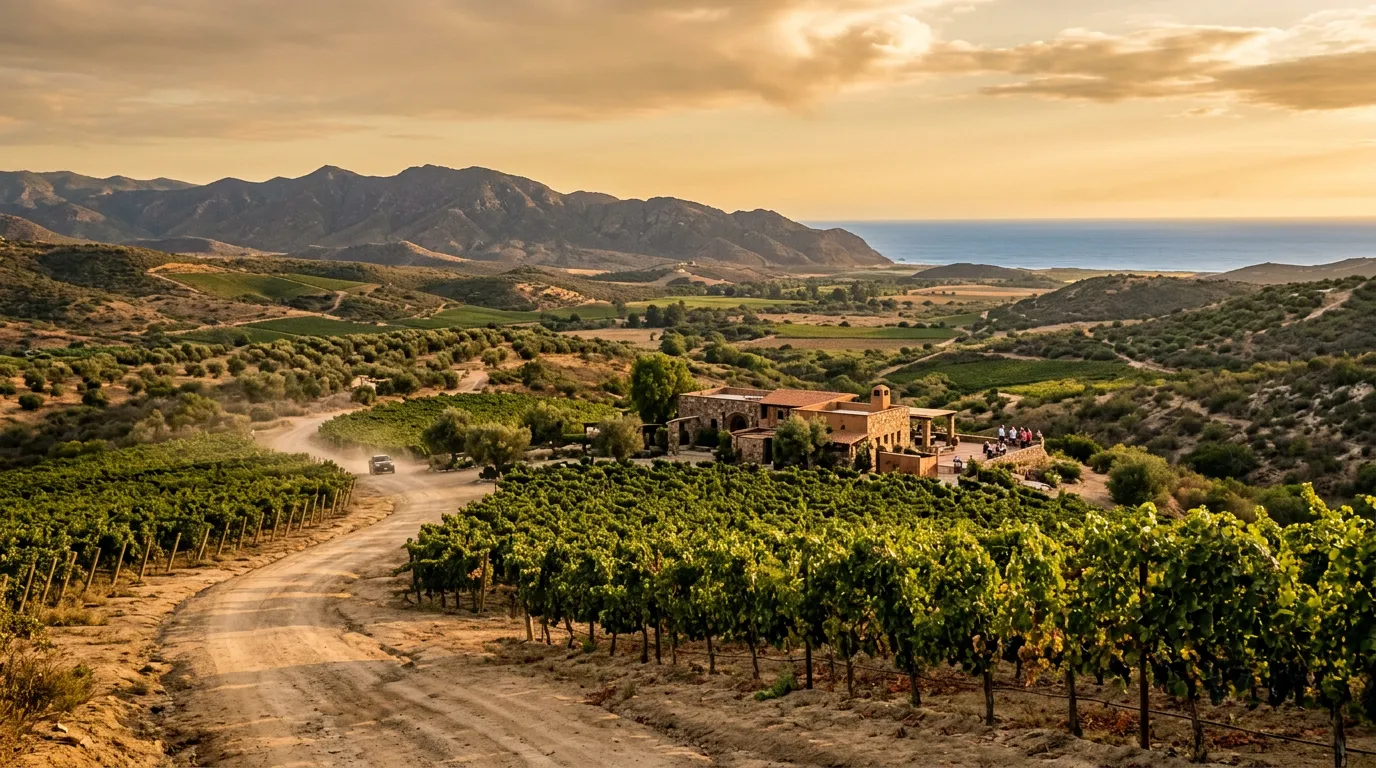
Valle de Guadalupe is Mexico's answer to Napa — but scrappier, dustier, and wildly more affordable. A 30-kilometer stretch of Baja California desert where over 150 boutique wineries sit alongside open-fire kitchens and architect-designed tasting rooms made from shipping containers. It feels like a wine country that hasn't yet been polished smooth, and that raw energy is exactly the point.
Wine Culture Without the Pretension
This is Mexico's largest wine-producing region, responsible for roughly 70% of the country's wine output. Most winemakers are hands-on — you'll often meet the actual vintner pouring your tasting at places like Vena Cava, Finca La Carrodilla, or Lechuza Vineyard. Tastings typically run 200–500 MXN (roughly $12–30 USD) for 4–6 pours. The signature grapes are Nebbiolo, Tempranillo, and Grenache, adapted to the Mediterranean microclimate. Don't expect Napa-level consistency — embrace the experimentation.
ICONIC · BUDGET
The Campestre Dining Scene
Valle de Guadalupe invented a dining category: campestre restaurants — outdoor kitchens using wood fire, local ingredients, and wine-country views. Finca Altozano (by chef Javier Plascencia), Deckman's en el Mogor, and Fauna are the headliners, but newer spots like Malva and Lunario are equally compelling. Weekend reservations at top restaurants should be booked 2–4 weeks ahead. Weekday visits are dramatically easier and often come with more personal service.
ICONIC · BOOK AHEAD · PHOTO
Vendimia Festival Season (August)
The annual Fiestas de la Vendimia (grape harvest festival) runs through most of August, with individual wineries hosting their own multi-course pairing dinners, barrel tastings, and live music events. Tickets for marquee events sell out months ahead — follow @rutadelvinobaja on Instagram for announcements. Hotel prices spike 40–60% during Vendimia weekends. If you want the festival energy without the crush, the first and last weekends of August are slightly calmer.
SEASONAL · BOOK AHEAD · CROWD WARNING
Designated Driver or Bust
There is no Uber service in the valley, and taxis are scarce. Your realistic options: rent a car and designate a sober driver, hire a private driver for the day (expect 2,500–4,000 MXN for 6–8 hours — ask your hotel for contacts), or book a structured wine tour through companies like Baja Wine + Food or Valle Secreto Tours. Many visitors base themselves in Ensenada (30 minutes west) where ride-share works, then arrange a driver for valley days. Do not drink and drive — police checkpoints are frequent on the Carretera Tecate-Ensenada.
BOOK AHEAD
Accommodation Strategy
The valley itself has limited lodging — mostly boutique hotels, glamping sites, and Airbnbs scattered among vineyards. Bruma, Encuentro Guadalupe (the famous cliffside eco-lofts), and Hotel Boutique Valle de Guadalupe are the standout properties but book up weeks ahead on weekends. For budget travelers, staying in Ensenada opens up far more options. Mid-week stays in the valley are 30–50% cheaper and infinitely more relaxed. Many properties have a 2-night minimum on weekends.
BOOK AHEAD · PHOTO · NEXTPIC
The Art and Architecture Trail
Beyond wine, the valley has become an open-air architecture showcase. Encuentro Guadalupe's cantilevered steel cabins, Vena Cava's recycled-boat-hull roof, and Bruma's minimalist concrete structures are destination-worthy on their own. Street art and sculpture installations dot the main road (Carretera Tecate-Ensenada Km 73–96). The best light for photographing the architectural properties is late afternoon when the desert hills go golden behind them.
PHOTO · GOLDEN HOUR · NEXTPIC · FREE
Cross-Border Day Trip Reality
Many visitors come from San Diego (a 90-minute drive via the Tecate border crossing). The Tecate crossing is far less congested than Tijuana's San Ysidro — northbound waits average 30–60 minutes vs. 2–3 hours at San Ysidro. You'll need a valid passport or passport card. If crossing by car, ensure your US auto insurance covers Mexico or buy a Mexican liability policy through Baja Bound or Lewis & Lewis (purchase online before you cross). SENTRI lanes cut the Tecate return to under 10 minutes if you have a trusted traveler card.
BUDGET
When to Go
October is the single best month for Valle de Guadalupe: harvest crowds have dispersed, vineyard foliage turns amber and crimson for extraordinary photography, temperatures hover around 26C (79F), and restaurants are still fully open with new vintage tastings available. For walking the vineyard trails and shooting golden-hour portraits against grapevine rows, the light in October and early November is unmatched. April is the runner-up if you prefer wildflower-covered green hills over autumn tones.
Winter Dormancy
Vines are bare and the valley is quiet. Morning fog and green rain-fed hills give the landscape a moody, almost Mediterranean feel. Winemakers use this period for barrel work and blending.
Best for budget visits and intimate winery conversations; some venues have reduced hours or are closed.
Spring Bloom
Bud break through full canopy. The surrounding hills are alive with wildflowers in April, and vineyard rows turn vibrant green. Temperatures are perfect for outdoor dining.
Ideal for photography and hiking with manageable crowds and comfortable weather.
Wildflower Season
A brief but spectacular period when the chaparral and meadows surrounding the valley erupt in yellow, purple, and orange wildflowers. Depends on winter rainfall totals. [ASSUMPTION: peak timing varies year to year]
Best for landscape photographers and nature lovers; combines well with vineyard visits.
Fiestas de la Vendimia
The valley's signature harvest festival season with grape-stomping, winemaker dinners, barrel tastings, live music, and culinary pop-ups across dozens of estates. This is when Valle de Guadalupe becomes a national destination.
Must book accommodations and top restaurants months in advance; expect peak pricing and weekend gridlock on the Ruta del Vino.
Santa Ana Season
Hot, dry offshore winds can sweep through the valley, spiking temperatures 5–10C above normal and creating fire risk. Events are sporadic and unpredictable. The upside: crystal-clear skies and dramatic golden light.
Check fire advisories before travel; the light quality during Santa Ana events is extraordinary for photography but outdoor comfort drops sharply.
Post-Harvest Autumn
Vine leaves shift to gold, crimson, and amber. The pace slows, new wines appear in tasting rooms, and the valley reclaims its rural tranquility. Many consider this the most beautiful time of year.
Optimal balance of great weather, fall color photography, open restaurants, and minimal crowds.
Where to Stay
Valle de Guadalupe is Mexico's premier wine country, and accommodations lean heavily toward boutique and experiential stays scattered across vineyard-covered hillsides. Budget options are genuinely scarce in the valley itself — most travelers on a budget base in Ensenada (30 minutes west) and drive in. Weekend rates spike dramatically, especially during the Fiestas de la Vendimia harvest festival in August, when prices can double and availability disappears months ahead.
Encuentro Guadalupe
Central Valle de Guadalupe
Boutique Hotel
ICONIC · PHOTO · BOOK AHEAD · NEXTPIC
Bruma Wine Garden
Western Valle de Guadalupe
Resort
ICONIC · PHOTO · BOOK AHEAD · GOLDEN HOUR
Hotel Boutique Valle de Guadalupe
Central Valle de Guadalupe
Boutique Hotel
CENTRAL · EASY WALK
Maglen Resort
Eastern Valle de Guadalupe
Boutique Hotel
FAMILY · GOLDEN HOUR · PHOTO
Airbnb Casitas and Glamping in Valle
Throughout Valle de Guadalupe
Guesthouse
BUDGET · HIDDEN GEM
Hotel Coral and Suites (Ensenada)
Ensenada (30 min from Valle)
Hotel
BUDGET · FAMILY · TRANSIT-FRIENDLY
Cuatro Cuatros
Coastal edge near Valle de Guadalupe
Resort
NEXTPIC · SUNSET · PHOTO · BOOK AHEAD · ICONIC
Contemplacion Hotel Boutique
Central Valle de Guadalupe
Boutique Hotel
HIDDEN GEM · SUNRISE · PHOTO
Top Attractions
№ 1 · Essential
Museo de la Vid y el Vino
★ ICONIC · PHOTO · BUDGET · EASY WALK
The valley's dedicated wine museum traces Baja California's winemaking history from mission-era roots to the modern boom. The architecture itself is striking — a curved, semi-underground building that blends into the hillside. It's genuinely well curated and a great first stop to contextualize everything you'll taste.
Tip: Visit first thing in the morning before winery hopping. The outdoor terrace has a panoramic view of the valley that photographs beautifully with morning side-light, and the small on-site shop sells hard-to-find small-production bottles.
Best: Morning, 10:00–11:30 AM, before crowds arrive and while light is soft on the terrace
Fees: Around 50–80 MXN (approximately $3–5 USD)
Finca La Carrodilla
A beloved artisanal winery known for rustic charm, organic farming practices, and some of the valley's most character-driven wines. Unlike the slick tasting rooms nearby, this feels like visiting a friend's ranch. The Tempranillo and Grenache blends are standouts.
HIDDEN GEMRuta del Vino Scenic Overlook (Km 83 Area)
The informal pulloff area near kilometer marker 83 on the Tecate-Ensenada highway offers one of the best wide-angle views of the entire valley. No signs, no entrance — just a dirt shoulder and a jaw-dropping panorama of vineyards, olive groves, and rolling hills. This is where the postcard shots come from.
NEXTPICRestaurante Deckman's en el Mogor
Chef Drew Deckman's open-air restaurant is essentially a kitchen set in a vineyard with no walls — just a canopy roof and the valley as your dining room. The hyper-local, fire-cooked cuisine is legitimately world-class. It's pricey but not overrated; this one earns every peso.
ICONICDay Trips
Ensenada — Coastal City & Foodie Capital
Travel: 30 km / 30 min by car
La Bufadora — Pacific Blowhole & Seafood Strip
Travel: 55 km / 50 min by car via Ensenada
Guadalupe Canyon Hot Springs
Travel: 120 km / 2 hr by car southeast via Hwy 3
Rosarito & Puerto Nuevo — Lobster Village
Travel: 95 km / 1.5 hr by car north via toll road
San Pedro Martir National Park — Sierra Observatory
Travel: 200 km / 3 hr by car southeast
Tecate — Border Town with Character
Travel: 70 km / 1 hr by car northeast
Tijuana — Urban Food & Art Scene
Travel: 115 km / 1.5 hr by car north via toll road
Scenic Routes
Ruta del Vino (Highway 3 Core Loop)
Driving
Route: Ensenada to San Antonio de las Minas via Tecate Highway 3
ICONIC · PHOTO · GOLDEN HOUR · NEXTPIC
Cerro de la Campana Overlook Hike
Hiking
Route: Trailhead near Monte Xanic winery to summit overlook
HIDDEN GEM · SUNRISE · HARD HIKE · PHOTO · FREE
Vineyard Walk: La Ruta a Pie (El Porvenir Loop)
Walking
Route: Finca La Carrodilla area through El Porvenir village and back
EASY WALK · GOLDEN HOUR · HIDDEN GEM · PHOTO · FREE
Highway 3 to La Grulla Mountain Pass
Driving
Route: Valle de Guadalupe east toward Ojos Negros and La Grulla
SEASONAL · HIDDEN GEM · PHOTO
Coastal Connector: Valle to Puerto Nuevo
Driving
Route: Valle de Guadalupe to Puerto Nuevo via Highway 1 Free Road
PHOTO · SUNSET · SEASONAL · NEXTPIC
San Antonio de las Minas Walking Trail
Walking
Route: San Antonio de las Minas church to old mining ruins loop
EASY WALK · BLUE HOUR · HIDDEN GEM · FREE · PHOTO
Culture & History
Valle de Guadalupe is Mexico's premier wine region, shaped by an extraordinary collision of Russian immigrant heritage, indigenous Kumiai traditions, and a modern culinary revolution that has redefined Baja California's identity. What was once a quiet agricultural valley has become a living laboratory for Mexican terroir-driven winemaking and open-fire cooking, earning global recognition while retaining a proudly scrappy, anti-corporate ethos.
Eat & Drink
Valle de Guadalupe is Mexico's most exciting wine-country food destination, where a generation of chefs has built open-air kitchens among the vineyards and turned hyper-local Baja Med cuisine into a global phenomenon. The cooking here fuses Mexican tradition with Mediterranean technique and Asian accents, leaning hard on olive oil, fresh seafood from the Pacific coast just 30 minutes away, heritage produce from nearby ranchos, and of course the valley's own wines. Most restaurants are destination-dining experiences set on winery estates with jaw-dropping vineyard views.
Fauna ★★★★★
Multi-course tasting menu by chef David Castro Hussong featuring dishes like smoked marrow with sea urchin, aguachile with local olives, and lamb barbacoa with mole. Wine pairings from Bruma's own cellar.
Bruma Wine Garden, Carretera Tecate-Ensenada Km 85
Restaurant
Deckman's en el Mogor ★★★★★
Open-fire cooking with wood and charcoal. Whole grilled fish, bone-in ribeye over live fire, octopus tostada, and seasonal vegetable dishes from chef Drew Deckman's on-site garden.
Mogor Badan Winery, Carretera Tecate-Ensenada Km 85.5
Restaurant
Malva ★★★★
Vegetable-forward Baja Med cuisine by chef Roberto Alcocer. Outstanding beet salad with goat cheese, stuffed squash blossoms, mushroom-based mains, and inventive desserts using local fruit.
Carretera Tecate-Ensenada Km 96
Restaurant · vegetarian_restaurant
Finca Altozano ★★★★
Chef Javier Plascencia's rustic open-air concept. Famous for carne asada tacos, grilled quail, blistered peppers, and wood-fired pizzas. Great local wine list at approachable prices.
Carretera Tecate-Ensenada Km 83
Restaurant
Traslomita ★★★
Farm-to-table concept with strong plant-based options including grilled vegetable platters, jackfruit tacos, roasted cauliflower mains, and seasonal salads. Offers clearly marked vegan dishes.
Carretera Tecate-Ensenada Km 87 [ASSUMPTION]
Restaurant · vegan_restaurant
Bruma Cafe
Specialty coffee served inside the architecturally stunning Bruma complex. Single-origin pour-overs, cold brew, and excellent pastries. The minimalist concrete-and-glass space is gorgeous for morning light photos.
Bruma Wine Garden, Km 85
Coffee · cafe
La Cocina de Dona Esthela
Famous for her Mexican hot chocolate and cafe de olla alongside legendary machaca and egg breakfasts. More of a breakfast institution than a coffee shop, but the drinks alone are worth the stop.
Ejido El Porvenir, off Carretera Tecate-Ensenada Km 75
Coffee · cafe
Cafe at Encuentro Guadalupe
Espresso drinks and light bites served at the architecturally famous eco-loft hotel. The steel-and-glass pods perched on the hillside make a dramatic backdrop for coffee.
Encuentro Guadalupe, Km 75 [ASSUMPTION]
Coffee · cafe
Cafe de la Ruta
Simple roadside coffee stop with drip coffee, pan dulce, and a friendly local vibe that contrasts nicely with the valley's upscale destinations.
Along Ruta del Vino, near Km 88 [ASSUMPTION]
Coffee · cafe
Pan de Horno at Dona Esthela
Traditional Mexican wood-fired bread, flour tortillas made to order, and pan dulce baked fresh each morning. The conchas and empanadas are outstanding.
Ejido El Porvenir, Km 75
Bakery · bakery
Lunario Bistro and Bakery
European-style pastries and sourdough breads alongside a full brunch menu featuring eggs Benedict with smoked salmon, brioche French toast, and seasonal fruit bowls.
Carretera Tecate-Ensenada Km 83 [ASSUMPTION]
Bakery · bakery · breakfast_restaurant
Panaderia Ruta del Vino
Rustic artisan breads, olive oil focaccia using local olives, and savory empanadas stuffed with cheese and chiles.
Along Ruta del Vino, Km 87 [ASSUMPTION]
Bakery · bakery
Malva
Dedicated vegetable-focused tasting plates, roasted beet with local goat cheese, grilled seasonal squash, herb salads from the on-site garden, and creative meatless mains that change weekly.
Carretera Tecate-Ensenada Km 96
Vegetarian · vegetarian_restaurant
Traslomita
Full vegan plates including jackfruit carnitas, grilled vegetable mole, roasted cauliflower steaks, and seasonal fruit desserts. Everything can be prepared fully plant-based on request.
Carretera Tecate-Ensenada Km 87 [ASSUMPTION]
Vegetarian · vegan_restaurant
Deckman's en el Mogor
While known for grilled proteins, chef Deckman grows an extensive garden and offers outstanding grilled vegetable platters, seasonal salads, and can create a vegetarian or vegan tasting on advance request.
Mogor Badan Winery, Km 85.5
Vegetarian · vegetarian_restaurant · vegan_restaurant
Shopping
Valle de Guadalupe is wine country, not a shopping destination in the traditional sense. The best purchases here are bottles direct from boutique wineries, handmade ceramics from local artisans, and olive oil pressed in the valley — visitors who love artisan goods and winery-direct deals will be happiest.
Mercado del Valle
Mixed
Handmade pottery, locally pressed olive oil, lavender sachets, small-batch soaps, and beeswax candles from valley producers. Some vendors sell hand-tooled leather goods.
Market · ICONIC · PHOTO · BUDGET
Feria de la Vendimia Pop-Up Markets
Craft
Limited-edition wine labels, signed bottles, artisan jewelry made from repurposed wine barrel oak, and hand-printed posters by Baja artists.
Market · SEASONAL · HIDDEN GEM · BOOK AHEAD
Ensenada Artisan Market (Mercado de Artesanias)
Craft
Talavera-style ceramics, woven textiles, blown glass, and alebrijes. Worth the drive if you want traditional Mexican crafts that you will not find in the valley itself.
Market · BUDGET · TRANSIT-FRIENDLY · CROWD WARNING
Ruta del Vino Winery Row (Km 73–93)
This is the main artery of the valley, lined with over 100 wineries, many with small retail shops. Not a traditional shopping district but the primary place to buy wine direct from producers at cellar-door prices.
Adobe Guadalupe for their signature blends and branded merchandise, Vena Cava for wine in a stunning architectural setting, Lechuza Vineyard for small-lot bottles you cannot find outside the valley, and Casa de Piedra for award-winning reserves. Many wineries also sell house-branded olive oil and artisan cheese boards.
District · ICONIC · PHOTO
El Porvenir Artisan Cluster
A small concentration of workshops and studios along the road near the village of El Porvenir, featuring local potters, ironworkers, and a couple of leather artisans.
Look for hand-forged wine openers and iron candelabras from small metalworking shops. A few pottery studios sell seconds at deep discounts. The vibe is rustic and unpolished — these are working studios, not boutiques.
District · HIDDEN GEM · BUDGET
Downtown Ensenada - Avenida Lopez Mateos
The closest proper shopping street to Valle de Guadalupe. A mix of tourist shops, galleries, and a few genuinely good stores selling regional products.
Hussongs Cantina gift shop for kitschy-but-fun memorabilia, Bodegas de Santo Tomas retail shop for an alternative wine selection, and several shops selling vanilla extract, mole pastes, and dried chiles in bulk. Gallery Antigua sells original artwork by Baja California artists.
District · TRANSIT-FRIENDLY · PHOTO
Photo Spots
Valle de Guadalupe sits around 32 degrees north latitude at roughly 1,100 feet elevation in a Mediterranean climate zone. Summer (June-August) delivers long golden hours with sunset around 7:45pm and sunrise near 5:50am, but midday heat creates harsh shimmer and washed-out skies from 11am-4pm. Winter (December-February) brings softer, lower-angle light all day with sunset around 5:00pm and sunrise near 6:50am — the entire day feels like extended golden hour from 2pm onward. The valley runs roughly east-west, so morning light illuminates the north-facing hillside vineyards and evening light catches the south-facing slopes. Occasional marine fog rolls in from the Pacific coast 20 miles west, most common May-July mornings, creating ethereal conditions that burn off by 10am. September-October harvest season offers the richest colors in the vineyards and the most activity at the wineries. Rare winter rains (December-March) can produce dramatic cloud formations and fresh green hillsides that contrast beautifully with the normally arid palette. Gear-wise, bring a versatile zoom (24-70mm f/2.8) as your workhorse for winery interiors, food, and architecture, plus a 70-200mm for compressing vineyard row patterns. A fast prime (35mm or 50mm f/1.4) is essential for low-light restaurant and fire-pit food photography — you will be shooting handheld at ISO 1600-3200 regularly. Pack a circular polarizer; the dry Baja air produces vivid blue skies that a polarizer deepens dramatically, and it cuts glare on wine glasses and bottles. For editing, lean into warm tones — the valley's natural palette is ochre, terracotta, sage green, and dusty gold. Slightly desaturate blues and greens and push warmth in the highlights to match the actual feel of the place. Dehaze is your friend for cutting through the midday atmospheric haze. If you shoot astro at Encuentro Guadalupe, a star tracker is overkill for this latitude — wide-field exposures at f/2.8, 20 seconds, ISO 3200 on a full-frame body will capture the Milky Way core cleanly from June through September during new moon windows.
Ruta del Vino Vineyard Panorama from Cerro de la Virgen
Sweeping valley overlook showing the patchwork of vineyards, olive groves, and the dusty chaparral hills that frame the entire wine region. Shoot wide with leading lines from the dirt switchback road curving into the valley below. Morning light rakes across the rows of vines and creates long shadows that define the landscape geometry.
Finca Altozano Outdoor Kitchen and Fire Pits
Chef Javier Plascencia's iconic open-air restaurant is a food photography dream. The wood-fired grills throw dramatic flames and smoke, the plated dishes are art, and the entire structure is photogenic rustic-industrial design. Shoot the chefs working the fire with the vineyard behind them. The long communal tables at golden hour are pure editorial material.
Monte Xanic Winery Barrel Room
One of the valley's most established wineries with a beautifully lit barrel aging room. Rows of oak barrels converge to a vanishing point. Shafts of light come through small windows and doorways. Pair with exterior shots of the manicured vineyard rows and the stone-and-wood tasting room architecture.
Decantos Vineyard Infinity Pool Reflection
The modernist architecture of Hotel Decantos features an infinity-edge pool that reflects the surrounding hills and sky. At sunset the warm Baja light turns the pool into liquid gold with the silhouettes of distant ridgelines. Architectural geometry meets landscape — strong leading lines from the pool edge into the valley.
Calle Principal Francisco Zarco Village Morning
The small agricultural town at the heart of the valley is the real-life counterpart to the polished wine scene. Weathered adobe walls, hand-painted signs, a modest church, pickup trucks loaded with crates, and locals starting their day. Street portraits here feel authentic and unhurried. The morning fruit and vegetable vendors set up colorful displays.
Museo de la Vid y el Vino Exterior Sculpture Garden
The wine museum's exterior features large-scale metal sculptures and curved architectural walls that create interesting shadow play. The building itself is a concrete-and-glass modernist form set against the arid hills. Works well as a foreground subject with valley backdrop. Grapevine sculptures and interpretive art installations provide human-scale subjects.
Vineyard Rows at Adobe Guadalupe
This boutique winery has impeccably maintained vineyard rows with a Tuscan-meets-Baja aesthetic. The adobe hacienda with its terracotta archways frames beautifully behind the vines. In spring (April-May) the vines are bright green and lush. In autumn (September-October) the leaves turn amber and gold. The on-site horses sometimes wander near the vines creating unexpected compositions.
Starscape Over the Valley from Encuentro Guadalupe Cabins
The minimalist steel-and-glass cabins perched on the hillside are some of the most photographed architecture in Baja. At night, with minimal light pollution, the Milky Way arcs overhead June through September. The cabins become silhouettes or glowing lanterns depending on your angle. Even without a stay, the restaurant terrace offers similar views.
Suggested Itinerary
Nightlife
Valle de Guadalupe is a wine region, not a nightlife destination. The scene revolves around lingering dinners at vineyard restaurants that wind down by 10-11pm, followed by a nightcap at your hotel or a handful of casual bars. Weekends bring a tourist-heavy crowd from Tijuana and San Diego who come for long wine-soaked lunches that stretch into evening, but true late-night options are extremely limited — most visitors are asleep by midnight. This is honest: do not come here expecting bars or clubs.
Bar Bura
A sleek concrete-and-steel bar tucked inside the Bruma complex where winemakers and well-heeled visitors sip natural wines under string lights with valley views fading into darkness
Open until around 10pm on weekends, earlier on weekdays. Part of the Bruma development alongside Fauna restaurant. Wine-focused but they mix decent cocktails. No cover. Reservations not needed for bar seating but recommended for dinner at Fauna. Weekends only during slower months [ASSUMPTION].
Troika Food Park
A casual open-air food truck park with craft beer taps and communal tables where families, couples, and groups of friends mingle over tacos and local cerveza artesanal as live acoustic sets play on weekend nights
One of the more lively spots on weekend evenings with occasional live music. Closes around 10pm. Good craft beer selection from Baja breweries. Kid-friendly early evening. No reservations, no cover. Cash helpful.
Deckman's en el Mogor
An open-air restaurant under a massive oak tree where the post-dinner crowd lingers at the bar with mezcal flights and Valle wines while the kitchen fire dies down — the closest thing to a scene this valley has
Chef Drew Deckman's acclaimed spot. The bar area allows walk-ins when dinner is fully booked. Open Thursday-Sunday, kitchen closes around 9:30pm but drinks flow a bit longer. Book dinner well ahead on weekends. Smart casual. This is a splurge.
Cervecería Wendlandt (Valle taproom)
A craft brewery outpost where Ensenada's best-known microbrewery serves hoppy IPAs and dark stouts in a low-key outdoor setting that feels more like a friend's backyard party than a bar
Wendlandt is one of Baja's top craft breweries. This taproom has a rotating selection. Closes relatively early, around 8-9pm [ASSUMPTION]. No cover, no dress code, very casual. Check hours as they vary seasonally.
Vena Cava
A stunning architectural winery built from reclaimed boat hulls where you taste estate wines in an arched tasting room that feels like sitting inside the ribcage of a whale — magical at dusk, quiet by 7pm
More of a daytime/late afternoon destination but included because the tasting room experience at golden hour is the best pre-dinner activity in the valley. Usually closes by 6-7pm. Their restaurant Corazón de Tierra is next door and is one of Mexico's best — book weeks ahead.
La Cocina de Doña Esthela (late weekends)
Famous for its legendary breakfast machaca, but on certain weekend evenings the courtyard fills with visitors drinking beer and wine under the stars in a scene that feels like a rural Mexican family gathering you somehow got invited to
Primarily a breakfast and lunch spot. Evening hours are inconsistent and seasonal — confirm before going. When it is open at night, it is casual and charming. No reservations needed for drinks. Cash preferred.
Adobe Guadalupe
A boutique winery and inn where guests and visitors settle into leather chairs in a hacienda-style tasting room surrounded by vineyards and the winery's resident horses — genteel, unhurried, and very quiet after dark
The tasting room and inn make this a lovely late afternoon stop. If you stay at the inn, the courtyard at night with a bottle of their estate wine is genuinely romantic. Tastings end early. Reservations recommended for visits. Their wines, especially the Kerubiel, are excellent.
Ensenada late-night spillover (Hussong's Cantina)
The legendary 1892 cantina where the margarita was allegedly invented — swinging saloon doors, sawdust on the floor, mariachi bands competing with jukebox norteño, and a crowd ranging from grizzled locals to cruise ship tourists getting rowdy
If you actually want nightlife, you need to drive 30 minutes to Ensenada. Hussong's is open late on weekends — midnight or later. No cover. Cash is king. Do NOT drive back to the valley drunk — arrange a designated driver or stay in Ensenada. Papas & Beer nearby is the louder, clubbier alternative.
Build your own Itinerary from this guide
Pick the places you care about — attractions, photo spots, map markers — and we'll lay out a day-by-day starting point. Yours to edit; guide updates never touch it.