Essentials
Currency, language, transit & safety — tap to expand.
Currency — Varies by country — Brazilian Real (R$, ~5.0/USD), Argentine Peso (ARS$, ~1000/USD official but use 'blue dollar' rate ~1200/USD via cuevas), Chilean Peso (CLP$, ~950/USD), Peruvian Sol (S/, ~3.75/USD), Colombian Peso (COP$, ~4000/USD), US Dollar in Ecuador. Rates fluctuate hard — check before crossing borders [ASSUMPTION: rates as of 2024]
Cash vs card — Cards work in cities and chain hotels; cash rules everywhere else, especially Argentina, Bolivia, Peru highlands, rural Brazil. ATMs widely available but charge stiff fees ($5–10 USD per withdrawal) and limit small amounts — withdraw max. In Argentina bring crisp USD bills to exchange at cuevas for 30–40% better rate than cards. Tipping: 10% in restaurants (often included as 'servicio'), round up taxis, $1–2/day for hotel staff.
Budget — Budget: $30–50 USD/day (hostels, street food, buses) — varies hugely by country. Mid-range: $80–150 USD/day (private room, sit-down meals, some tours). Luxury: $250+ USD/day. Chile, Uruguay, Brazilian coast cost 30–50% more than Bolivia, Peru, Ecuador.
Language — Spanish across most of the continent. Portuguese in Brazil — and Brazilians genuinely don't speak Spanish, don't assume. Quechua and Aymara widely spoken in Andean highlands (Peru, Bolivia). English in tourist zones only.
Language barrier — Low English proficiency outside hotels, hostels, and tour operators. Learn basic Spanish — even 50 words transforms the trip. Brazil is harder; Portuguese sounds nothing like its spelling. Google Translate offline packs are essential.
Getting around — Long-distance buses are the backbone of South American travel — cheap, frequent, often surprisingly comfortable (cama/semi-cama seats recline flat). Flights save days on big crossings (Lima–Cusco, Santiago–Patagonia, Rio–Manaus) and LATAM, GOL, Sky, JetSMART run cheap fares if booked 2+ weeks ahead. Trains are rare outside Peru's tourist routes. Rideshare (Uber, Cabify, 99 in Brazil) safer than street taxis in most cities.
Safety — Petty theft is the real threat, not violence. Phone snatching from café tables and on the move is endemic in Rio, São Paulo, Buenos Aires, Lima, Bogotá — keep it pocketed in transit. Don't flash cameras in favelas, comunas, or peripheral neighbourhoods without a local guide. Express kidnappings (forced ATM withdrawals via taxi) happen — use rideshare apps, not street taxis, especially at night and from airports. Altitude sickness is a genuine risk above 3,000m (Cusco, La Paz, Uyuni, Quito) — arrive slow, hydrate, skip alcohol day one. Coca tea helps. Drink bottled or filtered water everywhere except Chile and urban Uruguay/Argentina. Protests and road blockades (especially Peru, Bolivia, Chile) can shut highways overnight — check local news before long bus rides.
Highlights
South America isn't a single trip — it's a continent of contradictions stitched together by overland buses, cheap flights, and shared empanadas. You can shoot Patagonian granite at sunrise and be in an Amazon canoe a week later, but distances are vast and infrastructure varies wildly between Chile's efficiency and Bolivia's improvisation. Pace yourself: most first-timers try to see too much.
Two-speed continent
Chile, Uruguay, and Argentina's big cities run on near-European rails — contactless payments, Uber, fibre wifi. Bolivia, Paraguay, Guyana, and rural Peru still run on cash, paper tickets, and patience. Plan your route knowing which side of that line you're on each week.
PLUGIN TIP
Entry and visa reality
Most Western passports (EU, UK, Canada, Australia, NZ) get 90 days visa-free in nearly every country. US citizens pay a reciprocity fee for Bolivia (~$160, multi-entry) and need a visa for Suriname and Guyana. Brazil reintroduced e-visas for US/CA/AU travellers in April 2025 — apply online via vfsglobal before you fly.
BOOK AHEAD
SIM cards and connectivity
Claro and Movistar have the widest continental coverage; Entel is strongest in Chile and Bolivia, Personal in Argentina. An eSIM through Airalo or Holafly covers most of the continent without swapping physical cards — useful for short multi-country trips. Download offline Google Maps and Maps.me for every city before you arrive; coverage drops fast outside towns.
PLUGIN TIP · TRANSIT-FRIENDLY
Payment apps and cash habits
Mercado Pago (Argentina, Brazil, Mexico, Chile, Uruguay) and PIX (Brazil) dominate local digital payments — PIX in particular is faster than cash for markets and taxis. Wise or Revolut cards beat most bank cards on FX. In Argentina, use Western Union or a 'blue dollar' exchange to get the parallel rate — official ATM rates are roughly half the real value [ASSUMPTION: as of late 2024 reforms this gap has narrowed, check before travel].
BUDGET · PLUGIN TIP
Greetings and social norms
One cheek kiss is standard between women and mixed company across most of the continent (two in Brazil's southeast, none in formal Andean settings). Lunch is the main meal, dinner often starts after 9pm in Argentina and Uruguay. Don't show up on time to a casual invite — 30 minutes late is polite. Tipping is 10% in restaurants when not already included as 'servicio'.
Altitude is real
La Paz (3,650m), Cusco (3,400m), Potosí (4,000m), Quito (2,850m), and the Uyuni circuit (up to 4,900m) will flatten you if you arrive from sea level. Build in 48 hours of low activity, hydrate hard, skip alcohol day one, and consider acetazolamide. Coca tea helps mildly. Don't fly Lima → Cusco and start hiking the same day — it's the most common rookie mistake.
HARD HIKE
Overland vs flying the long legs
Buses in Argentina, Chile, and Peru are excellent — Cama or Semi-Cama seats recline 160°+ and cost a fraction of flights. But Buenos Aires → Salta is 20 hours; Lima → Cusco is 21. For anything over 12 hours, compare with LATAM, Sky, JetSMART, and GOL — budget flights often beat bus prices if booked 2–3 weeks ahead.
BUDGET · TRANSIT-FRIENDLY
When to Go
April–May and September–October are the sweet spots: dry in the Andes, manageable crowds, and shoulder pricing. For photography specifically, May offers crisp Andean light without July's school-holiday crush, while November pairs Patagonia reopening with BA's jacarandas. Avoid late December–early January unless Carnival or Patagonia trekking is the whole point.
Carnival Window
Brazil's Carnival (and smaller versions across the continent) falls in late February or early March depending on Easter. Rio, Salvador, and Olinda are the headline acts. Prices triple and accommodation books out 6–12 months ahead.
Book extremely early or avoid Brazilian coastal cities entirely during this window.
Vendimia (Wine Harvest)
Mendoza's grape harvest festival peaks in early March with parades, tastings, and vineyard events. Cooler nights bring excellent wine-country light for photography.
Best window for Argentine wine travel — book vineyard lunches ahead.
Andean Dry Season
The most reliable weather window for Peru, Bolivia, and northern Chile. Clear skies, cold nights at altitude, and minimal rain make this ideal for Machu Picchu, Uyuni, and Atacama.
Best weather but highest crowds and prices — book Inca Trail permits 4–6 months ahead.
Uyuni Mirror Season
When rains flood the Salar de Uyuni, a thin layer of water turns the salt flat into the world's largest mirror. Timing is unpredictable — too little water and there's no reflection, too much and tours can't cross.
Photographers chasing the mirror should aim for February; those wanting Incahuasi island access should come in dry season instead.
Patagonia Trekking Season
The narrow window when Torres del Paine, Fitz Roy, and the Carretera Austral are fully accessible. Outside this period, refugios close, winds intensify, and many trails become unsafe.
Book refugios and camping permits 6+ months ahead — December and January sell out first.
Jacaranda Bloom
Buenos Aires (and to a lesser extent other southern cone cities) erupts in purple from mid-October through November. Plaza San Martín and Avenida 9 de Julio are prime photo locations.
Brief but spectacular urban photography window — target the first three weeks of November.
Where to Stay
South America's accommodation landscape swings wildly by country — Chile and Uruguay run pricey, while Bolivia and parts of Peru deliver shocking value. The standout strategy: splurge on iconic locations (Atacama, Patagonia, Machu Picchu) where logistics justify the price, and go mid-range or hostel in big cities where competition is fierce. Booking gotcha: shoulder-season pricing can drop 40%, but Patagonia and Galápagos book out 6+ months ahead regardless.
Explora Patagonia
Torres del Paine, Chile
Resort
ICONIC · PHOTO · BOOK AHEAD · GOLDEN HOUR
Tierra Atacama
San Pedro de Atacama, Chile
Boutique Hotel
NIGHT SHOOT · PHOTO · WORKSHOP SPOT · BOOK AHEAD
Casa Gangotena
Plaza San Francisco, Quito, Ecuador
Boutique Hotel
ICONIC · PHOTO · CENTRAL · BLUE HOUR
Selina Miraflores
Miraflores, Lima, Peru
Hostel
BUDGET · TRANSIT-FRIENDLY · CENTRAL
Pariwana Hostel Cusco
Plaza de Armas, Cusco, Peru
Hostel
BUDGET · SOCIAL · CENTRAL · EASY WALK
Loki Hostel La Paz
Centro, La Paz, Bolivia
Hostel
BUDGET · SOCIAL · CROWD WARNING
Palacio Nazarenas, A Belmond Hotel
San Blas, Cusco, Peru
Hotel
ICONIC · SPLURGE · PHOTO · BOOK AHEAD
Kachi Lodge
Salar de Uyuni, Bolivia
Villa
UNIQUE · NIGHT SHOOT · PHOTO · SEASONAL · BOOK AHEAD
Top Attractions
№ 1 · Essential
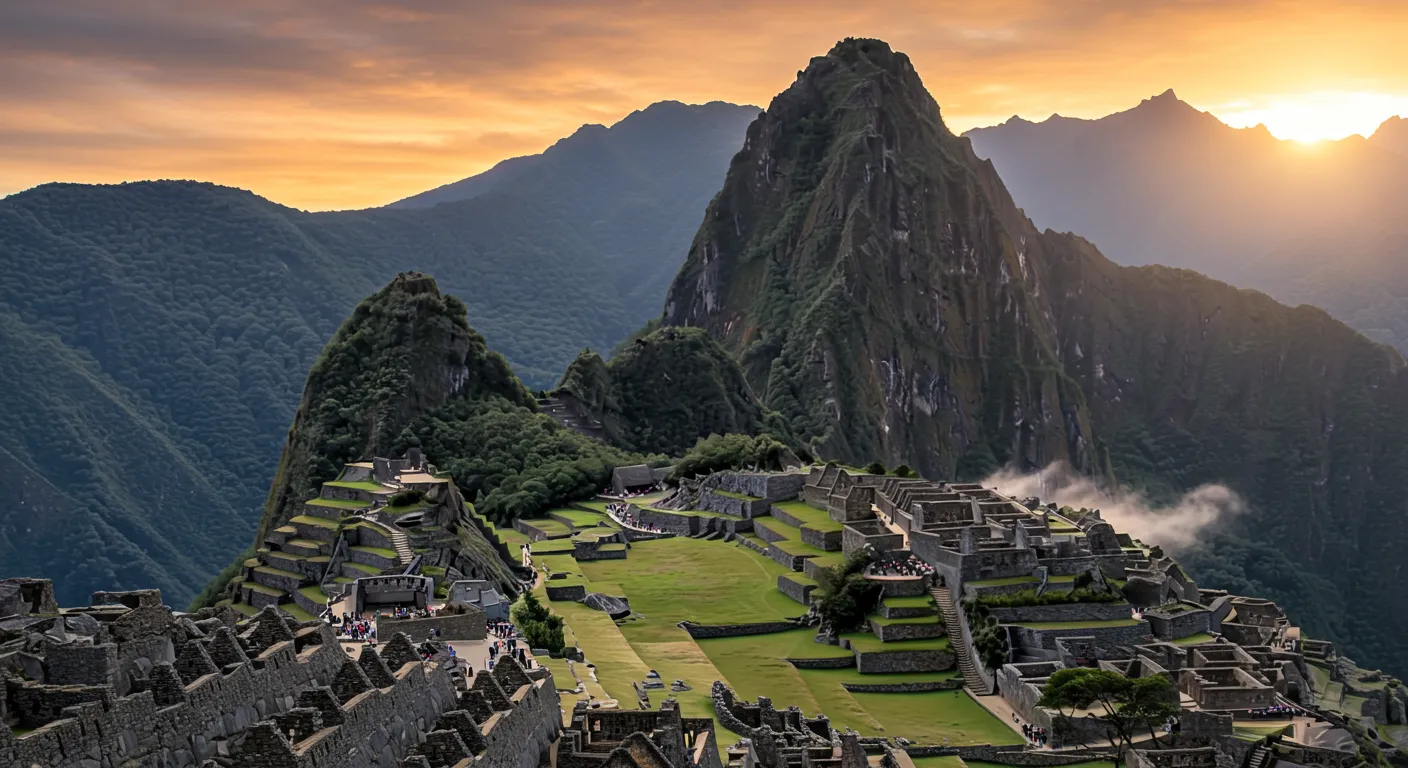
Machu Picchu
★ ICONIC · PHOTO · SUNRISE · BOOK AHEAD · PERMIT NEEDED · CROWD WARNING
Yes, it lives up to the hype — but only if you plan around the crowds. The classic postcard view from the Guard House is iconic for a reason, though the site itself is now strictly one-way circuits with timed entry.
Tip: Book Circuit 2 for the full classic view. Add Huayna Picchu or Machu Picchu Mountain for elevation shots — Huayna sells out 2-3 months ahead in high season.
Best: First entry at 6am — morning mist burns off around 8am for that dramatic reveal shot. Avoid midday harsh light and peak crowds.
Fees: ~$50 USD base ticket, more with mountain add-ons
Iguazú Falls (Argentine & Brazilian sides)
Bigger and louder than Niagara, set in subtropical jungle. Do both sides if you can — Brazil for the panoramic view, Argentina for getting drenched at Devil's Throat.
ICONICSalar de Uyuni
The world's largest salt flat — surreal in dry season, a giant mirror in wet season. Honest take: the 3-day jeep tours from Uyuni are rough, cold, and bunk-style lodging is basic, but the landscape pays it back.
ICONICCristo Redentor, Rio de Janeiro
Iconic but honestly crowded and a bit underwhelming up close — the statue itself is less impressive than the view of Rio it offers. Worth doing once for the panorama, not the monument.
ICONICDay Trips
Machu Picchu from Cusco/Aguas Calientes
Travel: ~75 km / 3.5 hr by train from Cusco via Ollantaytambo, then 25 min bus
Tigre Delta from Buenos Aires
Travel: 30 km / 1 hr by Mitre line train to Tigre
Colonia del Sacramento from Buenos Aires
Travel: ~50 km / 1 hr 15 by Buquebus ferry across the Río de la Plata
Cotopaxi National Park from Quito
Travel: ~75 km / 2 hr by car or organized tour
Petrópolis from Rio de Janeiro
Travel: ~70 km / 1.5 hr by bus from Rodoviária Novo Rio
Maipo Valley wineries from Santiago
Travel: ~25–40 km / 45 min by car or Metro+Uber to Concha y Toro
Isla del Sol from Copacabana, Bolivia
Travel: ~12 km / 1.5 hr by slow boat across Lake Titicaca
Scenic Routes
Carretera Austral
Driving
Route: Puerto Montt to Villa O'Higgins, Chile
PHOTO · BOOK AHEAD · SEASONAL · ICONIC
Death Road (Yungas Road)
Cycling
Route: La Cumbre to Coroico, Bolivia
PHOTO · BOOK AHEAD · CROWD WARNING
W Trek, Torres del Paine
Hiking
Route: Refugio Paine Grande to Las Torres base, Chile
HARD HIKE · SUNRISE · PERMIT NEEDED · BOOK AHEAD · ICONIC
Quebrada de Humahuaca
Driving
Route: Jujuy to Humahuaca, Argentina
PHOTO · GOLDEN HOUR · SEASONAL
Selaron Steps to Santa Teresa Walk
Walking
Route: Lapa to Largo dos Guimaraes, Rio de Janeiro
PHOTO · FREE · CROWD WARNING · EASY WALK
Salkantay Trek
Hiking
Route: Mollepata to Machu Picchu, Peru
HARD HIKE · PHOTO · BUDGET · BOOK AHEAD
Street Art
South America has the most vibrant, politically charged, and technically ambitious street art scene on the planet. Buenos Aires and São Paulo are open-air galleries with lax-to-permissive laws, while Bogotá, Valparaíso, and Lima host muralism that blends pre-Columbian iconography with sharp social commentary. Unlike Europe's stencil-and-tag culture, expect large-scale figurative work, indigenous motifs, and surreal magical-realist pieces.
Palermo & Colegiales, Buenos Aires
Buenos Aires legalised most street art, producing enormous commissioned murals alongside organic pieces. Colegiales' Pasaje Russel and the train-line walls along Av. Dorrego are dense with work. Palermo Soho has smaller, faster-rotating pieces.
Start Plaza Serrano, Palermo; walk north to Av. Dorrego rail corridor and Pasaje Russel in Colegiales
ICONIC · PHOTO · TRANSIT-FRIENDLY · FREE · GOLDEN HOUR
Beco do Batman, Vila Madalena, São Paulo
A narrow alley packed wall-to-wall with murals, repainted constantly. Touristy and crowded but genuinely the densest concentration of quality work in the city. Pair with the surrounding Vila Madalena streets for less-photographed pieces.
Beco do Batman, Rua Gonçalo Afonso, Vila Madalena
ICONIC · PHOTO · CROWD WARNING · FREE
La Candelaria & Distrito Graffiti, Bogotá
Bogotá's scene is politically loaded — indigenous rights, displacement, peace process commentary. La Candelaria has the historic murals; Distrito Graffiti in Puente Aranda is a sanctioned warehouse zone with massive walls and active painters most weekends.
La Candelaria: Carrera 2 + Calle 12 area. Distrito Graffiti: Calle 19 between Carrera 26 and 30
PHOTO · FREE · HIDDEN GEM
Cerros Alegre & Concepción, Valparaíso
Murals are woven into the hillside fabric — staircases, retaining walls, garage doors. Less about famous artists, more about cumulative atmosphere. The Museo a Cielo Abierto on Cerro Bellavista is the curated stretch but the surrounding hills are richer.
Start Ascensor Reina Victoria; wander Cerro Alegre to Cerro Concepción
ICONIC · PHOTO · GOLDEN HOUR · HARD HIKE
Barranco, Lima
Smaller scene than the others but worth a half-day if you're in Lima. Bajada de Baños and the streets around Puente de los Suspiros have good pieces, often blending Andean imagery with contemporary styles. Pair with the neighbourhood's cafes and ocean overlooks.
Bajada de Baños and Av. San Martín, Barranco
PHOTO · EASY WALK · FREE
Culture & History
South America's identity was forged by the collision and fusion of advanced Indigenous civilizations, Iberian colonization, forced African migration, and later waves of European, Asian, and Middle Eastern immigration. The result is a continent where pre-Columbian cosmologies coexist with Catholic festivals, where samba and cumbia share airwaves with Andean huayno, and where literature, food, and political resistance are deeply intertwined. What resonates is the openness — culture here is participatory, loud, and lived on the street.
Eat & Drink
South America's food scene is a layered story of Indigenous staples, European immigration, African influence, and Asian fusion — most visibly in Peru's nikkei and chifa traditions. From Argentine asado to Brazilian feijoada, Peruvian ceviche to Colombian arepas, the continent rewards travellers who eat across class lines: fine dining one night, a market stall the next. Expect bold contrasts. Lima and São Paulo are genuine world food capitals with multiple World's 50 Best entries, while smaller cities like Cusco, Cartagena, and Mendoza punch well above their weight. Vegetarians do better than reputation suggests, especially in the Andes where quinoa, potatoes, and corn anchor the diet. Skip the tourist-trap parrillas on main squares — the good stuff is one neighbourhood over.
Central ★★★★★
tasting menu mapping Peruvian ecosystems by altitude
Barranco, Lima, Peru — Av. Pedro de Osma 301
Restaurant
Don Julio ★★★★★
dry-aged beef parrilla, ojo de bife, chorizo
Palermo, Buenos Aires, Argentina — Guatemala 4699
Restaurant
A Casa do Porco ★★★★
nose-to-tail pork, San Zé sushi of pork belly
Centro, São Paulo, Brazil — R. Araújo 124
Restaurant
El Chato ★★★★
modern Colombian, Amazon and Pacific coast ingredients
Chapinero Alto, Bogotá, Colombia — Cra. 4 #56-39
Restaurant · vegetarian_restaurant
La Mar Cebichería ★★★★
ceviche, tiraditos, causa
Miraflores, Lima, Peru — Av. La Mar 770
Restaurant
El Vegetariano ★★★
Andean vegan plates, quinoa stews, lúcuma desserts
San Blas, Cusco, Peru — Tandapata 248
Restaurant · vegan_restaurant
Café San Alberto
single-estate Colombian beans roasted to order
La Candelaria, Bogotá, Colombia
Coffee · cafe
Coffee Lab (Isabela Raposeiras)
Brazilian specialty roasts, brew-method flights
Vila Madalena, São Paulo, Brazil
Coffee · cafe
Full City Coffee House
third-wave roastery with Peruvian micro-lots
Miraflores, Lima, Peru
Coffee · cafe
LAB Tostadores de Café
Argentine specialty roasting, espresso flights
Palermo Soho, Buenos Aires, Argentina
Coffee · cafe
Panadería Rosetta
concha, guava danish, sourdough
Pinheiros, São Paulo, Brazil [ASSUMPTION location may have shifted]
Bakery · bakery
L'Épi Boulangerie
croissants, medialunas, brunch plates
Recoleta, Buenos Aires, Argentina
Bakery · bakery · breakfast_restaurant
La Valeriana
Andean grain breads, alfajores, empanadas salteñas
San Blas, Cusco, Peru
Bakery · bakery
Quinoa Café
Andean vegetarian set lunches, soups, juices
Centro Histórico, Quito, Ecuador
Vegetarian · vegetarian_restaurant
Buenos Aires Verde
raw, vegan, and macrobiotic plates
Palermo, Buenos Aires, Argentina
Vegetarian · vegan_restaurant
Govinda
Hare Krishna thali, vegan curries, lassi
Multiple cities (Lima, La Paz, Cusco)
Vegetarian · vegetarian_restaurant · vegan_restaurant
Shopping
South America's shopping rewards travellers who lean into artisan markets over malls — this is a continent where indigenous textile traditions, leatherwork, silverwork, and gemstones are genuinely world-class. Mall shoppers will be underwhelmed; anyone willing to dig through a craft market will leave with pieces that beat anything sold back home.
Otavalo Saturday Market
Craft
Indigenous Andean textiles — alpaca and wool blankets, tapestries, ponchos, scarves. The Otavaleños are one of the most established weaving cultures in the Americas and prices here beat Cusco and La Paz.
Market · ICONIC · PHOTO · BUDGET
Feria de San Telmo
Antiques
Genuine antiques — vintage soda siphons, mate gourds, silver bombillas, old leather goods, 1940s–60s ephemera. Tango photography and prints from real collectors, not reproductions.
Market · ICONIC · PHOTO · CROWD WARNING
Mercado de las Brujas
Mixed
Aymara ritual objects, amulets, woven coca pouches, silver charms, and Andean folk-medicine curiosities. Honest take: the dried llama foetuses are the famous draw but most travellers just want photos — buy the textiles and silverwork instead.
Market · PHOTO · HIDDEN GEM
Feira Hippie de Ipanema
Craft
Brazilian gemstone jewellery (tourmaline, aquamarine, citrine), leather sandals, hammocks, and woodcarving from the Northeast. Quality is mixed but stones are real and cheaper than shops in Copacabana.
Market · TRANSIT-FRIENDLY · PHOTO
Palermo Soho, Buenos Aires
Argentina's strongest independent design scene — leather ateliers, local fashion labels, and concept stores in a walkable grid of low-rise streets.
Leather jackets and bags from workshops on Honduras and El Salvador streets, designer brands like Jazmin Chebar and Rapsodia, and independent bookshops. Argentine leather is genuinely world-class and roughly half EU prices.
District · LOCAL · LUXURY
Miraflores & Barranco, Lima
Lima's polished shopping spine, mixing Peruvian alpaca houses with contemporary art galleries and design boutiques.
Sol Alpaca and Kuna for premium baby alpaca knitwear, Dédalo in Barranco for curated Peruvian craft and silver, and Las Pallas for serious folk art collectors. Skip Larcomar mall unless you need international brands.
District · LOCAL · LUXURY
San Blas, Cusco
Steep cobblestone artisan quarter above the main plaza — small workshops where you can often watch makers at work.
Textile cooperatives selling naturally-dyed weavings (look for Centro de Textiles Tradicionales del Cusco for ethically sourced, fair-priced pieces), silverwork, and ceramics. Prices are higher than rural markets but quality and provenance are real.
District · LOCAL · PHOTO
Photo Spots
Seasonal light across South America splits hard by hemisphere and latitude. South of the equator (Patagonia, Uyuni, Rio, Buenos Aires) the austral summer Dec–Feb gives long days with 5:00am sunrises and 9:00pm sunsets — beautiful but the sun climbs high and midday is harsh. Austral winter Jun–Aug compresses daylight (sunrise 8:00–9:00am in Patagonia) but delivers low-angle golden light most of the day and dramatic Patagonian storm skies. Equatorial destinations (Cartagena, Quito, Galápagos) have near-constant 6am/6pm sun year-round — plan around weather, not seasons. Wet season for the Uyuni mirror runs Jan–Mar; dry season for the Inca Trail and Patagonia trekking is May–Sep. Amazon shooting peaks in dry season Jul–Oct when river levels drop and wildlife concentrates.
Machu Picchu Classic Viewpoint (Guardian's Hut)
The iconic terraced overlook of the citadel with Huayna Picchu rising behind. Wait for mist to lift off the ruins — that 10-minute window when sun hits the stonework but valley fog still clings is the shot. Shoot wide at 16–24mm for the full bowl, or 35–50mm to compress Huayna Picchu.
Salar de Uyuni Mirror Effect
The wet-season mirror — sky and clouds reflected perfectly on a thin film of water across the salt flat. Place a single subject (person, vehicle, flamingo) at the horizon line for scale. Sunset and the blue hour after are unbeatable; storms rolling in at golden hour give dramatic skies.
Christ the Redeemer from Mirante Dona Marta
The honest answer: shooting Christ himself from the platform is overrated and crowded. The better shot is Christ silhouetted against the sky from Mirante Dona Marta, with Sugarloaf, Botafogo Bay, and Copacabana stretching behind. Compresses beautifully at 70–150mm.
Torres del Paine — Lago Pehoé at First Light
The Cuernos and Torres catching first alpenglow — a 5–8 minute window where the granite turns pink-orange while the lake stays in shadow. Reflections possible on still mornings. Shoot from the south shore for the classic composition with the small island and Hostería Pehoé in foreground.
Valparaíso — Cerro Concepción & Cerro Alegre Stairways
Painted staircases, layered tin-roof houses tumbling down to the Pacific, and murals around every corner. The Paseo Gervasoni and Paseo Atkinson viewpoints frame the port and ascensores. Look for laundry lines, stray dogs, locals — the city rewards walking, not checklist shooting.
Cartagena — Plaza de San Pedro Claver at Blue Hour
Spanish colonial facades, bougainvillea-draped balconies, and the cathedral's tower against deep blue sky just after sunset. The contrast between yellow tungsten window light and cobalt sky is what makes it sing. Wider views from Café del Mar atop the city walls.
Quilotoa Crater Rim, Ecuador
A 3km-wide volcanic caldera with a turquoise crater lake. Most visitors stop at the main viewpoint; walk 20–30 minutes along the rim trail north or south for cleaner foregrounds — grass tussocks, lone trees, indigenous farmers crossing the ridge. The lake color shifts from emerald to deep teal with sun angle.
Iguazú Falls — Garganta del Diablo Catwalk
Standing directly over the Devil's Throat as 14 falls converge into a single roaring void. Spray and rainbows constant. Argentine side gives the immersive shot; Brazilian side gives the panoramic. Long exposures (1–4 sec) silk the water; fast shutter freezes the chaos — both work, pick your story.
Suggested Itinerary
Nightlife
South American nightlife runs late and loud — dinner often starts at 9pm, bars fill after midnight, and clubs don't peak until 3am. The continent's defining scenes are Buenos Aires milongas and electronic clubs, Rio's samba and beach bars, Medellín's reggaeton-soaked Poblado, and Lima's pisco-fuelled Barranco. Outside major cities and tourist hubs, nightlife is mostly local plaza culture, neighbourhood bars, and live music venues rather than club scenes.
Bar Sur
A cramped, mirror-walled tango bar where dancers perform between the tables and brush past your wineglass; touristy but the musicianship is real.
Shows nightly from around 8pm until late. Cover includes a drink; food is overpriced — eat first. Book ahead on weekends.
Pony Línea
Underground electronic den where porteños dance to local DJs until sunrise; no velvet rope, no pretension, just a sweaty room and serious sound.
Doesn't fill until 2am. Cover varies by night. Casual dress fine. Cash preferred at the door. [ASSUMPTION] Door policy easier earlier in the night.
Rio Scenarium
Three floors of antiques, samba bands, and dancing cariocas in a converted warehouse; the closest thing to a guaranteed great night in Rio.
Cover charge 40–80 BRL depending on night. Thursday–Saturday best. Arrive by 10pm to get a table. Lapa is sketchy late — taxi in and out.
Pavão Azul
A stand-up botequim where locals drink ice-cold Antarctica beer on the pavement and demolish plates of pastel de camarão; zero atmosphere engineering.
No reservations, no seating strategy — just elbow in. Cash works best. Closes around 1am. Great pre-club stop.
Ayahuasca
A restored 19th-century mansion split into themed rooms, with pisco cocktails served on velvet couches under chandeliers; date-night theatrical.
No cover but cocktails 35–55 PEN. Smart casual — no shorts or flip-flops. Busiest Thursday–Saturday. Reservations recommended weekends.
Vintrash
Rooftop reggaeton and crossover party where paisas and travellers mix freely; high energy, low ceiling on pretension.
Cover around 20,000–30,000 COP on weekends. Doesn't fill until midnight. Smart casual. Watch your phone on the dance floor.
La Puerta Falsa
Centuries-old hole-in-the-wall serving chicha and tamales by day, becoming a candlelit drinking spot for students and writers after dark.
Closes earlier than most — around 9–10pm. Try the chocolate completo or chicha. Cash only. La Candelaria empties fast at night; don't linger on side streets.
Bocanáriz
A serious Chilean wine bar where the staff actually know the valleys; flights let you taste your way from Casablanca to Maule in one sitting.
Reservations essential Thursday–Saturday. Smart casual. Closes around midnight. Order the three-glass flight, not the full pour.
Shamrock
An Irish pub that's become the default expat-and-local gateway to Bellavista's bar strip; loud, beery, predictable in a good way.
No cover. Open until 3am weekends. Bellavista is walkable bar-hopping territory after — Patio Bellavista is one block away.
Jobs
Long-running Uruguayan club where the locals actually dance rather than pose; cumbia, house, and Latin pop until the sun comes up.
Cover 400–600 UYU. Doesn't fill until 2am. Smart casual. Montevideo nightlife is concentrated — combine with bars in Ciudad Vieja earlier.
Build your own Itinerary from this guide
Pick the places you care about — attractions, photo spots, map markers — and we'll lay out a day-by-day starting point. Yours to edit; guide updates never touch it.
Premium section
Special Interest
This part of the guide is included with a NextTripLabs account. Sign in to read it here — full guide unlocks and itineraries are available in the NextTripLabs app.
Premium section
Hidden Gems and Off the Beaten Path
This part of the guide is included with a NextTripLabs account. Sign in to read it here — full guide unlocks and itineraries are available in the NextTripLabs app.
Premium section
Sustainability Guide
This part of the guide is included with a NextTripLabs account. Sign in to read it here — full guide unlocks and itineraries are available in the NextTripLabs app.