Destination Guide • Photography • Planning

Venice, Italy

Travel Guide — Photography & Planning

A city built on water, sinking into legend

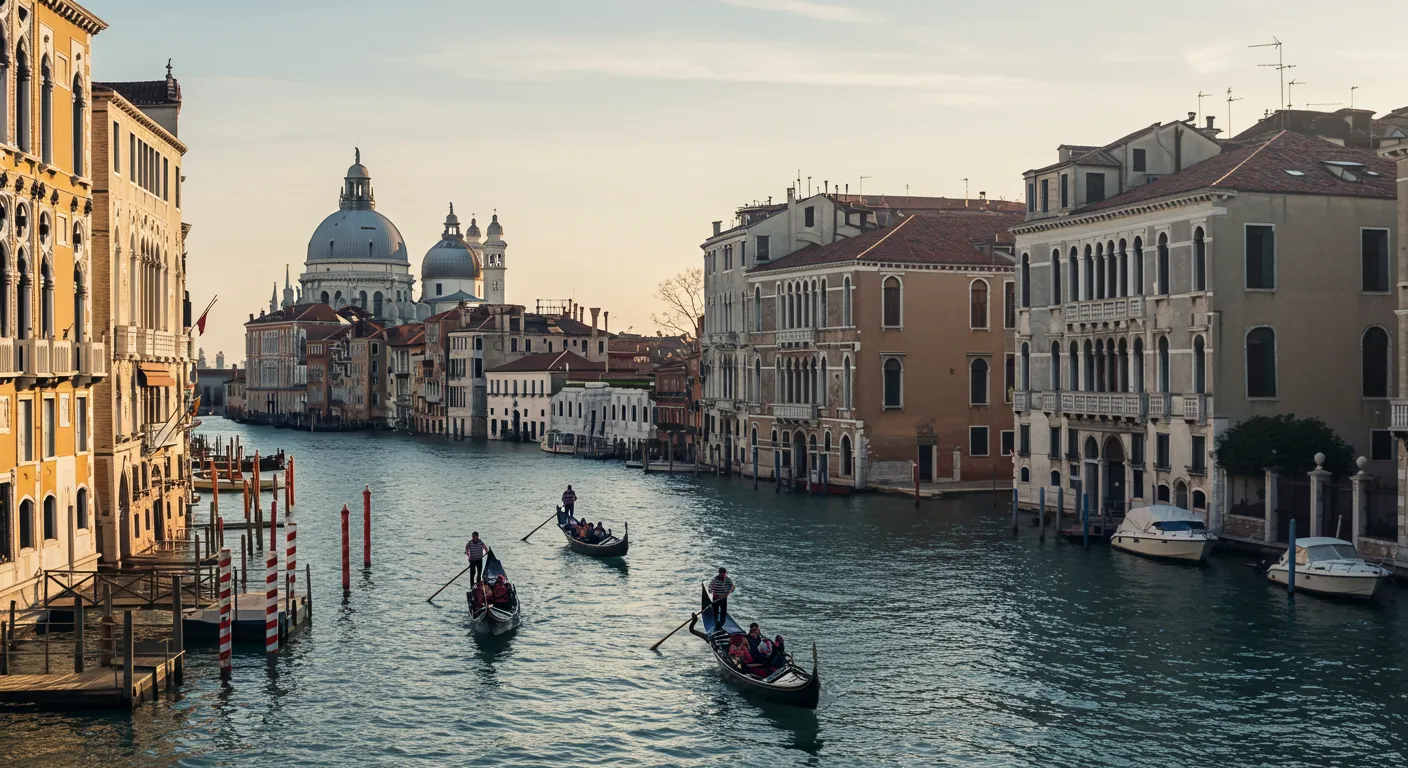
AI-generated hero image: Venice Italy iconic image

Photo by AI-Generated (Google Imagen)

Plan & Navigate

Quick Facts & Essentials

💰

Money & Costs

Currency: Euro (EUR, €). Roughly €1 = $1.08 USD [ASSUMPTION — check live rate before travel].

Cards widely accepted at hotels, restaurants, and most shops, but carry €30–50 cash for small bacari (wine bars), cicchetti counters, public toilets, and vaporetto ticket machines that glitch. ATMs (bancomat) are common — use bank-branded ones and decline the machine's currency conversion (DCC) to avoid bad rates. Tipping is modest: service is often included (coperto/servizio), round up or leave 5–10% for good service. No need for US-style 20%.

Budget: budget: €70–100/day (~$76–108) — dorm or cheap mainland room, cicchetti and supermarket meals, walking. mid-range: €150–250/day (~$162–270) — 3-star hotel, sit-down meals, a few vaporetto rides. luxury: €400+/day (~$432+) — canal-view hotel, private water taxi, fine dining.

🗣️

Language

Official: Italian is official and universal. Venetian (Vèneto) dialect is still spoken by locals, especially older residents and in markets, but everyone understands standard Italian.

Low for travellers. English is widely spoken in tourist zones, hotels, and restaurants. Effort with a few Italian words is appreciated and warms up service noticeably.

Useful: Buongiorno (Good morning / hello), Grazie (Thank you), Quanto costa? (How much does it cost?), Un'ombra (A small glass of house wine (Venetian)), Dov'è il vaporetto? (Where is the water bus?)

🚗

Getting Around

Venice is a walking city — your feet do most of the work and the best photos come from getting lost in quiet sestieri. The vaporetto (water bus) handles longer hops and the islands. Skip the gondola as transport (it's a €80–90 experience, not a ride) and avoid renting anything wheeled — there are no cars. Buy a multi-day vaporetto pass if you'll ride more than 3–4 times; single tickets are punishingly expensive.

Walking: The default and best option. Bridges and narrow calli mean it's faster than the vaporetto for short distances. Download an offline map — signage is inconsistent and getting lost is half the charm. — Free

Vaporetto (water bus): ACTV-run public ferries along the Grand Canal and to islands (Murano, Burano, Lido). Line 1 doubles as a cheap Grand Canal tour. Buy passes at machines or the ACTV app; validate before boarding. — €9.50 single (75 min); €25 24h / €35 48h / €45 72h passes

Traghetto: A bare-bones gondola ferry crossing the Grand Canal at a few points where bridges are far apart. Locals stand; it's a 2-minute hop and a budget way to ride a gondola. — €2 (cash, exact change)

Water taxi: Private sleek motorboats — fast, glamorous, expensive. Worth it for airport transfers with luggage or a splurge arrival. Agree the fare or confirm the meter before departing. — €60–100+ per trip; ~€120–140 to/from Marco Polo airport

Alilaguna: Shared airport boat shuttle connecting Marco Polo to main stops. Slower than a water taxi but far cheaper and more scenic than the bus-to-walk route. — ~€15 one way

⚠️ Safety Note: Venice is very safe for violent crime, but pickpocketing is real around Rialto, San Marco, and on packed vaporetti — wear bags in front. Watch your footing: stone steps and bridges get slick when wet, and there are no railings on many canal edges. Acqua alta (tidal flooding) happens mostly Oct–Jan; check the tide forecast and grab cheap boot covers if needed [SEASONAL]. Avoid restaurants with photo menus and hawkers near San Marco — overpriced tourist traps. Confirm prices before sitting at café terraces (Piazza San Marco charges a hefty cover for the orchestra). Don't sit/eat on bridge steps or feed pigeons — both carry fines.

Getting There

Most visitors arrive by train into Venezia Santa Lucia or fly into Marco Polo Airport, then transfer to the historic centre by water. Crucially, no cars reach the islands themselves — everything funnels through Piazzale Roma or the train station, where you switch to vaporetto (water bus) or water taxi. The train from Milan takes about 2h30; from Rome roughly 3h45 on a Frecciarossa.

✈️ By Air

Venice Marco Polo Airport (VCE)📍 13 km from the historic centre (across the lagoon)
Alilaguna water bus (Blue/Orange/Red lines) — 60–90 min to San Marco, €15Shared water taxi — 30–45 min, around €30 per person [ASSUMPTION]Private water taxi — 30 min, €120–€140ATVO/ACTV airport bus to Piazzale Roma — 20–25 min, €10, then vaporetto
Treviso Airport (TSF)📍 40 km from Venice
ATVO bus to Piazzale Roma — 70 min, €12Then vaporetto or walk into the centre

Treviso is the low-cost carrier hub (Ryanair and similar). Marco Polo handles full-service and intercontinental flights. From Marco Polo, the bus-plus-vaporetto combo is far cheaper than water transfers if you're on a budget.

🚆 By Train

Venezia Santa LuciaFrecciarossa from Rome 3h45, from Milan 2h30, from Florence 2h. International EuroCity services from Munich (~7h) and connections from across Italy.

This is the only station ON the islands — step outside and you're directly on the Grand Canal at a vaporetto stop. Book Frecciarossa in advance for cheaper fares; Trenitalia and Italo both serve the route. Do not confuse with Venezia Mestre on the mainland.

Venezia MestreMainland hub; most trains stop here before crossing to Santa Lucia. Regional and intercity services.

If your hotel is in Mestre (cheaper), get off here. Otherwise stay on for Santa Lucia — it's only a few minutes more across the causeway.

Train is strongly recommended over flying for anyone coming from within Italy — it drops you directly on the canal with no airport transfer hassle.

🚗 By Car

From MilanAround 3h from Milan, 2h30 from Bologna via A13

Tolled motorway. The A4 connects Turin–Milan–Venice. You cannot drive into the historic centre — the road ends at Piazzale Roma or Tronchetto island.

Cars must be parked at Piazzale Roma garages or Tronchetto island — expect €25–€35 per day, more in peak season. Cheaper option: park in Mestre and take the train or tram across. The centre is entirely pedestrian and waterborne; do not attempt to drive in.

🛂 Visa & Entry Requirements

Italy is in the Schengen Area. US and UK travellers can enter visa-free for up to 90 days in any 180-day period for tourism. EU/EEA citizens have unrestricted entry. The EU's ETIAS travel authorisation (a quick online registration, expected around €7) is planned for non-EU visitors including US and UK — check the latest start date before travel as this rollout date keeps shifting. [ASSUMPTION] Passport must be valid for at least 3 months beyond your departure date.

💡 Arrival Tips

  • Buy a multi-day ACTV vaporetto pass (24/48/72-hour) immediately on arrival — single rides are €9.50 each and add up fast.
  • Withdraw euros from a bank-branded ATM (Bancomat) in town, not the airport DCC machines that push poor conversion rates.
  • Pack light and use a backpack — you'll be hauling luggage over stepped bridges with no escalators or lifts.
  • Skip the private water taxi from the airport unless splitting the cost; the Alilaguna or the bus-to-Piazzale-Roma is a fraction of the price.
  • Most arrivals waste time confusing Venezia Mestre with Santa Lucia — confirm your station before booking train tickets.
  • Screenshot your hotel's walking directions offline; Venice's alley numbering defeats GPS and you will get lost.

Safety & Accessibility

🛡️ General Safety

Venice is one of the safest major cities in Italy for violent crime — it's genuinely low-risk, partly because the lagoon geography makes a quick getaway impossible for criminals. The real threat is petty theft, concentrated heavily around San Marco, the Rialto Bridge, and on packed vaporetto lines. Quieter sestieri like Castello (east end), Cannaregio (away from the station strip), and Dorsoduro feel calm and residential even after dark. There are no genuine no-go areas; the main risks are crowds, water, and overpriced tourist traps rather than personal danger.

⚠️ Common Risks

MEDIUM
Pickpocketing on crowded vaporetto lines (especially Line 1 and 2), at the Rialto Bridge, around San Marco, and in the chokepoint between Santa Lucia station and the Rialto

Keep bags zipped and worn across the front; avoid back pockets; be extra alert when boarding/exiting vaporetti as bumping is a common distraction tactic. Watch your phone near canal railings — drops into water are unrecoverable.

MEDIUM
Restaurant and bar scams near San Marco and Rialto — undisclosed cover charges, 'fish of the day' priced by weight, and €15+ table service for a coffee

Always check the menu for 'coperto' (cover) and 'servizio' charges before sitting. Avoid restaurants with photo menus and touts. Walk 5–10 minutes into Castello or Cannaregio for fair prices.

MEDIUM
Slips, trips and water hazards — wet, uneven, mossy stone steps near canals, low railings, and acqua alta (tidal flooding) that submerges walkways in autumn/winter

Wear grippy flat shoes; never sit on canal edges. During acqua alta, follow the elevated passerelle walkways and the city's tide forecast (Hi!Tide Venezia app or sirens). [ASSUMPTION] Flooding is most common Oct–Jan.

LOW
Heat and crowd crush in summer — narrow alleys (calli) become bottlenecks, and shade is scarce in open campi

Carry water (free public fountains/nasoni are safe to drink); explore early morning or evening; avoid the San Marco–Rialto corridor midday in July–August.

LOW
Disorientation and getting lost — Venice's maze of unmarked alleys and dead-end canals defeats GPS regularly

Follow the yellow 'Per San Marco / Per Rialto / Per Ferrovia' wall signs; download offline maps; don't rely solely on phone GPS, which jumps near tall buildings.

🆘 Emergency Numbers

Police112EU-wide emergency line; English-speaking operators generally available. 113 also reaches state police (Polizia).
Ambulance118Medical emergency; 112 also routes to ambulance. Water ambulances operate in Venice's canals.
Fire115Vigili del Fuoco; fire and rescue, including water rescue.
Tourist Police112No dedicated 24h tourist line; the Polizia Municipale handle tourist issues and patrol San Marco during daytime hours.

🏥 Healthcare Access

Venice's main public hospital is Ospedale SS. Giovanni e Paolo in Castello, reachable by foot and water ambulance; the mainland Ospedale dell'Angelo in Mestre is larger. EU/EEA visitors with a GHIC/EHIC card get public care at low or no cost. Non-EU visitors should carry travel insurance, as public ER (Pronto Soccorso) waits for non-urgent cases can run several hours and you'll be billed. No vaccinations or altitude concerns; tap water from public nasoni fountains is safe. Pharmacies (farmacia, green cross) handle minor issues and rotate for night duty.

♿ Accessibility

Venice is genuinely difficult for wheelchair and limited-mobility visitors, and it's dishonest to pretend otherwise — the city has roughly 400 bridges, most with steps and no ramps. That said, it's more navigable than its reputation: the city publishes accessible itineraries, around half of central Venice can be reached without crossing a stepped bridge, and key bridges have been fitted with ramps or stairlifts (though lifts are often out of service). San Marco square, the waterfront Riva, and much of Cannaregio's main fondamenta are flat. Expect to plan routes carefully, accept some areas are simply unreachable, and budget extra time everywhere.

Step-Free Routes
  • Riva degli Schiavoni waterfront from San Marco eastward toward Giardini — flat and wide
  • Strada Nova / main Cannaregio route from the station area toward the Rialto zone is largely step-free along the fondamente
Accessible Transit
  • ACTV vaporetti are step-free to board at level platforms and crew assist with ramps; Lines 1 and 2 are the workhorses and most stops are accessible
  • Alilaguna airport boats and the People Mover monorail from Piazzale Roma to the cruise terminal are wheelchair accessible
Accessible Attractions
  • St Mark's Basilica has a step-free entrance for wheelchair users (ask staff, separate access); the ground floor is reachable
  • Peggy Guggenheim Collection in Dorsoduro is largely step-free with lift access [ASSUMPTION]; Doge's Palace offers an accessible route covering most of the main floors
Sensory Considerations

Sensory load is highest in the San Marco–Rialto corridor: dense crowd noise, echoing alleys, and pushing during peak hours can be overwhelming. Church and museum interiors are often dim and quiet — a good reset. Markets (Rialto fish/produce market) carry strong fish and food smells in the morning. Church bells ring loudly and frequently across the city, and acqua alta sirens are jarring if unexpected. For low-stimulation time, head to quiet Castello backstreets, the Giardini, or Dorsoduro's southern fondamente.

Travel Insurance

Comprehensive travel insurance is sensibly recommended rather than critical — Italy has competent public healthcare and EU visitors are largely covered via GHIC/EHIC. The stronger case for insurance here is trip disruption: acqua alta flooding, occasional transport strikes (sciopero), and the slip-and-fall injury risk on wet stone steps. Non-EU travellers especially should ensure coverage includes medical repatriation and any independent water-taxi or boating activity.

When to Go

Januarylow crowds

The quietest, cheapest month in Venice. Cold, often foggy, and atmospheric — empty alleyways and reflective canals make it a photographer's secret. Locals reclaim the city.

🌤 High 8°C/46°F, low 1°C/34°F, frequent fog and ~55mm rain.

Best for: solo travellers · photographers · budget travellers
Season: Acqua Alta Season

Bottom Line: Late April through early June and all of September into early October hit the sweet spot: comfortable walking temperatures, golden low-angle light, and crowds well below the summer crush. For photography, the shoulder months reward early risers with mist over the canals and uncluttered foregrounds, while autumn's harvest menus make food exploration richer.

Where to Stay

Venice runs expensive across every tier — you pay a premium for being inside the historic city, and 'canal view' commands a steep markup over an identical room facing a quiet calle. The honest move is to decide whether you want to be on the main islands (atmospheric, walkable, pricey) or to trade some commute for value on the Lido or Giudecca. Note the city tourist tax (currently a few euros per person per night, tiered by hotel class) is usually charged separately at checkout.

Luxury

The Gritti PalaceHotel

A genuine 15th-century palazzo on the Grand Canal with a waterside terrace that's one of the best aperitivo spots in the city. Suits travellers who want classic Venetian grandeur and a postcard view from the room. The terrace is a serious photo and golden-hour spot.

💰 $900–$2200 per night📍 San Marco (Grand Canal)
Book 3–6 months ahead for peak (spring, Carnival, summer). Direct booking via Marriott Luxury Collection sometimes adds breakfast or credits. Canal-view rooms cost markedly more than courtyard.
Belmond Hotel CiprianiResort

Rare-in-Venice resort with a large outdoor pool and gardens, plus a private shuttle boat to San Marco. Best for honeymooners and anyone wanting a calm, green retreat away from crowds. The lagoon-facing terrace at blue hour is exceptional.

💰 $1200–$3000 per night📍 Giudecca
Closed in winter (typically reopens spring). Book 4+ months ahead for summer. The free shuttle is a genuine value-add given Giudecca's separation from the main islands.

Mid-Range

Hotel FloraBoutique Hotel

Family-run boutique a few minutes from Piazza San Marco with a beloved garden courtyard for breakfast. Great value for the location, with character rooms over chain blandness. Suits couples who want central + charming without luxury pricing.

💰 $180–$320 per night📍 San Marco
Book direct on their site — often matches or beats OTA rates and lets you request specific rooms (sizes vary a lot). 2–3 months ahead for spring/autumn.
Ai Cavalieri di VeneziaBoutique Hotel

Quieter residential-feeling Castello location near Campo Santa Maria Formosa, away from the tourist crush but still walkable to San Marco. Solid breakfast and comfortable modern rooms. Good for repeat visitors who want a more local base.

💰 $160–$300 per night📍 Castello
Mid-week shoulder-season rates drop noticeably. Direct booking is competitive; 1–2 months ahead is usually fine outside peak.

Budget

Generator VeniceHostel

Design-forward hostel right on the Giudecca waterfront with a bar and unbeatable views back toward San Marco. Best budget option for the social crowd and solo travellers. The terrace view across the canal is a free, underrated photo spot.

💰 $35–$70 per dorm bed📍 Giudecca
Book 1–2 months ahead in summer. Factor in vaporetto costs from Giudecca — buy a multi-day transit pass. Private rooms available but pricier than the dorms.
Ostello Santa FoscaHostel

Simple guesthouse-style hostel in a former convent on the main islands, set around a quiet garden in lively Cannaregio. Suits budget travellers who want to actually sleep inside historic Venice rather than commute in. [ASSUMPTION] Garden access seasonal.

💰 $30–$60 per dorm bed📍 Cannaregio
Limited beds — book 2+ months ahead for summer and Carnival. Cash sometimes preferred for incidentals; confirm at booking.

Unique Stays

Casa BuranoGuesthouse

A 'diffused hotel' spread across restored fishermen's houses on candy-coloured Burano. You stay in the islands' famous painted streets after the day-trippers leave — the quiet evening light there is a photographer's dream. Best for slow travellers and serious photographers.

💰 $160–$300 per night📍 Burano island
Burano is ~40 min by vaporetto from central Venice, so plan transit carefully. Book 2–3 months ahead; rooms are limited. Reception/check-in arrangements differ from a normal hotel — confirm details.
Palazzo Venart Luxury HotelBoutique Hotel

Restored Grand Canal palazzo with a private garden and the Michelin-starred Glam restaurant on-site. A boutique splurge with fewer rooms and more intimacy than the grand hotels. Suits foodies and couples wanting palazzo character without the largest-property scale.

💰 $500–$1100 per night📍 Santa Croce (Grand Canal)
Garden and canal-view rooms book first — reserve 3+ months ahead for peak. Direct booking sometimes bundles a dining or breakfast perk.

Booking Tips

Book 2–3 months ahead for shoulder season (April–May, September–October) and 4–6 months for Carnival, summer, and major festivals like the Biennale, when rates can double. Booking.com has the deepest Venice inventory, but for boutique and family-run hotels, checking the property's own site often unlocks a better rate or room-request flexibility. Watch for properties listing a 'San Marco' address that are actually a long walk or vaporetto ride away — verify the exact location on a map and note whether luggage transfer is included, since wheeled bags over arched bridges are a real ordeal. The biggest mistake visitors make is fixating on canal views and overpaying, when a quiet interior room on the main islands often delivers a better night's sleep for far less.

What to Experience

★★★★★ St. Mark's Basilica (Basilica di San Marco)

religious sitehistorical landmark

A genuinely jaw-dropping Byzantine cathedral whose golden mosaics cover over 8,000 square meters. The interior earns every bit of its fame, though the entry line can be brutal. Worth it even for the basilica-fatigued.

🕐 Best Time: First entry slot in the morning before tour groups; mosaics are also illuminated for short windows midday — check the lighting schedule posted inside.

💡 Insider Tip: Book the skip-the-line ticket online and aim for the first slot. Pay the small extra for the Pala d'Oro and the upstairs museum, where you can step out onto the loggia for a balcony view over the piazza.

💰 Fees: Basilica entry approx €3; Pala d'Oro and museum add-ons approx €5–7 each [ASSUMPTION]

🎟️ Booking: Book online

★★★★★ Doge's Palace (Palazzo Ducale)

museumhistorical landmark

The seat of Venetian power for centuries, with opulent state rooms, vast painted ceilings, and the famous Bridge of Sighs. The Secret Itineraries tour through hidden passages and the prison cells is the standout — far better than wandering solo.

🕐 Best Time: Open mid-morning to spread out crowds; late afternoon tours are quieter.

💡 Insider Tip: Book the Secret Itineraries (Itinerari Segreti) guided tour. It crosses the Bridge of Sighs from the interior, so you actually walk it instead of just photographing it from outside.

💰 Fees: Approx €30 standard; Secret Itineraries approx €32 [ASSUMPTION]

🎟️ Booking: Book online

★★★★ Rialto Bridge & Market

historical landmarkcultural landmark

The bridge itself is iconic but mobbed and lined with overpriced souvenir stalls — honestly overrated as a destination. The real draw is the adjacent Rialto fish and produce market, which is pure local life and far more photogenic.

🕐 Best Time: Market is best at dawn to mid-morning; the bridge photographs well at blue hour when the Grand Canal lights come on.

💡 Insider Tip: Shoot the bridge from a vaporetto or from the Fondamenta del Vin on the opposite bank, not from on top of it. Hit the fish market early before it packs up around midday.

💰 Fees: Free

🎟️ Booking: None

★★★☆☆ Gallerie dell'Accademia

art gallerymuseum

The premier collection of Venetian painting — Bellini, Titian, Tintoretto, Veronese. Essential for art lovers and a calm rainy-day refuge, but skippable if you're short on time and prefer Venice's streets over its galleries.

🕐 Best Time: Late afternoon for fewer crowds.

💡 Insider Tip: Go in the last two hours before closing when tour groups thin out. The Carpaccio narrative cycles reward slow looking.

💰 Fees: Approx €15 [ASSUMPTION]

🎟️ Booking: Book online

★★★★ Burano

cultural landmarkhidden gem

A small island in the lagoon famous for its vividly painted fishermen's houses and lace tradition. One of the most colorful photo subjects anywhere in the Venice area, and far less crowded than San Marco if you go early.

🕐 Best Time: Early morning for soft light and minimal crowds; golden hour saturates the colors.

💡 Insider Tip: Take the vaporetto early and walk the back canals away from the main drag — the brightest, emptiest house facades are a few streets in. Reflections at low wind make for mirror shots.

💰 Fees: Free to wander; vaporetto fare required

🎟️ Booking: None

★★★☆☆ Libreria Acqua Alta

cultural landmark

A quirky bookshop where stock is stored in bathtubs, boats, and a gondola to survive flooding, with a back-courtyard staircase built from old books. Touristy and tiny now, but still a fun, free photo stop that genuinely delivers something unusual.

🕐 Best Time: Opening time to beat the small-space crowds.

💡 Insider Tip: Go right at opening to get the book-staircase shot without a queue forming behind you. The rear canal exit makes a nice frame too.

💰 Fees: Free

🎟️ Booking: None

★★★★ Scala Contarini del Bovolo

viewpointhidden gemhistorical landmark

A tucked-away Renaissance spiral staircase in an external tower, hidden down a quiet courtyard most tourists walk straight past. The climb is short and the loggia at top gives an unusual rooftop view over Venice's tiles and domes.

🕐 Best Time: Late afternoon golden hour for warm light on the rooftop view.

💡 Insider Tip: It's genuinely hard to find — follow signs from Campo Manin and look for the small courtyard. The spiral photographs beautifully looking straight up from the base.

💰 Fees: Approx €9 [ASSUMPTION]

🎟️ Booking: None

★★★☆☆ St. Mark's Campanile

viewpointhistorical landmarkaccessibility friendly

The bell tower offers the best panoramic view of Venice, the lagoon, and the rooftops. The elevator makes it accessible to nearly everyone, but the view is somewhat distant from street life — solid, not transcendent.

🕐 Best Time: Golden hour before sunset for warm rooftop light and clearer lagoon visibility.

💡 Insider Tip: Time your visit for late afternoon so you catch the city in golden light, then descend before the bells ring at the top of the hour if you're sound-sensitive.

💰 Fees: Approx €10 [ASSUMPTION]

🎟️ Booking: Book online

Neighbourhoods in Venice, Italy

San Marco

Cannaregio

Dorsoduro

Castello

San Polo & Rialto

Burano

Giudecca

Day Trips from Venice, Italy

⏱️ Time: Half day

Highlights: Burano's rainbow-painted fishermen's houses are some of the most photogenic streets in the entire lagoon — every canal corner is a frame. Murano delivers live glassblowing demos and a quieter, less-touristed feel. Pair both on one vaporetto line.

Go early (before 10am) to shoot Burano's houses without crowds clogging the bridges. Buy a multi-day vaporetto pass if combining with other lagoon trips — single tickets add up fast. The glass shops in Murano push hard sales; the free demos are worth it, the buying pressure is not.

⏱️ Time: Full day

Highlights: Scrovegni Chapel holds Giotto's frescoes — a genuine art-history landmark, not a tourist trap. Add the vast Prato della Valle square, the Basilica of St. Anthony, and lively student-town energy with prices far below Venice.

Scrovegni Chapel requires advance booking — entry is timed and slots sell out. Visits include a climate-controlled waiting room before a strictly limited viewing window. Easiest day trip by train; departures are frequent from Venezia Santa Lucia.

⏱️ Time: Full day

Highlights: A Roman amphitheater (the Arena) still hosts summer opera, a romantic old town along the Adige river, and the famous Juliet's balcony. Climb Torre dei Lamberti or Castel San Pietro viewpoint for the classic terracotta-rooftop panorama.

Honest take: Juliet's House is overrated and overcrowded — skip the courtyard scrum unless you want the photo. The Arena and river views are the real draw. [ASSUMPTION] Summer opera season runs roughly June-September; book tickets ahead if attending.

⏱️ Time: Full day

Highlights: Dramatic alpine peaks, turquoise lakes like Lago di Misurina, and serious mountain photography. A complete change of scenery from the lagoon — pine forests, jagged limestone, and crisp light.

Long for a day trip — a car makes it far more efficient than buses. Best June-October; mountain passes and trails can close in winter outside ski operations. Golden hour on the peaks is the payoff for the early start. Suits hikers and landscape shooters, not those wanting a relaxed pace.

⏱️ Time: Half day

Highlights: The city of architect Andrea Palladio — UNESCO-listed villas and the stunning Teatro Olimpico, the world's oldest surviving indoor theater with a remarkable perspective stage set. An architecture lover's day.

More niche than Padua or Verona — best for those into architecture and design. Villa La Rotonda sits outside the center and has limited interior opening days, so check ahead. [ASSUMPTION] Quieter than the bigger day trips, which means fewer crowds for photos.

⏱️ Time: Half day

Highlights: A charming canal town often called 'little Venice' but with locals instead of tour groups. Frescoed facades, willow-lined waterways, and an authentic aperitivo scene. The home of Prosecco country nearby.

Great budget-friendly, low-crowd alternative if Venice fatigue sets in. The canals photograph beautifully in early morning light. Easy quick train hop — pairs well with a Prosecco hills detour if you have a car. Suits travelers wanting calm and real Italian street life.

Scenic Routes

Grand Canal Vaporetto Line 1

📏 ~3.8km / 45min by vaporetto

  • The entire S-curve of the Grand Canal lined with palazzi from Gothic to Baroque
  • Rialto Bridge from water level, best shot from the boat's open rear deck
  • Ca' d'Oro and Ca' Rezzonico facades reflecting golden light in late afternoon

Sestiere Walk: San Marco to Rialto Back Streets

📏 ~1.5km / 40min on foot

  • Quiet calli and bridges away from the main signposted route, far better for clean frames
  • Rialto Market food stalls at dawn before crowds arrive
  • Reflections in narrow canals like Rio di San Salvador in early light

Dorsoduro Canal Loop

📏 ~2.5km / 1hr on foot

  • Squero di San Trovaso, a working gondola boatyard you can photograph from across the canal
  • Zattere waterfront promenade with wide views toward Giudecca
  • Campo Santa Margherita local life, cheaper cafes and less staged scenes

Cannaregio and Jewish Ghetto Stroll

📏 ~2km / 50min on foot

  • Long straight fondamente canals that catch directional light, great for symmetry shots
  • The historic Ghetto with tall buildings and quiet campo
  • Bacari (wine bars) along Misericordia for evening cicchetti and blue hour reflections

Burano and Torcello Lagoon Boat Route

📏 ~9km lagoon crossing / 45min vaporetto each way

  • Burano's saturated painted fishhouses, unbeatable on an overcast day for even color
  • Torcello's ancient cathedral and quiet marsh paths, a calm contrast to Venice proper
  • Lagoon vistas with bricole (mooring posts) breaking the water for foreground interest

Giudecca Waterfront to Redentore

📏 ~1.8km / 35min on foot

  • Across-the-water panorama of the San Marco skyline, the classic postcard angle without the crowds
  • Palladio's Redentore church facade, strong at golden hour
  • Working residential Venice, [ASSUMPTION] generally quieter and cheaper for a spritz

Street Art

No established street art scene. Skip street art hunting in central Venice. The real photographic gold is the city as subject: blue hour over the Grand Canal from the Rialto, dawn light on a deserted Piazza San Marco before the crowds arrive, and the colour-saturated facades of Burano, which out-photograph any mural you'll find here. If you want a genuine urban art fix, take the train to Mestre on the mainland, where commissioned murals and a more relaxed wall culture give you something closer to a scene. For Venice proper, treat the architecture, reflections, and light as your canvas. #NextTrip

Cultural Significance

Venice is a city built on water, a maritime republic that for a thousand years bridged Europe and the East, fusing Byzantine, Gothic, and Islamic influences into something singular. Its identity was shaped by trade, glass, and the constant negotiation with the lagoon — a place that learned to turn impermanence into spectacle. It resonates because it feels both impossibly grand and impossibly fragile, a working museum that is also still a living, leaking, defiant town.

The Venetian Republic (La Serenissima)697–1797

For over a millennium Venice was an independent maritime power and one of Europe's wealthiest trading hubs, governed by an elected Doge and a complex republican system that influenced political thought across the continent. Its wealth from East-West trade funded the art, architecture, and culture that still define the city.

You feel it in the layout itself — the Rialto as the old commercial heart, the lion of St Mark on banners and buildings citywide. Simply knowing the city was a sovereign state for 1,100 years reframes everything you walk past.
The Venetian School of Painting15th–18th century

Titian, Tintoretto, Veronese, and later Tiepolo developed a distinctive emphasis on color (colore) and light over Florentine line, shaping European painting profoundly. Their work was tied to the city's churches and scuole, not just palaces, making art part of daily devotional life.

Look for paintings still in situ in churches across the city rather than only in galleries — the Scuola Grande di San Rocco holds an overwhelming cycle by Tintoretto in the space it was painted for.
Murano Glass and Burano Lace13th century–present

Glassmaking was moved to Murano in 1291 to contain fire risk, and Venetian glass became a closely guarded, world-renowned craft — artisans were forbidden from leaving on pain of death. Burano's needle lace was similarly prized across European courts. Both are living crafts under pressure from cheap imports.

Visit working furnaces on Murano (watch for genuine 'Vetro Artistico Murano' trademark to avoid imitations) and the small lace museum on Burano. Buying directly from makers supports the surviving workshops.
St Mark's and Venetian Spiritual Identity9th century–present

Venice built its civic and spiritual identity around St Mark the Evangelist, whose relics were famously smuggled from Alexandria in 828. The Byzantine-influenced cult of the saint expressed Venice's independence from Rome and its eastward orientation, with the winged lion becoming the symbol of the whole Republic.

The St Mark iconography is everywhere once you notice it. The Festa della Salute (21 November) and Redentore (July) are religious feasts that remain genuine communal observances, born from plague survival.
Cicchetti and Bàcaro CultureLiving tradition

Venice's authentic food tradition is the bàcaro — small wine bars serving cicchetti, bite-sized snacks eaten standing with a glass of wine (an ombra). It is a working-class, social ritual that survives alongside the tourist-trap restaurants, and it is the real local table.

Skip the overpriced piazza restaurants. Do a giro de ombre — a bar crawl — around the Rialto market area or Cannaregio in early evening. Order baccalà mantecato, sarde in saor, and polpette. [ASSUMPTION] Cash is handy at smaller bàcari.
Carnevale di VeneziaMedieval origins; revived 1979

The Venetian Carnival, with its elaborate masks, allowed temporary dissolution of social rank in the Republic's era and became legendary across Europe. Banned under Austrian rule and revived in 1979, it is now both a major cultural festival and a contested symbol of Venice's tourism economy.

Held in the weeks before Lent (Feb/March). Mask-making is a living artisan craft — buy from a real workshop, not a plastic stall. Expect intense crowds; quieter side calli still feel magical.
Venice Biennale1895–present

Founded in 1895, the Biennale made Venice a global capital of contemporary art and architecture, alternating major international exhibitions that draw the art world every year. It proves the city is not only a relic but an active site of contemporary cultural production.

Art and Architecture Biennales alternate (roughly May–November). The Giardini and Arsenale are the main venues, plus dozens of collateral shows in palazzi across the city — many of the smaller ones are free.

Living Culture

Beyond the museum-city image, Venice has a stubborn living culture sustained by the few tens of thousands of residents who remain. Evening bàcaro culture, the gondoliers' guild, neighbourhood feast days, and the rhythm of the Rialto fish market are daily realities, not performances. The Biennale and the autumn Venice Film Festival on the Lido keep the contemporary arts scene internationally relevant, while institutions like the Teatro La Fenice maintain a serious operatic tradition in a hall rebuilt after fire in 2003.

Visitor Respect

Cover shoulders and knees to enter St Mark's Basilica and most churches — you may be turned away otherwise, and large backpacks are often refused. Photography is restricted or banned inside many churches and the basilica; never use flash near artworks. Don't sit and picnic on bridges, church steps, or in St Mark's Square — it's fined and resented. Stand to eat cicchetti at the bar rather than expecting table service, and say buongiorno/buonasera when entering small shops and bars. Locals are increasingly weary of overtourism, so keep to the right in narrow calli and don't block them for photos.

Eat & Drink

Venetian cuisine is built around the lagoon, not the land. Expect cicchetti (small bites eaten standing at a bar), seafood-heavy dishes like sarde in saor and risotto with cuttlefish ink, and an aperitivo culture powered by Spritz and local Prosecco. The rhythm of eating here is different: graze your way through bacari (wine bars) at lunch, then sit down for a proper cena.

Coffee, Cafés & Bakeries

Caffè Florian

Café

Specialty: historic café, espresso with live orchestra

📍 San Marco, Piazza San Marco 57

Oldest café in Italy and overrated for the price, but worth one coffee for the setting. Music surcharge applies at the tables.

Torrefazione Cannaregio

Café

Specialty: house-roasted beans, strong espresso

📍 Cannaregio, Rio Terà San Leonardo 1337

Local roaster with real coffee credibility. Go mid-morning, stand at the bar for the cheapest price.

Caffè del Doge

Café

Specialty: specialty espresso blends, single origin

📍 San Polo, Calle dei Cinque 609

Reliable serious coffee near Rialto. Quick stop between sights.

Rosa Salva

Café

Specialty: espresso and pastries, classic Venetian café

📍 Castello, Campo SS. Giovanni e Paolo 6779

Long-running local favourite. Good for a pastry and coffee away from tourist mark-ups.

Pasticceria Tonolo

Bakery

Specialty: krapfen, fritelle, zaeti biscuits

📍 Dorsoduro, Calle San Pantalon 3764

Beloved by locals. Go early, especially during Carnevale when fritelle sell out fast.

Pasticceria Rizzardini

Bakery

Specialty: traditional Venetian pastries, bignè

📍 San Polo, Campiello dei Meloni 1415

Tiny old-school counter. Cash only, go early before the cases empty.

Breakfast & Brunch

Dal Mas

BakeryBreakfast

Specialty: croissants, pastries, breakfast spread

📍 Cannaregio, Rio Terà Lista di Spagna 150

Near the train station, ideal first or last stop. Arrive before 9am for the best selection.

Lunch

★★★★★ All'Arco

Specialty: cicchetti, fresh crudo, market-driven small plates

📍 San Polo, Calle Arco 436

Tiny standing bacaro by the Rialto market. Go before 1pm to beat the crowd and get the freshest seafood. Cash preferred.

★★★★ Osteria al Squero

Specialty: cicchetti, baccalà mantecato, wine by the glass

📍 Dorsoduro, Fondamenta Nani 943

Across from the gondola squero. Grab a plate and eat canalside. Great value, no seating inside.

La Tecia Vegana

Vegan

Specialty: fully vegan Venetian-inspired plates

📍 Castello, near Via Garibaldi

Warm, casual and entirely plant-based. Friendly to allergies; portions are generous. [ASSUMPTION] verify hours seasonally.

Gelato di Natura

VegetarianVegan

Specialty: vegan sorbets and dairy-free gelato options

📍 Santa Croce, Calle Larga dei Bari 1628

Clearly labelled vegan flavours. Good sweet stop on a walk through the western sestieri.

Dinner

★★★★★ Trattoria alla Madonna

Specialty: fritto misto, seppie in nero, grilled lagoon fish

📍 San Polo, Calle de la Madona 594

Old-school institution near Rialto. Cash-friendly, no fuss. Arrive early or expect a wait; reservations help on weekends.

★★★★ La Zucca

Vegetarian

Specialty: pumpkin flan, seasonal vegetable dishes

📍 Santa Croce, Ponte del Megio 1762

Rare veg-forward spot in a fish-heavy city. Canal-side tables fill fast; book a day or two ahead.

★★★☆☆ Le Spighe

Vegan

Specialty: organic vegan plates, grains, daily specials

📍 Castello, Via Garibaldi 1341

Small fully vegan kitchen in the residential east end. Limited hours; call ahead to confirm.

La Zucca

Vegetarian

Specialty: seasonal vegetable mains, vegetarian classics

📍 Santa Croce, Ponte del Megio 1762

The most reliable veg-friendly dinner in town. Book ahead for canalside seats.

Budget Eating Strategy

Eat cicchetti standing at the bar in bacari — a few small plates plus an ombra (small wine) costs a fraction of a sit-down dinner.

Drink coffee al banco (standing at the counter); sitting at a table, especially in Piazza San Marco, multiplies the price.

Shop the Rialto market in the morning and grab fresh fritto misto or seafood from nearby stalls instead of a tourist-menu restaurant.

Shop

Venice rewards shoppers who can tell craft from kitsch — genuine Murano glass and Burano lace live alongside oceans of mass-produced masks and made-in-elsewhere trinkets. The patient browser who ventures off the Rialto-to-San Marco gauntlet will find working artisan studios and family workshops worth the hunt.

Markets

Rialto Market (non-food stalls)Mixed

Beyond the famous fish and produce halls, the surrounding stalls and arcades sell scarves, leather goods, and seasonal Carnival masks — quality varies wildly, so inspect closely.

🕐 Tue–Sat roughly 7am–1pm; produce section closed Mon📍 San Polo, beside the Rialto Bridge
Mercatino dell'Antiquariato (Campo San Maurizio)Antiques

Vintage Murano glass, old prints, Venetian jewelry, antique lace, and ephemera — a genuine antiques fair rather than a souvenir market.

🕐 Several weekends per year only — check dates [ASSUMPTION]📍 Campo San Maurizio, San Marco
Burano Lace & Craft StallsCraft

Authentic Burano needle lace — but most stalls sell machine-made imports. Look for certified hand-stitched pieces and visit the Lace Museum to learn the difference.

🕐 Daily, roughly 10am–6pm [ASSUMPTION]📍 Island of Burano (40-min vaporetto from Fondamente Nove)

Shopping Districts

Murano (the island and its fondamente)

Working glass-furnace island — the source for authentic Venetian glass, from showrooms to small family studios.

Established furnaces and showrooms offer glassblowing demos; smaller back-street studios sell pieces signed by the maker. Look for the 'Vetro Artistico Murano' trademark sticker to verify authenticity.

Calle Larga XXII Marzo & San Marco luxury streets

High-end luxury shopping — international designer flagships near Piazza San Marco.

Bottega Veneta, Prada, Gucci and similar flagships. Worth it mainly if you want the boutique experience; the goods are the same as anywhere else in Italy.

Dorsoduro & San Polo artisan workshops

Quieter neighborhoods with working artisan studios — bookbinders, mask-makers, marbled-paper makers, and small glass shops.

Seek out traditional bottega mask-makers who create papier-mâché Carnival masks on site, and printmakers selling hand-marbled Venetian paper. Far better value and authenticity than the San Marco tourist strip.

What to Buy

Murano glass (jewelry, vases, sculpture)

Murano has produced glass for over 700 years; buying at the source means access to signed, certified pieces you won't find authentic elsewhere.

📍 Murano island studios and certified showrooms; look for the Vetro Artistico Murano trademark.💰 $15 for small beads up to thousands for signed art pieces
Hand-stitched Burano lace

Burano's needle-lace tradition is genuinely local and increasingly rare as fewer artisans remain.

📍 Certified shops on Burano and the Lace Museum gift area.💰 $30 for small certified items to hundreds for large hand-worked pieces
Papier-mâché Carnival masks

Authentic masks are hand-shaped and hand-painted by mascareri in small workshops, a living Venetian craft.

📍 Working botteghe in Dorsoduro, San Polo, and Castello where you can watch them being made.💰 $30–$200+ for genuine handmade
Hand-marbled Venetian paper & bookbinding

Venice has a strong tradition of marbled-paper printing; notebooks, prints, and stationery make excellent durable, packable gifts.

📍 Specialty paper shops in Dorsoduro and San Polo (legatoria/cartolerie).💰 $8 for sheets to $40+ for bound journals
Murrine and millefiori beads

These layered glass-cane beads are a distinctly Venetian glasswork; they pack small and are far more authentic than generic souvenirs.

📍 Murano bead studios and reputable San Polo glass shops.💰 $10–$60 for jewelry pieces

Shopping Tips

Bargaining is not standard in fixed shops, but is fair game at antiques fairs and informal stalls; the produce traders won't haggle. Many small studios prefer cash, though most established showrooms take cards — carry some euros either way. Markets run mornings (roughly 7am–1pm) while shops keep longer hours with a possible afternoon lull; weekends are busiest. The thing most visitors miss: step just two or three calli away from the Rialto and San Marco crush, where the same crafts cost less and the makers are often working right there in the shop.

See Through the Lens

St. Mark's Square (Piazza San Marco)

Best: Sunrise: 5:30am Jun, 7:45am Dec. Arrive 30 min before sunrise for blue hour and empty square. The light hits the Basilica facade roughly 20–40 min after sunrise.

Rialto Bridge from Riva del Vin

Best: Sunrise to 1 hour after: 5:30–6:45am Jun, 7:45–9:00am Dec. Golden hour also works in reverse from the bridge looking down-canal: 7:00–8:30pm Jun, 4:00–4:45pm Dec.

San Giorgio Maggiore (Campanile View)

Best: For the church facade lit at sunset from across the water: golden hour 7:30–8:30pm Jun, 4:15–5:00pm Dec. For the tower view, go mid-morning for even light or just before closing for warmer tones.

Punta della Dogana / Santa Maria della Salute

Best: Blue hour: 9:00–9:30pm Jun, 5:00–5:30pm Dec — the dome lights come on and balance with the sky. Sunrise also catches the dome warmly from the San Marco side around 6:00am Jun / 8:00am Dec.

Burano Island Canals

Best: Arrive early: first vaporetto gets you there by 9:00–9:30am before tour groups. Soft overcast light actually works best here as harsh midday sun blows out the saturated colors. Golden hour 7:30pm Jun / 4:30pm Dec adds warmth.

Libreria Acqua Alta

Best: Opening at 9:00am for the fewest people — this is a small space that gets jammed. Indoor light is dim and constant, so timing matters less for light than for crowds.

Cannaregio Backstreet Canals (Fondamenta della Misericordia)

Best: Sunrise to mid-morning 6:00–9:00am for empty streets and soft side light. Evening 7:00–9:00pm Jun / 5:00–7:00pm Dec when bacari fill with locals for an atmospheric aperitivo scene with warm window light.

Scala Contarini del Bovolo

Best: Mid-morning 10:00–11:30am when soft light fills the courtyard evenly without harsh shadows on the spiral. The rooftop loggia view works best with the warm late afternoon light, around 5:00pm Jun / 3:30pm Dec.

Seasonal light in Venice swings dramatically with latitude (45°N). June offers sunrise around 5:30am and sunset near 9:00pm with long, generous golden and blue hours, but harsh midday sun and dense crowds — shoot early and embrace 9:00pm blue hour. December compresses everything: sunrise near 7:45am, sunset by 4:30pm, with low-angle raking light all day that flatters the architecture and is the secret weapon for serious photographers. Autumn (Oct–Nov) and early spring bring frequent fog and acqua alta flooding, which creates the most atmospheric, reflective conditions Venice is famous for — plan around the tide tables and you'll capture mirror-like piazzas. Avoid late July–August for the worst heat haze and crowds.

Plan Your Days

Suggested Itinerary

Generated with this Venice, Italy guide — use it as a starting point for your own Itinerary.

How Long Do You Need?

Venice rewards early risers more than any city in Italy — beat the cruise crowds and you get the most photographed square on earth to yourself. If you do one thing: be in St. Mark's Square at blue hour before sunrise. Empty, silent, and glowing.

Day 1 — San Marco Icons at First Light

Morning: Be in St. Mark's Square (Piazza San Marco) 30 min before sunrise (around 5:00am Jun / 7:15am Dec) for blue hour and an empty square. Stay as light hits the Basilica facade 20–40 min after sunrise. Enter St. Mark's Basilica when it opens, then climb St. Mark's Campanile for even mid-morning light.

Afternoon: Doge's Palace (Palazzo Ducale) — book ahead to skip the line. Allow 2 hours including the Bridge of Sighs. Afterward wander the San Marco backstreets toward Scala Contarini del Bovolo.

Evening: Aperitivo and dinner in San Marco's quieter lanes away from the square markups. Walk the Riva degli Schiavoni in Castello after dark.

📷 Photo Prime Time: St. Mark's Square (Piazza San Marco) at blue hour, 5:00am Jun / 7:15am Dec. Shoot low with the Campanile and Basilica framing a leading line of paving stones — the wet stone reflects the lamps. [NEXTPIC]
Day 2 — Rialto, Spirals & the Salute Dome

Morning: Sunrise at Rialto Bridge from Riva del Vin, 5:30–6:45am Jun / 7:45–9:00am Dec, before market deliveries clog the canal. Then cross to the Rialto Market for produce and fish stalls. Mid-morning, head to Scala Contarini del Bovolo around 10:00–11:30am for soft even light on the spiral staircase.

Afternoon: Lunch in San Polo & Rialto, then cross to Dorsoduro for the Gallerie dell'Accademia (good rainy-day backup). Drift toward Punta della Dogana.

Evening: Position at Punta della Dogana / Santa Maria della Salute for blue hour, 9:00–9:30pm Jun / 5:00–5:30pm Dec, when the dome lights balance with the sky. Dinner in Dorsoduro near Campo Santa Margherita.

📷 Photo Prime Time: Punta della Dogana / Santa Maria della Salute at blue hour, 9:00pm Jun / 5:00pm Dec. Use a tripod and expose for the sky just as the dome lights kick in — that 10-minute window is when foreground and sky balance. [NEXTPIC]
Day 3 — Burano Colors & Cannaregio Aperitivo

Morning: Take the first vaporetto to Burano to arrive by 9:00–9:30am before tour groups. Soft overcast light is ideal here — harsh sun blows out the saturated house colors. Work the quieter back canals, not just the main drag.

Afternoon: Return mid-afternoon via Murano if time allows (Burano & Murano Islands). Back in Cannaregio, stop at Libreria Acqua Alta — though it opens at 9:00am for fewest crowds, the dim indoor light is constant so afternoon works for the famous gondola-of-books shot.

Evening: Cannaregio Backstreet Canals (Fondamenta della Misericordia) for the aperitivo scene, 7:00–9:00pm Jun / 5:00–7:00pm Dec, when bacari fill with locals. Bar-hop for cicchetti and dinner along the fondamenta.

📷 Photo Prime Time: Cannaregio Backstreet Canals (Fondamenta della Misericordia) in the evening, 7:00pm Jun / 5:00pm Dec. Shoot the warm window light spilling onto the canal with locals at the bars — a wider aperture and a steady hand beat a flash here. [NEXTPIC]
Day 4 — Giudecca Views & San Giorgio at Sunset

Morning: Catch sunrise warmth on the Salute dome from the San Marco side around 6:00am Jun / 8:00am Dec. Then vaporetto to Giudecca for unhurried waterfront views back across to the city — far fewer crowds than San Marco.

Afternoon: Explore Castello's eastern, residential lanes — the least touristy sestiere, good for street and detail work. Late afternoon, position for the evening shoot.

Evening: Shoot San Giorgio Maggiore (Campanile View) — the church facade lit at sunset from across the water, golden hour 7:30–8:30pm Jun / 4:15–5:00pm Dec. Dinner back in Castello or San Marco afterward.

📷 Photo Prime Time: San Giorgio Maggiore (Campanile View) at golden hour, 7:30pm Jun / 4:15pm Dec. Shoot the facade from the Riva degli Schiavoni waterfront with a longer lens to compress the church against passing vaporetti. [NEXTPIC]

Premium section

Special-interest guides for Venice, Italy

This part of the guide is included with a NextTripLabs account. Sign in to read it here — full guide unlocks and itineraries are available in the NextTripLabs app.

Nightlife

Venice nightlife is an early, low-key affair built around the bacaro (wine bar) tradition rather than clubs — the action peaks during the evening ombra-and-cicchetti crawl from roughly 6pm to 9pm, then thins out fast as day-trippers leave. Real late nights are concentrated in the student zones around Campo Santa Margherita and Cannaregio's Fondamenta della Misericordia, where locals and university crowds linger. Serious clubbing barely exists on the islands; for that, people cross to Mestre or the Lido in summer.

Cantine del Vino già Schiavi (Bar Schiavi)
Wine Bar$📍 Dorsoduro, by the Ponte San Trovaso

"A bottle-lined, no-seats bacaro where gondola-builders, professors and tourists stand canalside balancing wine and the city's best cicchetti."

Cash-friendly, no reservations, no table service — you eat standing or on the bridge. Closes early evening (around 8:30pm), so this is a pre-night warm-up, not a late stop. House move: a spritz plus a few creative crostini.

Osteria al Squero
Wine Bar$📍 Dorsoduro, opposite the Squero di San Trovaso gondola yard

"A tiny cicchetti bar where you drink with a postcard view of the working gondola boatyard across the rio."

Grab a glass and stand by the water. Best at golden hour for the boatyard light. Limited hours — confirm before going. [ASSUMPTION] Closes by mid-evening.

Il Caffè Rosso (Bar Rosso)LATE
Bar$📍 Campo Santa Margherita, Dorsoduro

"A scruffy red-fronted institution where students, artists and old regulars sprawl across the campo with cheap spritzes until late."

Spritz is the order — among the cheapest on the islands. Outdoor tables fill in summer; expect noise and crowds. No dress code. Open later than most Venice spots.

Imagina CaféLATE
Cocktail Lounge$$📍 Campo Santa Margherita, Dorsoduro

"An art-hung, design-conscious lounge that's a calmer alternative to the rowdy campo bars, with proper cocktails and occasional exhibitions."

Good for a sit-down drink rather than a standing scrum. No cover. Smart casual fine. Aperitivo through to late evening.

Paradiso PerdutoLATE
Live Music$$📍 Fondamenta della Misericordia, Cannaregio

"A boisterous canalside osteria where jazz and trad sessions break out and the long tables blur into singalongs once the food is cleared."

Live music typically certain nights (often Sunday/Monday jazz sessions) — check current schedule. Reserve for dinner on music nights. Mixed local-tourist crowd, lively and loud.

Vino VeroLATE
Wine Bar$$📍 Fondamenta della Misericordia, Cannaregio

"A natural-wine bar with a serious bottle list and a young crowd that spills onto the fondamenta with glasses in hand."

Strong for natural and small-producer wines plus elevated cicchetti. Gets packed at aperitivo. No reservations — arrive early for a spot inside.

TimonLATE
Bar$$📍 Fondamenta degli Ormesini, Cannaregio

"Wine and cicchetti served to a crowd perched on a moored boat in the canal, with low-key live music on warm nights."

The canal-boat seating is the draw — grab it if you can. Occasional acoustic sets. Busy and informal; this stretch is the closest Venice gets to a bar district.

Bar Longhi (Gritti Palace)
Cocktail Lounge$$$$📍 San Marco, Grand Canal

"A jewel-box hotel bar with Murano glass and waiters in white jackets, mixing serious classics for a moneyed, hushed clientele."

Eye-watering prices — this is special-occasion territory. Smart dress expected; jackets common for men. Terrace tables on the Grand Canal are the prize. Closes earlier than club hours.

Skyline Rooftop BarLATE
Cocktail Lounge$$$📍 Giudecca, atop the Hilton Molino Stucky

"A sleek hotel rooftop with a panoramic sweep over the lagoon and San Marco skyline — Venice's rare proper rooftop drink."

Reach it via the hotel shuttle boat from Zattere/San Marco. Best at sunset and blue hour for the skyline. Reserve for prime evenings. Smart casual.

Venice Jazz Club
Live Music$$📍 Dorsoduro, near Campo San Barnaba

"A small ticketed venue where a resident quartet runs tight sets of standards and bossa nova for an attentive, seated room."

Ticket includes a drink; book ahead as it's intimate. Sets usually start around 9pm on scheduled nights. Closed periods in low season — verify the calendar.

Piccolo Mondo (El Souk)LATE
Club$$📍 Dorsoduro, near the Accademia

"Venice's tiny, faintly retro disco — a dim, mirror-and-strobe basement that fills with whoever's still standing after the bars shut."

Among the only actual clubs on the historic islands and it's small and dated — go for novelty, not a world-class night out. Possible cover/drink minimum. Opens late and runs into the early hours.

🎶 Live Music Scene

Live music is small-scale and tradition-leaning: jazz at Venice Jazz Club and Paradiso Perduto, acoustic and trad sessions along Cannaregio's Misericordia/Ormesini canal (Timon), and a strong classical/baroque concert circuit (Vivaldi programmes in churches and Scuole) that fills the gap clubs leave. For DJ sets and bigger gigs, Venetians head to Mestre on the mainland or the Lido beach clubs in summer.

🌙 Safety at Night

Venice is one of Italy's safest cities after dark — violent crime is rare and the main risks are pickpocketing in crowds and simply getting lost in unlit, deserted alleys. Dorsoduro (Santa Margherita/San Barnaba) and Cannaregio's Misericordia are the liveliest and feel fine late; the empty back calli anywhere can feel eerie but are generally low-risk. There are no cars and therefore no rideshare on the islands — night transport means vaporetto (line 1 and night lines run reduced but do operate overnight) or pricey water taxi. Watch your footing on wet, low-lit fondamente near canals, and note bridges have steps, not ramps.

💡 Practical Notes

  • Cover charges: most bacari and bars have none; ticketed live music (Venice Jazz Club) bundles a drink for roughly €20, and the few clubs may impose a cover or first-drink minimum.
  • Dress code: overwhelmingly relaxed — spritz-and-cicchetti culture is come-as-you-are. Only the luxury hotel bars (Gritti's Bar Longhi, Danieli) expect smart dress, and men may want a jacket there.
  • Last call: bacari and wine bars often close 8–9pm; livelier bars in Santa Margherita and Cannaregio run to midnight or 1am; the rare club pushes to 3–4am. Venice shuts down early by big-city standards.
  • Reservations: needed for dinner-with-music nights (Paradiso Perduto), the Venice Jazz Club, and rooftop/hotel bars on peak evenings. Standing bacari and casual bars are walk-in.
  • Local custom: the ritual is the ombra (small glass of wine) and cicchetti crawl at aperitivo hour, not late clubbing — Venetians drink early and socially. After the day-trippers leave around 7pm, the city quiets fast, so plan your night around the early-evening peak.

Build your own Itinerary from this guide

Pick the places you care about — attractions, photo spots, map markers — and we'll lay out a day-by-day starting point. Yours to edit; guide updates never touch it.

Traveller's Guide

Venice is a city built on water, where streets are canals and the only traffic is on foot or by boat. It rewards the lost wanderer — the magic happens when you abandon the map in Cannaregio or Dorsoduro and let the dead-end alleys and silent campos pull you in. By day it's overrun; before 9am and after the day-trippers leave on the last train, it becomes one of the most atmospheric places on Earth.

Stay overnight, escape the day-trippers

Venice's population swells with cruise and rail day-trippers who clog San Marco and Rialto from roughly 10am to 5pm. Sleeping in the city (even one night) gives you the empty dawn streets and quiet evenings that justify the trip. Base yourself in Cannaregio or Dorsoduro rather than near San Marco for better value and atmosphere.

The Venice Access Fee (Contributo di Accesso)

Day-trippers must pay an access fee (around 5 euros, rising to 10 if booked late) on designated peak days, registered via the official cda.ve.it portal. Overnight guests are exempt but pay a separate hotel tourist tax. Keep your QR code or exemption confirmation — spot checks happen at entry points like the train station. [ASSUMPTION] Fee dates and amounts change yearly; confirm before travel.

Connectivity and getting around without data panic

Italian SIM/eSIM options like TIM, Vodafone Italia, and Iliad work well; Iliad offers cheap generous-data tourist plans. EU travellers roam free. Download offline maps in Google Maps or Maps.me — GPS gets confused in narrow calli, so the yellow painted wall signs pointing to 'Per Rialto', 'Per San Marco', and 'Per Ferrovia' are more reliable than your phone.

Skip the gondola hype, master the vaporetto and traghetto

The 90-euro gondola ride is overrated for the price — do it only if it genuinely matters to you. For a fraction of the cost, ride a traghetto (a stand-up gondola ferry crossing the Grand Canal, around 2 euros) or take vaporetto line 1 down the Grand Canal at dusk for the same views. Buy multi-day ACTV passes if staying several days.

Bacaro culture and cicchetti

The real local ritual is the bacaro crawl — standing at tiny wine bars eating cicchetti (small bites: baccalà mantecato, sarde in saor, crostini) with an ombra (small glass of wine) or a spritz. Hit Cannaregio's Fondamenta degli Ormesini or the area around Rialto market. This is cheaper and far more authentic than sit-down restaurants on the main drags.

Local etiquette and tourist traps to avoid

Don't sit on bridge steps or block narrow walkways for photos — locals commute here. Cover shoulders and knees to enter St Mark's Basilica and other churches. Avoid restaurants with photo menus and hawkers near San Marco; check for 'coperto' (cover charge) and 'servizio' on bills. A cappuccino is a morning-only drink to Italians, and ordering one after lunch marks you instantly.

Photographer's unlock: the early light and the outer islands

Dawn in San Marco and along the Grand Canal is the only time you'll shoot it without crowds — be in position by sunrise. For color, take the vaporetto to Burano (rainbow houses) and Torcello (ancient mosaics, near-empty). Acqua alta (high water) flooding occurs mostly Oct–Jan; check the Hi!Tide Venice app or sirens for timing and pack waterproof footwear.

Practical Notes

Entry is straightforward for most travellers: Italy is in the Schengen Area, so US, UK, Canadian, Australian and many other passport holders enter visa-free for up to 90 days in any 180. The EU's ETIAS travel authorisation is expected to apply to visa-exempt visitors once launched — check status before booking. [ASSUMPTION] Verify ETIAS timing closer to travel as rollout dates have shifted. For connectivity, an Iliad or Vodafone Italia eSIM gives cheap, reliable data; airport kiosks sell tourist SIMs but eSIMs bought in advance save hassle. Download offline maps because Venice's stone canyons scramble GPS. Contactless cards and Apple/Google Pay are widely accepted, but carry some cash for bacari, traghetti, and small vendors. Socially, Venetians are patient but tired of bad tourist behaviour. Greet shopkeepers with 'buongiorno', keep voices down in residential sestieri at night, never swim in canals, and don't feed pigeons in St Mark's Square (it's fined). Eat where you stand at bacari and you'll blend in fast. Two unlocks: First, use the back-route walking signs and deliberately get lost in the morning — the best Venice is the one without a destination. Second, time your churches and museums for the lunch lull (roughly 12:30–2:30pm) when tour groups thin out, then hit the islands or aperitivo as crowds peak.

Resources

  • Official tourism site: veneziaunica.it
  • Access fee and exemption portal: cda.ve.it; acqua alta tracking: Hi!Tide Venice app

Premium section

More from the full Venice, Italy guide

This part of the guide is included with a NextTripLabs account. Sign in to read it here — full guide unlocks and itineraries are available in the NextTripLabs app.